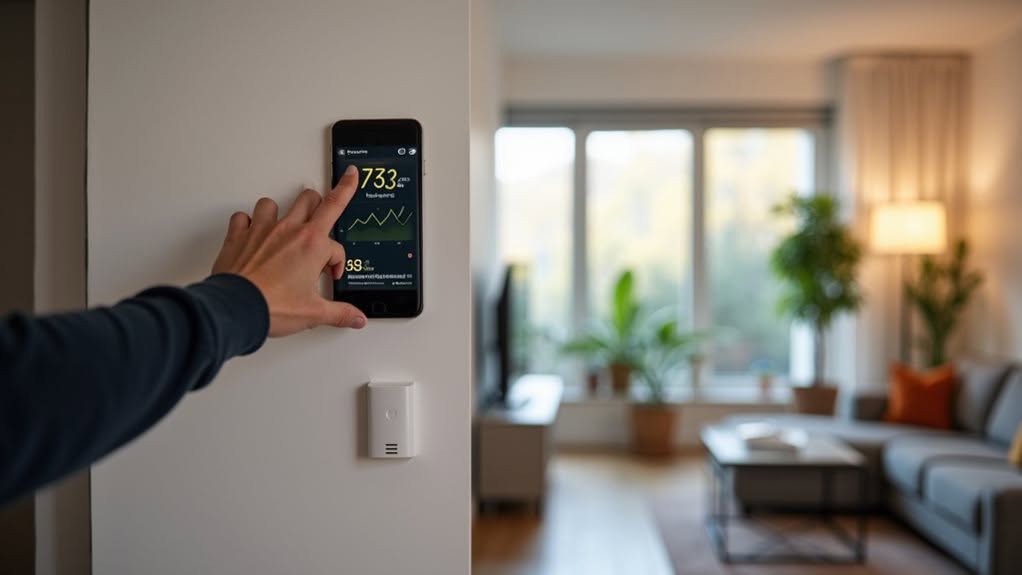
To create an energy-efficient smart home, start by monitoring your consumption with smart meters to identify energy vampires. Install a smart thermostat like Nest or Amazon Smart Thermostat to save 10-20% on heating and cooling costs. Add motion-activated lighting that reduces energy use by 20-50%, and schedule appliances during off-peak hours to save 2-9% on bills. Use automated shades for passive temperature control and guarantee device compatibility by choosing products with Matter certification. These strategic implementations will transform your home into an efficiency powerhouse.
Assessing Your Home’s Energy Consumption Patterns
How effectively can you manage what you don’t understand? Tracking your home’s energy usage is the first step toward creating an efficient smart home system.
You can collect energy consumption data through multiple sources. Smart meters provide detailed, real-time information, while utility bills offer valuable historical trends. Home energy monitoring systems track usage patterns throughout the day.
Understanding when your energy use peaks helps you identify opportunities for automation and conservation. You’ll discover which appliances consume the most electricity and when your household’s demand is highest. For residential buildings, heating demands are the main drivers of useful energy consumption patterns, varying significantly between single-family and multi-family houses. Key variables like household size can significantly impact overall energy consumption and usage patterns.
Smart energy monitoring systems can help unlock significant benefits by providing real-time visibility into your home’s power usage.
Data analysis faces challenges like privacy concerns and integration complexity. Weather conditions and occupancy patterns also influence your energy consumption, making analysis more nuanced.
Statistical techniques and visualization tools can help you interpret this information and make informed decisions about your home’s energy management.
Choosing the Right Smart Thermostats for Climate Control
When selecting a smart thermostat for your home, you’re making a decision that directly impacts both comfort and energy consumption.
These devices offer 10-20% annual savings on heating and cooling costs compared to traditional options.
Smart thermostats outperform programmable models through adaptive learning capabilities that automatically adjust based on your behavior and weather patterns. The average US household spends approximately $1,300 annually on HVAC costs that can be significantly reduced.
No manual scheduling required.
Consider your specific needs when choosing between models like the Google Nest Learning Thermostat with AI-enhanced scheduling or the more budget-friendly Amazon Smart Thermostat with Alexa integration. Most leading models offer comprehensive DIY installation with user-friendly push-in wire terminals and guided app setups.
While prices typically range from $100-$300, many utilities offer rebates for ENERGY STAR certified models.
The initial investment usually pays for itself within a few years through reduced energy bills and potential HVAC maintenance savings.
Implementing Automated Smart Lighting Solutions
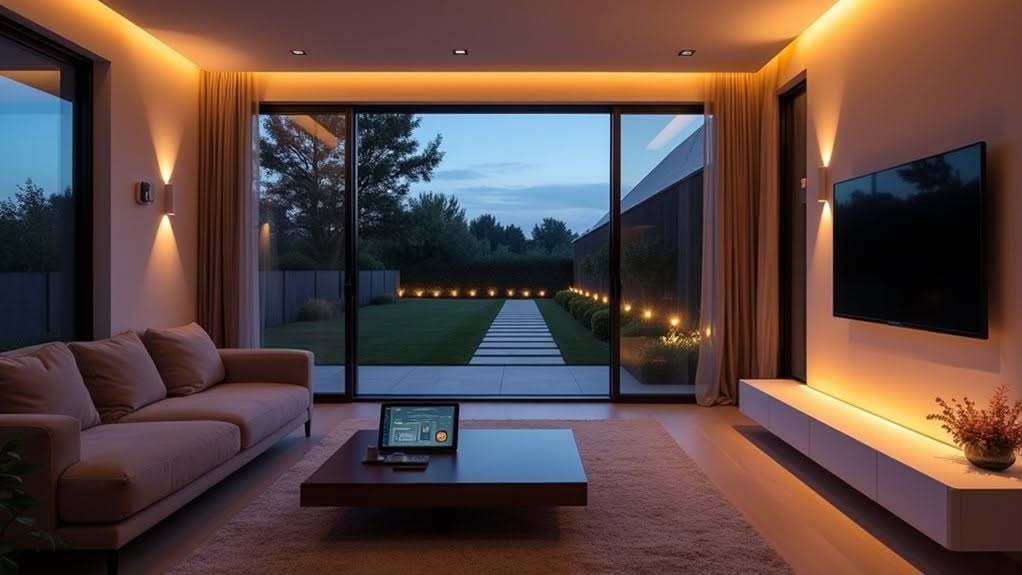
Modern smart lighting systems can dramatically reduce your energy consumption through motion-activated controls that guarantee lights operate only when needed.
You’ll find that installing occupancy sensors in high-traffic areas like hallways and bathrooms eliminates wasted energy from forgotten lights while maintaining convenience and safety.
Implementing daylight harvesting strategies, where smart bulbs automatically adjust their brightness based on natural light levels, can further optimize your lighting efficiency by complementing rather than competing with available sunlight. Many homeowners report significant energy savings by setting their smart lighting to automatically adjust dim levels according to the time of day. These systems typically utilize wireless communication protocols to create a network of interconnected lighting fixtures that can be easily controlled and customized to your preferences.
Motion-Activated Light Control
Motion-activated light control represents one of the most practical and influential implementations of smart home technology available today.
With a global market valued at roughly $2.1-2.5 billion and growing rapidly, these systems offer notable energy savings while improving security.
You’ll benefit from reduced energy consumption as lights operate only when needed, potentially cutting your lighting electricity use by 20-50%. Integrating these solutions with your existing smart home ecosystem enhances functionality through cross-device compatibility, addressing one of the industry’s significant interoperability challenges.
Modern systems combine infrared and microwave detection to minimize false triggers, guaranteeing reliable performance. The growing residential segment, which accounts for 52.8% market share, drives innovation as homeowners increasingly prioritize both security and energy efficiency.
- Integration with voice assistants like Alexa and Google Assistant for hands-free control
- Remote management through smartphone apps for monitoring and adjustments
- LED technology for extended lifespan and reduced power consumption
- Adjustable sensitivity settings to prevent unwanted activations from pets or vehicles
For best results, place sensors at entry points, hallways, and frequently used areas throughout your home.
Daylight Harvesting Strategies
Daylight harvesting technology boosts your smart home lighting system beyond motion-activated controls by intelligently incorporating natural light into your energy efficiency strategy.
This approach can reduce your energy consumption by 20-60% while improving your wellness through natural light exposure.
To implement daylight harvesting, you’ll need photosensors placed strategically indoors or outdoors to measure available natural light.
These sensors communicate with your control system, which automatically adjusts artificial lighting levels based on the amount of daylight present.
You can choose between open-loop and closed-loop systems, depending on your home’s layout and needs. Utilizing dynamic lighting environment capabilities allows your home to adapt continuously to changing sunlight conditions throughout the day.
For best results, integrate your daylight harvesting system with LED lighting and your existing smart home automation platform.
The system allows for manual overrides when you need specific lighting conditions, guaranteeing both energy efficiency and comfort.
Modern lighting control systems can offset electric lighting needs with natural light, significantly reducing overall electricity consumption in spaces with large windows.
Integrating Solar Panels With Smart Home Systems
As renewable energy becomes more accessible, integrating solar panels with smart home systems offers homeowners a powerful way to reduce costs and environmental impact.
The combination creates an intelligent ecosystem that maximizes energy efficiency through automated management. Your smart home system can coordinate appliance usage with peak solar production times, guaranteeing you’re using self-generated power whenever possible.
- PV panels convert sunlight to electricity while inverters transform it into usable AC power
- Energy management systems automatically adjust device usage based on real-time solar production
- Mobile apps provide instant visibility into energy generation and consumption patterns
- AI algorithms analyze weather forecasts and usage patterns to optimize system performance
When properly integrated, your solar-smart home can notably reduce reliance on grid power while providing resilience during outages.
The technology also allows you to monitor and control your energy usage remotely.
Setting Up Energy Monitoring for Real-Time Data Analysis
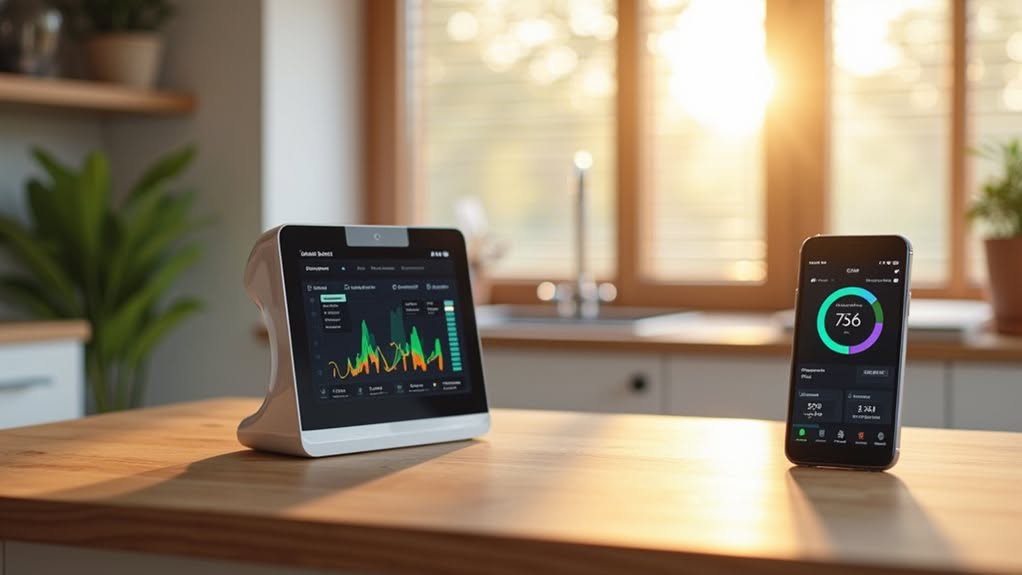
You’ll gain critical insights into your home’s energy patterns through real-time monitoring systems that track where and when electricity is being consumed.
Modern energy monitors can identify “energy vampires” – devices that quietly drain power when not in use – allowing you to take immediate action to reduce waste.
Tracking Consumption Patterns
Understanding how energy flows through your home requires reliable monitoring systems that capture real-time data.
With modern tracking solutions, you’ll gain visibility into consumption patterns that can greatly reduce your energy bills and environmental impact.
Real-time monitoring provides valuable insights into when and where energy is being used, allowing you to make informed decisions about usage habits and appliance efficiency.
- Circuit-level monitors with current transformers offer granular insights into specific areas of your home
- Customizable alerts notify you immediately about unusual consumption spikes or potential issues
- Machine learning capabilities progressively improve device detection accuracy over time
- App interfaces unify control and analytics for streamlined energy management
Identifying Energy Vampires
While tracking consumption patterns provides the big picture of your home’s energy usage, identifying specific energy vampires requires more targeted monitoring.
Energy monitors with machine learning capabilities detect electrical signatures of individual appliances, alerting you to devices that consume power even when supposedly off. Systems like Sense and Emporia can pinpoint these phantom loads through real-time notifications when devices turn on unexpectedly.
For greater precision, integrate smart plugs with your monitoring system to isolate and measure energy use at specific outlets. This approach exposes hidden vampire loads from entertainment systems, chargers, and other standby electronics.
Review historical data comparisons to identify devices consuming power when they shouldn’t be. Users typically reduce their energy bills by 5-15% after eliminating these vampire loads, which often include old refrigerators, always-on gaming consoles, and unused electronic equipment.
Optimizing Peak Usage
Once homeowners identify energy vampires, setting up a robust energy monitoring system becomes the next critical step for optimizing peak usage.
Modern monitors like Leviton, Schneider, Sense, Emporia Vue, and Siemens Inhab provide real-time data through current transformers installed at your electrical panel.
These systems collect and analyze your energy consumption patterns, helping you make informed decisions about when and how you use electricity.
- Wi-Fi connected monitors provide remote access to your home’s energy data from any device
- Machine learning algorithms identify specific appliances by their unique energy signatures
- Real-time dashboards display current usage and cost estimates for immediate feedback
- Customizable alerts notify you of unusual consumption spikes or when devices are left on
With this visibility, you’ll quickly spot opportunities to shift energy-intensive activities away from peak rate periods.
Scheduling Smart Appliances for Off-Peak Usage
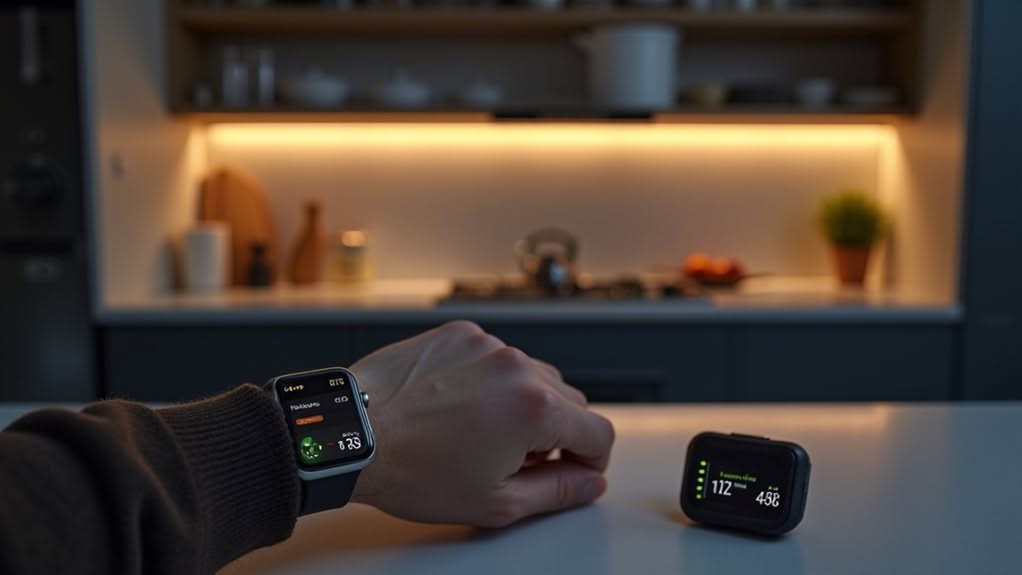
Scheduling smart appliances to operate during off-peak hours represents one of the most effective strategies for reducing household energy costs while supporting grid stability.
By shifting your appliance usage to times when electricity demand is lower, you can save approximately 2-9% on your total energy bills.
You can identify peak and off-peak periods through utility tariff schedules or by using smart plugs that monitor energy consumption.
These tools provide valuable data to help optimize your scheduling decisions.
For maximum efficiency, program your washing machine and dryer to run during weekend or late-night hours.
Set your dishwasher to operate after the evening peak or early morning.
Smart thermostats can also adjust your heating and cooling systems to align with lower-cost periods.
Installing Motorized Shades for Passive Temperature Regulation
You’ll achieve ideal energy efficiency by strategically positioning your motorized shades based on your home’s sun exposure throughout the day.
Installing shades on south and west-facing windows helps block intense afternoon heat during summer months, while allowing beneficial solar gain during winter.
Setting up an automation schedule that coordinates with your daily routine and seasonal patterns can reduce your energy consumption by up to 25%, as the shades automatically adjust to maximize natural lighting while minimizing temperature fluctuations.
Optimal Positioning Matters
When installing motorized shades for maximum energy efficiency, the direction your windows face plays an essential role in determining their effectiveness.
South and west-facing windows benefit most from shading during cooling seasons, as they block intense afternoon sunlight that increases indoor temperatures.
In colder climates, focus on insulating north-facing windows to prevent heat loss, while warmer regions require prioritizing east and west windows to reduce cooling demands.
- South-facing windows can reduce cooling energy by 25% with proper shading during peak heat hours
- West-facing windows with automated shades can block afternoon sun that contributes notably to cooling loads
- North-facing windows benefit most from insulating cellular shades that prevent heat escape in winter
- Sensor integration allows shades to adjust automatically based on sun angle and temperature throughout the day
Proper positioning combined with automation creates a dynamic temperature regulation system that responds to changing conditions.
Automation Schedule Benefits
Beyond ideal window positioning, the automation schedule of motorized shades creates a powerful system for passive temperature regulation throughout your home.
Automated scheduling maximizes passive solar heating in winter and blocks heat during summer months, reducing your cooling demand. These smart systems adjust shade positions based on time of day, solar intensity, and temperature without any manual intervention.
Your motorized shades can reduce heat transfer through windows, which are major contributors to building energy loss. During winter, quality insulating shades trap indoor heat within your home, cutting heating demand by up to 40%.
Integration with sensors and thermostats improves these benefits by dynamically responding to changing conditions.
This coordinated approach between your shading and HVAC systems can reduce overall building energy consumption by up to 25%, offering a return on investment within 3-5 years.
Creating Custom Automation Routines for Maximum Efficiency
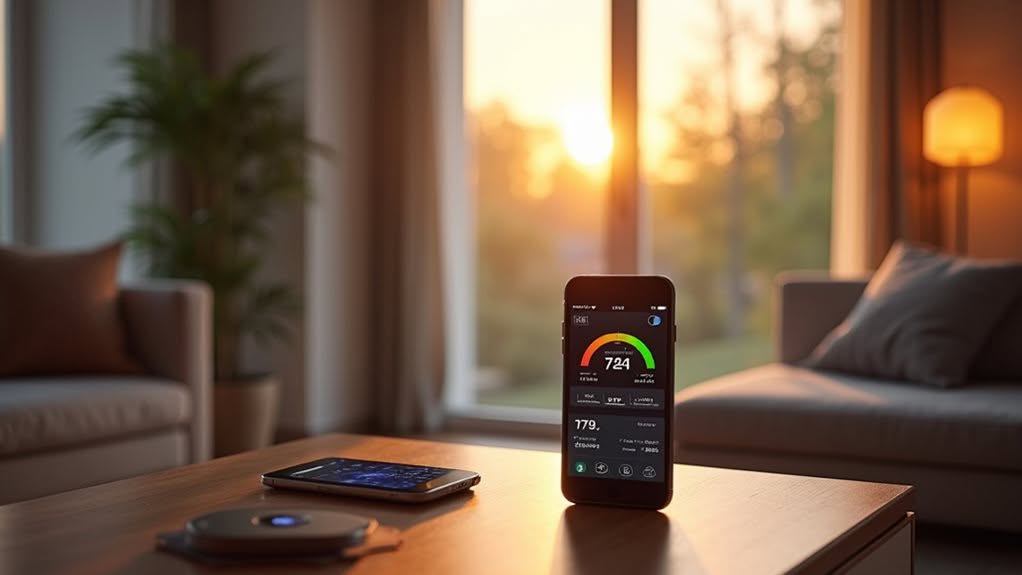
Custom automation routines serve as the backbone of any truly energy-efficient smart home system.
By designing personalized sequences that match your household’s patterns, you’ll maximize both energy savings and convenience.
To create effective routines, combine multiple triggers and conditions that respond intelligently to your presence and schedule.
For example, program your home to automatically adjust heating when you leave and prepare for your return based on your location data.
- Develop morning routines that gradually increase lighting and adjust temperature as you wake up
- Create “away” modes that power down non-essential devices and optimize HVAC settings
- Set up evening shutdown sequences that turn off forgotten devices and lower temperatures
- Implement multi-device scenes triggered by single commands like “goodnight” or “movie time”
Track your automation’s performance regularly and refine settings based on energy consumption data.
Ensuring Device Compatibility and System Integration
While creating effective automation routines forms the foundation of your smart home, the compatibility between devices determines how well your system actually works.
The fragmented environment of protocols like Zigbee, Z-Wave, Wi-Fi, and Bluetooth can create integration challenges.
When selecting devices, prioritize those certified with emerging standards like Matter, which aims to unify communication regardless of brand. This certification guarantees interoperability and robust security features including AES-128 encryption.
Your hub choice is vital as it must support the protocols used by your devices. Some hubs enable compatibility through third-party integrations, though this may increase setup complexity.
For maximum security and reliability, opt for devices with certified security protocols and regular over-the-air updates.
Local control capabilities can reduce latency and improve privacy compared to purely cloud-based solutions.
Maximizing ROI Through Strategic Smart Device Placement
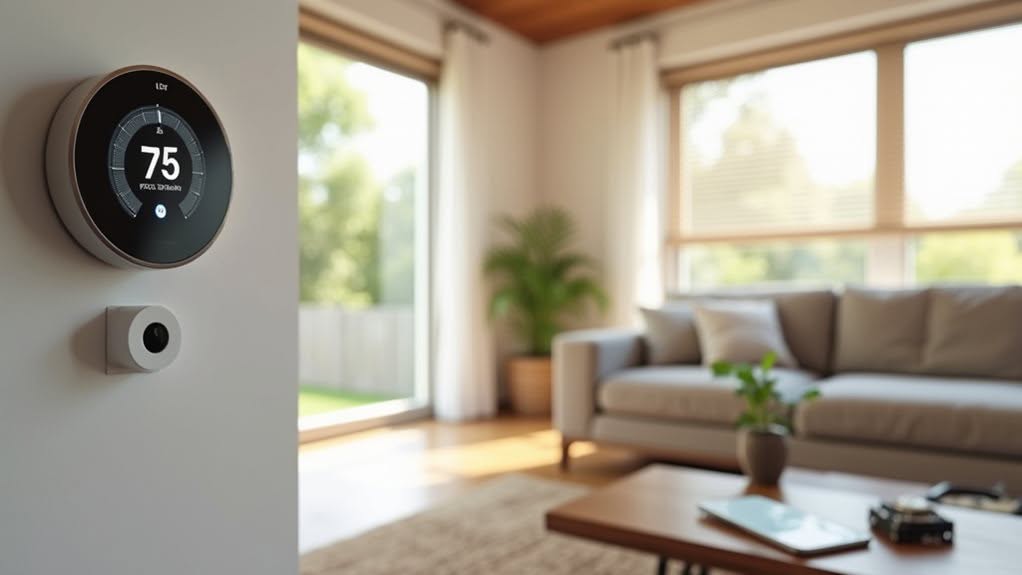
Strategic placement of smart devices throughout your home greatly impacts their effectiveness and return on investment.
Thoughtful positioning improves functionality while reducing energy consumption and installation costs.
Consider these placement strategies to maximize your smart home investment:
- Install smart thermostats centrally, away from sunlight and drafts, for accurate temperature readings and ideal HVAC efficiency.
- Position motion sensors in high-traffic areas to activate lighting and climate control only when spaces are occupied.
- Place smart lighting in frequently used rooms like kitchens and living rooms for the highest energy savings.
- Group smart devices near existing wiring and network connections to reduce installation complexity and costs.
When planning your smart home setup, remember that professional consultation on device placement can greatly enhance system efficiency and potentially increase your property’s value by up to 5%.
Frequently Asked Questions
How Do Smart Home Systems Affect Home Insurance Premiums?
Smart home systems can lower your insurance premiums by reducing risk. You’ll typically get discounts for security systems, leak detectors, and smoke alarms, but you might need to share device data with insurers.
What Backup Options Exist During Internet or Power Outages?
You’ve got several backup options: whole-home generators, battery systems, smart hubs with backup power, and UPS devices. These keep your internet, security systems, and critical smart home functions running during outages without manual intervention.
Can Rental Properties Be Equipped With Removable Smart Home Systems?
Yes, you can equip rental properties with removable smart systems. Use plug-and-play devices like smart speakers, wireless cameras, smart plugs, and portable thermostats that don’t require permanent installation or damage walls.
How Do Smart Homes Accommodate Elderly or Disabled Residents?
Smart homes provide you with voice control, safety features like fall detection, remote monitoring, automated tasks, and customized accessibility options that’ll improve your independence and safety as an elderly or disabled resident.
What Privacy Concerns Arise With Voice-Controlled Smart Home Devices?
Your voice-controlled devices constantly listen for wake words, store your commands on cloud servers, and may share data with third parties. You’ll face risks of data breaches, unauthorized recordings, and targeted advertising based on your conversations.
Final Thoughts
You’ve now learned the crucial steps to create an energy-efficient smart home. By monitoring consumption, integrating compatible devices, and establishing automated routines, you’ll reduce your environmental impact while saving money. Remember that strategic placement of devices and regular system analysis will maximize your efficiency gains. With these techniques, you’re well-equipped to transform your home into a sustainable, intelligent living space that serves both your needs and the planet.


