To effectively manage smart home humidity, maintain levels between 30-60% using strategically placed sensors in moisture-prone areas. Adjust seasonally—aim for 30-50% in winter to prevent dry skin and 30-50% in summer to avoid mold growth. Integrate humidity controls with your smart home system for automated adjustments based on real-time readings. Use properly sized dehumidifiers or humidifiers for your space, and implement mechanical ventilation with extraction fans. These practices will establish the foundation for healthier indoor air quality.
Understanding Optimal Humidity Ranges for Home Health and Comfort
Humidity, often overlooked in home comfort management, plays a crucial role in maintaining both health and comfort in your living space. The ideal relative humidity (RH) for most homes falls between 30% and 60%, though international health guidelines narrow this to 40-60% for optimal immune function.
Keeping your home’s humidity within these ranges helps prevent numerous problems. When levels drop too low, you’ll experience dry skin, irritated eyes, and increased vulnerability to airborne viruses. Low humidity can also cause headaches, sore throats, and makes you more susceptible to respiratory infections. Static electricity and flaking paint can also signal insufficient moisture. Investing in a smart controller can automate humidity regulation throughout your home for consistent comfort.
Conversely, humidity above 55% creates conditions where mold thrives and dust mites multiply, potentially triggering allergies and asthma. A reliable hygrometer can help you monitor indoor humidity levels accurately to maintain optimal conditions.
You’ll need seasonal adjustments—lower humidity in winter prevents condensation, while summer may require higher levels to counteract air conditioning’s drying effects.
Smart Sensors and Monitoring Systems for Humidity Control
Modern humidity sensors require strategic placement in moisture-prone areas like bathrooms and kitchens to provide accurate readings that detect excessive humidity before mold develops.
Placing these sensors at eye level, away from direct sunlight, and at least three feet from air vents guarantees you’ll get reliable data about your home’s actual conditions.
With proper sensor positioning, your smart home system can automatically trigger dehumidifiers, HVAC systems, or ventilation fans when needed, saving energy while maintaining ideal comfort levels without your constant attention. Devices like the Tapo T310 use Swiss-made sensors that provide exceptional accuracy with readings as precise as ±0.3°C and 3% relative humidity. Some advanced sensors can be managed through smartphone apps for convenient remote monitoring of room conditions and timely alerts.
Placement for Accurate Readings
Proper placement of humidity sensors is crucial for obtaining reliable measurements that help you maintain ideal indoor air quality.
Position indoor sensors in the “breathing zone,” 3.6–5.6 feet above the floor, where people actually inhale air. Keep them at least 3 feet away from windows, vents, and moisture sources like kitchens and bathrooms to prevent skewed readings.
For outdoor sensors, raise them 4–6 feet above ground and shield from direct sunlight. Avoid placing them near heat-absorbing surfaces such as brick or concrete.
Ensure your sensor enclosures have multiple ventilation openings for proper airflow. Don’t mount sensors directly above heating vents or near electronic components that generate heat. Consider using a USB-powered sensor for better performance and reliability in critical areas.
Central placement in frequently occupied areas like living rooms provides holistic air quality insights compared to isolated corners that lack context.
Regularly calibrate your sensors according to manufacturer specifications to maintain accuracy over time.
Data-Driven Automation Benefits
When you implement smart sensors and monitoring systems, your home transforms into a data-driven environment that improves comfort, health, and efficiency. These systems continuously monitor humidity levels, making real-time adjustments that enhance your living conditions. Temperature sensors work alongside humidity monitors to create optimal environmental conditions for your home and its occupants. Timely detection through IoT humidity sensors prevents mold formation in susceptible areas of your home.
Smart humidity control offers notable advantages beyond manual systems:
- Energy efficiency improvements of up to 15-30% by preventing your HVAC system from overworking when humidity levels are already ideal
- Preemptive mold prevention through early detection of moisture problems before damage occurs
- Enhanced respiratory health by maintaining perfect humidity levels between 40-60%
- Reduced maintenance costs from avoiding moisture-related damage to walls, furniture, and electronic equipment
Your smart sensors can integrate with existing home automation systems, providing valuable historical data that helps identify patterns and further enhance your home’s environment.
Seasonal Adjustments to Maintain Ideal Moisture Levels
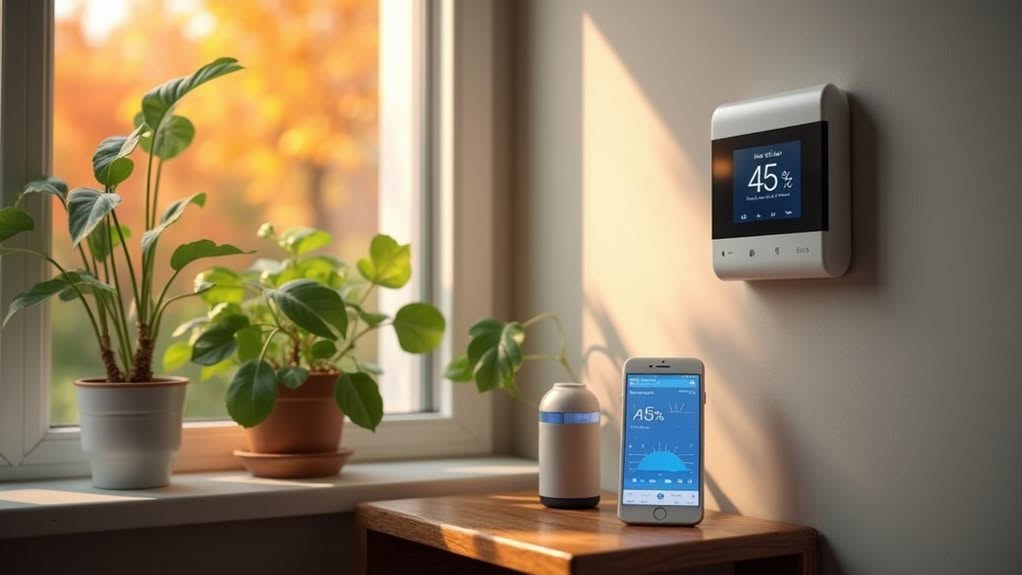
Your smart home can help you tackle the seasonal humidity challenges that affect comfort and home integrity throughout the year.
During winter, you’ll need to add moisture to prevent dry skin and static electricity, while summer demands moisture removal to combat muggy conditions and inhibit mold growth.
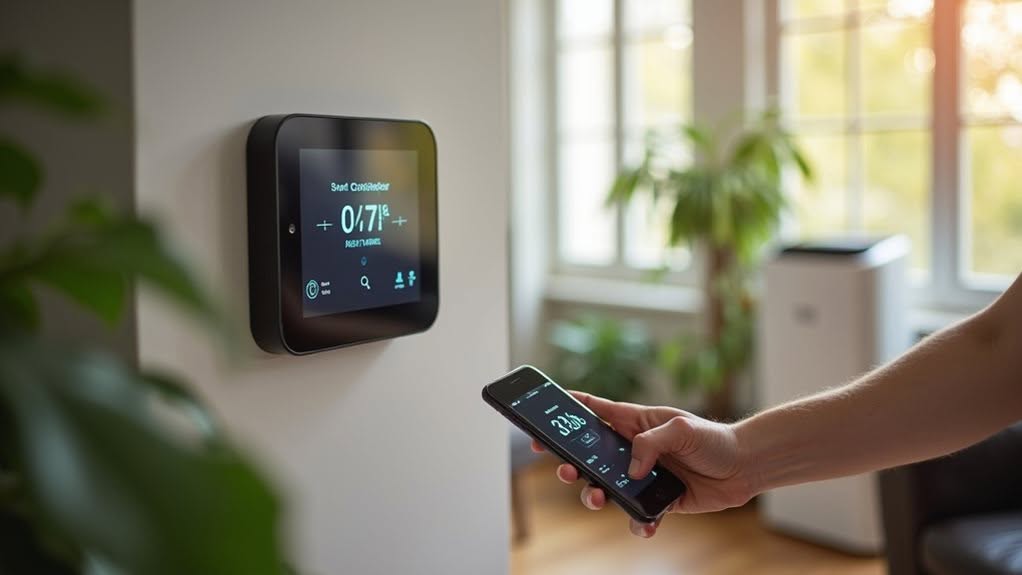
Smart thermostats with humidity sensing capabilities can automatically adjust your home’s moisture levels as seasons change, maintaining the ideal range of 30-50% humidity without requiring constant manual intervention. The humidity balancing feature adjusts blower speeds based on detected moisture levels, ensuring optimal comfort year-round. Enabling the Adjust for Humidity feature in your ecobee app can significantly enhance this seasonal control while reducing energy consumption.
Winter Humidity Control
As winter temperatures drop, maintaining healthy indoor humidity becomes considerably more challenging for homeowners. You should aim to keep your indoor relative humidity between 30% and 50% during winter months to avoid health issues and home damage.
Install hygrometers throughout your home to monitor humidity levels accurately, keeping them away from direct heat sources for reliable readings.
- Clean and maintain humidifiers regularly to prevent mold growth and bacteria dispersion.
- Seal windows and doors with weatherstripping to prevent cold drafts that cause humidity fluctuations.
- Use exhaust fans in kitchens and bathrooms to remove excess moisture during cooking and showering.
- Consider smart humidity sensors that can alert you when levels fall outside the ideal range.
Proper winter humidity control protects both your health and home from the effects of excessively dry or damp air.
Combating Summer Moisture
During summer months, humidity levels in homes typically rise due to warmer air holding more moisture, creating uncomfortable and potentially unhealthy indoor environments.
The EPA recommends maintaining indoor humidity between 30% and 50% to prevent mold growth and guarantee comfort.
Integrate your smart thermostat with whole-home dehumidifiers to automatically control moisture levels throughout your house.
These systems work together to maintain ideal conditions while maximizing energy efficiency.
Use bathroom and kitchen exhaust fans during and after activities that generate moisture.
Proper ventilation is crucial for reducing indoor humidity during summer’s peak periods.
Monitor humidity levels using smart home sensors or hygrometers, especially in basements and bathrooms where moisture tends to accumulate.
Your AC system can help with dehumidification, but confirm it’s properly sized for your home’s needs.
Smart Seasonal Transitions
The shift between seasons presents considerable challenges for maintaining ideal indoor humidity levels, requiring thoughtful adjustments to your smart home systems.
Modern thermostats with integrated humidity sensors can automatically adapt to changing conditions, guaranteeing your home remains comfortable year-round.
To optimize your smart home’s seasonal shifts:
- Program your thermostat to maintain 30-40% humidity during winter months to prevent dryness, and 40-55% in summer to minimize mold growth
- Enable weather forecast integration features that anticipate incoming weather patterns and adjust settings proactively
- Conduct pre-season HVAC system checks to verify equipment functions properly before extreme weather arrives
- Utilize your smart thermostat’s remote monitoring capabilities to track humidity trends and make adjustments even when you’re away
These automated adjustments help maintain consistent comfort while reducing energy consumption throughout seasonal changes.
Integrating Humidity Controls With Whole-Home Automation
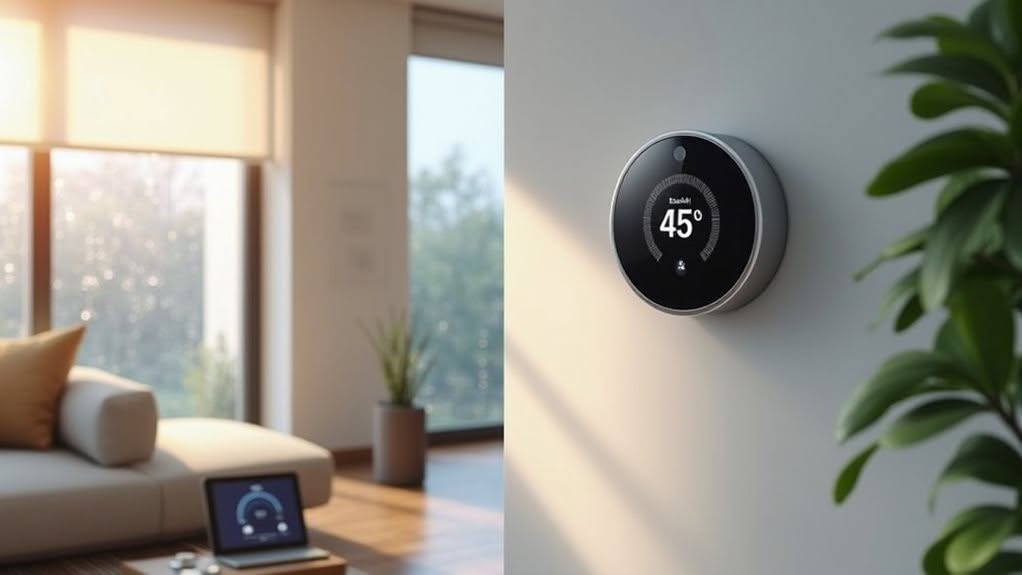
Modern smart homes benefit greatly from integrated humidity control systems that work seamlessly with other home automation components.
Centralized platforms like Google Home, Apple HomeKit, and Alexa enable you to control humidity sensors and related devices throughout your home from a single interface.
You can program automation rules that trigger specific actions based on humidity levels. For example, when humidity exceeds 50%, your system can automatically activate dehumidifiers; when it drops below 30%, humidifiers can turn on.
Smart thermostats like the Honeywell Home X Series coordinate with humidity sensors to optimize both temperature and humidity simultaneously, improving comfort while saving energy.
Your data streams to cloud dashboards for real-time monitoring and historical analysis.
Include physical override buttons as backups for those inevitable connectivity disruptions or system failures.
Preventing Moisture Problems Through Strategic Ventilation
Strategic ventilation serves as your first line of defense against excessive moisture that can damage your home’s structure and compromise indoor air quality.
Implementing a combination of mechanical and natural ventilation strategies helps maintain ideal humidity levels between 40-60%.
In well-insulated, airtight homes, mechanical ventilation systems with heat recovery provide continuous moisture control while preserving indoor temperature.
For crawlspaces, proper ventilation combined with vapor barriers prevents mold formation on structural elements.
- Install extraction fans in bathrooms and kitchens to remove humidity directly at the source
- Utilize smart ventilation controls with humidity sensors for real-time airflow adjustment
- Open windows briefly each day in damp areas to improve natural air exchange
- Maintain regular cleaning schedules for all ventilation components to prevent system contamination
Selecting the Right Dehumidifiers and Humidifiers for Your Space
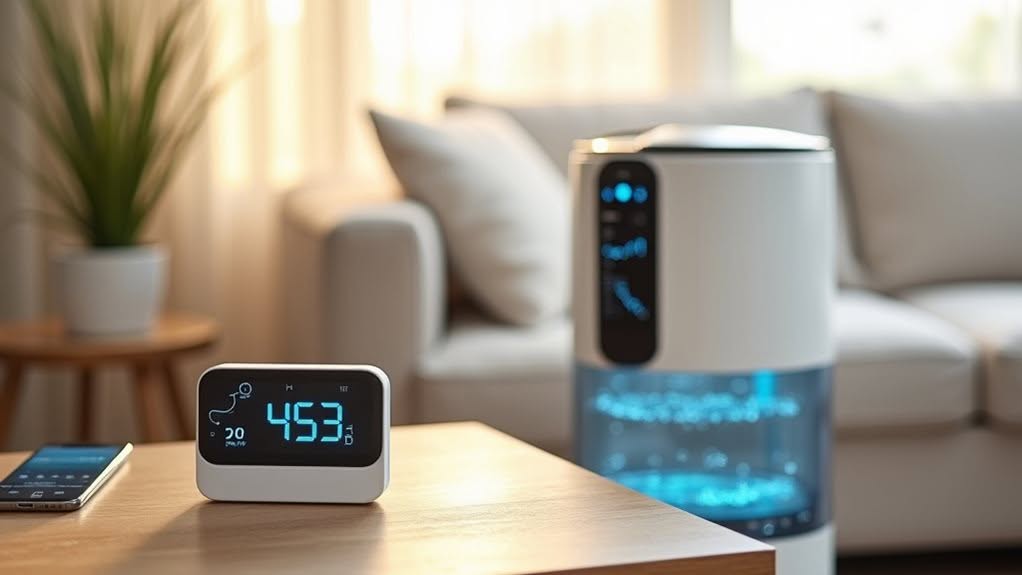
While proper ventilation creates the foundation for humidity control, selecting appropriate humidification equipment tailors moisture management to your specific needs.
Begin by measuring your room’s square footage and current humidity levels with a hygrometer. This information will help you match device capacity to your space requirements.
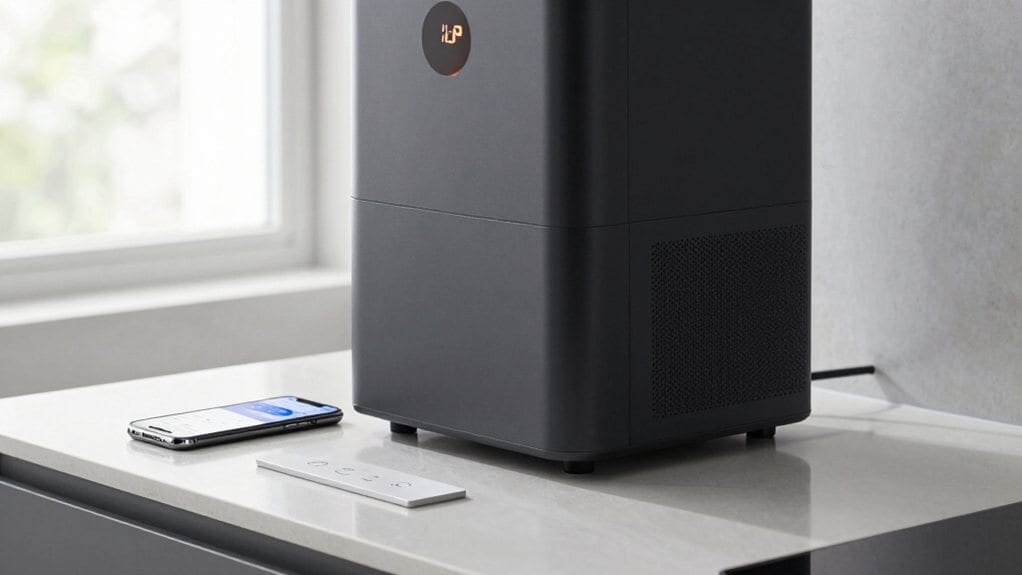
For large spaces with excess moisture, consider a 50-pint dehumidifier like the Midea Cube, which efficiently reduces humidity from 90% to 40% while using less energy than competitors at 1.9L per kWh.
If you’re battling dry air, the Brondell O2+ Revive humidifier covers up to 628 square feet with an output of 350 mL/hour. It’s particularly effective for allergy sufferers with its built-in HEPA filtration.
Pay attention to noise levels—units below 54 dB work well in living spaces.
Structural Solutions to Combat Excessive Moisture or Dryness
Beyond adding humidity-controlling appliances, effective moisture management begins with your home’s structural design.
Your building’s envelope plays an essential role in maintaining ideal humidity levels and preventing moisture problems before they start.
A well-designed home integrates several structural elements that work together to regulate indoor moisture:
- Insulated Concrete Forms (ICF) create airtight, vapor-resistant walls that stabilize interior humidity and reduce condensation risks.
- Continuous thermal mass elements like concrete or brick regulate temperature swings, indirectly stabilizing humidity levels.
- Strategic high R-value insulation prevents warm moist air from contacting cold surfaces, reducing dew point issues.
- Moisture-resistant materials such as specialized drywall or cement board in bathrooms and kitchens prevent deterioration in high-humidity areas.
These structural solutions reduce your reliance on active humidity control systems while providing consistent baseline protection against moisture problems.
Maintenance Routines for Humidity Control Equipment

To guarantee your humidity control equipment operates efficiently and reliably, regular maintenance is vital.
Replace humidifier pads annually and clean or replace filters monthly to prevent clogging and microbial growth.
Empty standing water from humidifiers daily and disinfect units weekly with appropriate cleaning agents. This prevents bacterial growth and maintains proper function.
Test your humidistat sensors regularly for accuracy and clean them to remove dust that can cause faulty readings.
Position these sensors away from heat sources and direct sunlight for peak performance.
Check drainage systems routinely for clogs or leaks, especially in whole-house dehumidifiers.
Clear water lines and confirm proper drainage slope to prevent stagnation.
Schedule annual professional maintenance to extend equipment lifespan and improve air quality.
Document all maintenance activities to help diagnose recurring issues.
Frequently Asked Questions
Can Houseplants Effectively Regulate Indoor Humidity Levels?
Yes, your houseplants can help regulate humidity through transpiration, but they won’t considerably impact larger spaces. For effective humidity control, you’ll need several plants or should combine them with mechanical humidifiers.
How Does Altitude Affect Smart Humidity Control Settings?
At higher altitudes, you’ll need to adjust your smart humidity controls upward since thinner air holds less moisture. You should recalibrate sensors and increase humidification settings to maintain comfort in the naturally drier environment.
Will an Air Purifier Help Control Humidity?
No, air purifiers don’t control humidity levels. They remove pollutants and allergens but won’t affect moisture in your air. For humidity management, you’ll need a dedicated humidifier or dehumidifier instead.
Are There Child-Safe Alternatives to Chemical Moisture Absorbers?
Yes, you can use natural desiccants like rice, clay, baking soda, sea salt, or activated charcoal. Create homemade moisture-absorbing pouches with these ingredients for child-safe alternatives that won’t pose ingestion hazards around your little ones.
How Can I Prevent Humidity Fluctuations During Power Outages?
Install battery-powered humidity sensors, use a generator or UPS for critical systems, and deploy non-electric moisture absorbers like silica gel. Keep windows closed during humid conditions and open during dry weather.
Final Thoughts
By implementing these smart home humidity strategies, you’ll create a healthier, more comfortable living environment while protecting your property from moisture damage. Maintain levels between 30-50% using connected sensors, seasonal adjustments, and proper equipment. Regular maintenance of your systems, combined with strategic ventilation and structural solutions, guarantees ideal humidity control year-round. Your smart home can effectively manage moisture levels with minimal effort on your part.