
Smart home systems can be worth your investment based on several key factors. You’ll typically see 10-15% savings on heating and cooling costs, while all-encompassing systems can reduce overall energy consumption by 15-30%. The technology also increases property values by up to 5% and may qualify for insurance discounts. With the market projected to reach $537 billion by 2034 and adoption rates doubling by 2027, these systems are evolving from luxury to necessity. The following analysis breaks down the financial and practical considerations in detail.
Understanding the Modern Smart Home Landscape
As the digital revolution transforms our living spaces, smart home technology has emerged as one of the fastest-growing consumer technology markets worldwide. The global market, valued at $127.8 billion in 2024, is projected to reach between $537 billion and $1.4 trillion by 2034, growing at an impressive 27% annually. The market is witnessing significant expansion with Asia Pacific emerging as the fastest-growing region at a CAGR of over 28% from 2025 to 2030.
Currently, 14.2% of households worldwide use smart home devices, a figure expected to double to 28.8% by 2027. The average revenue per smart home installation stands at $382, reflecting considerable consumer investment in these technologies. Consumer preferences are increasingly favoring integration during initial new construction rather than retrofit applications, as it helps avoid extensive renovations later.
Security and access control dominate the market with 29% share, while AI-powered assistants like Google Assistant, Alexa, and Siri have revolutionized how we interact with our homes. Advanced AI technology is now transforming home security systems with smarter detection and monitoring capabilities.
In the U.S., 63% of households now own at least one smart device.
Cost-Benefit Analysis of Smart Home Technologies
When considering whether smart home technologies are worth the investment, you’ll need to weigh both immediate costs and long-term benefits. The upfront expenses for devices, installation, and system integration can be substantial.
Smart homes offer notable financial advantages through reduced utility bills and waste prevention. Water leak detection systems can prevent costly damage, while automated energy management optimizes resource usage in your home. Smart thermostats can deliver significant energy savings by making micro-adjustments in temperature based on your behavior patterns throughout the day. Intelligent lighting systems can reduce energy consumption through occupancy detection and daylight harvesting capabilities.
You’ll likely see maintenance savings too, as smart systems detect potential issues early and enable more accurate diagnostics when repairs are needed.
Insurance companies often offer premium discounts for homes with smart security features, which also make your property less attractive to burglars.
Finally, these technologies can increase your property’s market value by up to 5% and may help it sell faster when it’s time to move.
Energy Savings and Long-Term Financial Returns
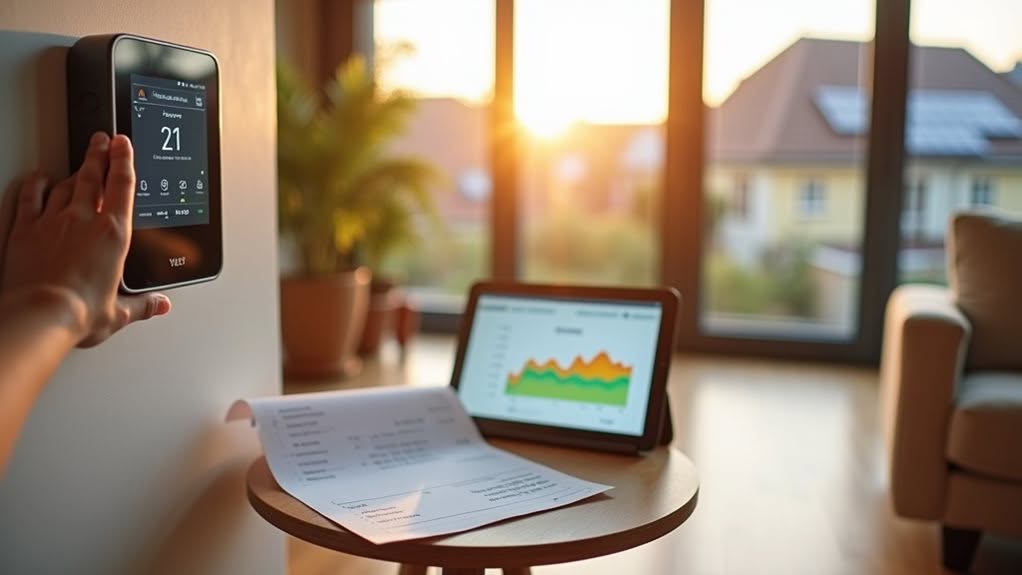
Smart home systems offer considerable energy savings that translate to impressive long-term financial returns for homeowners. Properly implemented automation can reduce total household energy consumption by 15-30%, representing notable cuts to utility bills.
Smart thermostats alone deliver 10-15% savings on heating and cooling costs, with payback periods of just 1-3 years. These devices learn your occupancy patterns and adjust settings automatically for ideal efficiency. Additionally, they integrate seamlessly with voice assistants for convenient hands-free operation.
Lighting represents another major opportunity, with smart systems cutting electricity use by up to 75% compared to traditional bulbs. Smart plugs eliminate standby power waste from idle devices.
The financial impact is substantial: homeowners can save $427-$640 annually, about 27% of the average $2,300 home energy bill. User behavior and quick repairs of leaks can significantly affect the actual savings realized from smart home investments.
These savings accelerate when you combine smart controls with building efficiency upgrades.
Security Enhancements and Peace of Mind
Modern home security systems represent one of the most valuable aspects of smart home technology, transforming how homeowners protect their properties and gain peace of mind.
The global smart home security market, valued at $33.94 billion in 2024, is projected to reach $82.07 billion by 2030. This growth reflects widespread adoption, with security cameras and video doorbells being particularly popular among homeowners.
AI integration has greatly improved these systems by reducing false alarms and providing intelligent threat detection. A significant portion of consumers are interested in AI for crime prediction, showing the growing demand for advanced security features.
You’ll benefit from real-time monitoring capabilities that allow you to check your property from anywhere via smartphone.
With over 39 million U.S. households protected by home alarm systems, these technologies are proving effective.
The correlation between smart security deployment and burglar deterrence offers concrete evidence that your investment provides both physical protection and psychological comfort.
Smart locks are experiencing the fastest growth rate due to increasing consumer preference for keyless access solutions utilizing technologies like Bluetooth, Wi-Fi, and biometrics.
Overcoming Technical Hurdles and Compatibility Issues

Despite the convenience smart home systems offer, many users face considerable technical challenges when integrating various devices into their homes. Compatibility issues arise from different communication protocols like Zigbee, Z-Wave, WiFi, and Bluetooth operating simultaneously in one household.
You can overcome these challenges by researching device compatibility before purchasing and using central hubs that bridge communication gaps between different protocols. Selecting devices from the same ecosystem greatly reduces integration problems. Voice assistants may experience recognition issues when attempting to process commands in noisy environments or with non-standard accents.
Common hurdles include connectivity glitches, device incompatibility, and delayed responses. Implementing mesh networks improves connectivity, while professional installation guarantees proper system setup. Privacy and security concerns increase as smart appliances become more prevalent in homes, creating potential vulnerabilities for hackers.
Regular maintenance is essential—update firmware consistently and test devices thoroughly before committing to them.
The smart home industry continues to address these issues through AI advancements and enhanced IoT integration.
Future-Proofing Your Home: Technology Trends and Resale Value
Looking beyond technical compatibility issues, you’ll want to contemplate how your smart home investments will hold up over time.
Smart home adoption is projected to reach more than half of U.S. consumers by 2025, suggesting these technologies will become standard expectations rather than luxury additions.
The integration of AI, sustainability features, and advanced security like quantum encryption can greatly boost your home’s future appeal.
Modern buyers increasingly value properties with energy-efficient systems and seamless device connectivity.
The Matter protocol represents a crucial advancement by enabling cross-platform integration, while modular designs allow for easier upgrades as technology evolves.
With 45% of U.S. internet households already owning at least one smart home device, this trend shows no signs of slowing down.
Investing in these technologies now may enhance your property’s competitiveness and resale value in tomorrow’s market.
Frequently Asked Questions
How Does Smart Home Technology Impact Homeowner’s Insurance Premiums?
Smart home devices can lower your insurance premiums through discounts of 5-20%. You’ll qualify when you install security systems, smoke detectors, water sensors, or cameras that reduce claim risks for insurers.
Can Smart Home Systems Work During Power Outages?
Yes, your smart home systems can work during power outages if you’ve installed backup power solutions like standby generators, UPS devices, or battery systems. Without these backups, most devices will stop functioning until power returns.
What Happens to Smart Home Systems When Selling Your House?
When you sell your house, permanently installed smart devices typically stay with the property. You’ll need to transfer ownership of accounts, reset devices to factory settings, and provide necessary passwords to the new owners.
How Much Maintenance Do Smart Home Systems Typically Require?
Smart home systems require regular maintenance including battery replacements, software updates, network connectivity checks, and occasional professional troubleshooting. You’ll need to dedicate a few hours monthly to keep your system running efficiently.
Are DIY Installations as Effective as Professional Smart Home Installations?
No, DIY installations typically aren’t as effective as professional ones. You’ll save money upfront but may sacrifice reliability, integration quality, and scalability. Professionals guarantee ideal placement, proper wiring, and provide ongoing support when issues arise.
Final Thoughts
You’ll need to evaluate smart home technology based on your specific circumstances. While initial costs can be considerable, energy savings, improved security, and potential increases in property value may justify the investment. Consider compatibility with existing systems and future technological developments. Ultimately, smart home investments are worthwhile if they align with your lifestyle, budget, and long-term housing goals.


