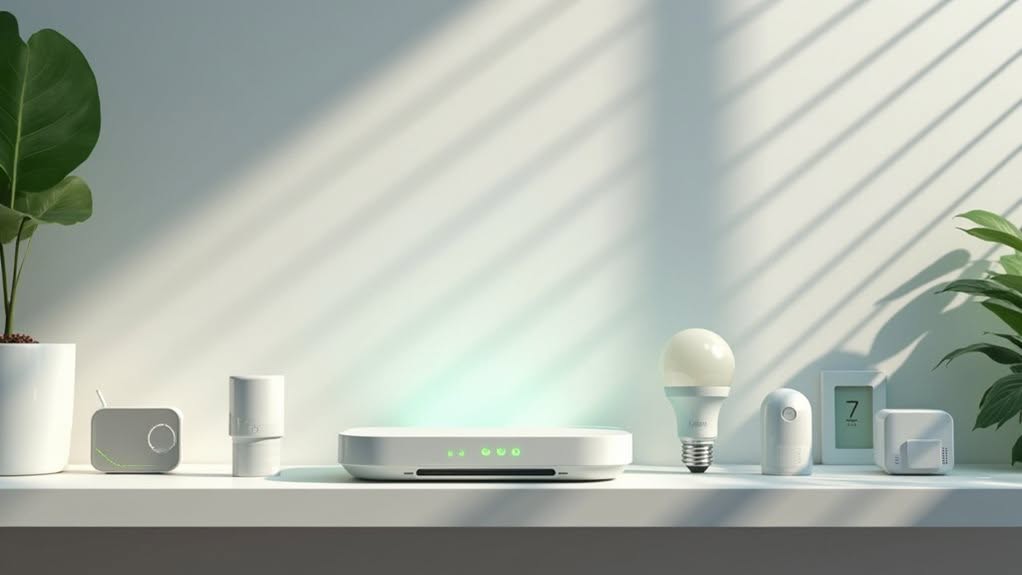
Home Assistant Green stands as a top contender for 2025’s best smart home hub with its privacy-focused approach and robust hardware specs. You’ll benefit from its offline functionality, energy-efficient design (1.7W idle), and broad compatibility with major platforms like Apple HomeKit and Google Home. Priced competitively at $119.95, it offers excellent value with its quad-core processor, 4GB RAM, and zero-subscription model. The extensive integration options and local processing capabilities make it particularly compelling for privacy-conscious users.
The Hardware Foundation: What Makes Green Tick
At the core of Home Assistant Green sits the powerful Rockchip RK3566 system-on-chip, featuring a quad-core Arm Cortex-A55 CPU running at 1.8 GHz. This capable processor is paired with 4GB of RAM, guaranteeing your smart home operations run seamlessly without lag.
You’ll find 32GB of eMMC flash storage inside, providing ample space for your Home Assistant installation and apps. The device maintains stable performance thanks to its large aluminum heatsink that efficiently dissipates heat. The unique translucent polycarbonate housing design adds both durability and visual appeal to this smart home hub. The affordable $99 price point makes it an accessible entry point for beginners in home automation.
Connectivity options include a reliable Gigabit Ethernet port and two USB 2.0 ports for expanding functionality. There’s also a microSD slot for recovery purposes and an HDMI port for diagnostics. When considering your purchase, explore hub device alternatives that match your specific smart home ecosystem needs.
The compact device measures just 112mm × 112mm × 32mm and weighs 340g, making it an unobtrusive addition to your smart home setup.
Privacy-First Approach: No Cloud Required
Unlike most smart home systems that send your data to the cloud, Home Assistant Green keeps all your personal information stored locally on the device itself.
You’ll maintain complete control of your smart home even when your internet goes down, as Green’s core functions work offline without any cloud dependency.
Your privacy remains protected through a local-first architecture that dramatically reduces security risks associated with remote data breaches that plague cloud-based alternatives. The system enables easy viewing, sharing, and exporting of your home data while maintaining your privacy. This local-first approach aligns with the recent updates that support sub-entries for integrations, allowing shared API keys without repeatedly authenticating cloud services.
Privacy-First Approach: No Cloud Required
While many smart home systems transmit your personal data to remote servers, Home Assistant Green breaks this pattern by keeping all your information safely on the device itself. The hub processes everything locally using its quad-core ARM CPU, 4GB RAM, and 32GB storage.
You won’t need internet connectivity to control your smart home. When your Wi-Fi goes down, your automations and device controls continue functioning without interruption.
The fanless, energy-efficient design draws only a few watts of power while maintaining complete privacy. USB ports allow direct connection to Z-Wave and Zigbee devices, eliminating additional cloud dependencies. Home Assistant Green’s plug-and-play setup makes installation incredibly simple with just power and network cables needed to get started.
Home Assistant’s open-source software means you can verify exactly how your data is handled. No accounts, logins, or third-party servers are required to use the system’s core functionality. The platform’s commitment to strengthened privacy controls demonstrates its user-focused approach for protecting both residents and guests.
Data Stays Home
Your privacy fundamentally relies on controlling where your data physically resides, which Home Assistant Green accomplishes by storing all smart home information directly on its built-in 32GB eMMC storage.
The device runs the complete Home Assistant Operating System pre-installed, giving you direct management of your data without any third-party cloud dependency. This plug-and-play solution requires no custom assembly while still providing full control over your smart home data. You can export, view, and share your information directly from the hardware.
Local storage greatly improves security by minimizing exposure to external data breaches. Your information never leaves your home network unless you specifically configure it to.
While some integrations may require occasional internet access, the core storage and control functions remain strictly local.
The gigabit Ethernet connection provides fast, secure communication without relying on cloud intermediaries for device control.
Offline Functionality Shines
Home Assistant Green truly excels in its ability to function without an internet connection, making it a standout choice for privacy-conscious users. Your smart home continues operating during internet outages when you configure it with local protocols like Zigbee or Z-Wave.
Unlike cloud-dependent systems, Home Assistant Green processes automations and device controls locally on your hub. This means your lights, thermostats, and security devices remain responsive even when internet service fails. Many users find that running Home Assistant on affordable hardware like Raspberry Pi or dedicated Home Assistant hubs provides excellent performance without breaking the bank.
The system’s privacy-first approach guarantees your personal data stays within your network. You won’t find your usage patterns or voice commands being transmitted to external servers.
For advanced users, offline voice control integration is possible, eliminating the privacy concerns and latency issues common with commercial voice assistants. However, implementing no-wake-word systems presents significant challenges with continuous listening and resource utilization.
The hub’s energy-efficient design supports this 24/7 local operation without considerable power costs.
Energy Efficiency: The Eco-Conscious Smart Hub
As energy costs continue to rise, the Home Assistant Green stands out with its remarkably low power consumption of just 1.7W at idle and approximately 3W under load.
This efficiency comes from its purpose-built design using energy-optimized components.
The fanless enclosure eliminates the power drain of mechanical cooling while maintaining silent operation.
You’ll appreciate how this translates to lower electricity bills over time.
Its eco-design philosophy extends beyond power consumption. The hub’s built-in power monitoring helps track energy usage across your entire smart home ecosystem.
The durable polycarbonate and aluminum housing reduces material waste while maximizing product lifespan.
When paired with Home Assistant’s Energy Dashboard, you can monitor household utilities and create automations that further reduce your home’s carbon footprint.
The local processing approach also avoids energy-intensive cloud infrastructure, setting a new benchmark for sustainable smart home technology.
Setup Experience: From Box to Automation

Setting up the Home Assistant Green couldn’t be more straightforward with its true plug-and-play functionality.
Simply connect the Ethernet cable and attach the 12V DC power supply to bring your smart home hub to life.
The device comes with Home Assistant Operating System preinstalled, eliminating complex software installation steps.
After powering up, you’ll notice status lights indicating the system’s operational status—watch for the blinking yellow light during the onboarding process.
Access the interface by directing yourself to http://homeassistant.local:8123 in your browser or using the mobile app.
The guided onboarding helps you create an account, set your location, and select language preferences.
Once configured, you’ll immediately gain access to automation tools, device integration capabilities, and pre-made blueprints that transform your disconnected smart devices into a cohesive, responsive system.
Compatibility: Connecting Your Smart Home Ecosystem
When selecting a smart home hub in 2025, compatibility stands as a crucial factor determining your overall experience. Home Assistant Green works seamlessly with major platforms including Apple HomeKit, Google Home, Samsung SmartThings, and Amazon Alexa, allowing you to migrate without disrupting existing setups.
For protocol support, you’ll need additional hardware. The Home Assistant Connect ZBT-1 USB adapter enables Zigbee 3.0 and Thread capabilities, serving as a Thread border router for Matter devices. Z-Wave and Bluetooth require compatible third-party USB accessories.
Green handles one 1080p camera stream efficiently, but multiple streams may cause delays. The modular design supports expansion as your smart home grows, with frequent updates guaranteeing new device compatibility.
A Home Assistant Cloud subscription improves voice assistant integration for Google Home and Amazon Alexa users.
Price Point Analysis: Value for Money in 2025
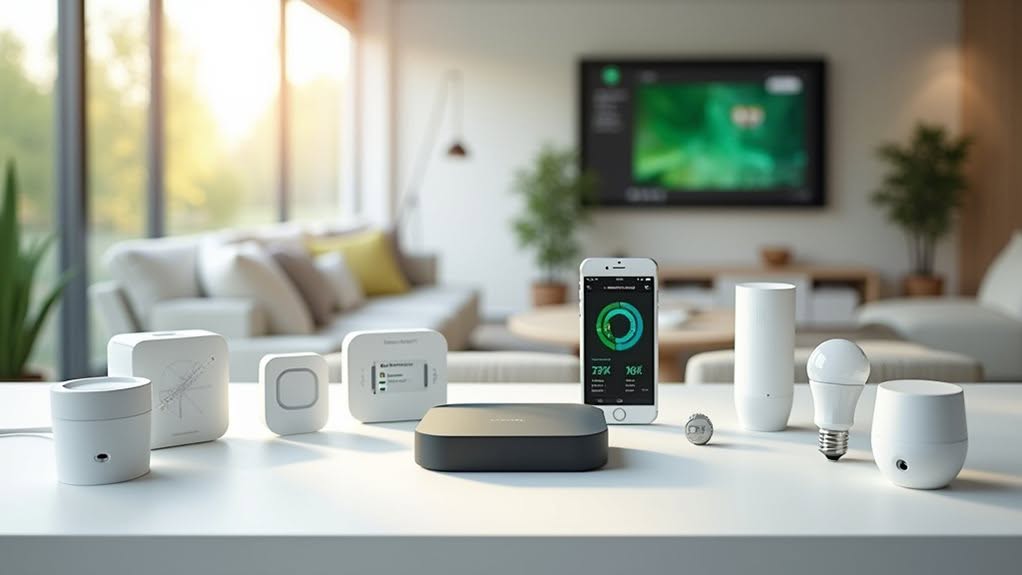
Home Assistant Green’s $128.95 price tag positions it as an accessible entry point for smart home enthusiasts in 2025’s competitive market.
You’ll find its quad-core processor, 4GB RAM, and 32GB storage deliver exceptional value compared to pricier alternatives like Samsung SmartThings or Apple HomeKit.
The device’s energy-efficient design, fanless operation, and commitment to lifetime updates make it a worthwhile long-term investment that adapts to your evolving smart home needs.
Competitive Market Positioning
As the smart home market evolves in 2025, the Home Assistant Green maintains its position as an attractive value proposition at $119.95, down from its original $128.95 price tag in mid-2024. This price reduction results from tariff changes, making it even more competitive against alternatives.
When comparing Home Assistant Green to competitors, you’ll find several advantages:
- Notably more affordable than Home Assistant Yellow ($199+), while delivering crucial functionality
- Ready-to-use hardware that eliminates the complexity of DIY Raspberry Pi setups
- Strong privacy features with local data processing, unlike cloud-dependent alternatives
The Green targets users seeking simplicity and integration across major ecosystems like Apple, Google, and Amazon without requiring technical expertise.
While it lacks native Zigbee, affordable USB accessories can expand its capabilities without replacing the entire hub.
Feature-to-Cost Ratio
The value proposition of Home Assistant Green in 2025 stands out remarkably in the crowded smart home market.
At $119.95-$128.95, it delivers impressive hardware specs including a quad-core 1.8 GHz processor, 4GB RAM, and 32GB storage—sufficient for most home automation needs without breaking the bank.
You’re getting exceptional value with access to over 1,000 built-in integrations that connect to hundreds of thousands of devices across major ecosystems like HomeKit, Google Home, and Alexa.
Unlike competitors requiring subscription fees, Home Assistant Green offers continuous feature updates at no additional cost. Its local control philosophy improves privacy while reducing long-term expenses.
Though lacking built-in Zigbee capabilities found in the pricier Yellow model, Green’s USB expandability allows you to add these protocols only when needed, creating a cost-efficient upgrade path.
Long-term Investment Value
When evaluating smart home technology investments for 2025, Home Assistant Green emerges as a compelling long-term option with its modest initial investment of $119.95-$128.95. The hub offers noteworthy value through its zero-subscription model and energy-efficient operation, minimizing costs over time.
While Green lacks internal upgrade options, its longevity is supported by:
- Regular software updates from an active open-source community
- Broad compatibility with over 1,000 integrations across major ecosystems
- USB expandability for adding protocols like Zigbee or Z-Wave as needed
For most homeowners, Green’s hardware specifications provide sufficient power for typical automation needs without overpaying for unused potential.
Though enthusiasts with complex setups may eventually outgrow its capabilities, the average smart home user will find Green’s price-to-performance ratio excellent for years to come.
Comparing Green to Other Home Assistant Options
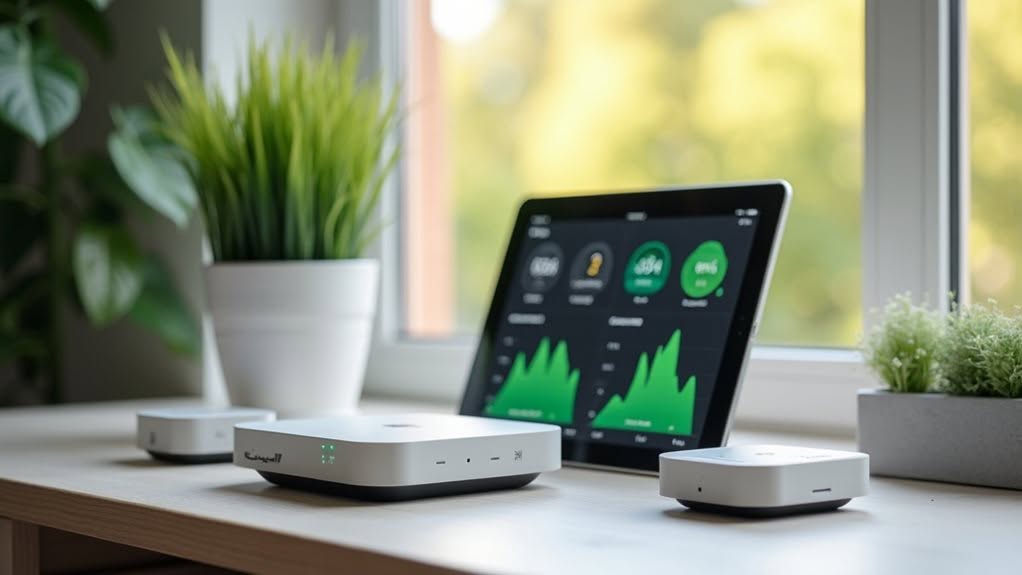
Choosing between different Home Assistant hardware options requires understanding their key differences in performance, features, and target users.
Home Assistant Green offers simplicity with its plug-and-play setup, pre-installed OS, and fixed hardware specifications. It’s perfect for beginners with its $128.95 price point and silent, energy-efficient operation.
Yellow targets advanced users with its expandability through NVMe storage slots, additional RAM options, and built-in Zigbee and Matter-over-Thread radio. It requires more assembly but provides greater long-term flexibility.
Blue positions itself as the middle option, balancing Green’s simplicity with some of Yellow’s expandability features.
All three options prioritize local data processing and user privacy. Green requires USB dongles for wireless protocols, while Yellow includes these capabilities out of the box.
Frequently Asked Questions
Can Home Assistant Green Work Without Internet After Initial Setup?
Yes, your Home Assistant Green can operate without internet after setup. It’ll run locally using protocols like Zigbee or Z-Wave, allowing you to control compatible smart devices offline through your local network.
How Do Firmware Updates Work if Green Operates Offline?
You’ll need to download firmware updates elsewhere and transfer them manually via USB to your offline Green. Some device firmware updates may still require temporary internet connectivity to complete installation.
Is There a Subscription Fee for Any Features?
No, Home Assistant Green has no subscription fees. You’ll pay only the one-time purchase price. All updates, features, add-ons, and dashboard improvements remain free for life through the open-source community.
What Happens if the Hardware Fails After Warranty Period?
After the warranty expires, you’ll need to purchase a replacement unit at your own expense. There’s no extended repair program for Home Assistant Green beyond the standard warranty period.
Can Multiple Users Access the Hub With Different Permission Levels?
Yes, you can set up multiple user accounts with different permission levels. You’ll be able to control who can view and manage specific devices or areas in your home through Home Assistant’s access management system.
Final Thoughts
Home Assistant Green stands out as a compelling smart home hub for 2025, offering excellent privacy controls and impressive device compatibility. You’ll appreciate its energy-efficient operation and local processing capabilities that don’t require cloud connectivity. While not the cheapest option available, its balance of performance, security, and ecosystem support provides strong value. Your decision should ultimately depend on your specific smart home needs, technical comfort level, and privacy preferences.


