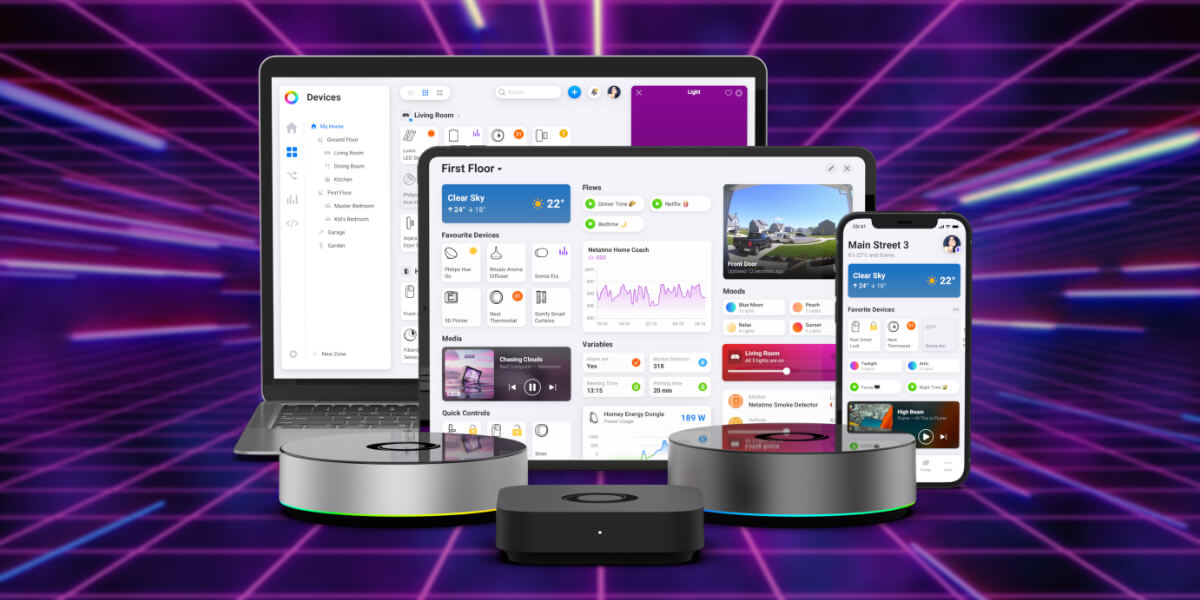
If you’ve been eyeing Homey for your next smart home project but live and breathe Python, there’s good news: Athom has officially added Python support to the Homey Apps SDK. Announced on March 11, 2026, in Enschede, the Netherlands, this update brings Python alongside the long-standing JavaScript and TypeScript options—broadening who can build for Homey and how fast they can ship.
For a platform that’s grown steadily since 2014, this is more than a language update. It’s a shift that invites an even larger developer community—data scientists, IoT engineers, and Python-first makers—into the Homey ecosystem.
What’s New
- Python is now a fully supported language for building and publishing Homey apps.
- Developers can build Python apps that run across:
- Homey Cloud
- Homey Pro (2023–2026)
- Homey Pro mini
- Homey Self-Hosted Server
- This joins existing support for JavaScript and TypeScript, which have been core to Homey app development since launch.
In the words of Athom’s CEO, Stefan Witkamp: “We’ve always believed that a great smart home platform is built together with its developer community. Adding Python allows us to welcome a whole new group of developers to Homey. A more diverse community means more apps, and ultimately a better smart home for everyone.”
Why It Matters to Developers
- Lower barrier to entry: If your expertise is Python—whether from automation scripts, data pipelines, or microcontroller-adjacent tooling—you can now apply that skill directly to smart home apps in Homey.
- Faster prototyping: Python’s concise syntax and rich library ecosystem can help you iterate device integrations, automations, and logic faster.
- Broader community input: Opening the door to Python expands the talent pool. Expect more device drivers, niche integrations, and creative automations to emerge.
For teams already invested in JavaScript/TypeScript, this isn’t a replacement—it’s an expansion. Polyglot teams can choose the best tool for the job while targeting the same Homey deployment landscape.
Where Your Apps Can Run
Compatibility is comprehensive, covering cloud, local, and self-hosted environments:
- Homey Cloud: Ideal for quick deployments without managing hardware.
- Homey Pro (2023–2026) and Homey Pro mini: Run locally for reliability and low latency in the home.
- Homey Self-Hosted Server: For organizations and power users who require full control over their environment.
This breadth means Python apps can serve everything from hobbyist projects to production-grade smart home setups.
Getting Started
Developers can dive in via the Homey Apps SDK Documentation. If you’ve built on Homey before, you’ll find the familiar SDK structure adapted for Python. If you’re new to the platform, the docs provide the scaffolding to get your first app running, connect devices, and define flows and capabilities. To see the broader context and roadmap, check the full announcement on homey.app.
A Platform with Momentum
Athom’s move fits a larger trajectory. Since its founding in 2014 in Enschede, the company has positioned Homey as a global smart home platform built for control, automation, and energy management. Homey Pro—its flagship hub—works with all major smart home technologies, turning it into a unifying layer for diverse ecosystems.
In 2024, LG Electronics acquired Athom to accelerate global expansion of the Homey ecosystem. That backing suggests continued investment in developer tools and platform compatibility—Python support being a clear signal.
What to Build Next
- Device integrations: Bridge lesser-known or niche devices into Homey using Python libraries and APIs.
- Intelligent automations: Leverage Python’s strengths for logic-heavy scenarios, from energy-saving routines to context-aware scenes.
- Data-driven features: Use Python’s data handling chops to analyze device telemetry, track trends, or optimize home energy usage.
- Vertical-specific apps: Create solutions for accessibility, elder care, or sustainability that benefit from Python’s rapid development cycle.
The Bottom Line
Adding Python to the Homey Apps SDK is a meaningful step for developers who prefer Python’s ecosystem and expressiveness. It widens the on-ramp to Homey, invites new kinds of apps, and ultimately strengthens the smart home experience for users.
If you’ve been waiting for a reason to bring your Python skills into the smart home, this is it. Explore the Homey Apps SDK Documentation to get started, and keep an eye on homey.app for the full announcement and future updates.
