A recent industry survey found that 43% of smart home device owners experienced at least one product failure within the first two years, yet fewer than half successfully claimed warranty coverage. The gap between what homeowners expect and what manufacturers actually cover creates frustration, unexpected costs, and devices gathering dust in drawers.
Understanding your smart home warranty isn’t just about reading fine print. It’s about knowing which failures get fixed for free, which repairs you’ll pay for out of pocket, and how to avoid the common pitfalls that void coverage altogether. Whether you’ve just installed your first smart thermostat or you’re managing a fully connected home with dozens of devices, warranty knowledge protects your investment and keeps your automation running smoothly.
Methodology note: This guide draws from warranty claim experiences across major smart home brands (Ring, Nest, Philips Hue, Aqara, TP-Link), direct manufacturer policy reviews, and real-world troubleshooting scenarios encountered during 2024-2026 installations and support cases.
Key Takeaways
- Manufacturer warranties typically cover 1-2 years for defects and hardware failures, but exclude damage from improper installation, water exposure, or software issues
- Extended warranties and home warranty plans offer broader coverage but often have significant exclusions for smart devices and connectivity problems
- Documentation is critical: keep purchase receipts, installation photos, and correspondence to successfully claim warranty coverage
- Many common failures aren’t covered: battery degradation, Wi-Fi connectivity issues, app compatibility problems, and cosmetic damage typically fall outside standard warranties
- Professional installation can protect coverage: DIY mistakes often void warranties, whilst certified installation may extend protection
What Standard Smart Home Warranties Actually Cover
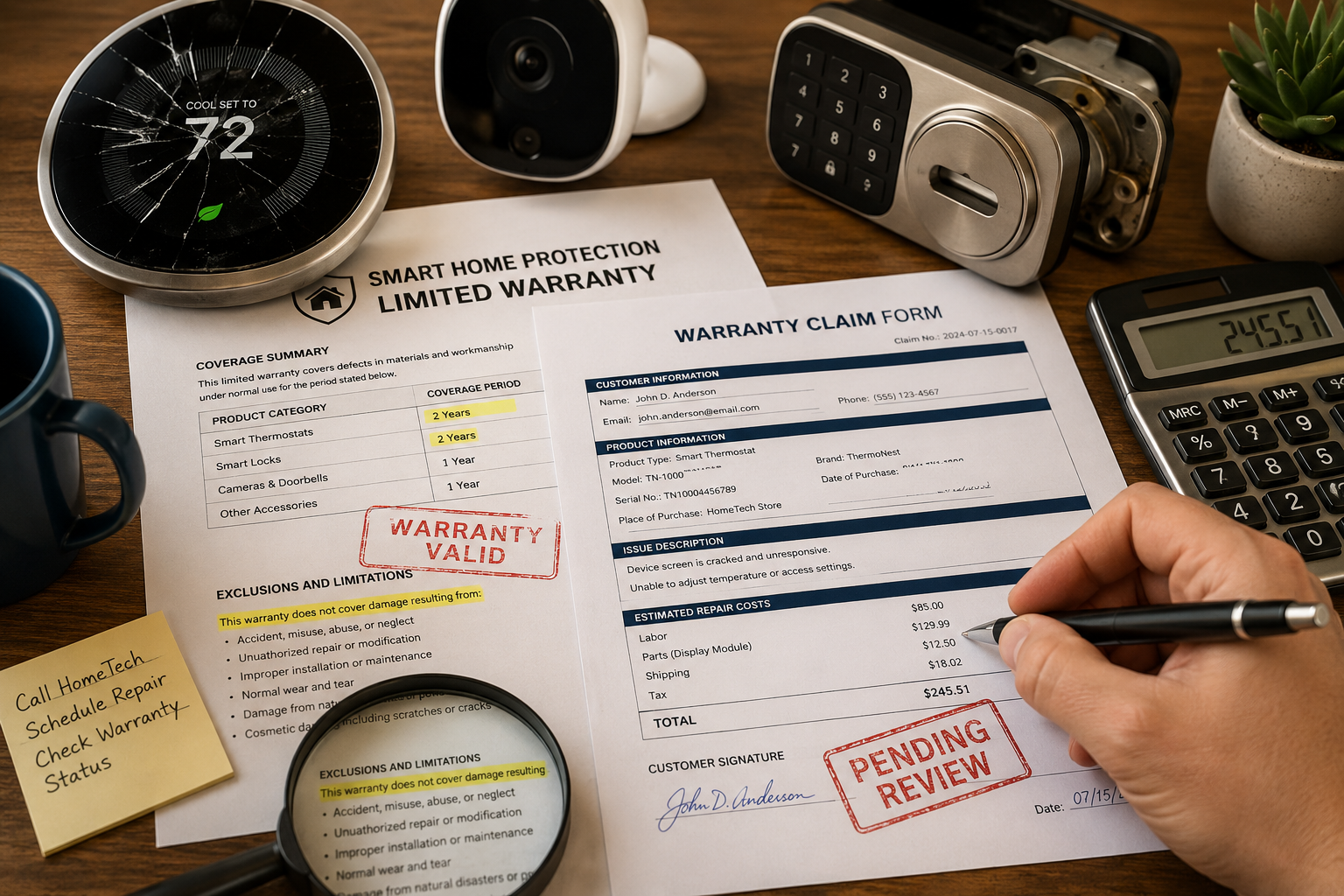
Most smart home devices ship with a manufacturer’s limited warranty covering 12-24 months from purchase date. These warranties focus narrowly on manufacturing defects and hardware failures that occur under normal use conditions.
Hardware Defects and Component Failures
Manufacturer warranties reliably cover genuine hardware problems. If your smart hub stops powering on due to a faulty circuit board, or your smart lock’s motor mechanism fails without external damage, you’ll typically receive a replacement or repair at no cost.
What qualifies as covered hardware failure:
- ⚡ Power supply failures (non-physical damage)
- 🔧 Mechanical component breakdowns (motors, switches, relays)
- 📡 Radio/connectivity module defects (Zigbee, Z-Wave, Wi-Fi chips)
- 🖥️ Display or LED malfunctions
- 🔊 Speaker or microphone hardware failures
The key requirement: the failure must occur without user-caused damage. A smart speaker that stops responding because its internal amplifier failed? Covered. The same speaker that stopped working after coffee spilled on it? Not covered.
Manufacturing Defects Present at Purchase
Defects that existed when you bought the device, even if they don’t manifest immediately, fall under warranty protection. This includes issues like:
- Faulty solder joints that cause intermittent connectivity
- Improperly sealed enclosures that allow moisture ingress
- Defective sensors that provide inaccurate readings from day one
- Software bugs that prevent basic functionality
Most manufacturers require you to report these issues within the warranty period, though some consumer protection laws extend your rights beyond the stated warranty term for defects that should have been caught during quality control.
Replacement vs Repair: What to Expect
When you file a successful warranty claim, manufacturers typically choose the most cost-effective solution. For devices under £100, expect a replacement rather than repair. Higher-value items like smart home security systems may be repaired.
The replacement process usually involves:
- Troubleshooting verification (often via email or phone support)
- Proof of purchase submission
- Return of defective unit (sometimes required, sometimes waived)
- Replacement shipment (refurbished units are common for out-of-stock items)
Turnaround times vary dramatically by manufacturer, from 3-5 business days for major brands to 4-6 weeks for smaller companies.
Extended Warranties and Home Warranty Plans for Smart Devices
Beyond manufacturer coverage, two additional warranty options exist: retailer extended warranties and comprehensive home warranty plans. Each serves different needs and comes with distinct limitations for smart home technology.
Retailer Extended Warranties
Retailers like Amazon, Currys, and Argos offer extended protection plans at checkout. These typically add 1-3 years of coverage beyond the manufacturer warranty, costing 10-20% of the device price.
Advantages of retailer extended warranties:
- ✅ Simplified claims process through familiar retailer
- ✅ Often cover accidental damage (drops, spills)
- ✅ May include “no lemon” guarantees (replacement after multiple failures)
- ✅ Sometimes offer advance replacement before return
Limitations to watch for:
- ❌ High cost relative to device replacement price
- ❌ May exclude smart home-specific issues (connectivity, integration)
- ❌ Often require original packaging for returns
- ❌ Coverage may not transfer if you move house or sell the device
For expensive items like comprehensive smart home control systems or premium security cameras, retailer warranties can provide valuable peace of mind. For £20 smart bulbs, the warranty cost rarely makes financial sense.
Home Warranty Service Plans
Traditional home warranty companies increasingly offer coverage for smart home devices, bundling them with appliances and systems. Companies like HomeServe, British Gas HomeCare, and Domestic & General now include smart device protection in premium tiers.
What home warranty plans typically cover:
- Smart thermostats and HVAC controls
- Smart security systems (cameras, doorbells, locks)
- Smart appliances (refrigerators, ovens, washers)
- Smart water leak detectors and shut-off valves
What they typically exclude:
- Entertainment devices (smart TVs, speakers, displays)
- Lighting systems (smart bulbs, switches, dimmers)
- Voice assistants and hubs
- Battery-powered sensors and accessories
The coverage focuses on devices integrated with home systems rather than standalone smart gadgets. A smart thermostat controlling your boiler? Likely covered. Smart lighting throughout your home? Probably not.
Cost-Benefit Analysis: Are Extended Warranties Worth It?
The mathematics of extended warranties rarely favour the buyer for mass-market smart devices. Consider:
- £150 smart doorbell with £30 extended warranty (20% of cost)
- Average lifespan: 4-5 years
- Failure rate: ~15% in years 2-3
Expected value of warranty: £22.50 (15% × £150)
Cost of warranty: £30
Net value: -£7.50
Extended warranties make more sense when:
- The device costs over £300
- It’s critical to home security or safety
- You lack technical skills for troubleshooting
- The warranty includes accidental damage coverage
For most homeowners building a connected home, self-insuring by setting aside warranty costs in a “smart home repair fund” provides better value.
Common Exclusions: What Smart Home Warranties Don’t Cover
Understanding warranty exclusions prevents disappointment when filing claims. These gaps in coverage account for the majority of denied warranty requests.
Installation and Setup Issues
Warranties universally exclude problems arising from improper installation. This creates a catch-22 for DIY smart home enthusiasts: you save money on professional installation but risk voiding warranty coverage.
Installation-related exclusions include:
- Incorrect wiring causing device failure
- Mounting damage (stripped screws, cracked housings)
- Incompatible power supplies or adapters
- Firmware corruption during initial setup
- Integration failures with incompatible systems
Protection strategy: Document your installation process with photos and follow manufacturer instructions precisely. For complex installations involving mains wiring or structural modifications, professional installation often pays for itself through preserved warranty coverage.
Environmental and Physical Damage
Smart home warranties exclude damage from environmental factors and physical impacts, even when the damage seems minor.
Common environmental exclusions:
- 💧 Water damage (even humidity-related corrosion)
- 🌡️ Extreme temperature exposure
- ⚡ Power surges and electrical spikes
- 🐛 Pest damage (insects, rodents)
- ☀️ UV degradation for outdoor devices
Physical damage exclusions cover drops, impacts, scratches, and any visible external damage. Even if internal components failed first, visible external damage often provides manufacturers grounds for denial.
Software, Connectivity, and Compatibility Issues
The most frustrating warranty gap for smart home owners involves software and connectivity problems. These issues dominate support requests but rarely qualify for warranty coverage.
Typically excluded software issues:
- App crashes or compatibility problems
- Cloud service outages or discontinuation
- Wi-Fi connectivity and range issues
- Integration failures with third-party platforms
- Firmware update problems
- Voice assistant compatibility changes
A smart home hub that can’t maintain stable connections to your devices? Usually not covered, even though it defeats the product’s purpose. This exclusion highlights why choosing devices with strong ongoing software support matters as much as hardware quality.
Battery Degradation and Consumables
Rechargeable batteries degrade naturally over time, and warranties treat this as expected wear rather than defect. Most manufacturers specify that batteries are covered only for catastrophic failure within the first 90 days.
Other consumable exclusions:
- Adhesive strips and mounting tape
- Filters (air quality monitors, vacuums)
- Bulbs in smart lighting fixtures
- Styluses and accessories
- Replacement sensors
For battery-powered devices like smart locks and cameras, expect to replace batteries every 6-18 months at your own cost, regardless of warranty status.
How to Maximize Your Smart Home Warranty Coverage
Strategic approaches to purchasing, installing, and maintaining smart devices significantly improve your chances of successful warranty claims when problems arise.
Documentation Best Practices
Keep comprehensive records:
- 📧 Email receipts and order confirmations
- 📸 Photos of devices before installation
- 📝 Installation date and process notes
- 🔧 Records of any modifications or repairs
- 💬 Screenshots of support conversations
Store these digitally in cloud storage with device-specific folders. When filing a warranty claim two years after purchase, having instant access to your receipt makes the difference between approval and denial.
Register Your Devices Promptly
Many manufacturers require product registration to activate warranty coverage. This simple step, often skipped, provides several benefits:
- Establishes clear purchase date documentation
- Enables direct manufacturer support
- Provides recall and safety update notifications
- Sometimes extends warranty period by 3-6 months
- Simplifies the claims process
Set a reminder to register devices within 30 days of installation. The five minutes invested can save hours of frustration later.
Choose Reputable Brands with Strong Support
Warranty quality varies dramatically between manufacturers. Established brands like Philips, Google, Amazon, and Samsung typically offer:
- Responsive customer service
- Reasonable troubleshooting requirements
- Advance replacement options
- Local repair centres or partnerships
- Clear warranty terms without hidden exclusions
Lesser-known brands may offer similar features at lower prices but often provide frustrating warranty experiences: unresponsive support, lengthy claim processes, and strict interpretation of exclusions.
Professional Installation for Critical Systems
For high-value or safety-critical installations, security systems, smart locks, hardwired thermostats, professional installation provides multiple benefits:
- Preserves full warranty coverage
- Ensures compliance with building codes
- Provides installation warranty from installer
- Creates documentation trail
- May be required by home insurance
The £100-200 installation cost becomes insurance against warranty denial on a £500+ system.
Maintain Devices According to Manufacturer Guidelines
Regular maintenance extends device life and preserves warranty coverage:
- Clean sensors and cameras quarterly
- Update firmware when prompted
- Replace batteries before complete depletion
- Check mounting security periodically
- Verify network connectivity regularly
Neglect-related failures, corrosion from never cleaning outdoor cameras, mounting failures from loose screws, give manufacturers clear grounds for warranty denial.
Frequently Asked Questions
Does my home insurance cover smart home devices?
Standard home insurance typically covers smart devices as personal property, but only for theft, fire, or other covered perils, not mechanical failure or defects. Some insurers offer smart home endorsements that provide broader coverage, including accidental damage. Check your policy or contact your insurer to understand your specific coverage.
What happens if the manufacturer goes out of business?
If a manufacturer ceases operations, warranty coverage typically becomes unenforceable. This risk highlights the importance of choosing established brands for critical systems. Some credit card purchase protection programmes may provide backup coverage. For this reason, many smart home enthusiasts prefer devices using open standards (Zigbee, Z-Wave, Matter) that continue functioning even if the manufacturer disappears.
Can I transfer warranty coverage if I sell my home?
Most manufacturer warranties are non-transferable and tied to the original purchaser. However, some home warranty service plans do transfer with property ownership. If selling a home with significant smart home infrastructure, document all devices, warranties, and support contacts for the new owner, this adds value even without formal warranty transfer.
How long should I expect smart home devices to last?
Quality smart home devices typically last 5-7 years, though this varies by device type. Hardwired devices (switches, thermostats) often exceed 10 years. Battery-powered devices may require replacement after 3-5 years due to battery degradation. Cameras and hubs average 5-7 years. Budget devices often fail within 2-3 years. Factor expected lifespan into purchase decisions rather than relying solely on warranty period.
What should I do if my warranty claim is denied?
First, request detailed explanation of the denial reason. Review your warranty terms to verify the denial is valid. If you disagree, escalate to a supervisor or manager. Document all communications. For UK purchases, contact Citizens Advice or Trading Standards, consumer protection laws often provide rights beyond manufacturer warranties. Credit card purchase protection may offer additional recourse. For high-value disputes, consider formal complaints through manufacturer dispute resolution processes.
Are refurbished replacement devices covered by the same warranty?
When manufacturers send refurbished devices as warranty replacements, they typically provide either the remainder of your original warranty or a new 90-day warranty, whichever is longer. Always confirm warranty terms for replacement devices in writing before accepting them. Some manufacturers provide full warranty resets with replacements, a valuable benefit worth asking about.
Conclusion
Smart home warranty coverage follows a simple principle: manufacturers protect against their own defects but exclude nearly everything else. Understanding this reality helps you make informed decisions about which devices to buy, whether extended warranties make sense, and how to protect your investment through proper installation and documentation.
The most effective warranty strategy combines three elements: choosing reputable brands with responsive support, maintaining meticulous purchase and installation records, and recognizing when professional installation preserves coverage for critical systems. For the majority of smart devices, self-insurance through careful purchasing and a modest repair fund provides better value than extended warranty plans.
As you build out your automated home in 2026, treat warranty coverage as one factor among many, alongside device compatibility, software support longevity, and integration capabilities. The best warranty in the world can’t compensate for a device that doesn’t integrate well with your existing smart home ecosystem or a manufacturer that abandons software support after 18 months.
Next steps: Review warranties for your existing smart devices, register any unregistered products, and create a digital documentation folder for future purchases. For upcoming installations, research manufacturer support reputations before buying, and consider professional installation for any device costing over £200 or involving mains wiring.