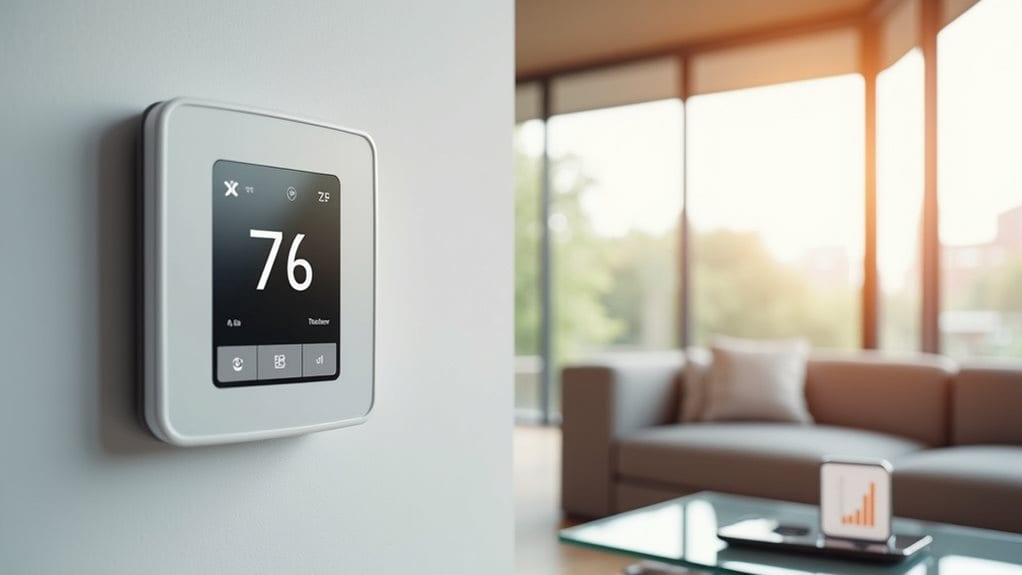
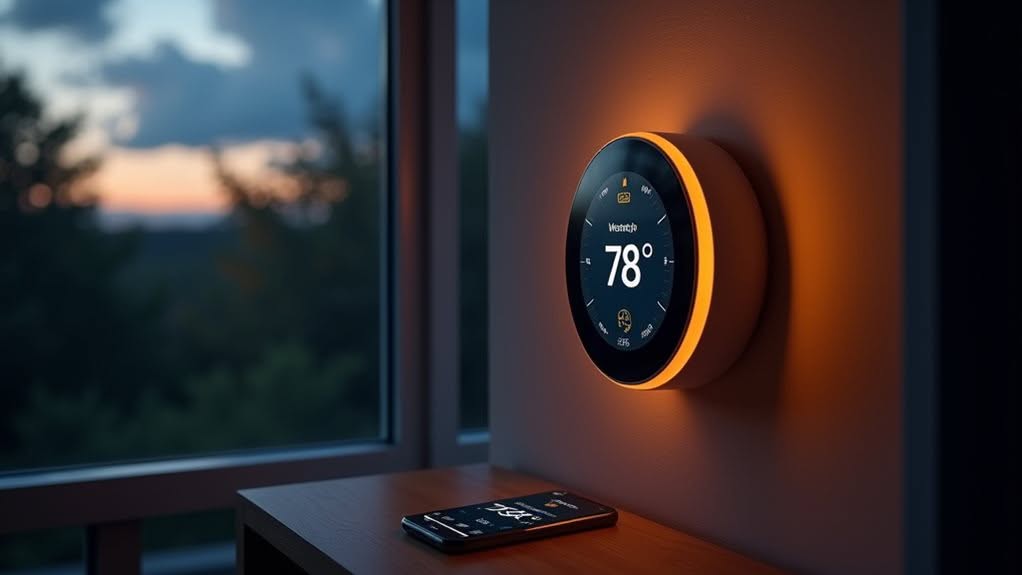
Smart HVAC systems can protect your home during extreme weather with remote monitoring that detects issues before they become emergencies. You’ll benefit from automatic power switchover during outages and energy-efficient performance that maintains comfort while reducing costs. AI-powered load management helps prevent grid overloads during peak demand, while IoT sensors continuously monitor system health, triggering alerts for necessary maintenance. These integrated technologies guarantee your safety and comfort when traditional systems might fail.
Remote Monitoring Capabilities for Early Issue Detection
While traditional HVAC systems require physical inspections to identify problems, modern smart systems now offer extensive remote monitoring capabilities that transform how we manage climate control.
You’ll benefit from real-time data that provides immediate insights into your HVAC system’s performance, allowing for prompt detection of potential issues before they escalate. This predictive approach reduces downtime and maintenance costs considerably.
IoT sensors continuously monitor critical parameters like temperature, humidity, and air quality. This information flows through cloud infrastructure, enabling access from anywhere.
For facility managers, these capabilities translate to informed decision-making and budget optimization. You can adjust settings remotely via mobile or web interfaces, maintaining comfort even during extreme weather conditions.
The system’s AI-powered diagnostics analyze sensor data to identify potential failures, guaranteeing your HVAC remains operational when you need it most. Installing smart home monitors can maximize efficiency by tracking energy consumption patterns and helping you make cost-effective adjustments during peak usage periods.
Automatic Power Switchover Systems During Outages
During extreme weather events, your HVAC system’s automatic power switchover can maintain seamless comfort despite grid failures.
You’ll benefit from integrated backup power systems that activate within seconds of detecting an outage, preventing uncomfortable temperature fluctuations in your home or business.
These systems connect your regular HVAC equipment to alternative power sources like generators or battery backups, guaranteeing critical climate control continues uninterrupted when you need it most.
Seamless Comfort Preservation
When extreme weather strikes and power fails, automatic transfer switches (ATS) become your HVAC system’s lifeline. These sophisticated devices monitor power sources continuously and switch to backup generators without manual intervention when utility power fails.
ATS systems utilize microprocessor-based control logic to guarantee uninterrupted operation of your HVAC equipment during outages. They constantly check voltage and frequency levels, making split-second decisions to maintain power flow.
You’ll benefit from increased safety and peace of mind, as ATS technology eliminates dangerous backfeeding risks while preventing potential equipment damage and data loss. They’re particularly valuable in storm-prone regions or areas with frequent wildfires.
For peak performance, professional installation is crucial. Many modern ATS units offer smart home compatibility, allowing you to monitor your power status remotely during extreme weather events.
Backup Power Integration
Automatic transfer switches (ATS) serve as the vital bridge between your home’s primary power supply and backup systems during outages. These devices monitor your utility power and activate your backup source within seconds when they detect voltage problems, guaranteeing your HVAC system continues functioning during extreme weather events.
ATS technology provides several key benefits for your home’s climate control systems:
- Seamless changeover between power sources in just 5-10 seconds after outage detection
- Automatic return to utility power once service is restored, including generator cool-down periods
- Continuous monitoring of power quality with undervoltage sensing capabilities
- Visual indicators showing power source status through easy-to-read LED displays
Your HVAC system gains essential protection through this integration, maintaining indoor comfort regardless of external power disruptions.
This technology has become increasingly important as weather patterns become more unpredictable and extreme.
Energy-Efficient Performance in Temperature Extremes
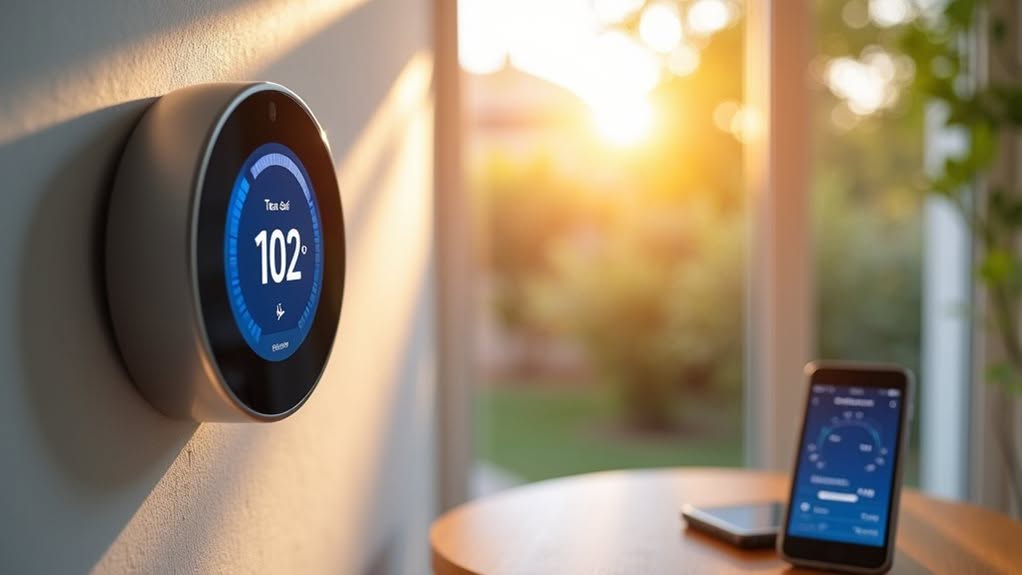
As extreme weather events become more common, smart HVAC systems offer remarkable energy efficiency without sacrificing comfort.
These systems continuously monitor indoor conditions and make precise adjustments, preventing wasteful overcooling or overheating.
You’ll benefit from up to 30% energy savings compared to conventional systems through variable speed compressors that modulate power based on actual needs. Proper duct sealing can enhance your system’s efficiency by over 20% improvement.
During temperature extremes, this technology proves invaluable.
ENERGY STAR-certified smart HVAC units deliver 10-30% annual energy savings while maintaining comfort during harsh weather.
When combined with zoning features, you’ll only condition occupied areas, further reducing energy consumption.
Integration with renewable energy sources like solar power and geothermal heat pumps can reduce your building’s carbon footprint by up to 50%, an important consideration as extreme weather events increase in frequency.
AI-Powered Load Management During Peak Weather Events
Your HVAC system can now intelligently adapt to extreme weather through AI-powered load management strategies.
During peak weather events, advanced algorithms implement adaptive demand response by shifting energy consumption away from high-demand periods, which helps stabilize both the grid and your utility costs.
These systems also use predictive energy distribution to anticipate temperature fluctuations and adjust operations accordingly, preparing your building before extreme conditions arrive rather than reacting to them.
Adaptive Demand Response
Three critical components form the foundation of adaptive demand response systems for modern HVAC technology.
These AI-driven systems enable your building to automatically adjust power consumption during extreme weather, helping utilities avoid grid stress and potential brownouts.
Smart HVAC demand response creates notable benefits for both you and the power grid:
- Reduces your energy costs through utility incentives and lower peak-period consumption
- Maintains indoor comfort while intelligently adjusting temperatures during high-demand periods
- Communicates directly with grid operators to respond to real-time electricity pricing signals
- Aggregates with other buildings to form virtual power plants that stabilize the larger grid
Your participation in these programs helps prevent blackouts during weather extremes while balancing grid needs with your comfort requirements.
The technology’s machine learning capabilities continuously improve performance by analyzing building thermal dynamics and occupant preferences.
Predictive Energy Distribution
When extreme weather threatens grid stability, predictive energy distribution through AI-powered HVAC systems provides critical support for both buildings and utilities. These systems use probabilistic models to forecast energy consumption with quantified confidence intervals rather than single-point estimates.
Your smart HVAC system can pre-emptively reduce peak demand by analyzing historical usage patterns, weather forecasts, and real-time environmental data. This peak shaving capability helps balance the grid during critical demand spikes while maintaining comfort.
The technology continuously monitors conditions through IoT sensors, creating feedback loops that adapt control strategies instantly when temperatures change. Machine learning algorithms seamlessly adjust your building’s energy load based on temporal factors like time of day and season.
Model Predictive Control integration optimizes energy use by forecasting future conditions, with some hospital implementations reducing heating energy by 7-8% while improving comfort.
Continuous System Health Diagnostics and Alerts
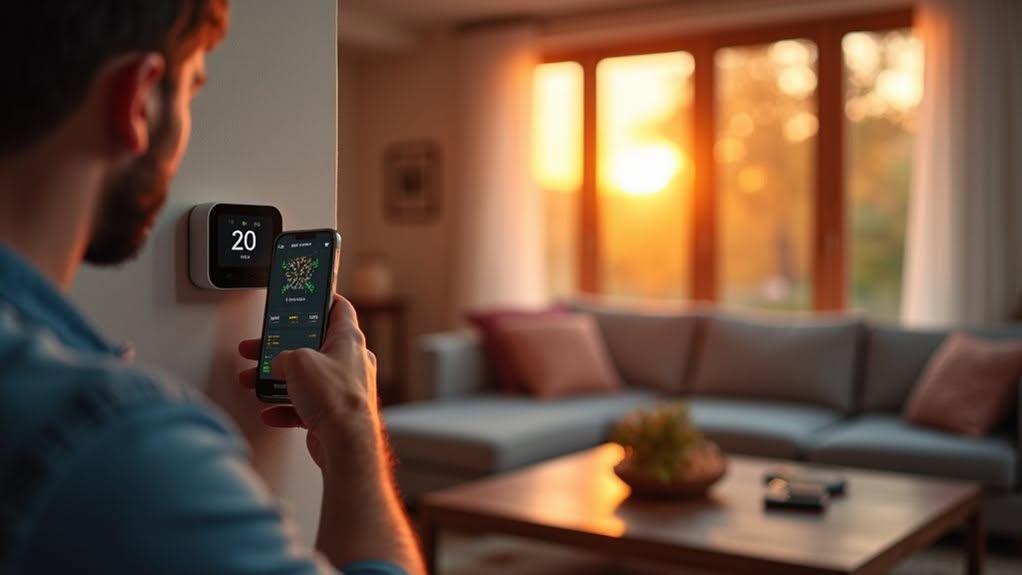
Modern smart HVAC systems incorporate sophisticated diagnostic capabilities that transform how we monitor and maintain climate control during extreme weather events.
These systems use IoT-enabled sensors to continuously track performance metrics and identify potential issues before they cause major breakdowns.
With predictive maintenance algorithms, you’ll receive automatic alerts when your system needs attention, allowing you to schedule repairs before extreme weather hits.
Remote diagnostics enable technicians to assess problems without immediate site visits.
- Temperature sensors throughout your home detect unusual heating or cooling patterns
- Pressure monitors in ductwork identify blockages before airflow is compromised
- IAQ sensors alert you when air quality deteriorates during weather extremes
- System analytics track performance trends, predicting potential component failures
Smart diagnostics extend equipment life while maintaining peak efficiency exactly when you need it most.
High-Efficiency Heat Pump Solutions for Severe Conditions
High-efficiency heat pumps represent a crucial advancement in climate control technology for extreme weather conditions, particularly during severe cold snaps when traditional heating systems often struggle.
Modern heat pumps with variable-speed compressors can maintain performance even when temperatures plummet to -22°F, adjusting their operation to match heating demands precisely. Their Coefficient of Performance (COP) typically ranges from 0.8 to 1.8 below 0°F.
For peak cold-weather performance, you’ll need proper system sizing and professional installation. Regular maintenance, including cleaning coils and checking refrigerant levels, guarantees continued efficiency during extreme conditions.
Ground-source heat pumps offer superior performance in harsh climates by utilizing stable underground temperatures.
For additional reliability, consider systems with backup heating options like electric resistance heaters or dual-fuel configurations that engage automatically during extreme cold.
Smart Thermostats and Dynamic Temperature Adjustments
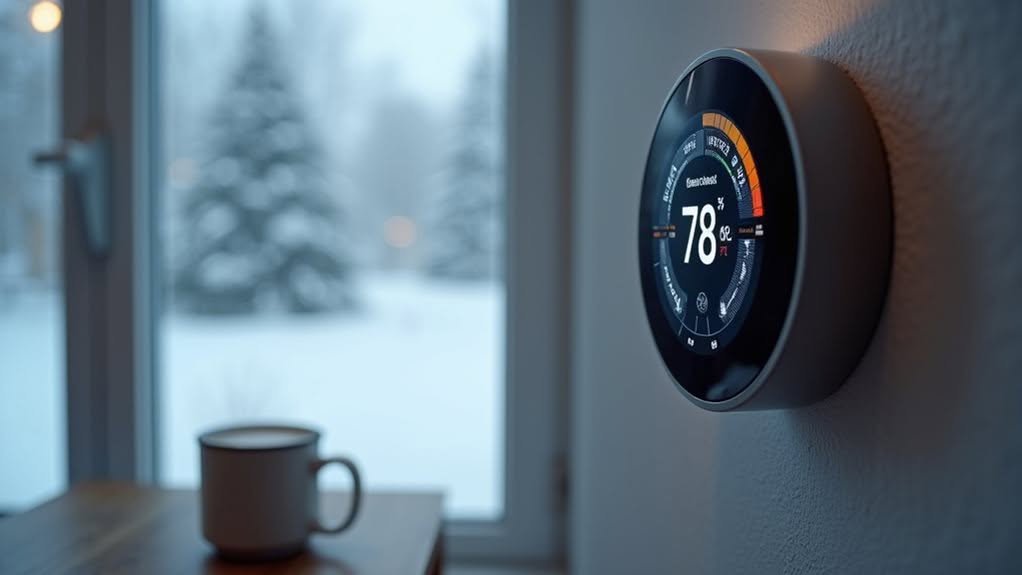
Smart thermostats now offer you unprecedented control over multiple temperature zones throughout your home, eliminating the one-size-fits-all approach to climate management.
Your system can anticipate extreme weather by analyzing energy consumption patterns and adjusting settings before conditions deteriorate, saving both comfort and costs.
Through precision comfort controls, you’ll maintain ideal temperatures in occupied rooms while reducing unnecessary heating or cooling in unused spaces, creating a more efficient response to weather challenges.
Remote Temperature Zones
When confronted with the challenges of extreme weather, remote temperature zones offer a sophisticated solution to maintain comfort while optimizing energy use.
By dividing your home into distinct areas with independent temperature control, you’ll enjoy personalized comfort exactly where you need it.
Remote wireless sensors placed throughout your home create a network that continuously monitors conditions in each zone, allowing your system to respond intelligently to changing needs.
- Bedroom zones can remain cooler during sleep while living areas stay warmer during daytime activities
- Unused guest rooms can be maintained at minimal conditioning levels until needed
- South-facing rooms with direct sunlight can receive additional cooling without affecting other areas
- Rooms with elderly occupants or infants can maintain ideal temperatures for their specific needs
Your smart thermostat orchestrates these zones automatically, reducing energy waste while maximizing comfort.
Energy-Based Weather Anticipation
As extreme weather events become more common, energy-based weather anticipation systems represent a critical advancement in modern HVAC technology.
Your smart thermostat‘s AI-driven analytics now collect real-time data from integrated sensors and weather forecasts to anticipate your home’s heating and cooling needs before extreme conditions arrive.
These systems use predictive models that process seasonal trends and occupancy patterns to calibrate operations proactively.
The technology makes minute-by-minute temperature adjustments based on ongoing analysis, creating zone-specific responses that match both current and anticipated weather conditions.
As a result, your system can modulate demand ahead of daily and seasonal peaks.
Most impressively, these systems integrate with renewable energy sources, coordinating HVAC operation with on-site solar and battery storage to offset increased demand during weather extremes, reducing both costs and environmental impact.
Precision Comfort Control
Modern precision comfort control represents the cornerstone of advanced HVAC management during extreme weather events. Your smart system employs multi-sensor arrays to detect real-time environmental changes, automatically adjusting temperatures based on occupancy and conditions.
Machine learning algorithms recognize your behavior patterns over time, developing personalized temperature schedules without requiring manual programming. These systems continuously adapt to your changing routines while balancing comfort and energy efficiency.
- Motion sensors trigger immediate temperature adjustments when rooms are empty, preventing wasted energy.
- Smartphone apps enable instant temperature control from anywhere during unexpected weather shifts.
- Geo-fencing features automatically adjust settings as you approach or leave home.
- Multi-zone management coordinates different temperature needs throughout larger homes.
You’ll appreciate the customized scheduling options that switch between comfort, away, and sleep modes based on your lifestyle and the current weather conditions.
Backup Power Integration for Operational Continuity
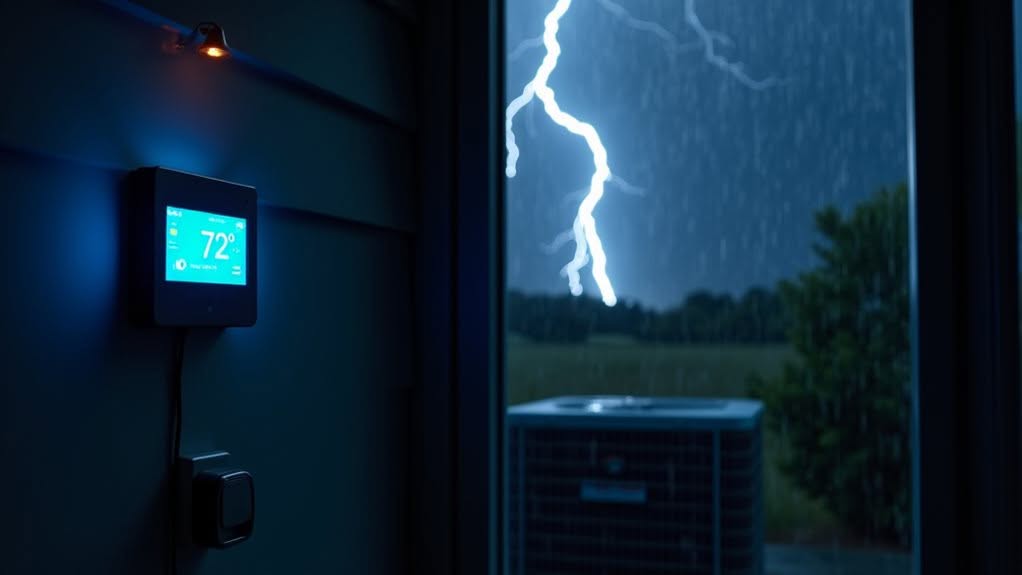
Because power outages often accompany extreme weather events, robust backup power solutions for HVAC systems have become vital for maintaining safe indoor environments.
Different regions require specific backup approaches. Coastal areas prone to hurricanes need whole-house generators, while northern regions benefit from reliable heating backup to prevent frozen pipes during winter blackouts.
You’ll find standby generators and high-capacity lithium-ion battery systems are the most dependable options for extended outages.
Battery systems operate without the noise or emissions of fuel-based generators, making them ideal for indoor installation.
When selecting a backup solution, verify it can handle the startup loads of your HVAC equipment.
Professional installation remains fundamental for proper sizing and safety compliance, protecting both your system and family during extreme weather events.
Preemptive Maintenance Through Sensor Technology
Beyond reliable backup power, the intelligence of your HVAC system can help prevent failures before they occur during extreme weather events.
Smart systems employ sensor technology that continuously monitors critical components, identifying potential issues days or even weeks before they cause breakdowns.
Your system’s predictive maintenance capabilities rely on:
- Temperature sensors that track thermal performance, guaranteeing ideal heating during freezes
- Pressure sensors that detect early signs of blockages or refrigerant leaks
- Vibration sensors that monitor mechanical wear on fans and motors
- Airflow sensors that identify duct obstructions before efficiency drops
This IoT-connected monitoring sends real-time data to cloud platforms where AI and machine learning analyze patterns and anomalies.
When extreme weather approaches, you’ll receive alerts about necessary maintenance, greatly reducing the risk of system failure during critical weather situations.
Reducing Carbon Footprint During Weather Emergencies
While extreme weather events strain HVAC systems to their limits, smart climate control technologies can considerably reduce your environmental impact during these vital periods.
Advanced HVAC systems equipped with variable-speed motors adjust performance in real-time, avoiding the energy waste typical of traditional systems. During emergencies, these intelligent systems modulate temperature control to prevent excessive power draw when demand spikes.
Smart HVAC platforms can prioritize energy use to align with renewable availability, potentially cutting your building’s carbon footprint by half when combined with high-efficiency equipment.
Upgrading to systems that use green refrigerants can reduce greenhouse gas emissions by up to 99% compared to traditional refrigerants.
Additionally, heat recovery ventilation maintains indoor air quality while minimizing energy loss, which is essential during extreme weather to conserve resources and reduce emissions.
Frequently Asked Questions
What Is the Typical Installation Cost for a Smart HVAC System?
You’ll typically spend between $8,000-$18,000 for a smart HVAC system installation. For an average 2,000-2,500 sq. ft. home, expect to pay about $11,500-$14,100, including equipment and professional labor costs.
How Long Do Backup Batteries Last During Extended Power Outages?
Your backup batteries typically last 2-9 hours depending on your energy usage. With a 20kWh battery, you’ll get 9 hours for basic needs (2kW), 4 hours for moderate usage (5kW), or 2.25 hours running everything (8kW).
Can Smart HVAC Systems Be Retrofitted to Existing Older Units?
Yes, you can retrofit your older HVAC unit with smart technology using IoT devices, smart thermostats, and control modules. These retrofits offer remote control, energy savings, and predictive maintenance without replacing the entire system.
Are Smart HVAC Systems Vulnerable to Cybersecurity Threats?
Yes, your smart HVAC systems are highly vulnerable to cybersecurity threats through unsecured APIs, default credentials, outdated firmware, and legacy protocols. They can serve as entry points for ransomware, DoS attacks, and unauthorized access.
What Maintenance Can Homeowners Perform Themselves on Smart Systems?
You can change air filters, clear debris around outdoor units, check thermostat batteries, clean vents, guarantee furniture doesn’t block airflow, and use smart features like maintenance reminders and energy monitoring to maintain your system.
Final Thoughts
You’ll gain vital advantages during extreme weather events by investing in smart HVAC systems. These technologies offer seamless remote monitoring, automatic power management, and energy efficiency when you need it most.
With AI-driven load balancing and continuous diagnostics, your system remains operational even in challenging conditions. The integration of backup power and preemptive maintenance guarantees your comfort while reducing environmental impact during weather emergencies.