Smart climate control systems let you manage your vacation home’s temperature remotely via smartphone apps, reducing energy usage by up to 30% through intelligent automation. You’ll receive real-time alerts for potential issues like freezing pipes or excess humidity that could damage your property. Voice-controlled features improve guest experience with hands-free temperature adjustments, while weather-responsive technology maximizes comfort based on forecasts. These systems also monitor performance and send maintenance notifications to guarantee peak operation year-round.
Remote Temperature Management: Control Your Vacation Property From Anywhere
While traditional thermostats require physical adjustment, today’s smart climate solutions offer vacation homeowners unprecedented control from any location.
Wi-Fi-enabled devices like Google Nest, ecobee, and Honeywell T9 connect directly to your smartphone for immediate temperature adjustments.
Mobile apps provide real-time data access, allowing you to modify settings instantly whether you’re across town or across the country. You’ll receive critical alerts about extreme temperatures that could lead to pipe freezing or mold growth.
Many systems incorporate geofencing technology that detects when you’re approaching the property, automatically adjusting temperatures for your arrival.
For properties with unreliable internet, cellular-connected sensors guarantee continuous monitoring.
Multi-user alert capabilities mean your property manager and maintenance team can receive simultaneous notifications if temperatures fall outside safe parameters.
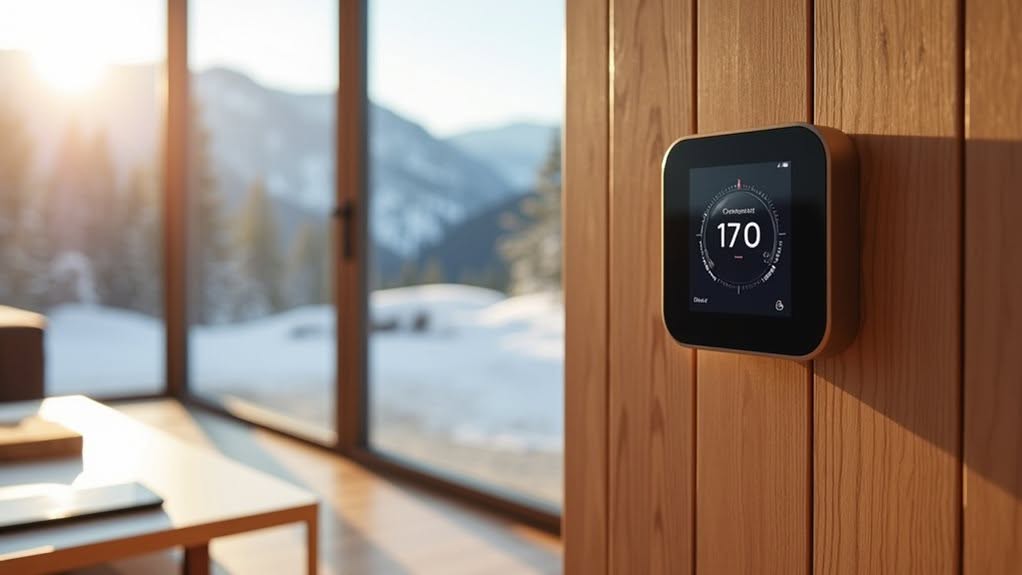
Modern WiFi-compatible smart thermostats enhance your vacation home by allowing precise climate control while maximizing energy efficiency.
Energy Savings Through Smart Automation
Vacation homeowners can achieve notable energy savings through intelligent automation systems that adapt to occupancy patterns.
These smart systems typically reduce annual energy usage by an average of 16% per home, with even greater savings in properties with intermittent occupancy.
HVAC optimization delivers the most considerable benefits, particularly in warm climates where advanced cooling controls markedly impact energy consumption.
Properly implemented smart climate control can cut energy bills by 25-30% in vacation rentals.
Machine learning boosts these savings by analyzing historical usage patterns and forecasting energy loads.
The technology automatically adjusts settings based on guest preferences while minimizing waste during vacancy periods.
Remote management between guest stays further reduces unnecessary energy consumption, directly contributing to decreased operational costs and improved rental profitability.
Protecting Your Property With Temperature Alerts and Monitoring
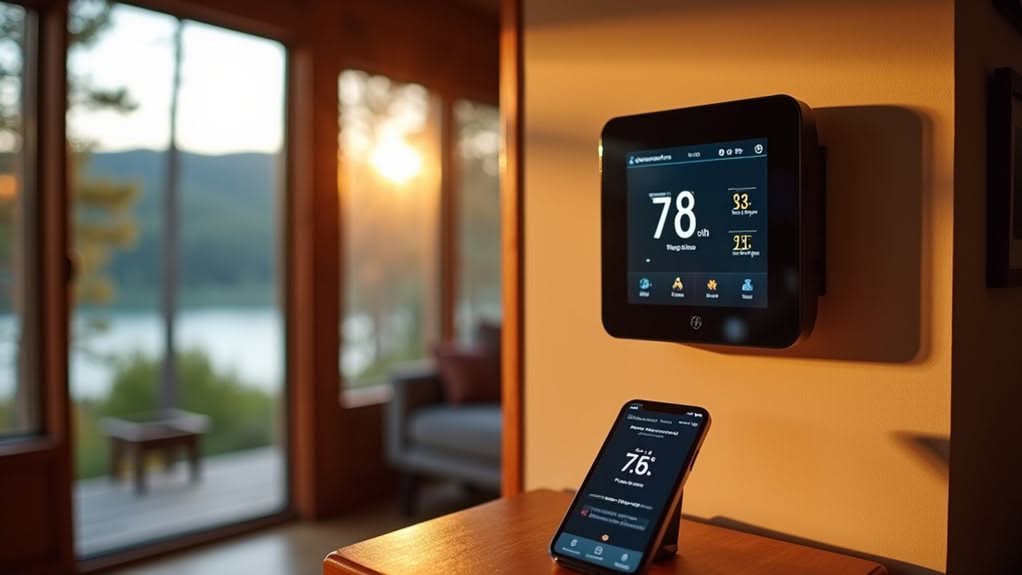
Modern temperature monitoring systems can help you safeguard your vacation property against costly freeze damage with real-time alerts when temperatures drop dangerously low.
These smart devices, like the tempCube Pro and Temp Stick, also monitor humidity levels to prevent mold growth and structural damage that often occurs in unoccupied homes.
You’ll receive immediate notifications about unusual energy consumption patterns, which might indicate HVAC system failures or unauthorized thermostat adjustments that could lead to wasted energy and potential property damage.
Freeze Protection Systems
As temperatures plummet below freezing during winter months, unoccupied vacation homes face serious risks from frozen and burst pipes.
With over 250,000 households suffering pipe freezes annually, the financial impact is substantial—averaging $20,000 per insurance claim.
Installing remote temperature monitoring systems in your vacation property provides essential protection.
These smart systems continuously track temperatures and send real-time alerts when readings drop below your customized thresholds.
For maximum protection, place sensors in vulnerable areas like basements, exterior walls, and near pipe runs.
Set alert temperatures around 40°F to provide a safety buffer before freezing occurs.
The most effective systems also monitor for power outages that could disable heating systems.
This all-encompassing approach allows you to arrange emergency interventions before costly damage occurs, potentially saving you thousands in repairs.
Humidity Damage Prevention
While maintaining your vacation home’s temperature protects against pipe freezing, controlling humidity levels is equally important for preventing costly structural damage and mold growth.
Install multiple humidity sensors in moisture-prone areas like basements, bathrooms, and kitchens to detect problems early.
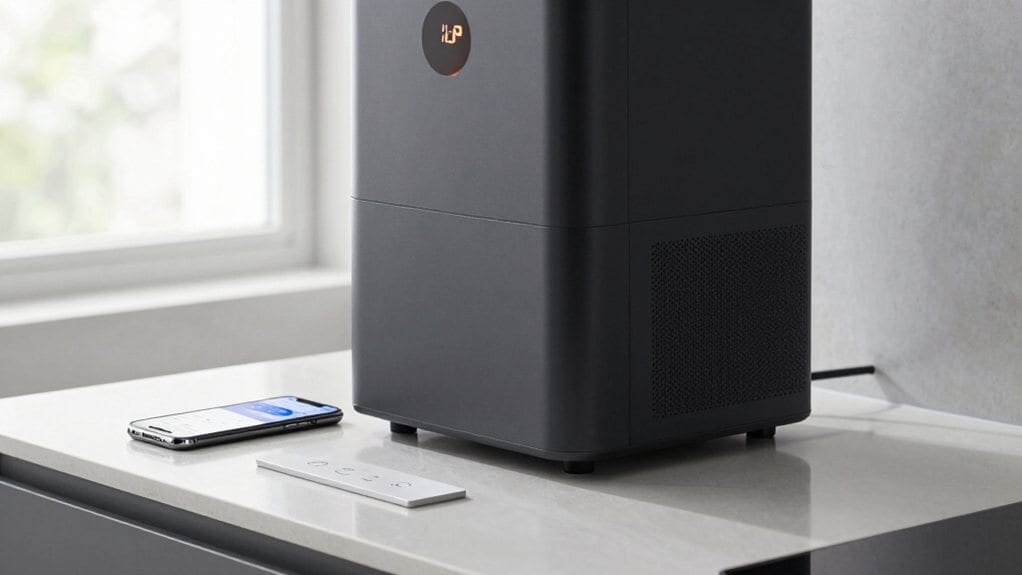
Keep indoor relative humidity between 30-50% to inhibit mold development. Use dehumidifiers in confined spaces when ventilation isn’t sufficient, and verify exhaust fans operate properly in bathrooms and kitchens.
Integrate humidity sensors with your smart climate system for automated responses when levels exceed thresholds. This connectivity allows you to monitor conditions remotely and activate dehumidifiers or adjust ventilation from anywhere.
Conduct regular inspections for leaks and clean all surfaces thoroughly before leaving your property vacant.
Consider professional monitoring services for real-time alerts when you’re away.
Energy Anomaly Alerts
Temperature monitoring systems with real-time alerts form your property’s first line of defense against costly damage when you’re away. These smart devices instantly notify you via SMS, email, or app notifications when temperatures exceed your preset thresholds.
Modern monitoring solutions operate 24/7 and can detect multiple environmental factors beyond just temperature. They’ll alert you to power outages that might affect your heating systems—critical information during freezing weather.
Many systems also monitor your internet connection, guaranteeing you won’t miss important alerts if Wi-Fi goes down. You can customize temperature thresholds to protect specific areas of your home.
This proactive approach prevents expensive issues like frozen pipes or HVAC failures and supports insurance compliance through documented risk management. Multiple users can receive alerts simultaneously, enabling quick response regardless of your location.
Creating the Perfect Welcome: Pre-Arrival Climate Settings
The moment your guests step inside your vacation property should feel like a revitalizing change, regardless of the weather outside. Smart thermostats allow you to adjust temperatures remotely before guests arrive, guaranteeing ideal comfort from the moment they enter.
Set spring and fall temperatures between 68°F and 72°F for balanced comfort. Summer settings work best at 72°F to 76°F, while winter should maintain the 68°F to 72°F range for cozy warmth without wasting energy.
Pre-heat or pre-cool your property based on arrival times to avoid peak utility charges. This preparation should include sending clear thermostat instructions at least 24 hours before check-in.
Provide extra climate items like fans and blankets to accommodate personal preferences without adjusting the main temperature settings.
Enhancing Guest Experience With Voice-Controlled Climate Systems
Voice-controlled climate systems allow you to adjust your vacation home’s temperature with simple commands like “Hey Google, set the temperature to 72 degrees.”
You can create personalized temperature profiles for different times of day or activities, guaranteeing optimal comfort whether you’re waking up, cooking dinner, or settling in for movie night.
The hands-free convenience of voice commands eliminates the need to interrupt your vacation activities to adjust a thermostat, letting you focus on relaxing while maintaining your ideal climate settings.
Seamless Voice Commands
Why fumble with complicated interfaces or apps when a simple phrase can adjust your vacation home’s climate to perfection?
Voice assistants like Amazon Alexa, Google Assistant, and Apple Siri now integrate seamlessly with smart climate systems, offering hands-free convenience to your guests.
These voice-controlled systems respond to natural language commands in multiple languages and accents, accommodating international visitors. Your guests can simply say “make it cooler” or activate preset scenes like “comfortable evening mode” without learning new technology.
Voice control provides immediate audio feedback, confirming temperature changes and guaranteeing clarity. This technology is especially valuable for guests with mobility challenges or when hands are occupied with luggage or cooking.
The intuitive nature of voice commands reduces frustration with unfamiliar systems, creating a more satisfying stay experience overall.
Personalized Temperature Profiles
Beyond simple voice commands, personalized temperature profiles take your vacation home’s comfort to the next level. These AI-driven systems analyze guest behavior and environmental conditions to automatically optimize settings throughout the day.
Your property gains a competitive advantage in the luxury market when you implement these smart climate solutions. Guests enjoy temperatures customized to their preferences without manual adjustments, creating a more satisfying experience that often translates to higher ratings and reviews.
The technology integrates seamlessly with other IoT devices and smart home systems, providing a cohesive experience. Machine learning capabilities mean the system becomes more attuned to guest preferences over time, improving efficiency with each stay.
Property managers benefit too, as automated climate control reduces operational overhead while increasing property appeal to premium clients.
Hands-Free Convenience
Imagine arriving at your vacation rental after a long trip, hands full with luggage, and instantly adjusting the room temperature with a simple voice command.
Voice assistants like Amazon Alexa, Google Assistant, and Apple Siri now seamlessly integrate with smart thermostats in vacation properties.
This technology enables you to control temperature settings without physical interaction, particularly beneficial during late-night arrivals or when you’re occupied with other activities.
Voice commands allow efficient management of multiple rooms, customizing climate based on occupancy and preference.
For guests with mobility challenges, voice-controlled systems provide crucial accessibility benefits.
These hands-free solutions also minimize physical contact with devices, reducing touchpoints and improving hygiene.
Integration with broader smart home systems allows combined actions—adjusting both climate and lighting simultaneously with a single command for ideal comfort upon arrival.
Integrating Climate Control With Your Existing Smart Home Ecosystem
When you’re ready to improve your vacation home’s comfort, integrating smart climate control into your existing smart home ecosystem offers substantial benefits beyond standalone devices.
Most modern smart thermostats like Nest and Ecobee seamlessly connect with popular voice assistants such as Amazon Alexa and Google Home. This compatibility enables you to control temperature settings using simple voice commands.
Smart home hubs like Control4 provide a centralized interface that combines climate control with lighting, security, and entertainment systems. You’ll enjoy the convenience of managing everything through a single app.
Your integrated system can create automated routines that adjust temperature, lighting, and security based on your arrival or departure. Global market revenue for smart home technology is expected to reach $231.6 billion by 2028, demonstrating the growing consumer confidence in these interconnected solutions.
These customizable scenarios optimize energy usage while maintaining comfort, potentially extending your HVAC equipment’s lifespan through more efficient operation.
Weather-Responsive Temperature Adjustments for Seasonal Properties
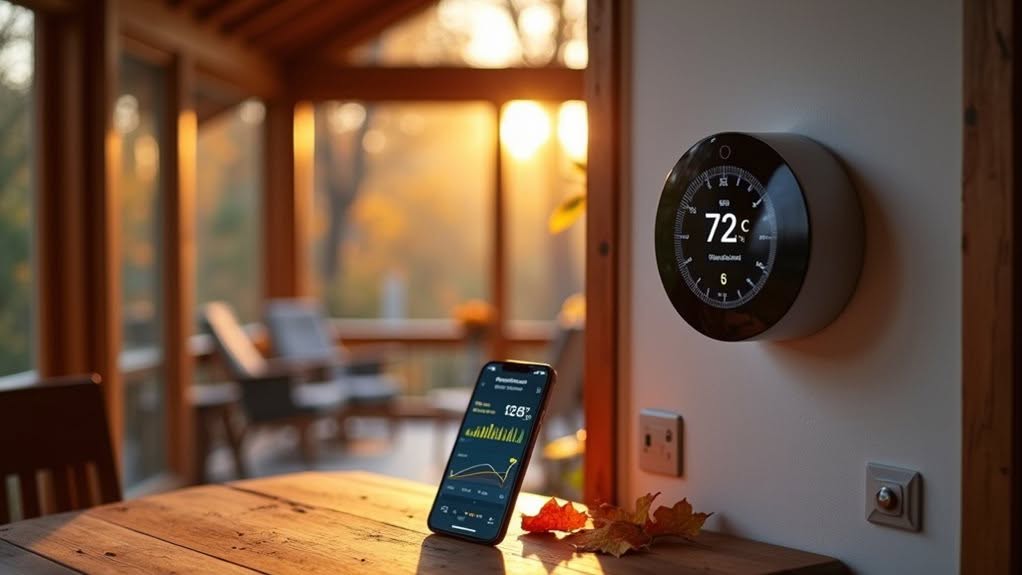
Seasonal properties exposed to varying weather conditions require intelligent climate control that responds dynamically to environmental changes. Smart thermostats equipped with learning algorithms can optimize heating and cooling based on weather forecasts and historical data.
When you’re away from your vacation property, automated systems maintain temperatures between 78-80°F in summer and 50-65°F in winter, adjusting as weather conditions shift. These systems help prevent costly damage from frozen pipes or mold growth while minimizing energy consumption.
Real-time alerts notify you when temperatures exceed predetermined thresholds, allowing for immediate intervention. You can customize sensor packages based on your property type and regional climate needs, whether you own a mountain cabin or beachfront condo.
For extended absences, vacation modes automatically implement energy-saving temperatures and restore comfort settings before your arrival.
Maintenance Benefits: Filter Alerts and System Performance Tracking
Regular maintenance of HVAC systems in vacation properties becomes considerably easier with smart climate control technology.
These systems deliver timely filter replacement reminders, guaranteeing your HVAC equipment maintains peak efficiency between visits.
Your smart thermostat actively monitors system performance, alerting you to potential issues before they develop into costly repairs.
Many modern units include automated diagnostic features that can identify when components aren’t operating within ideal parameters.
With remote monitoring capabilities, you’ll receive notifications directly on your mobile device when maintenance is needed, eliminating the need for frequent on-site inspections.
This proactive approach helps extend your equipment’s lifespan while reducing long-term maintenance costs.
The system’s energy performance tracking provides valuable data on consumption patterns, allowing you to make informed decisions about further efficiency improvements for your vacation property.
Cost-Benefit Analysis: Return on Investment for Smart Thermostats
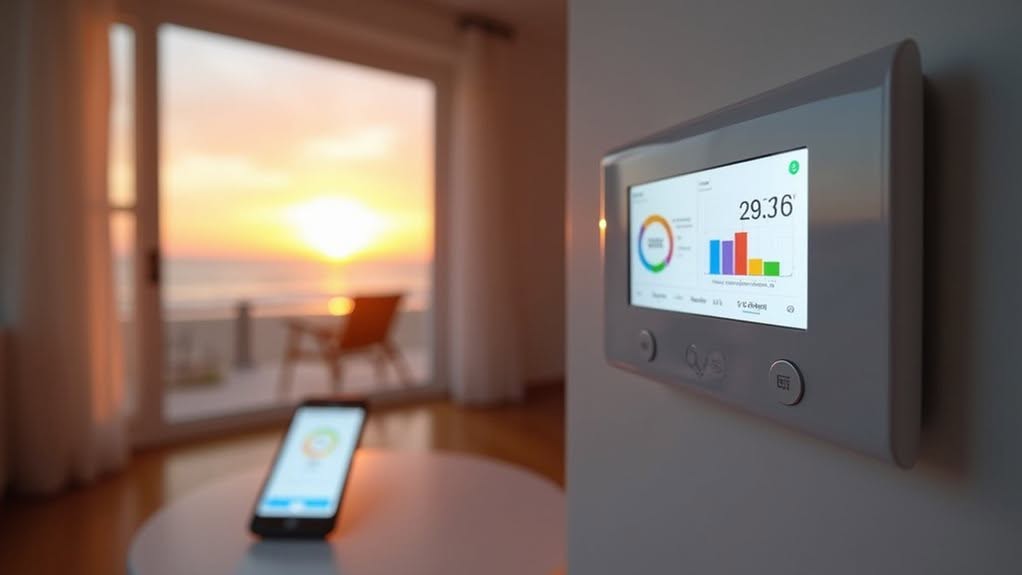
Investing in smart thermostats for your vacation property represents a clear financial opportunity with both immediate and long-term returns.
These devices typically save 8-15% on annual heating and cooling expenses, directly reducing your utility bills.
While installation costs are relatively modest, you’ll recover this investment through consistent energy savings. Property values can increase by 3-5% with smart home upgrades, boosting your asset’s market worth.
You’ll notice operational efficiencies as these systems allow remote monitoring and automatic temperature adjustments when your property is unoccupied.
Many insurance companies offer premium reductions for homes with smart monitoring capabilities.
For budget-conscious owners, financing options are available to spread the initial investment across manageable payments.
The combined benefits of utility savings, increased property value, and improved guest experience create a compelling return on investment.
Frequently Asked Questions
Can Smart Thermostats Work Without Reliable Internet Connection?
Yes, your smart thermostat will work without reliable internet. You’ll maintain basic manual temperature control and pre-set schedules, but you’ll lose remote access, smartphone control, alerts, and energy-saving learning features.
Are Smart Thermostats Vulnerable to Security Breaches or Hacking?
Yes, smart thermostats are vulnerable to hacking. You’ll face risks from weak encryption, firmware flaws, and unsecured connections. Nearly 50% have security weaknesses, so you should regularly update firmware and use strong passwords.
How Do Power Outages Affect Smart Thermostat Programming?
Power outages typically won’t erase your smart thermostat’s programming, as settings are stored in non-volatile memory. However, you’ll need to reset the clock, and your device may default to basic heating/cooling modes afterward.
Can Renters Override Temperature Limits Set by Property Owners?
Generally, you can’t override temperature limits on smart thermostats if the owner has set restrictions. Some systems allow minor adjustments within preset ranges, but password protection and remote monitoring prevent complete overrides of owner settings.
Do Smart Thermostats Require Professional Installation or Special Wiring?
No, you can install most smart thermostats yourself with basic DIY skills if you have standard low-voltage HVAC wiring. However, professional installation is recommended for complex systems, high-voltage heating, or if you lack a C-wire.
Final Thoughts
You’ll find smart climate control transforms vacation home ownership through substantial cost savings and improved property protection. Your investment in this technology pays off through reduced energy bills, prevention of weather-related damage, and better guest experiences. With remote management capabilities and seamless integration with existing systems, you’re more than upgrading your thermostat—you’re investing in your property’s long-term value and your peace of mind.