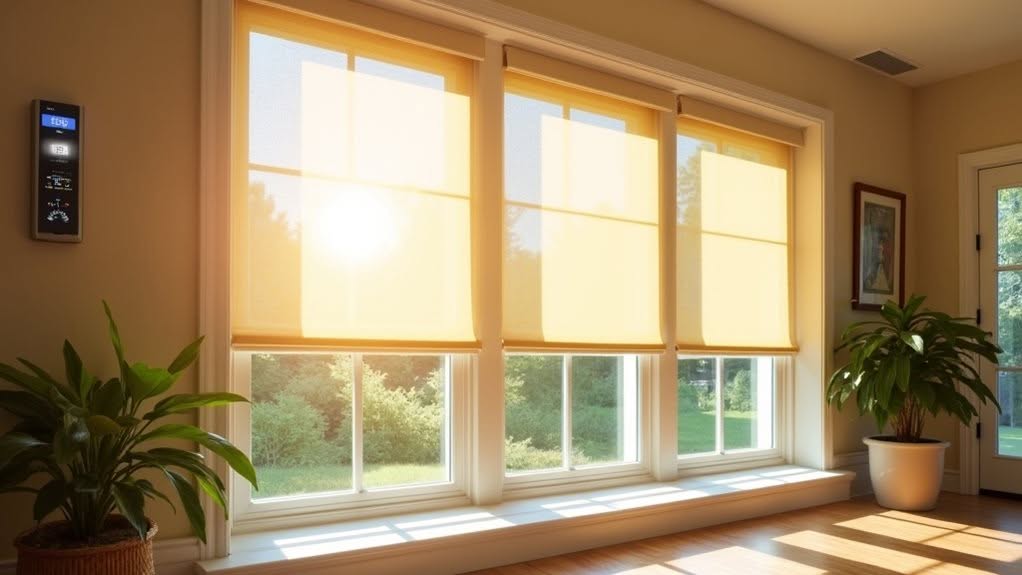
Smart window shades can reduce your building’s energy use by up to 25% across heating and cooling seasons. They automatically adjust based on sunlight intensity, blocking up to 60% of solar heat in summer while providing insulation in winter. You’ll typically achieve ROI within 3-7 years through lower energy bills (up to 20% savings) and reduced HVAC maintenance costs. These systems integrate with home automation platforms for seamless climate control throughout changing seasons.
Understanding the Energy Savings Potential of Smart Shades
While traditional window coverings typically remain static throughout the day, smart shades offer considerable energy-saving benefits through automated operation.
Studies show they can reduce total building energy use by up to 25% across heating and cooling seasons.
A U.S. residential pilot program demonstrated 13.5% average electricity savings and 3.4% gas savings over a year.
Smart shades achieve this by adjusting based on time of day and sun position, optimizing shade closure in summer to reduce cooling needs.
The insulation quality matters greatly.
Cellular (honeycomb) shades provide the highest efficiency with R-values from 2.0 to 5.0, while properly sealed versions can reduce window heat loss by 40% or more in winter.
With ROI typically achieved within 3-7 years, these systems represent a practical energy-saving investment for most homeowners.
For additional climate control integration, many homeowners pair smart shades with smart ceiling fans to create comprehensive temperature management systems.
How Automated Window Coverings Regulate Indoor Climate
You’ll find that automated window coverings precisely control your home’s climate through dynamic solar heat management.
Smart shades use sensors to adjust their position based on sunlight intensity, blocking up to 60% of solar heat during hot periods while allowing beneficial warmth during winter.
The insulation barrier technology in cellular and honeycomb shades creates trapped air layers that reduce heat transfer year-round, helping you maintain comfort while lowering energy consumption.
How Automated Window Coverings Regulate Indoor Climate
Automated window coverings have revolutionized indoor climate control by responding dynamically to environmental changes.
These systems actively regulate temperature by adjusting to the sun’s position throughout the day, creating ideal indoor comfort without manual intervention.
Programmable controls allow your shades to open during winter months to capture warming sunlight and close during summer to block heat, considerably reducing your HVAC system’s workload.
This seasonal adaptation maintains comfortable temperatures year-round while lowering your utility bills.
The integration of motorized shades with smart home systems enables extensive energy management.
You’ll benefit from automatic adjustments based on time of day, weather conditions, and your personal preferences.
For difficult-to-reach windows, these systems eliminate the need for ladders while guaranteeing consistent temperature regulation, improving both comfort and energy efficiency in every room of your home.
Solar Heat Management
When properly managed, solar heat represents both a resource and a challenge for homeowners seeking ideal climate control. Smart window shades offer an effective solution.
High-quality solar shades can block 80-90% of heat from entering your home, with 1-3% openness factor providing maximum efficiency. Light-colored fabrics reflect more sunlight than darker ones, improving cooling performance.
Your shade operation timing matters greatly. Automated systems can reduce cooling energy by 10-20%, especially when shades remain closed during peak heat hours. This strategic management can lower indoor temperatures by up to 15°F near windows.
The Solar Heat Gain Coefficient (SHGC) helps you evaluate shade effectiveness—lower values mean less heat transmission.
Exterior-mounted shades perform better than interior ones, as they block heat before it reaches the glass.
Insulation Barrier Technology
Modern window coverings function as more than decorative elements; they create vital thermal barriers between your home’s interior and the outside world. They effectively combat the 30% of heating energy typically lost through windows.
Cellular or honeycomb shades utilize a multi-pocket design that traps air, forming an insulating layer that reduces heat transfer. This trapped air minimizes conduction and convection, improving thermal performance year-round.
Automated shades can be programmed to respond to temperature changes, optimizing your home’s climate control without manual adjustments. They’ll close during peak heat or cold, maintaining consistent indoor temperatures.
Innovative materials with dense weaves and specialty coatings further boost insulation properties.
Layering techniques, like combining sheers with heavier draperies, create additional thermal pockets that increase insulating effectiveness and enhance overall energy efficiency.
Regional Climate Considerations for Maximum Efficiency
Your climate zone greatly impacts which shade systems will deliver the best energy savings for your home.
In hot regions, automated shades can cut cooling costs by 15-25% when programmed to block intense sunlight, while northern climates benefit from shades that trap heat during winter months.
You’ll need different shade strategies depending on your location—southerners should prioritize solar heat reduction, midwesterners require seasonal adaptability, and those in temperate zones will find the highest ROI from systems that balance daylight optimization with thermal management.
Climate-Optimized Shade Selection
Selecting the right window shades for your specific regional climate can greatly improve your home’s energy efficiency and comfort levels.
For hot regions, choose solar shades that block UV rays while allowing filtered light. These materials can greatly reduce cooling costs when properly installed.
In humid environments, opt for moisture-resistant options like vinyl, aluminum, or PVC faux wood to prevent warping and mold growth.
Coastal homeowners should select salt-resistant materials such as aluminum or synthetic fabrics that withstand corrosion.
Cold climate dwellers benefit from cellular (honeycomb) shades or thermal blinds with high R-values that trap air for superior insulation.
Consider your window orientation when selecting shades. South and west-facing windows typically need stronger heat-blocking properties than north-facing ones.
Geographic Efficiency Variations
While energy efficiency benefits are universal, the actual impact of smart window shades varies greatly across different geographic regions.
In hot climates like Arizona and Texas, smart shades can reduce cooling loads by 15-25% during peak summer months by controlling solar heat gain.
Conversely, homes in cold regions like Minnesota and Maine see winter heating costs drop by 10-18% through improved insulation.
Mixed climate zones experience year-round benefits with overall HVAC savings of 12-20%.
Even mild Pacific Northwest regions achieve 8-15% energy savings, primarily through lighting optimization.
Window orientation considerably affects performance: south-facing windows show the highest potential (30% cooling load reduction), while north-facing windows still achieve 8-12% savings through insulation improvements.
Regional climate patterns also influence consumer preferences, driving market trends and technology adaptations worldwide.
The Science Behind Thermal Regulation Through Window Treatments
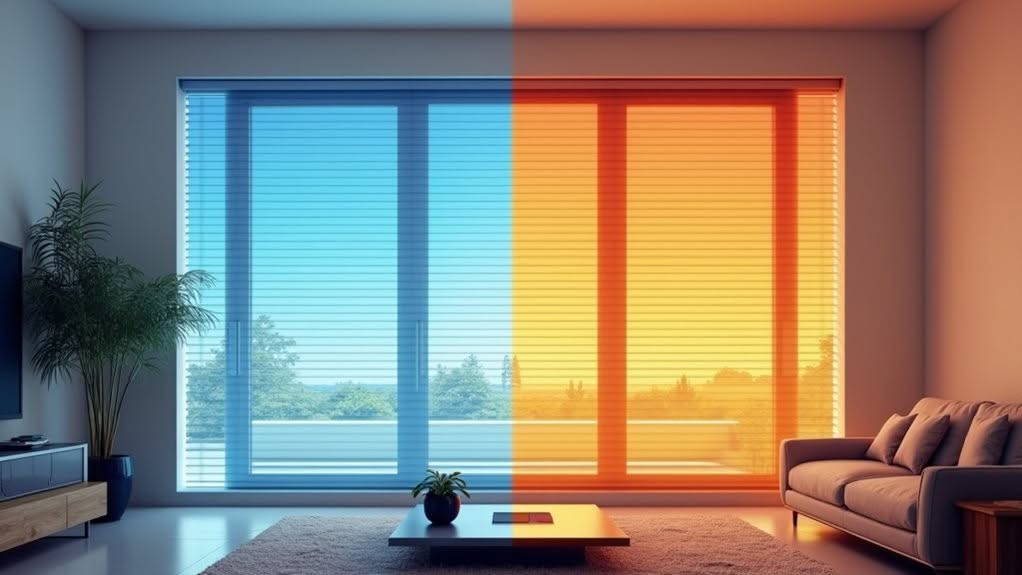
Understanding how window treatments regulate temperature involves a fascinating blend of physics and material science. The key mechanism centers on creating insulating barriers that slow heat transfer.
Cellular or honeycomb shades work by forming air pockets that trap heat, reducing window heat loss by over 40%. These hexagonal structures effectively create a thermal buffer between your home and the outdoors.
Material properties also play a vital role. Thermochromic fabrics change transparency based on temperature, potentially cooling rooms by more than 6°C. Similarly, reflective coatings block infrared radiation before it enters your space.
The installation method matters considerably too. Tightly fitted window treatments minimize convective heat loss through gaps, improving insulation by 10-25% compared to poorly installed alternatives.
Return on Investment: Economic Benefits of Smart Shade Systems
As homeowners increasingly seek to balance comfort with cost-effectiveness, smart shade systems have emerged as a financially sound investment with impressive returns.
These systems can reduce annual energy bills by up to 20% through optimized solar management and improved insulation.
The economic benefits extend beyond immediate utility savings. Your HVAC system will experience less wear and tear, leading to reduced maintenance costs and an extended operational lifespan. Smart glass technology manages heat effectively, preventing thermal loss during winter and heat gain during summer.
Smart shading also adds measurable value to your property. Modern buyers are willing to pay premium prices for homes with integrated smart features and energy-efficient upgrades.
You’ll eliminate expenses associated with traditional window treatments, avoiding replacement costs and ongoing maintenance of conventional blinds and curtains.
Additionally, these systems offer convenience through automation while providing augmented privacy, noise reduction, and security features.
Environmental Impact and Carbon Footprint Reduction
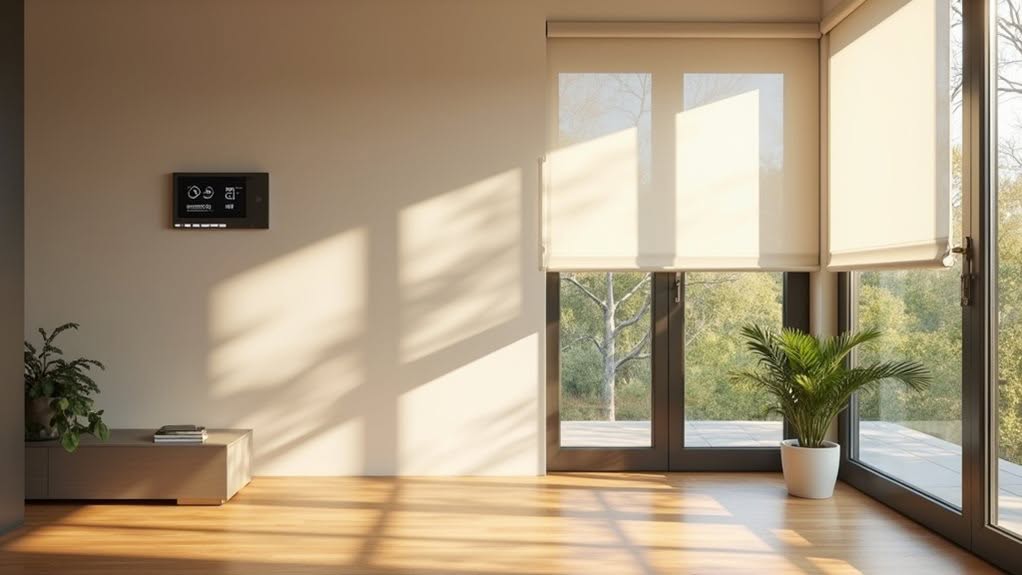
You can calculate your carbon savings from smart window shades by measuring reduced energy consumption and converting it to CO2 equivalent metrics.
When widely adopted, these systems could reduce global emissions by up to 45 million tons of CO2 annually, with the greatest impacts in extreme climate regions.
Your smart shades create a home-to-grid benefit by lowering peak energy demands, which reduces the need for power plants to operate at maximum capacity during high-usage periods.
Carbon Savings Calculation Methods
Calculating carbon savings from smart window shades requires systematic approaches that translate energy efficiency into environmental impact metrics.
You can determine carbon reductions through building energy simulation software like DOE’s EnergyPlus, which models thermal performance and solar gain across different climate zones. These simulations process window properties, shade positions, and local weather data to estimate HVAC load reductions.
Research demonstrates that automated insulating shades can reduce energy consumption by approximately 25%, particularly notable when temperature regulation accounts for 30-40% of building energy use.
To calculate your specific carbon savings, analyze the reduced kilowatt-hours from heating and cooling, then convert these figures using your local electricity grid’s carbon intensity factor. This calculation reveals how your smart shade investment directly contributes to lowering greenhouse gas emissions.
Global Emission Reduction Potential
The global impact of smart window shades extends far beyond individual buildings when scaled across millions of structures worldwide.
These systems offer substantial climate benefits through energy conservation and reduced reliance on HVAC systems.
Automated window treatments can reduce your energy consumption by up to 25% in both heating and cooling seasons, directly lowering carbon emissions from power generation.
When integrated with building management systems, they optimize performance based on real-time environmental conditions.
Smart shades contribute to emission reductions through:
- Decreasing HVAC usage by up to 50% with insulating designs like honeycomb shades
- Maximizing natural daylight harvesting, reducing artificial lighting needs
- Automatically adjusting based on sunlight intensity, time of day, and seasonal patterns
This technology represents a scalable climate solution as market adoption continues to grow worldwide.
Home-to-Grid Impact Metrics
When evaluating the full impact of smart window shades on environmental sustainability, quantifiable metrics reveal substantial contributions to both individual homes and the broader energy grid.
Your smart shades can reduce HVAC energy consumption by 10-25%, directly lowering your carbon footprint. This translates to fewer emissions from power plants that supply your electricity.
During peak demand periods, automated shades help decrease grid strain by reducing cooling needs when electricity usage is highest.
The carbon calculation isn’t just about operation, though. You’ll need to assess the full life cycle, including manufacturing impacts.
Studies suggest the environmental benefits of reduced energy use often outweigh the embodied carbon, especially with durable products made from sustainable materials like recycled fabrics or bamboo.
Smart shades that participate in demand response programs further amplify your home’s positive grid impact.
Smart Home Integration and Technological Advances
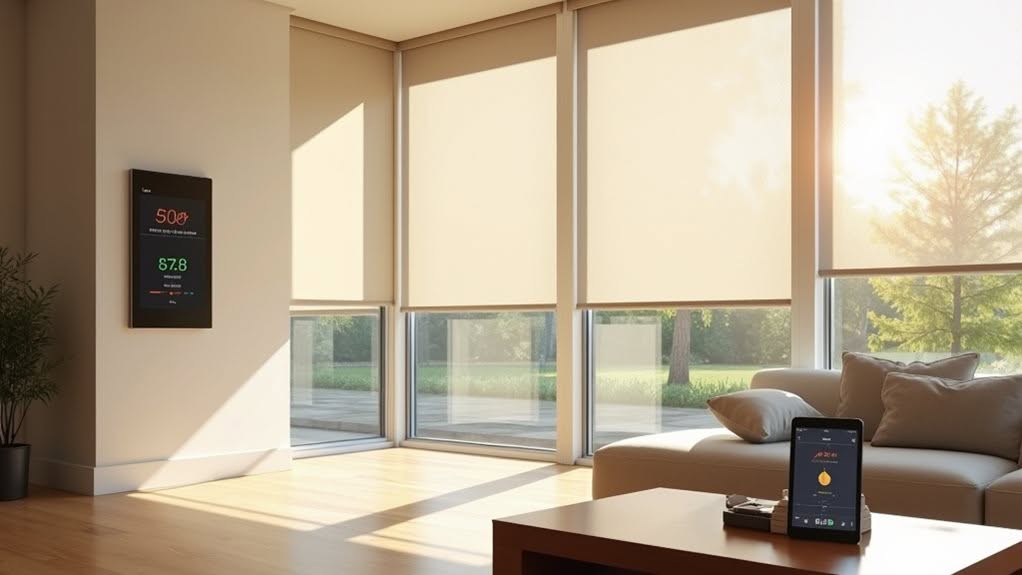
Modern smart shades seamlessly integrate with popular home automation ecosystems, transforming how you control your window coverings.
These systems work with Apple HomeKit, Amazon Alexa, Google Assistant, and SmartThings, while also supporting professional platforms like Control4 and Crestron Home.
Battery-powered motors with built-in lithium-ion cells have revolutionized installation options, eliminating the need for complex wiring.
You’ll also find wired AC and DC options for permanent installations that require continuous power.
Three key automation features include:
- Scheduled timers that automatically adjust shades at sunrise or sunset
- Environmental sensors that respond to changing light and temperature conditions
- Remote access capabilities allowing adjustment from anywhere via smartphone apps
Voice commands, mobile apps, and physical remotes provide multiple control methods, guaranteeing you can operate your shades however you prefer.
Comparing Different Smart Shade Solutions for Climate Control
Selecting the right smart shade solution can dramatically impact your home’s climate control efficiency and comfort level. Different options offer varying benefits for your specific needs.
Cellular shades stand out for energy efficiency, reducing solar heat through windows by up to 60% during cooling seasons. Their honeycomb structure traps air, providing superior insulation against heat transfer.
Solar window screens balance UV protection with visibility, blocking heat and glare while still allowing you to see outside. These are ideal if you want to preserve your view while protecting furniture from fading.
For large windows, smart vertical treatments with rotatable vanes offer adaptable coverage and precise light management.
Motorized options with sensors provide the most responsive climate control, automatically adjusting to changing conditions throughout the day without requiring your intervention. Zebra style shades offer excellent versatility, allowing for adjustable light control while maintaining privacy in various lighting conditions.
Implementation Challenges and Practical Considerations

While choosing the ideal smart shade solution is important, implementing these systems in your home brings its own set of challenges.
Technical installation complexities often require expert help, especially when integrating with existing smart home systems.
Cost considerations shouldn’t be overlooked, as the initial investment can be substantial despite long-term energy savings.
Additionally, you’ll need to guarantee reliable internet connectivity for peak functioning.
When implementing smart shades, remember these practical considerations:
- Power source options – battery-operated models require regular maintenance while hardwired options provide more reliability
- Compatibility with your existing smart home ecosystem (voice assistants, smartphone apps)
- Security measures to protect your data and privacy from potential breaches
Regular maintenance, including software updates and sensor cleaning, will keep your system running seamlessly while maximizing your investment’s lifespan.
Best Practices for Optimizing Energy Performance With Smart Shades
To maximize the energy-saving potential of your smart window shades, you’ll need to implement several strategic practices backed by research and industry standards.
Guarantee professional installation to minimize air gaps, as proper setup is essential for ideal energy performance.
Select high-performance fabrics, which can improve efficiency by 40-60% compared to basic options.
Program your shades to adjust automatically based on seasonal sun positions. This approach is especially effective in cooling-dominated climates, where automated shades greatly reduce solar heat gain.
Regularly maintain your system by cleaning fabrics and checking motor calibration. This maintenance extends your system’s 10-15 year lifespan.
Verify smart home compatibility before purchasing to guarantee seamless integration with platforms like Amazon Alexa or Google Home for maximum convenience and efficiency.
Frequently Asked Questions
Can Smart Shades Be Installed in Rental Properties?
Yes, you can install smart shades in rentals using DIY no-drill options like adhesive mounts or temporary brackets. Choose battery-powered models and always check your lease agreement or get landlord approval first.
How Do Smart Shades Impact Indoor Plants?
Smart shades benefit your indoor plants by regulating light exposure, preventing scorching, maintaining stable temperatures, reducing plant stress, and creating an ideal microclimate. You’ll enjoy healthier growth with automated adjustments throughout the day.
Do Smart Shades Reduce Furniture and Flooring Fading?
Yes, they do! You’ll protect your furniture and floors from fading as smart shades block up to 99% of UV rays while regulating temperature and diffusing harsh light that causes discoloration.
Can Smart Shades Help With Seasonal Affective Disorder?
Yes, smart shades can help with SAD by maximizing natural light exposure when you need it most. They’ll automatically adjust throughout the day, increasing your serotonin levels and improving your mood during darker seasons.
How Do Power Outages Affect Automated Shade Functionality?
During power outages, your battery-operated shades will still work with remotes or manual controls, but you’ll lose Wi-Fi-dependent features like app control, voice commands, and automated schedules until power returns.
Final Thoughts
You’ve seen how smart window shades offer substantial climate control benefits while reducing energy costs. By choosing the right system for your climate and integrating it with your smart home, you’ll maximize both comfort and savings. Though implementation requires initial investment, the long-term economic and environmental advantages make smart shades a practical solution for modern homes. Consider these technologies as valuable tools in your energy efficiency strategy.