
Smart homes are evolving into climate adaptation powerhouses through AI-driven energy optimization that can reduce consumption by 20-40%. You’ll find systems that predict weather changes, automatically adjusting your HVAC and lighting while scheduling appliances to run during peak solar generation. Predictive maintenance extends equipment life by 30-50%, while intelligent energy orchestration maximizes renewable energy usage. Real-time feedback on your consumption patterns fosters mindful energy habits, potentially reducing usage by 5-15%. These technologies represent just the beginning of climate-resilient living spaces.
AI-Driven Energy Optimization: The Smart Home Revolution
As climate change intensifies the need for sustainable living, AI-driven energy optimization has emerged as a cornerstone of modern smart homes. These systems analyze your behavior patterns and environmental data to adjust lighting, heating, and cooling in real time.
Buildings with AI-driven HVAC controls report impressive energy savings of 20-40%, even when working with older heating systems. The technology is remarkably accurate, with ANN-based IoT solutions achieving up to 99.99% accuracy in predicting your energy consumption patterns.
Your smart thermostat automatically adjusts based on occupancy, weather conditions, and time of day, eliminating wasted energy. This technology is expected to grow substantially as the global market for smart home energy monitoring devices expands at a CAGR of 17.2% between 2025 and 2033.
Meanwhile, Home Energy Management Systems (HEMS) provide you with real-time monitoring and predictive analytics for thorough control over your home’s energy production, storage, and use. Implementing smart energy solutions can transform your living space into an efficient, environmentally-friendly habitat that adapts to changing climate conditions.
How Predictive Maintenance Creates Climate-Resilient Living Spaces
Your smart home’s predictive maintenance systems can identify potential equipment failures before they happen, saving you from uncomfortable disruptions during extreme weather events.
When sensors detect irregular patterns in your HVAC system, AI algorithms analyze these anomalies and alert you to schedule repairs before the next heatwave or cold snap arrives.
This preemptive approach guarantees your home remains a reliable shelter against climate challenges, with systems that automatically adjust their operation in response to weather forecasts and changing environmental conditions.
Subheading Discussion Points
Predictive maintenance represents a cornerstone of climate adaptation in smart homes, transforming how residential systems respond to environmental challenges.
You’ll benefit from IoT sensors that continuously monitor your home’s energy consumption, allowing real-time optimization of HVAC, lighting, and appliances. These systems detect inefficiencies like poor insulation or leaks before they become major problems.
AI algorithms analyze temperature, pressure, and vibration data to schedule maintenance precisely when needed, not merely on a calendar basis. This approach prevents system failures during extreme weather events while extending equipment lifespan.
Your smart home can anticipate environmental stressors such as humidity fluctuations that might damage structural elements. By addressing maintenance needs proactively, you’ll avoid emergency repairs while reducing energy bills and resource waste, guaranteeing your home remains comfortable despite changing climate conditions.
Preemptive Failure Prevention
Preemptive detection of system failures stands at the heart of creating truly climate-resilient homes. Your smart home’s IoT sensors continuously monitor critical systems, collecting data that machine learning algorithms analyze to predict potential breakdowns before they occur.
This proactive approach offers considerable benefits for climate adaptation:
- Real-time monitoring of temperature fluctuations, power consumption, and mechanical vibrations in your HVAC system, alerting you to inefficiencies.
- AI-powered analysis that can extend equipment lifespan by 30-50%, reducing electronic waste and resource consumption.
- Integration with mobile apps that deliver actionable maintenance alerts, helping you maintain ideal system performance during extreme weather events.
Weather-Adaptive System Response
As climate patterns grow increasingly unpredictable, modern smart homes now integrate sophisticated weather-adaptive systems that respond dynamically to environmental changes.
These systems leverage real-time and forecasted weather data to proactively adjust your home’s HVAC, lighting, and irrigation.
You’ll benefit from AI-driven climate control that analyzes data from hyperlocal weather stations, occupancy sensors, and historical patterns.
When a temperature spike or storm is predicted, your system will pre-cool or pre-heat spaces, reducing HVAC strain during extreme weather events.
Distributed sensor networks throughout your home continuously feed environmental data to a central hub, enabling precise responses to changing conditions.
The system’s machine learning algorithms refine settings over time, improving accuracy while maintaining 10-30% energy savings compared to traditional systems.
Renewable Energy Integration: Powering Tomorrow’s Smart Homes
Your smart home can achieve greater energy independence through integrated renewable systems that balance production and consumption automatically.
AI-driven algorithms now orchestrate when to store excess solar energy, when to draw from batteries, and when to sell power back to the grid.
This intelligent energy management creates resilience during outages while optimizing your renewable resources, making your home both climate-adaptive and financially efficient.
Harnessing Grid Independence
The potential for homes to operate independently from traditional power grids represents one of the most transformative aspects of renewable energy integration in smart homes. This independence enables you to become a prosumer—both producing and consuming your own energy.
Advanced energy storage solutions, particularly batteries, play a vital role in maintaining stability when using renewable sources like solar power. Your smart home can optimize energy usage through IoT technology that monitors consumption patterns in real time. These systems can efficiently manage excess energy and determine the best times to store, use, or sell back to the grid.
Grid independence offers you:
- Protection from power outages with microgrids that manage energy distribution locally
- Reduced energy costs with systems that can save $131-$145 annually per home
- Decreased carbon footprint through renewable energy sources that greatly reduce greenhouse gas emissions
This shift toward self-sufficiency represents a fundamental change in how residential energy systems operate.
Intelligent Energy Orchestration
Intelligent Energy Orchestration transforms how smart homes utilize renewable energy through advanced computational systems that balance generation and consumption.
AI-powered smart meters and IoT sensors collect real-time data, enabling predictive energy management that maximizes renewable usage. Your home’s energy system can automatically schedule appliances to operate during peak solar generation, reducing reliance on grid power.
These systems consider your comfort preferences while optimizing for ecological benefits and cost savings. The market for these technologies is expanding rapidly, projected to reach USD 300.87 billion by 2030. Implementation of dynamic energy pricing allows homeowners to further optimize their energy consumption by automatically shifting high-energy tasks to off-peak hours. With remote monitoring capabilities, users can adjust their home’s energy settings from anywhere and receive real-time notifications about consumption patterns.
New construction increasingly includes solar-ready circuits and battery-ready infrastructure to simplify renewable integration. Despite these advances, challenges remain in managing the uncertainty of renewable generation and balancing multiple objectives like comfort, cost, and environmental impact.
The Intersection of Sustainable Design and Home Automation

As sustainable design principles increasingly merge with advanced automation technologies, modern homeowners find themselves at the intersection of eco-conscious living and intelligent functionality.
Your smart home can now incorporate recycled materials and green infrastructure while optimizing energy usage through AI-powered systems.
When sustainability meets automation, you’ll experience:
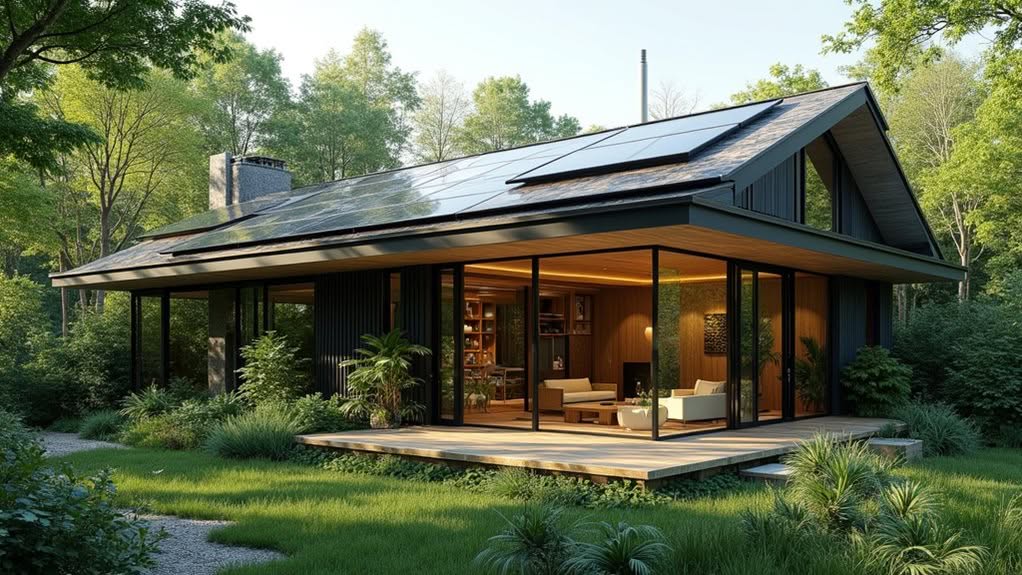
- Seamless integration of solar panels with home automation systems that track and adjust energy consumption based on your daily patterns
- Smart windows that automatically tint in response to sunlight intensity, reducing cooling needs while maintaining natural light
- Water conservation systems that detect leaks, monitor usage, and recycle greywater with minimal input from you
These advancements not just reduce your environmental footprint but also improve comfort and potentially cut energy bills by up to 20%.
Behavioral Shifts: How Smart Homes Change Energy Consumption Habits
Your relationship with energy has shifted from passive consumption to active management thanks to smart home technology.
You’ve likely moved from mindless habits to mindful awareness as devices provide real-time feedback about your energy usage patterns.
This tech-enabled climate consciousness transforms how you interact with your home’s systems, with 56% of global consumers now citing energy savings as their primary motivation for adopting smart home solutions.
Mindless to Mindful
While many homeowners previously remained unaware of their daily energy usage patterns, smart home technology has revolutionized this mindset by transforming unconscious consumption into deliberate energy decisions.
Real-time feedback makes energy use visible and actionable rather than abstract.
This shift from mindless to mindful consumption happens through:
- Visual dashboards showing exactly which appliances consume the most electricity, allowing you to prioritize efficiency upgrades.
- Automated alerts when standby power exceeds normal levels, prompting you to unplug unused devices.
- Personalized recommendations that suggest ideal times for running energy-intensive appliances based on your household patterns.
Studies confirm that households with smart monitoring systems reduce their energy usage by 5-15% simply through increased awareness.
Smart technology removes the cognitive burden of tracking consumption manually while embedding energy-conscious habits into your daily routines.
Tech-Enabled Climate Consciousness
How do smart homes fundamentally reshape our relationship with energy? They transform passive consumers into active managers through real-time feedback and automated optimization.
Platforms like Sense Energy Monitor identify energy-hungry devices and offer personalized recommendations to reduce waste.
The data shows 56% of global smart home adopters cite energy savings as their primary motivation. This technology enables you to schedule high-energy tasks during off-peak hours, reducing both costs and environmental impact.
The smart home energy monitoring market is projected to grow from $2 billion in 2024 to $8.5 billion by 2033.
With 63% of U.S. households already owning at least one smart device, these systems are embedding energy-conscious habits across a majority of consumers.
Climate Data and Smart Homes: Building Local Resilience

As climate patterns become increasingly unpredictable, smart homes equipped with advanced data systems offer practical solutions for household adaptation. Your home’s network of sensors continuously monitors conditions, allowing for automated adjustments that maintain comfort while reducing energy usage. With home monitoring systems tracking real-time energy usage, homeowners can make informed decisions about consumption patterns and identify areas for improvement.
Real-time data integration enables your smart HVAC system to respond to both indoor needs and outdoor weather forecasts, creating a resilient living environment that adapts to changing conditions.
- Temperature sensors detect subtle changes across rooms, triggering targeted heating or cooling responses.
- Humidity monitors adjust ventilation systems automatically when moisture levels rise above ideal ranges.
- Air quality detectors identify pollutants and activate filtration when outdoor air quality deteriorates.
These interconnected systems don’t just improve your comfort—they contribute to community-wide energy reduction efforts while potentially increasing your property’s value.
Voice Control and Accessibility: Making Sustainability Available to All
Three powerful trends are converging to make voice control a key element of sustainable living for everyone. The global voice control market is expanding rapidly, projected to grow from $108.72 billion in 2024 to $2.66 trillion by 2037, making this technology increasingly accessible.
Voice interfaces provide essential benefits for users with mobility limitations or physical disabilities, allowing hands-free operation of home systems. Natural language processing improvements accommodate diverse speech abilities and help elderly users who struggle with traditional interfaces. The NLP segment is projected to gain approximately 43% revenue share by 2037, driving significant advancements in voice recognition capabilities.
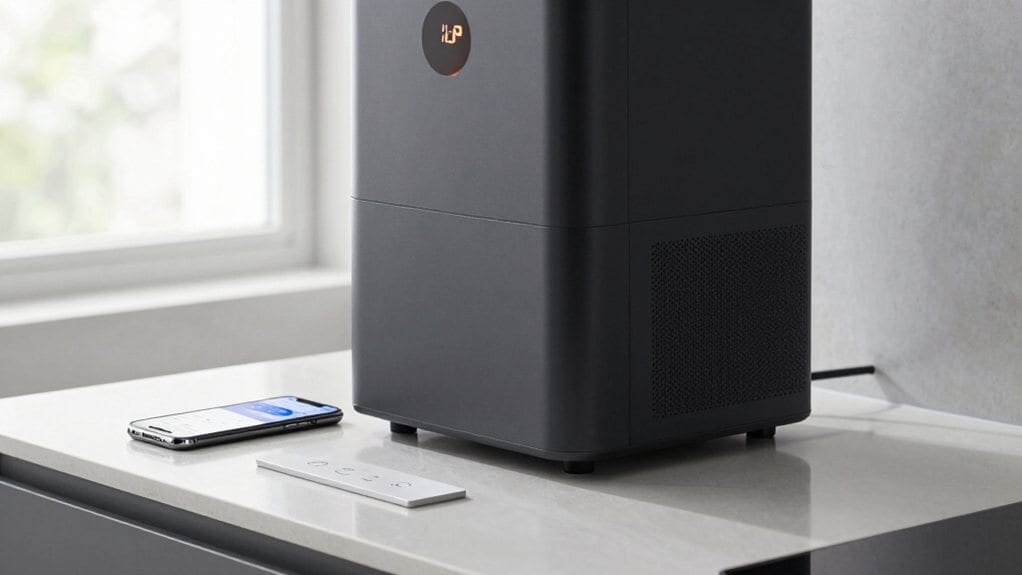
You’ll see meaningful energy savings through voice-activated smart home systems. Smart thermostats paired with voice control reduce energy consumption by 10-15%, while enabling instant adjustments that encourage energy-conscious behavior.
The technology is becoming more inclusive, with expanding language support and improved recognition of different accents and speech patterns, helping bridge digital divides across diverse populations.
The Economics of Climate-Adaptive Smart Home Technology
The financial terrain of climate-adaptive smart homes reveals both promising opportunities and significant challenges.
With the global smart home market projected to reach $645.19 billion by 2030, you’ll find substantial investment flowing into this sector.
Advanced AI systems are transforming home energy management, reducing utility costs through precise consumption forecasting with error rates below 3%. These savings often offset the initial investment within a few years.
- $200 billion in planned AI infrastructure investments will accelerate development of affordable smart home technologies
- Machine learning models analyze your home’s unique energy patterns, automatically adjusting systems for maximum efficiency
- Climate-adaptive technology creates a visual dashboard of your energy consumption, allowing you to track savings in real-time
Companies that combine IoT, AI, and sensor technologies are creating products that address both climate risks and comfort needs.
Weather Forecasting Integration: Preparing Homes for Climate Extremes
Modern weather forecasting systems represent a game-changing foundation for climate-adaptive smart homes. These systems integrate hyperlocal weather data from personal weather stations, providing minute-by-minute updates on your home’s immediate microclimate conditions.
You’ll receive early warnings for extreme weather events through smart speakers, wall displays, and mobile apps. When barometric pressure drops rapidly or wind speeds spike, your home can automatically initiate protective measures like closing smart shades or adjusting HVAC settings.
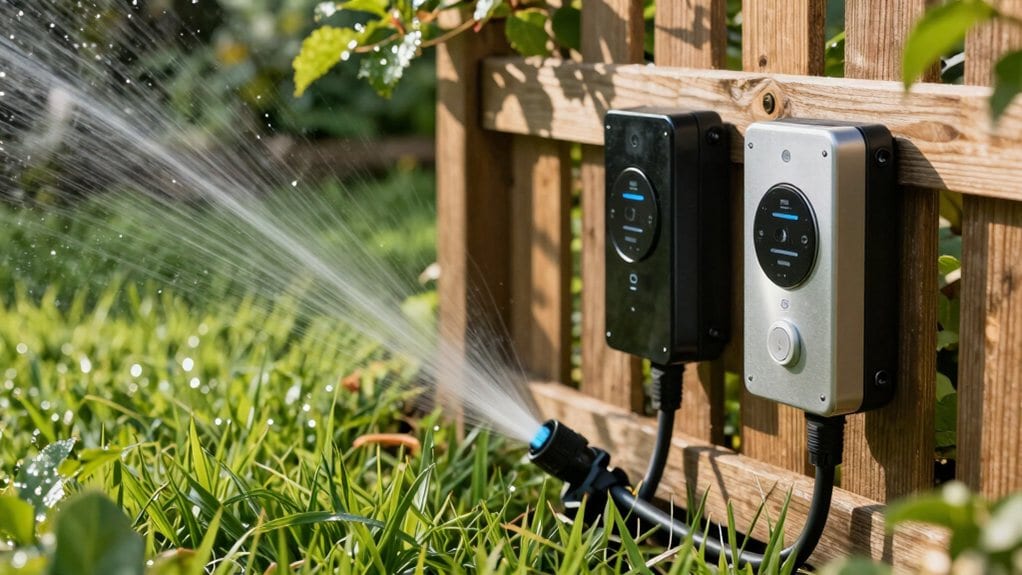
Smart irrigation controllers like Rachio use weather forecasts to reduce water waste by at least 20% through rain skip, wind skip, and freeze skip features. Your system can suspend watering when rain is imminent and optimize schedules based on precise soil moisture data.
These integrations allow your smart home to anticipate and respond to weather changes before they impact your comfort or safety.
Smart Homes as Data Contributors to Climate Solutions

As smart homes evolve beyond personal convenience, they’ve emerged as powerful data generators for broader climate initiatives. Your connected home continuously captures valuable information about energy usage patterns that researchers and utilities can leverage for climate adaptation strategies.
Smart thermostats, projected to exceed 38 million units in the U.S. by 2026, serve as critical data hubs for climate research. They track temperature preferences, occupancy patterns, and HVAC run times, enabling more efficient energy distribution. The integration of these thermostats with smart lighting systems can provide comprehensive energy usage profiles that further enhance climate adaptation strategies.
Three ways your smart home’s data contributes to climate solutions:
- Feeding machine learning models that identify energy inefficiencies across neighborhoods
- Supporting peer-to-peer energy trading in decentralized microgrids
- Providing real-time measurements that help balance renewable energy integration
This data exchange between homes and grids strengthens our collective resilience against climate challenges while maintaining privacy safeguards.
Frequently Asked Questions
How Do Smart Homes Protect Privacy While Collecting Climate Data?
Your smart home protects privacy through encryption, edge computing, minimized data collection, user-controlled settings, and strict access controls. You’ll benefit from options to opt-out of sharing and regular security updates for your devices.
Can Smart Home Systems Work During Extended Power Outages?
Yes, your smart home can work during extended outages with proper backup systems like whole-home generators, UPS devices, or battery backups. You’ll need prioritized energy management and possibly solar storage for longer resilience.
What’s the Environmental Impact of Manufacturing Smart Home Devices?
Manufacturing smart home devices has considerable environmental costs including resource depletion, toxic waste from mining rare earth elements, high carbon emissions during production, and e-waste from short lifespans. You’re contributing to these impacts with each purchase.
How Do Smart Homes Accommodate Multigenerational Family Needs?
Smart homes accommodate your multigenerational family by offering shared entertainment devices, safety monitoring for aging relatives, customizable features for different age groups, and collaborative technology use that improves communication across generations in one household.
Are There Insurance Benefits for Climate-Adaptive Smart Homes?
Yes, you’ll receive insurance premium discounts of 5-20% when you install climate-adaptive smart technologies like water leak sensors, smoke detectors, and security systems that reduce damage risks and demonstrate proactive risk management to insurers.
Final Thoughts
You’ll find that climate adaptation in smart homes isn’t just about convenience—it’s about survival. As extreme weather events increase, your home’s ability to predict, respond, and adapt becomes crucial. By investing in these technologies now, you’re preparing for an uncertain climate future while reducing your carbon footprint. Smart homes represent your personal contribution to a global solution, making sustainability accessible, economical, and increasingly vital.