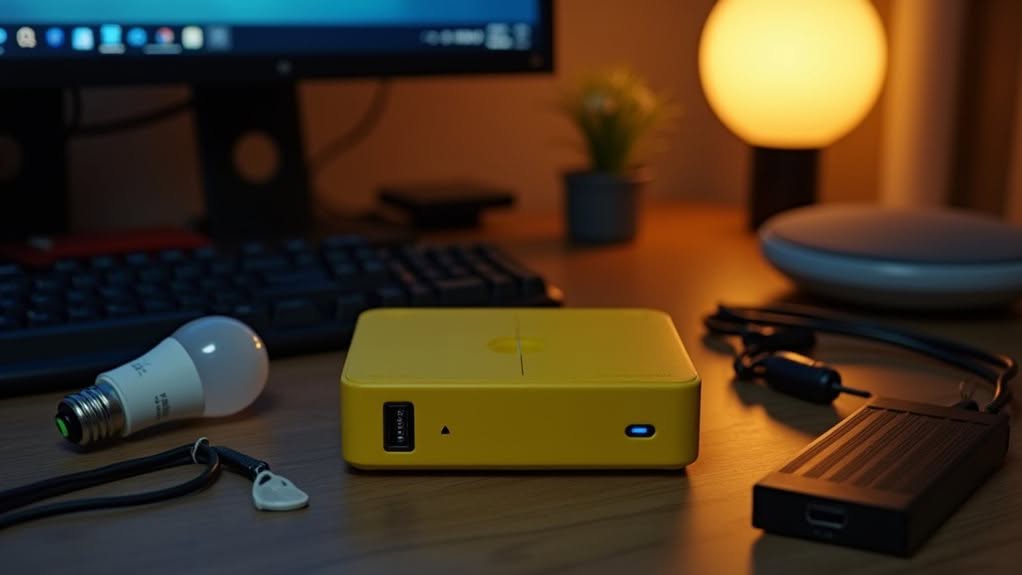
The Home Assistant Yellow, a cornerstone in DIY smart home technology, has reached the end of its production cycle. This powerful controller, which raised over $1.6 million from more than 11,000 backers, featured Zigbee 3.0 support, NVMe SSD compatibility, and integration with over 1,000 devices and services. While existing units will maintain full functionality with ongoing software support, the discontinuation has surprised many enthusiasts who valued its expandability and open-source design. The device’s legacy continues to shape future smart home solutions.
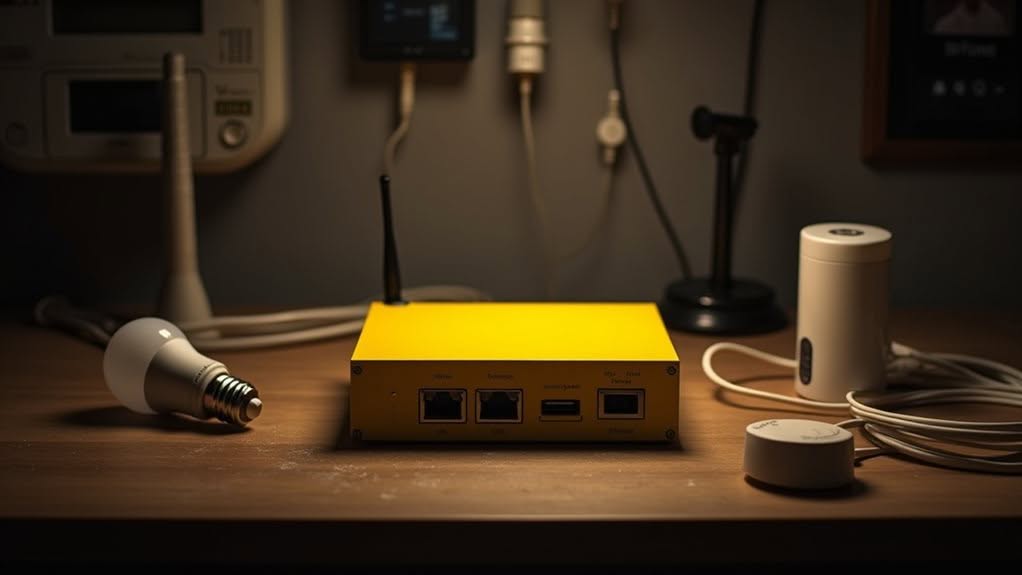
After establishing itself as a cornerstone of DIY smart home technology, the Home Assistant Yellow has reached the end of its production cycle. The powerful hub, which featured the Broadcom BCM2711 quad-core Cortex-A72 processor through its Raspberry Pi Compute Module 4, will no longer be manufactured.
You’ll remember the Yellow for its impressive array of features that made it stand out in the smart home market. Its built-in Zigbee 3.0 support allowed you to connect numerous compatible devices without additional hardware. The Yellow’s power consumption remained impressively efficient at only 1.5 watts idle, making it an energy-conscious choice for 24/7 operation. The M.2 slot for NVMe SSDs gave you expandable storage options beyond the standard 16GB or 32GB eMMC storage.
The Yellow’s networking capabilities were particularly notable, offering Ethernet connectivity and Power over Ethernet options on certain models. This flexibility made installation simpler in various home environments. The external antenna also provided improved Zigbee signal strength compared to integrated options.
You could integrate over 1,000 devices and services with Home Assistant Yellow, controlling everything from Philips Hue lights to complex automation systems. The project’s overwhelming success saw it raise over 1.6 million dollars from more than 11,000 backers, vastly exceeding its initial crowdfunding goal. The pre-configured automation blueprints made setup accessible even if you weren’t a programming expert.
Unlike the more affordable Home Assistant Green, Yellow offered superior expandability through its USB ports and standard forty-pin Pi header. This allowed you to add Z-Wave support via USB adapters or connect additional peripheral devices as needed.
The open-source nature of Home Assistant Yellow’s hardware schematics fostered a community of developers who contributed to its growth. This collaborative environment enabled continuous improvements and adaptations to emerging smart home standards like Matter.
For those who invested in the Yellow ecosystem, you can continue using your devices with full functionality. The Home Assistant software platform remains actively developed, guaranteeing your existing setup will maintain compatibility with new integrations.
While this marks the end of an era for Home Assistant Yellow hardware, the legacy of its versatile design and powerful capabilities will influence future smart home controllers for years to come.
Frequently Asked Questions
Why Was Home Assistant Yellow Discontinued Despite Its Popularity?
Your Home Assistant Yellow was discontinued primarily due to supply chain issues with the Raspberry Pi Compute Module 4.
The global chip shortage created unreliable production conditions and price fluctuations.
Additionally, sales naturally declined after the initial release period, while alternatives like Home Assistant Green emerged with better supply stability.
The company has shifted its strategy toward hardware with more dependable supply chains, though software support for existing Yellow devices will continue long-term.
Will Existing Yellow Devices Continue Receiving Software Updates?
Yes, your Yellow device will continue receiving software updates.
Home Assistant is committed to maintaining compatibility with the latest versions of their software, following the same support model used for Home Assistant Blue, which still receives updates despite ending production in 2022.
The company’s focus remains on optimizing Home Assistant to run efficiently on existing hardware, guaranteeing you can use your Yellow device without disruption for the foreseeable future.
What Alternatives Should Current Yellow Owners Consider?
You should consider several alternatives for your Yellow device.
Home Assistant Green offers a direct, official replacement with simple setup.
Raspberry Pi 5 provides more flexibility and upgradeability if you’re comfortable with DIY assembly.
Mini PCs like Beelink models deliver higher performance for running multiple services.
Remember that most alternatives will require separate Zigbee dongles to match Yellow’s built-in radio capabilities.
OpenHAB presents a different open-source platform if you’re willing to switch ecosystems.
How Will This Affect the Broader Home Assistant Ecosystem?
The Home Assistant ecosystem will remain stable despite Yellow’s discontinuation.
You’ll continue receiving software updates for existing Yellow devices, while the shift to Green hardware simplifies development efforts.
The platform’s open-source nature and 2500+ device integrations stay intact.
This change may accelerate adoption of Matter and Thread standards.
Community-supported hardware options will likely expand, filling gaps in official offerings while maintaining the ecosystem’s core functionality and interoperability benefits.
Were Supply Chain Issues the Primary Reason for Discontinuation?
Yes, supply chain issues were the primary reason for Yellow’s discontinuation.
You can trace this directly to uncertain availability of the Raspberry Pi Compute Module 4, which powers the device. The “great Pi shortage” created unpredictable procurement conditions and price fluctuations that made sustained production infeasible.
While declining sales and the introduction of Home Assistant Green were contributing factors, Nabu Casa’s decision primarily stemmed from their inability to maintain reliable manufacturing due to component supply bottlenecks.


