Smart kitchens revolutionize your cooking experience by combining AI-powered meal suggestions with precision cooking capabilities. You’ll benefit from energy savings of up to 50% through intelligent appliances that automatically adjust settings based on real-time data. Voice commands enable hands-free operation, improving safety and accessibility for all users. With personalized recipe recommendations that account for your preferences and dietary needs, these technologies reduce food waste by approximately 20%. The following sections reveal how these innovations can transform your daily meal preparation.
The Evolution From Analog to Smart Cooking Spaces
While we take modern kitchen conveniences for granted, the journey from ancient cooking spaces to today’s smart kitchens spans thousands of years of innovation.
Your ancestors cooked over open flames in central hearths, gradually evolving to medieval enclosed fireplaces with improved ventilation through chimneys. The 19th century brought gas stoves, followed by electric options that offered cleaner, more precise cooking.
By the mid-20th century, you’d find built-in ovens, mass-produced dishwashers, and standardized cabinetry replacing free-standing furniture. The 1990s introduced open-concept designs, changing kitchens from purely utilitarian spaces to social hubs. These modern layouts promote social interaction and inclusivity while maintaining functionality.
The 1950s marked a significant period when kitchen design innovations specifically aimed to simplify chores for women, introducing compact furniture and pastel-colored appliances.
Today, your smart kitchen connects appliances to shared networks, enabling remote control via smartphone apps while AI-driven features automate routine tasks and personalize your cooking experience through algorithmic learning systems.
How AI-Powered Appliances Transform Meal Preparation
AI-powered kitchen appliances now transform how you prepare meals through intelligent systems that learn your preferences and suggest recipes based on available ingredients.
Your cooking experience becomes more streamlined as these smart devices automatically adjust temperatures, cooking times, and methods to match specific recipes or food types.
The integration of mistake-proofing technology means you’ll experience fewer cooking failures, as your appliances can now detect potential errors and provide corrective guidance before problems occur.
Voice control capabilities are increasingly common, allowing you to operate appliances hands-free while the global smart home ecosystem continues its rapid expansion toward the $100 billion mark in 2024.
Modern smart refrigerators like Samsung’s Bespoke models can identify over 30 groceries automatically as you place them inside, revolutionizing inventory management in your kitchen.
Personalized Recipe Recommendations
As smart kitchens continue to evolve, personalized recipe recommendations have emerged as a cornerstone of modern meal preparation.
These AI-powered systems learn your preferences, dietary restrictions, and past choices to deliver hyper-personalized meal suggestions customized specifically to you. The technology analyzes your health goals, whether you’re following a low-carb diet or vegan lifestyle, and combines this with what’s available in your pantry. According to market trends, there’s a significant rise in consumers seeking devices that simplify meal planning due to the growing popularity of plant-based diets and allergen-aware cooking.
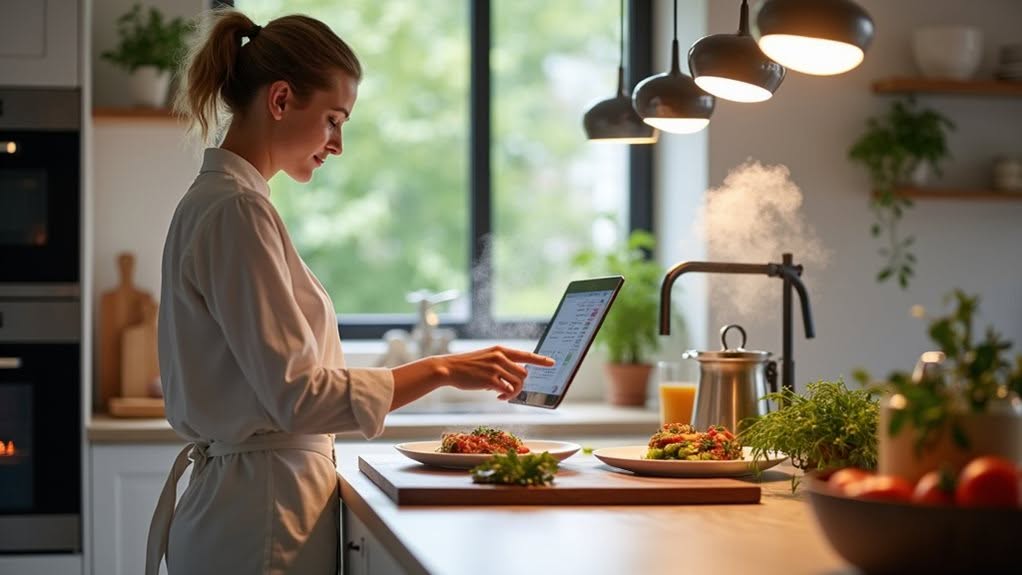
Your smart kitchen can now integrate with your wearables and health apps, enabling calorie tracking and nutritionally optimized meal plans that align with your fitness objectives.
The systems also make real-time adjustments based on your feedback or changing ingredient availability, guaranteeing consistently satisfying results.
For households with diverse tastes, multi-user profiles allow each family member to receive individualized recipe recommendations.
The rapidly expanding market, projected to reach $68.7 billion by 2025, indicates strong consumer demand for these intelligent cooking solutions.
Adaptive Cooking Controls
Modern kitchens now feature revolutionary adaptive cooking controls that transform everyday meal preparation into precision culinary experiences.
These intelligent systems continuously monitor your food using sensors that track moisture, browning, and rising during the cooking process.
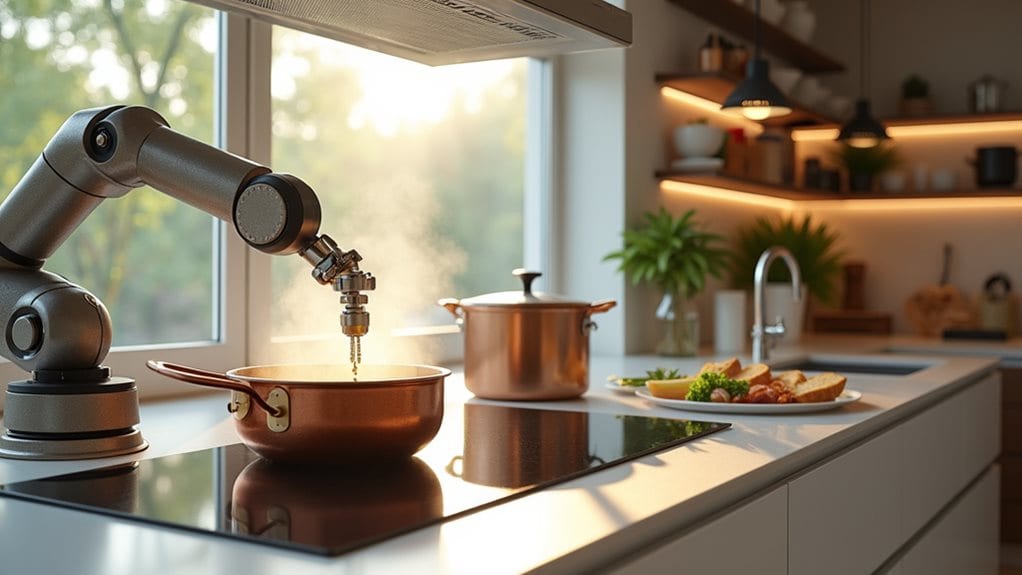
Your AI-enabled ovens and cooktops dynamically adjust temperature and timing based on real-time data, eliminating guesswork and reducing errors. The appliances learn your preferences over time, customizing settings to match your taste preferences. AI appliances leverage past cooking data to provide personalized recipe suggestions that align with your nutritional goals and dietary restrictions.
Voice-activated controls allow you to adjust cooking parameters hands-free, increasing both precision and convenience. When you place food items on sensor-equipped surfaces, cameras automatically identify what you’re cooking and select the ideal program.
These adaptive technologies also enhance energy consumption, guaranteeing your appliances operate efficiently while delivering consistent, personalized results every time. Users can access their Wipro Appliances remotely through mobile apps for smart sensor touch control of cooking functions.
Mistake-Proof Meal Prep
Three key innovations have transformed meal preparation from a potential minefield of culinary mishaps into a streamlined, error-proof process.
AI-enabled smart ovens now adjust cooking times and temperatures automatically, guaranteeing consistent results regardless of your cooking expertise. Visual recognition sensors identify food types and optimize cooking cycles, eliminating guesswork completely. The use of internal cameras allows users to monitor their food without opening the oven door and disrupting the cooking process.
Smart kitchen systems reduce common errors like overcooking by monitoring internal food temperatures and making real-time adjustments. You’ll appreciate how these technologies preserve nutrients while reducing energy consumption through optimized cooking processes. These systems are part of the rapidly growing AI meal planning market that’s projected to reach USD 11,566.5 million by 2034.
The integration with inventory management further improves efficiency, as AI suggests recipes based on ingredients you already have.
This thorough approach reduces food waste by approximately 20% while cutting down your meal preparation time through automated workflows and optimized cooking sequences.
Energy Savings That Benefit Your Wallet and the Planet
Today’s smart kitchen appliances can cut your energy consumption by up to 50% compared to conventional models, translating directly into lower monthly utility bills.
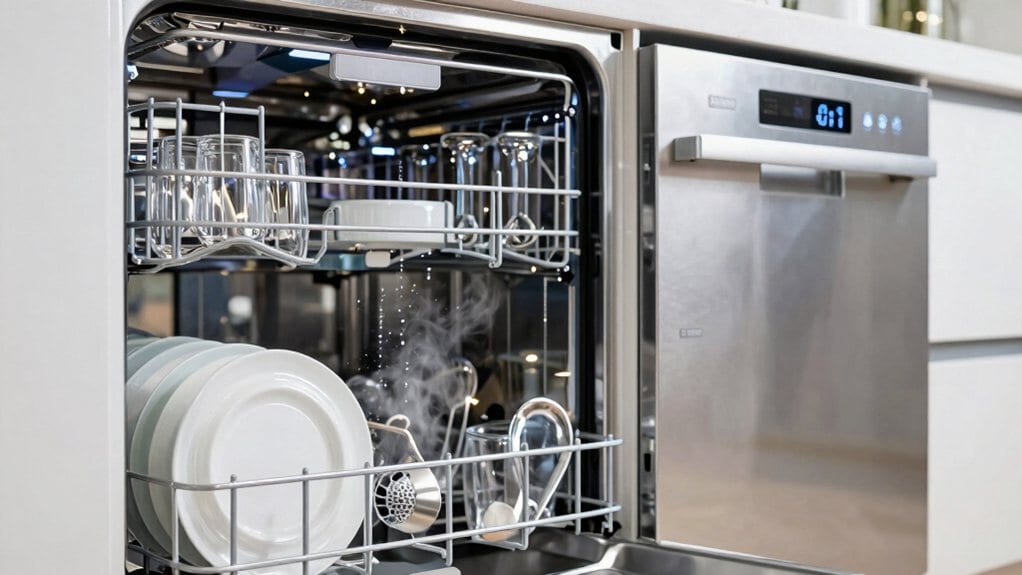
Your connected refrigerator, oven, and dishwasher work more efficiently by using sensors to prevent energy waste and automatically adjusting their operations based on actual needs.
These energy-saving features not just reduce your household’s carbon footprint but also contribute to a more sustainable electric grid when appliances operate during off-peak hours.
Lower Bills, Higher Efficiency
As homes become increasingly connected, smart kitchen technology delivers considerable energy efficiency that translates directly into lower utility bills.
Energy Star-rated appliances consume up to 50% less energy than standard models, immediately reducing your monthly expenses.
Smart refrigerators use door sensors to alert you when cold air is escaping, while intelligent ovens adjust cooking parameters automatically to optimize energy use.
Your dishwasher can now schedule cycles during off-peak electricity hours, further cutting costs.
Connected appliances communicate through IoT platforms to coordinate energy usage, preventing power consumption spikes.
With detailed monitoring features, you’ll identify which appliances consume the most energy and adjust accordingly.
The economic impact is notable—smart kitchen adoption can reduce energy consumption by 20-50% in commercial settings, with similar savings possible in your home.
Eco-Friendly Cooking Methods
The way you cook profoundly impacts both your energy bills and environmental footprint. Induction cooktops lead the efficiency race at 70-80%, markedly outperforming traditional gas stoves that waste 60-70% of their energy.
Simple habit changes make considerable differences. Covering pots while boiling can reduce energy needs by 60-80%, while batch cooking minimizes repeated heating cycles.
Your appliance choices matter too. Microwaves use just 0.1 kWh per meal compared to ovens that consume 0.7-1.0 kWh per baking session. High-powered, faster cooking appliances generally produce fewer emissions overall.
For maximum environmental benefit, pair efficient cooking methods with locally sourced, seasonal ingredients. This combination can slash your kitchen’s carbon footprint by up to 50% while supporting regional economies.
Voice Commands and Hands-Free Operation in Modern Kitchens
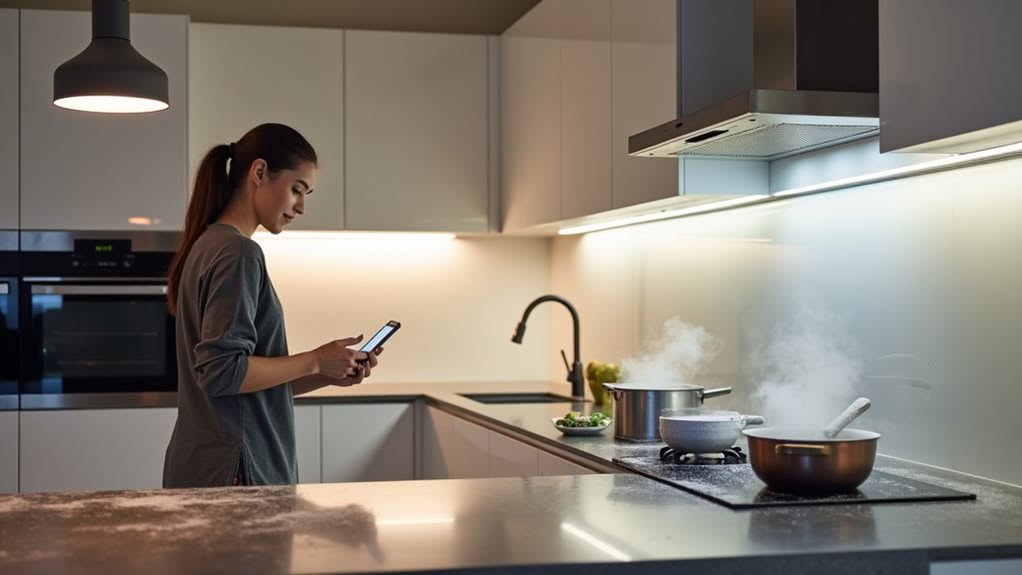
Why fumble with buttons and dials when you can simply speak to your kitchen? Voice commands are transforming modern kitchens, with 68% of smart home interactions now initiated by voice assistants. This hands-free approach offers considerable advantages when your hands are occupied with food preparation.
Voice-controlled appliances deliver three key benefits:
- Convenience – Start, stop, or adjust your oven temperature without touching anything, perfect when your hands are messy.
- Safety – Quickly deactivate appliances in emergency situations without physical contact.
- Accessibility – Enable seniors and persons with disabilities to operate kitchen equipment more easily.
With voice assistant users projected to reach 153.5 million by 2025, this technology is becoming mainstream. Your smart kitchen can respond to commands that control cooking sequences, answer recipe questions, and even help with food shopping. Upgrading your culinary space with smart home assistants can significantly elevate your entire cooking experience.
Precision Cooking: When Technology Guarantees Perfect Results
Perfect cooking results once seemed achievable only by professional chefs with years of training, but today’s precision cooking technologies have democratized culinary excellence for home cooks.
Sous vide systems guarantee consistent results by maintaining exact temperatures, eliminating the risk of overcooking your favorite proteins. Smart thermometers connect wirelessly to your devices, alerting you when your food reaches the perfect doneness.
Digital scales integrated with recipe apps automatically adjust ingredient quantities, assuring your dishes turn out perfectly every time. Advanced steam ovens control humidity levels precisely, helping you create bakery-quality bread at home.
These technologies reduce human error through automation and AI, optimizing cooking times and temperatures based on real-time feedback.
You’ll also enjoy environmental benefits, as precision cooking reduces energy consumption and minimizes food waste.
Remote Monitoring: Control Your Kitchen From Anywhere

Modern kitchens have transcended physical boundaries, allowing you to monitor and control your culinary domain from virtually anywhere. Unified platforms provide real-time oversight of all your connected equipment, regardless of manufacturer, while sending instant alerts about malfunctions or temperature deviations.
With remote access, you’ll enjoy three major benefits:
- Energy efficiency with up to 15% reduction in utility costs through real-time consumption tracking
- Predictive maintenance that identifies potential equipment failures before they happen
- Remote adjustment capabilities for everything from oven temperatures to cleaning cycles
Cloud-based systems securely transfer data between your devices and user accounts, creating digital twins that visualize equipment status.
This technology enables you to make immediate adjustments in response to changing demands—all from your smartphone or tablet.
Personalized Cooking Experiences Through Machine Learning
As artificial intelligence transforms our cooking habits, machine learning algorithms now deliver unprecedented levels of personalization in the kitchen.
These systems analyze your dietary requirements, taste preferences, and ingredient availability to customize recipes specifically for you.
Your smart kitchen can suggest meals that align with your health goals, whether you’re following a vegan, low-sugar, or gluten-free diet.
The AI considers what’s already in your refrigerator, proposing creative substitutions for ingredients you don’t have on hand.
When you’re planning meals for the week, AI tools create grocery lists while accounting for your schedule and nutritional targets.
Some advanced systems even integrate with biological data, predicting how specific foods affect your metabolism and blood sugar levels.
This technology effectively balances nutrition, flavor, and convenience to match your unique needs.
Future-Proofing Your Home With Sustainable Kitchen Technology

Investing in sustainable kitchen technology today guarantees you’ll be prepared for tomorrow’s environmental challenges while potentially boosting your home’s long-term value.
Modern eco-friendly options include recycled glass countertops that transform waste into beautiful surfaces, and bamboo cabinetry that reduces deforestation while providing natural warmth.
ENERGY STAR® appliances deliver remarkable efficiency improvements, with 75% of homeowners now prioritizing them during renovations.
Induction cooking technology offers up to 90% energy efficiency compared to traditional methods.
Three smart sustainability features worth considering:
- Aerated faucets that maintain pressure while considerably reducing water consumption
- Real-time food freshness tracking to minimize spoilage and waste
- Modular kitchen islands that adapt to multiple needs, maximizing space effectiveness
Water-saving dishwashers and leak detection systems further improve your kitchen’s environmental performance.
Frequently Asked Questions
What’s the Typical Price Range for a Complete Smart Kitchen?
You’ll typically spend $26,000-$45,000 for a complete smart kitchen remodel. Costs vary based on your chosen appliances, materials, and integration complexity, with minor upgrades starting at $10,000 and luxury options exceeding $80,000.
How Secure Are Smart Kitchen Devices Against Hacking?
Smart kitchen devices vary in security. You’re most vulnerable when manufacturers stop updates or you use unsecured networks. Protect yourself by choosing devices with encryption, regular updates, and by segmenting your home network for better protection.
Do Smart Appliances Require Specialized Maintenance or Repairs?
Yes, you’ll need specialized maintenance for smart appliances. They require sensor cleaning, firmware updates, connectivity checks, and technicians with both software and electronics expertise—beyond traditional repairs. Follow manufacturer guidelines to protect your warranty.
Can Smart Kitchen Devices Work During Internet Outages?
Yes, most smart kitchen devices maintain basic functions during internet outages. You’ll still be able to use core cooking features, though you’ll lose remote control, voice commands, and specialized cooking modes until connectivity returns.
How Long Do Smart Appliances Last Compared to Traditional Ones?
Smart appliances typically last as long as traditional ones, with lifespans of 9-15 years depending on the device. You’ll find refrigerators may last 10-15 years, while dishwashers and washing machines average around 9-10 years.
Final Thoughts
You’re investing in more than just appliances when you adopt smart kitchen technology. Your cooking becomes more precise, energy-efficient, and adaptable to your specific needs. As these systems continue to evolve, they’ll offer increasingly personalized experiences while reducing environmental impact. By upgrading now, you’re setting yourself up for a future where technology improves your culinary creativity rather than complicating it.