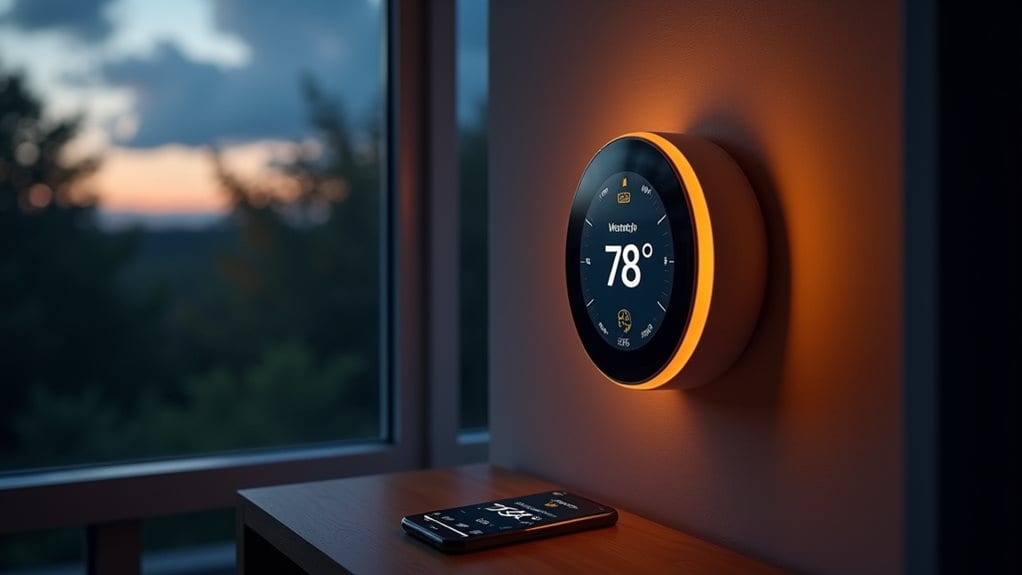
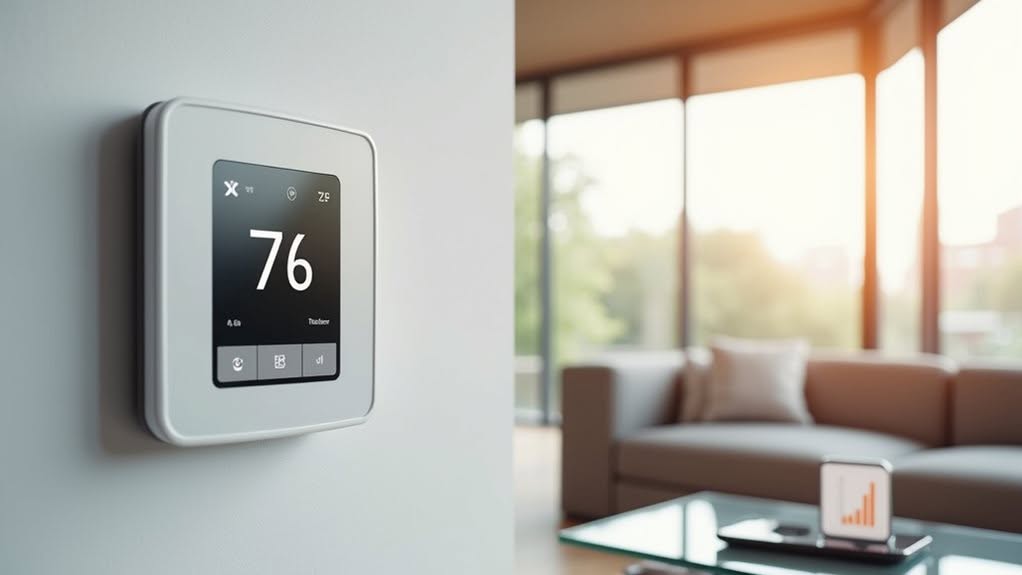
Smart HVAC systems combine traditional climate control with AI, IoT connectivity, and data analytics to transform how you heat and cool spaces. These technologies can reduce energy consumption by 10-30% annually while improving comfort through features like geofencing, voice control, and learning algorithms that adapt to your routines. The global market is expected to reach nearly $30 billion by 2033, driven by rising energy costs and stricter emissions regulations. Exploring these innovations reveals how climate control is becoming more personalized, efficient, and sustainable.
The Evolution of Smart HVAC Technology
While modern smart HVAC systems offer unprecedented comfort and efficiency, their development spans thousands of years of human innovation.
Ancient civilizations used basic methods like Roman hypocausts for heating and manual fans in Han Dynasty China for cooling.
The true foundation of modern HVAC emerged during the Industrial Revolution with steam radiators and forced air systems.
Willis Carrier’s 1902 invention of air conditioning marked a crucial moment in climate control history.
Central heating and cooling systems became mainstream in the mid-20th century, with programmable thermostats appearing in the 1950s. Air conditioning became more accessible and was widely installed in homes across America during this decade.
The energy crisis of the 1970s prompted significant innovations in HVAC technology, leading to systems with improved energy efficiency and better insulation techniques.
The digital revolution of the 1990s introduced online HVAC calculators and system monitoring.
Today’s smart HVAC systems integrate with smartphones, voice assistants, and AI algorithms to learn user preferences while optimizing for efficiency and comfort. Modern HomeKit thermostats offer seamless integration with Apple devices for convenient temperature control from anywhere.
Market Growth and Economic Impact
The explosive growth of smart HVAC systems represents one of the most notable developments in building technology markets today.
Valued at nearly $12 billion in 2024, the global smart HVAC controls market is projected to reach almost $30 billion by 2033, with an impressive 10.8% CAGR.
You’ll find this growth is driven by several key economic factors:
- Rising energy costs pushing building owners toward solutions that offer 20-40% efficiency improvements
- Stricter regulations on emissions forcing rapid adoption of intelligent climate control systems
- Growing consumer demand for personalized comfort with minimal environmental impact
- Increasing recognition that smart HVAC systems deliver measurable ROI through reduced operational costs
This expansion reflects the technology’s shift from luxury to crucial infrastructure component in modern building design.
The market is poised for recovery and accelerated growth post-pandemic, with enhanced focus on indoor air quality becoming a critical driver of consumer purchasing decisions.
The Asia-Pacific region is emerging as a particularly promising market, with projections showing it will experience the fastest growth rate at a CAGR of 12.15% through 2032.
Key Innovations Reshaping Climate Control
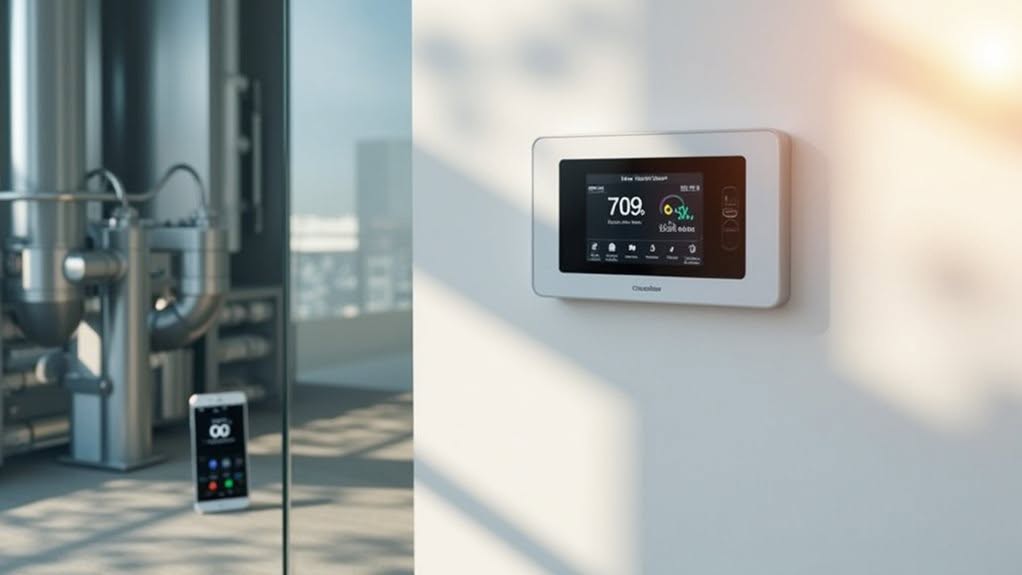
Beyond market growth, substantial technological innovations are transforming how we approach climate control in buildings today.
IoT sensors now provide real-time data for improved efficiency, while predictive maintenance capabilities detect potential issues before they become major problems. You’ll find these systems automatically alerting you when maintenance is needed.
Smart thermostats learn your daily routines and adjust temperatures accordingly, optimizing both comfort and energy savings. With geofencing technology, your HVAC system can adjust settings based on your location. The integration of noise reduction technologies ensures your system operates quietly without disrupting your daily activities or sleep.
Heat pumps and electric heating systems are gaining popularity due to environmental concerns and decarbonization efforts. These systems often integrate with advanced air purification technologies to elevate indoor air quality.
Voice control integration with assistants like Amazon Echo allows you to manage your climate settings through simple verbal commands. Wi-Fi connectivity enables homeowners to control temperatures remotely through smartphones or tablets from anywhere.
Energy Efficiency and Sustainability Benefits
Smart HVAC systems deliver impressive energy efficiency benefits that directly impact both your wallet and the environment.
These systems can achieve 10-30% annual energy savings by adapting to real-time occupancy and temperature needs. The intelligent systems utilize peak load shaving techniques to avoid high energy rates by strategically pre-cooling or pre-heating spaces. IoT sensors continuously collect environmental data to help these systems make intelligent adjustments.
Variable-speed compressors and zone control technologies enable precise temperature regulation while minimizing energy waste.
As the market grows toward $370 billion by 2030, sustainability benefits continue to broaden.
- Cut your utility bills by up to 30% while reducing greenhouse gas emissions
- Extend your equipment’s lifespan through optimized operation and reduced wear
- Breathe cleaner indoor air with improved air quality management systems
- Future-proof your building against evolving energy codes and regulations
Applications Across Residential, Commercial, and Industrial Sectors

Smart HVAC systems are transforming residential comfort through intuitive interfaces that let you control temperature, humidity, and air quality from your smartphone.
You’ll find these systems increasingly popular in homes where they integrate with voice assistants and automate climate settings based on your daily routines. The industry has seen remarkable growth with smart thermostats expected to increase at a CAGR of over 15% due to their low cost and easy installation.
In commercial and industrial environments, smart HVAC solutions optimize energy usage by adjusting operations according to occupancy patterns, resulting in notable cost savings for businesses of all sizes. The commercial segment is projected to experience significant expansion at 7.6% CAGR through 2033, driven by increasing demand for energy-efficient building solutions.
Residential Comfort Revolution
As the backbone of smart home technology adoption, the residential segment currently commands a remarkable 41.6% of the smart HVAC market share in 2024.
Your modern home climate control has evolved dramatically, integrating seamlessly with voice assistants and home automation platforms.
- Lower utility bills through systems that maximize energy use based on occupancy patterns
- Personalized comfort with room-by-room temperature control via smart thermostats
- Improved convenience with remote control capabilities through your smartphone
- Government incentives that make upgrading to smart HVAC financially advantageous
This residential HVAC revolution is gaining momentum as urbanization increases and disposable incomes rise.
Smart HVAC systems can reduce your energy consumption substantially while maintaining ideal comfort levels.
Tax credits and rebates further incentivize homeowners to make the switch to intelligent climate control solutions.
Enterprise Energy Optimization
While residential applications have dominated the market, enterprise energy optimization is emerging as a crucial frontier in smart HVAC technology adoption. The global enterprise energy-efficient HVAC market is projected to exceed $200 billion by 2028, driven by rising energy costs and regulatory mandates.
AI-powered HVAC agents use machine learning and IoT sensors to reduce energy costs by up to 35% while improving comfort and equipment lifespan. These systems collect real-time data from hundreds of wireless sensors, enabling intelligent adjustments based on actual conditions rather than static schedules.
Commercial split HVAC systems are expected to nearly double in market size by 2033, with data centers showing the fastest growth at 12.1% CAGR.
These facilities, which consume up to 40% of their total energy on HVAC needs, benefit greatly from optimization technologies.
Regional Adoption Trends and Future Outlook
Smart HVAC adoption varies considerably across global regions, with Asia-Pacific leading in volume while EMEA shows higher per-device spending.
You’ll find North America emphasizing efficiency and reliability, while emerging markets in Asia-Pacific and the Middle East drive growth through rapid urbanization and infrastructure development.
Latin America’s market remains smaller but shows steady growth, supported by increasing internet access and growing awareness of smart home technologies.
Regional Adoption Patterns
Regional adoption of smart HVAC systems varies markedly across the globe, driven by several interconnected factors that shape market dynamics. Urbanization rates directly influence demand, with Asia-Pacific and Middle Eastern regions showing accelerated uptake due to rapid city development and infrastructure expansion.
Government policies play a decisive role through incentives and regulations that promote energy-efficient technologies. You’ll find that regional climate conditions also dictate specialized adaptations by manufacturers to guarantee peak performance across diverse environments.
- Emerging markets experiencing infrastructure booms show surprising growth rates
- Local connectivity standards create integration challenges for global manufacturers
- Cost barriers remain considerable in developing regions despite long-term savings
- Urban centers lead adoption rates by 3-5x compared to rural areas in most regions
Economic factors, including upfront costs and potential savings, continue to influence adoption decisions across different markets.
Market Potential By Region
As global markets increasingly adopt smart technology, the environment for HVAC adoption reveals distinct regional patterns with compelling growth trajectories.
Europe currently dominates the smart HVAC systems market, having secured the largest revenue share in recent years. However, you’ll find considerable growth potential across various regions.
North America’s market is projected to expand from USD 53.52 billion in 2025 to USD 86.67 billion by 2034, reflecting strong regional demand.
The Asia Pacific region shows tremendous promise due to increasing urbanization and rising consumer incomes.
The Middle East, Africa, and Latin America represent emerging markets with growing demand driven by urban development and energy efficiency concerns.
Each region’s adoption rate is influenced by local building codes, sustainability initiatives, and technological infrastructure readiness.
Frequently Asked Questions
How Do Smart HVAC Systems Impact Home Resale Value?
Smart HVAC systems boost your home’s resale value by 5-10%. They’re attractive to buyers seeking energy efficiency, offer substantial utility savings, and signal your property is modern and well-maintained, commanding higher offers and faster sales.
What Cybersecurity Risks Exist With Internet-Connected HVAC Systems?
Your internet-connected HVAC faces ransomware threats, IoT vulnerabilities, and risks from default passwords and outdated firmware. Attackers can disrupt operations, compromise data, and potentially move laterally through your network to other systems.
How Long Does It Take to Recoup Smart HVAC Investment Costs?
You’ll typically recoup your smart HVAC investment in 1-5 years. Fan and pump upgrades pay back in 1-2 years, while chillers take 2-5 years. High electricity rates and variable load patterns accelerate your return.
Can Smart HVAC Systems Integrate With Existing Legacy Equipment?
Yes, you can integrate smart HVAC systems with legacy equipment through IoT sensors, building automation systems using open protocols, and retrofit solutions like variable speed drives. These integrations extend your existing equipment’s life while improving efficiency and control.
What Maintenance Requirements Differ Between Smart and Conventional HVAC?
Your smart HVAC relies on predictive maintenance with real-time monitoring, while conventional systems need fixed-schedule preventive maintenance. You’ll perform fewer on-site visits but more sensor calibrations and software updates with smart systems.
Final Thoughts
You’re witnessing a revolution in climate control technology. Smart HVAC systems aren’t just convenient—they’re transforming energy consumption patterns worldwide with measurable economic benefits.
As adoption accelerates across residential, commercial, and industrial sectors, these innovations will continue to reduce environmental impact while improving comfort. Your investment in smart climate control today positions you for both immediate energy savings and long-term sustainability in an increasingly climate-conscious world.