Smart IAQ sensors monitor multiple pollutants including CO₂, PM2.5, TVOCs, and radon while tracking temperature and humidity levels in your indoor spaces. You’ll receive real-time alerts when air quality parameters exceed healthy thresholds, allowing for immediate action. These devices integrate seamlessly with your home automation systems, enabling automatic adjustments to ventilation based on actual air quality conditions. Strategic sensor placement throughout your building can reduce energy consumption by up to 30% while maintaining ideal breathing environments.
Understanding Smart IAQ Sensor Technologies
As our awareness of indoor environmental health grows, smart IAQ sensor technologies have become vital tools for monitoring the air we breathe inside buildings. These advanced devices can track multiple pollutants simultaneously, providing extensive data about your indoor environment.
Modern IAQ sensors measure a range of parameters including carbon dioxide (CO₂), fine particulate matter (PM2.5), total volatile organic compounds (TVOCs), nitrogen oxides (NOₓ), temperature, and humidity.
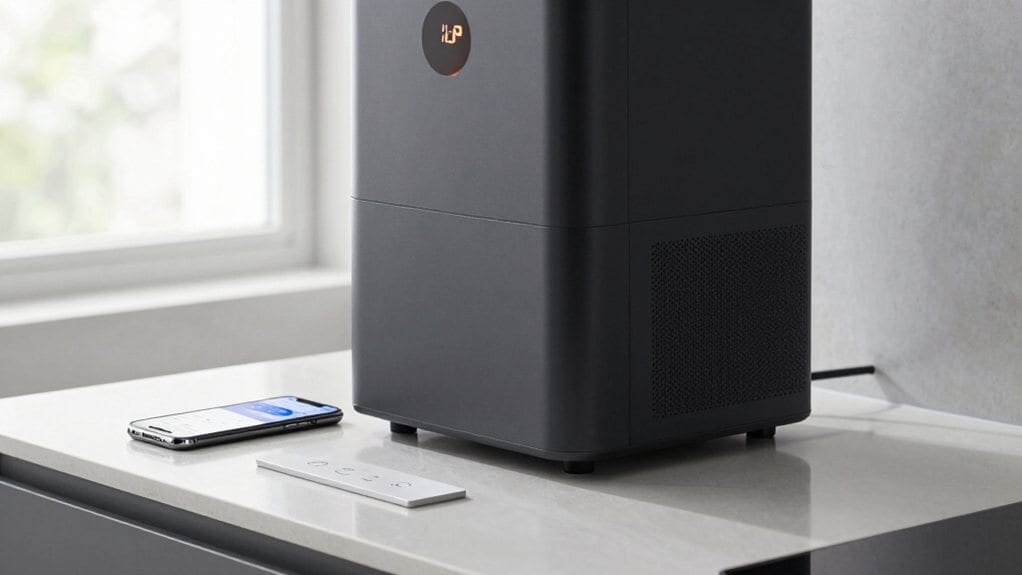
Multi-sensor technology has become the industry standard, with devices like Airthings View Plus offering all these measurements in a single unit.
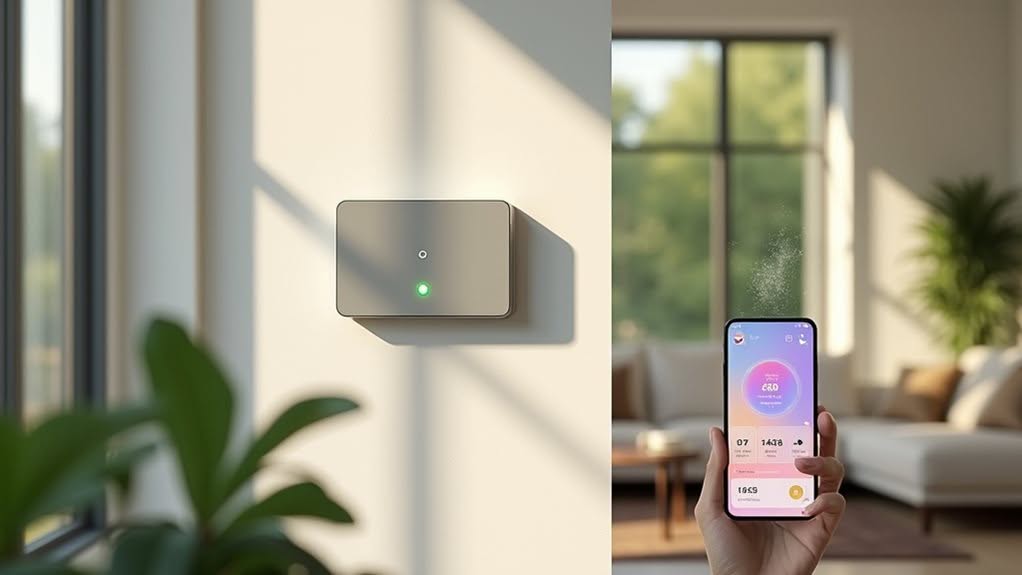
CO₂ sensors help you track ventilation effectiveness and occupancy levels, while PM2.5 sensors detect harmful fine particles. Smart air quality monitors can now integrate with home automation systems to provide real-time data-driven adjustments that improve indoor air quality automatically.
Temperature and humidity monitoring guarantees comfort while preventing conditions that could lead to mold growth.
Technological advancements in sensor reliability continue to address one of the industry’s biggest challenges, ensuring consumers receive accurate readings without false alarms.
Key Pollutants and Health Impacts in Indoor Environments
Understanding which pollutants impact your indoor air is crucial for making informed decisions about IAQ monitoring.
Common indoor pollutants include carbon monoxide, nitrogen dioxide, VOCs, biological contaminants, and particulate matter, each with distinct health effects ranging from mild irritation to serious diseases.
These airborne contaminants directly affect respiratory health, with research showing strong connections between exposure to indoor pollutants and increased incidence of asthma, allergies, and other respiratory conditions.
Radon, an odorless radioactive gas that seeps into homes through foundation cracks, poses a significant health risk as prolonged exposure can lead to lung cancer.
Formaldehyde, a colorless gas with a strong odor, is commonly found in building materials and household products and can contribute significantly to poor indoor air quality.
Common Pollutants Framework
The air inside your home or office contains a complex mixture of potentially harmful substances that can greatly impact your health. Understanding these pollutants is crucial for monitoring and improving your indoor environment.
Carbon monoxide, a colorless, odorless gas produced by burning fuels, can cause symptoms ranging from headaches to death at high concentrations.
Nitrogen dioxide from gas appliances irritates lungs and worsens respiratory conditions, particularly in children and asthmatics.
Particulate matter, especially the smaller PM2.5 particles, can penetrate deep into your lungs and bloodstream, increasing risks of respiratory and cardiovascular diseases. These fine particles contribute to systemic inflammation in the body, potentially affecting almost every organ system.
Radon, a naturally occurring radioactive gas, is the second leading cause of lung cancer.
Volatile organic compounds emitted from common household products can cause immediate irritation and potential long-term organ damage with prolonged exposure.
Respiratory Health Connections
Indoor pollutants directly impact your respiratory system in ways that can range from mild irritation to severe, chronic disease. Exposure to common household pollutants can exacerbate conditions like asthma and COPD, leading to increased hospital visits and poorer quality of life.
- Particulate matter (PM2.5 and PM10) penetrates deep into lungs, causing bronchitis and asthma attacks.
- Nitrogen dioxide from gas stoves and heaters worsens respiratory symptoms in COPD patients.
- Damp environments promoting mold growth increase respiratory infection risk, especially in children.
- Poor ventilation traps pollutants indoors, creating concentrated exposure that damages developing lungs.
Children and older adults face higher risks from these pollutants due to developing or declining respiratory systems.
Low-income communities often experience greater exposure because of substandard housing conditions with inadequate ventilation.
Real-Time Monitoring and Alert Systems
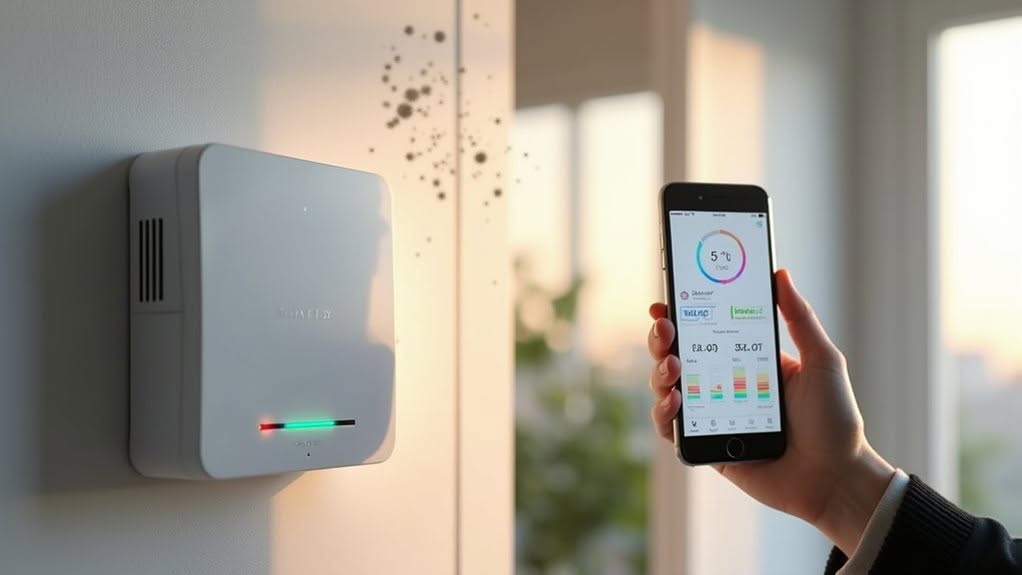
Modern IAQ sensors offer you immediate detection of pollutants through continuous monitoring that can identify changes in particulate matter and gases within seconds.
Cloud-based alert frameworks connect to your mobile devices and building systems, notifying you when air quality parameters exceed predefined thresholds for health and comfort.
These systems enable dynamic responses to changing conditions, automatically adjusting ventilation rates or triggering filtration systems when sensors detect heightened CO₂, VOCs, or particulate levels in your space. Regular sensor calibration ensures accuracy in measuring pollutant concentrations, preventing false alerts and maintaining reliable data integrity. Historical data collection provides trend visualizations that help facilities maintain OSHA compliance while identifying patterns that might require attention.
Immediate Pollutant Detection Systems
As environmental health concerns grow, real-time pollutant detection systems have emerged as vital tools for monitoring indoor air quality. These systems use advanced sensors to continuously detect harmful substances such as PM2.5, PM10, VOCs, CO₂, and CO in your indoor environment. Modern monitors like AirGradient use high-quality sensors from respected manufacturers to ensure measurement accuracy.
High-end models employ laser or electrochemical technology to guarantee accurate readings, while wireless connectivity allows you to access data remotely through centralized platforms. IoT-enabled sensors provide comprehensive monitoring of multiple environmental factors simultaneously.
- Real-time sensors provide continuous monitoring with instant results
- Photoionization Detectors (PIDs) measure pollutant concentration using UV light technology
- Direct-reading instruments enable immediate decision-making during hazardous conditions
- Wireless transmission delivers encrypted data to your monitoring platform
When pollutant levels exceed safety thresholds, these systems trigger immediate alerts via email, SMS, or visual/audible warnings.
This rapid response capability allows you to address air quality issues before they affect occupant health.
Cloud-Based Alert Frameworks
Building upon immediate pollutant detection capabilities, cloud-based alert frameworks elevate your monitoring system to new heights of efficiency and accessibility.
These platforms process air quality data in real time, allowing you to respond quickly when pollutant levels fluctuate. You’ll receive instant notifications when air quality thresholds are exceeded, enabling immediate action to protect occupants.
The centralized dashboards make monitoring simple, with all your data accessible from anywhere at any time. These systems are highly scalable, efficiently handling data from multiple sensors throughout your building. Holistic data analysis provides comprehensive assessment of air quality parameters for more effective environmental management.
You won’t need to worry about storage limitations as cloud-based infrastructure manages vast datasets while remaining cost-effective. Smart indoor monitors can transform your home environment by providing detailed insights about pollutant levels that may affect your health and comfort.
For regulatory compliance, customizable reports help you document air quality metrics and demonstrate adherence to standards. The system’s analytics also provide valuable insights for improving your indoor environment long-term.
Dynamic Response Capabilities
When air quality conditions deteriorate, dynamic response capabilities transform passive monitoring into actionable intelligence. Your smart IAQ sensors continuously track multiple pollutants with remarkable precision, enabling immediate responses to changing conditions.
These systems leverage real-time data to protect your indoor environment through:
- Color-coded displays and mobile dashboards that instantly communicate air quality status
- Automated alerts when pollutants exceed customized thresholds
- Direct integration with HVAC systems to adjust ventilation rates automatically
- Tiered notification severity based on concentration levels and change rates
The integration with building management systems means your sensors don’t just detect problems—they solve them.
When CO2 levels rise above 1000 ppm or PM2.5 exceeds safe thresholds, your system can immediately increase fresh air intake without human intervention.
Integration With Building Automation Systems
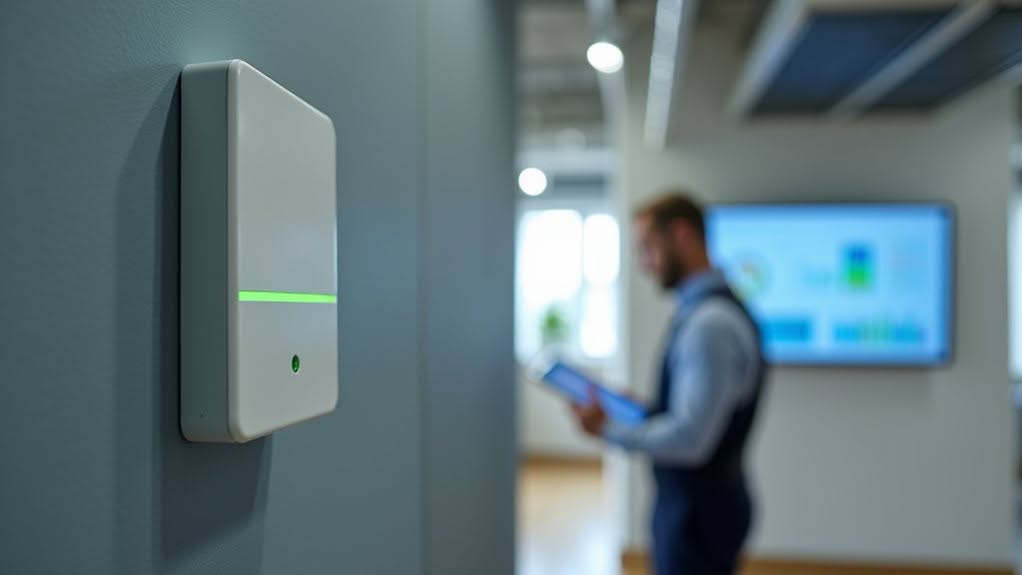
The seamless integration of indoor air quality sensors with Building Automation Systems (BAS) represents a critical advancement in modern building management.
Your building’s BAS can now receive real-time data on CO₂, VOCs, particulate matter, temperature, and humidity to dynamically control HVAC operations.
This integration allows your ventilation system to automatically adjust based on actual occupancy and pollutant levels, rather than fixed schedules. When sensors detect air quality issues, the BAS can trigger immediate remediation actions, protecting occupant health.
Common protocols like BACnet, Zigbee, and Wi-Fi guarantee compatibility between sensors and your existing BAS infrastructure. Wireless options provide cost-effective solutions for retrofitting older buildings.
This technology not only assists you in meeting LEED and WELL certification requirements but can reduce energy consumption by up to 30% while maintaining ideal indoor air quality.
Optimal Sensor Placement and Coverage Strategies
While integrating sensors with your building management system creates a solid foundation, strategic placement of these devices throughout your space determines the accuracy of your air quality monitoring efforts.
Proper placement guarantees you’re capturing meaningful data that reflects actual human exposure to pollutants.
For peak monitoring effectiveness, consider these placement strategies:
- Position sensors in breathing zones to accurately measure pollutant exposure levels
- Install multiple sensors across different zones (approximately one per 50m²)
- Keep sensors away from direct sunlight, heat sources, and ventilation systems
- Consider room layouts and use computational fluid dynamics to maximize placement
Wall-mounted sensors may show delayed detection in dynamic environments, while sensors closer to pollution sources provide more accurate exposure data.
Using Building Information Modeling and genetic algorithms can further refine your sensor placement strategy, especially in complex indoor environments.
Cost-Benefit Analysis of Smart IAQ Solutions
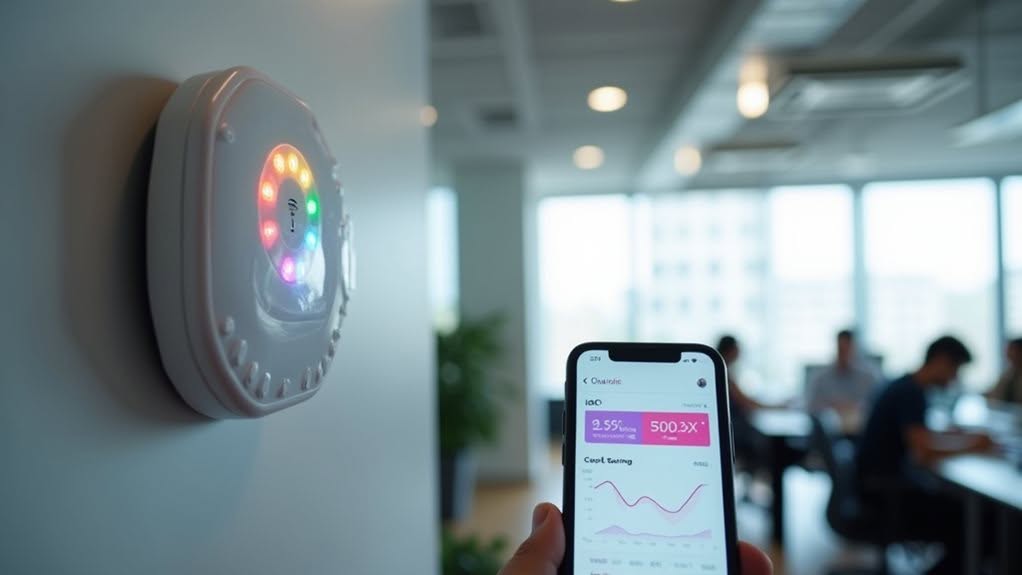
Investing in smart indoor air quality solutions requires careful financial analysis beyond the initial purchase price. Commercial monitors range from $96 to over $1,000, while low-cost options typically cost between $100-$250 for sensors alone.
Your total expenditure will include hardware, software, installation, calibration, and maintenance costs. Thankfully, both capital and operational expenses have decreased recently due to technological advancements and economies of scale.
The benefits often outweigh these costs. Real-time monitoring helps you quickly identify pollution sources, potentially reducing health-related expenses and absenteeism.
You’ll also likely see energy savings through optimized HVAC operations. Smart IAQ systems support regulatory compliance and can deliver long-term health benefits.
For workplaces, improved air quality may boost productivity and comfort, creating additional economic value.
Regulatory Compliance and Air Quality Standards
Steering through the complex terrain of indoor air quality regulations requires understanding both mandatory requirements and recommended guidelines that govern acceptable pollutant levels.
While WHO guidelines recommend PM2.5 limits of 5 µg/m³ annually and 15 µg/m³ for 24-hour periods, the US EPA has strengthened its standard to 9.0 µg/m³ annually.
- New York State’s recent legislation mandates IAQ inspections with specific monitoring requirements
- Continuous real-time monitoring is increasingly required instead of periodic measurements
- Facilities must document IAQ levels, system responses, and corrective actions for audit purposes
- International standards cover multiple pollutants including PM2.5, VOCs, CO2, and emerging concerns
Compliance programs now require thorough monitoring throughout facilities, with emphasis on high-occupancy areas rather than isolated points near HVAC systems.
You’ll need sensors capable of detecting pollutants at low concentrations with minimal delay.
Data Analytics for Improved Indoor Environmental Quality
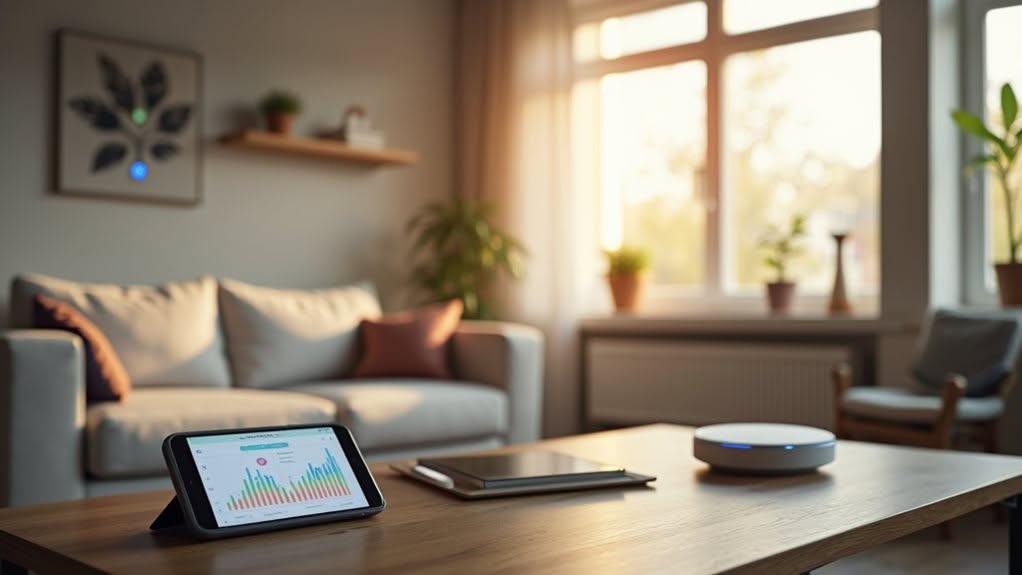
As organizations harness the power of IAQ monitoring systems, they’re discovering that the real value lies not just in sensor deployment but in the analytics capabilities that transform raw data into actionable intelligence.
Predictive analytics allows you to forecast IAQ trends and respond proactively rather than reactively. You’ll anticipate CO2 spikes and particulate matter surges based on occupancy patterns and planned activities like cleaning.
By integrating multiple sensor data streams, you can create thorough indoor environment assessments that optimize HVAC performance. Your forecast-based ventilation control guarantees systems run only when needed, improving comfort while reducing energy consumption.
These analytical capabilities provide traceable data for ESG compliance reporting and support data-driven decisions about space utilization.
With real-time dashboards, you’ll quickly identify system inefficiencies and implement targeted improvements.
Frequently Asked Questions
How Long Do Smart IAQ Sensors Typically Last Before Requiring Replacement?
You’ll typically need to replace smart IAQ sensors every 1-2 years. Consumer-grade monitors like PurpleAir last about 2 years, while some IoT sensors with advanced coatings can function for up to 5 years with proper maintenance.
Can IAQ Sensors Detect Mold or Biological Contaminants in Indoor Environments?
Yes, IAQ sensors can detect mold indirectly by monitoring particles sized 0.3-10 microns, tracking mVOCs from growing colonies, and measuring humidity levels above 60% that enable mold growth. They can’t identify specific species though.
How Do Power Outages Affect Smart Sensor Data Collection and Storage?
Power outages disrupt your sensor data collection by cutting power supply and network connectivity. You’ll lose data if backup batteries are insufficient. Your sensors may also experience transmission gaps and delayed communication once power returns.
Are There Privacy Concerns With IAQ Sensors That Connect to Wifi?
Yes, when you connect IAQ sensors to WiFi, they expose your personal data, household routines, and occupancy patterns. They transmit information that can be intercepted if poorly secured, often without your full awareness or consent.
Can Sensors Distinguish Between Indoor and Outdoor Pollution Sources?
Yes, advanced sensors can distinguish pollution sources by analyzing chemical signatures, temporal patterns, and concentrations. You’ll find that indoor pollutants like VOCs from cleaning products create different readings than vehicle emissions from outdoors.
Final Thoughts
You’ve seen how smart IAQ sensors transform indoor air quality management through real-time monitoring of key pollutants. When you integrate these technologies with building automation systems, you’ll optimize both health outcomes and energy efficiency. By implementing strategic sensor placement and leveraging data analytics, you’re not only meeting regulatory standards—you’re creating healthier indoor environments. The initial investment in smart IAQ solutions delivers considerable long-term benefits for occupant wellness and building performance.