You’re evaluating smart occupancy sensors for modern buildings, and you want reliable dual‑mode detection, minimal false alarms, and easy integration. Look for models that blend mmWave radar with PIR, offer wide fields of view and long reach, and mount flexibly on walls, ceilings, or corners. Compatibility with Alexa, Google, and SmartThings matters, as does battery life and ambient light sensing. The best choices balance performance and install simplicity, but something bigger waits beyond the shortlist.
| THIRDREALITY Zigbee Motion Sensor with Built-in Hub |

| Hub-Integrated Zigbee Sensor | Motion Type: Motion sensor | Use Location: Indoor use only | Smart Home Integration: Alexa routines; Echo device compatibility | VIEW LATEST PRICE | Read Our Analysis |
| SwitchBot mmWave Motion Sensor with 2-Year Battery |

| Hub-Free Sensing | Motion Type: mmWave radar + PIR presence sensor | Use Location: Indoor use | Smart Home Integration: Works with Apple HomeKit, Alexa, Google Assistant | VIEW LATEST PRICE | Read Our Analysis |
| Lutron Caseta Motion Sensor for Dimmers and Fans |
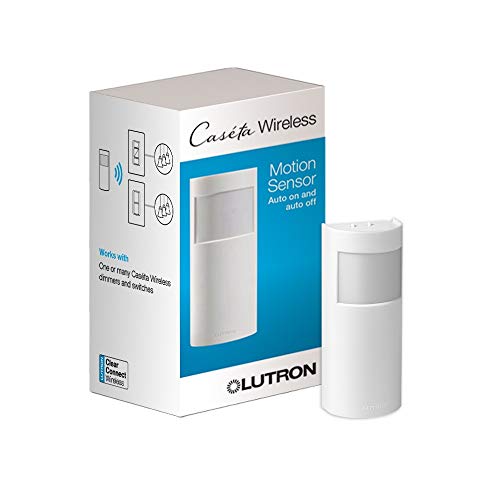
| Pro-Grade Occupancy Sensor | Motion Type: Occupancy sensor | Use Location: Indoor use | Smart Home Integration: Caseta ecosystem (requires Caseta hub) with compatible devices | VIEW LATEST PRICE | Read Our Analysis |
| GoveeLife Human Presence Sensor with Multi-Person Detection |

| Wi-Fi Presence Sensor | Motion Type: mmWave radar + PIR presence sensor | Use Location: Indoor use | Smart Home Integration: Alexa, Google Assistant, IFTTT | VIEW LATEST PRICE | Read Our Analysis |
| Kasa Smart Motion Sensor Switch 2-Pack |

| Budget Motion Kit | Motion Type: Motion sensor (switch) | Use Location: Indoor use | Smart Home Integration: Alexa, Google Assistant, Samsung SmartThings; Kasa app ecosystem | VIEW LATEST PRICE | Read Our Analysis |
More Details on Our Top Picks
THIRDREALITY Zigbee Motion Sensor with Built-in Hub
If you want a compact, all-in-one occupancy sensor that plugs directly into a Zigbee ecosystem, the THIRDREALITY Zigbee Motion Sensor with Built-in Hub is a standout choice for busy setups. You get a pocket-sized device (1.83 ounces) that runs on two AAA batteries, with up to two years of life in typical use. It detects motion up to 30 feet, works indoors, and is pet-friendly, making it suitable for driveways, garages, or gardens. It pairs via Zigbee hub, supports OTA updates, and integrates with Alexa routines to automate lights and plugs. Setup is quick, with discovery and voice pairing.
- Motion Type:Motion sensor
- Use Location:Indoor use only
- Smart Home Integration:Alexa routines; Echo device compatibility
- Mounting Type:Wall mount
- Power Source:Battery powered (2 AAA included)
- Battery Life / Durability:Up to 2 years (typical usage)
- Additional Feature:OTA firmware updates
- Additional Feature:Included mounting hardware
- Additional Feature:HomeKit via bridge
SwitchBot mmWave Motion Sensor with 2-Year Battery
The SwitchBot mmWave Motion Sensor with a 2-year battery stands out for those who want precise, hub-free presence sensing that still plays nicely with existing smart lights. With 120° coverage and up to 8 meters for moving people, plus reliable detection for stationary positions, it avoids false lights-offs in bathrooms or offices. The AI self-learning filters cut false triggers from fans and pets, while the magnetic base lets you aim it precisely and adjust zones without tools. Battery-powered for up to two years, you’ll appreciate a clean install in walls, shelves, or bathrooms with no cords. It works locally, pairs with SwitchBot devices, and can expand through a Matter hub for broader smart-home scenes. Consider placement for hallway movements and doorway entrances for best sensing consistently.
- Motion Type:mmWave radar + PIR presence sensor
- Use Location:Indoor use
- Smart Home Integration:Works with Apple HomeKit, Alexa, Google Assistant
- Mounting Type:Magnetic base for wall/flat placement
- Power Source:Battery powered (2 AAA included)
- Battery Life / Durability:Up to 2 years (typical usage)
- Additional Feature:Magnetic mounting base
- Additional Feature:Local hub-free operation
- Additional Feature:Zone positioning support
Lutron Caseta Motion Sensor for Dimmers and Fans
Designed for hands-free, centralized control, the Lutron Caseta Motion Sensor is best for households using Caseta dimmers, switches, or fans who want a single sensor to manage multiple devices within 60 feet. It pairs with Caseta dimmers, switches, fan controls, and Serena shades, and requires the Caseta Smart Hub for setup. Expect a 180° field of view, fine motion detection, and auto-on or auto-off in occupancy or vacancy modes. It’s battery-powered (one CR123A, included) with a typical 10-year life, and supports scheduling via the Lutron app for customized, energy-conscious use. Its range extends to 50–60 ft in practical layouts.
- Motion Type:Occupancy sensor
- Use Location:Indoor use
- Smart Home Integration:Caseta ecosystem (requires Caseta hub) with compatible devices
- Mounting Type:Wall mount or freestanding
- Power Source:Battery powered (CR123A)
- Battery Life / Durability:10 years typical (long-life battery)
- Additional Feature:180° detection
- Additional Feature:Active Hours scheduling
- Additional Feature:Multi-Caseta compatibility
GoveeLife Human Presence Sensor with Multi-Person Detection
GoveeLife’s Human Presence Sensor combines mmWave radar and PIR tech for high-accuracy detection, making it the best pick if you need reliable multi-person presence in rooms with several occupants. It uses dual-mode operation, zone positioning, and supports up to multiple people while reducing false triggers from pets or appliances. You’ll mount it with a magnetic base, enjoy 360° rotation, and power it via USB for continuous operation in bedrooms or living rooms. It integrates with Alexa, Google Assistant, and IFTTT, and works within the GoveeLife ecosystem, driving energy-efficient automation for lights, fans, and more. Simple setup, steady performance, privacy.
- Motion Type:mmWave radar + PIR presence sensor
- Use Location:Indoor use
- Smart Home Integration:Alexa, Google Assistant, IFTTT
- Mounting Type:Magnetic base; wall or ceiling mounting
- Power Source:Powered via USB (no batteries)
- Battery Life / Durability:Not battery-powered (power via USB)
- Additional Feature:USB powered
- Additional Feature:Dual radar & PIR
- Additional Feature:Foldable magnetic base
Kasa Smart Motion Sensor Switch 2-Pack
With built-in motion and ambient light sensors, the Kasa Smart Motion Sensor Switch 2-Pack is ideal for anyone who wants hands-free, energy-efficient lighting that only activates when needed. It uses motion detection to turn lights on and ambient light sensing to skip daytime activation, saving energy without sacrificing convenience. Setup is straightforward through the Kasa app, with 2.4 GHz Wi-Fi, no hub, and voice control via Alexa, Google, or SmartThings. Designed for indoor spaces like bedrooms or hallways, the pair supports routine automation, Away Mode, and safe operation within a 100–125V circuit. This 2-pack brings value and reliability home.
- Motion Type:Motion sensor (switch)
- Use Location:Indoor use
- Smart Home Integration:Alexa, Google Assistant, Samsung SmartThings; Kasa app ecosystem
- Mounting Type:Wall box mounting (needs neutral)
- Power Source:Requires neutral wiring (no batteries)
- Battery Life / Durability:Not battery-powered (hardwired switch)
- Additional Feature:Ambient light sensor
- Additional Feature:No hub required
- Additional Feature:Two-pack inclusion
Factors to Consider When Choosing Smart Occupancy Sensors
When you choose smart occupancy sensors, you weigh sensing range and coverage to guarantee you won’t miss activity in critical spaces. Consider power and longevity, whether you want battery life to last years or a plug-in setup, and decide if you need hubless operation or a hub-based system. You’ll also compare detection technology types and installation flexibility, so you pick devices that balance accuracy with easy placement and future-proof compatibility.
Sensing Range & Coverage
Figuring out the sensing range and coverage isn’t just about picking a big sensor—it’s about matching it to your space. Sensing range typically varies from 20 to 60 feet, with wider detection angles up to 180° providing broader coverage for large rooms or open areas. If you’re dealing with specific zones, some sensors offer adjustable detection zones or beamforming capabilities, allowing you to focus on activity where it matters. Microwave or mmWave radar-based sensors can detect subtle movements like breathing, enabling presence detection even when someone is stationary. Passive infrared (PIR) sensors, by contrast, require motion across heat gradients and may miss slow movement, affecting reliability in low-activity scenarios. Ideal placement between 6 to 8 feet height minimizes blind spots and maximizes coverage overall.
Power & Longevity
Choosing the right power setup for your occupancy sensor isn’t just about batteries; it directly affects how often you’ll replace them and how reliably the device stays online. Battery-powered sensors typically use AAA or CR123A batteries, with lifespans ranging from 2 to 10 years depending on usage and battery chemistry. Lithium batteries often provide longer life and better performance in extreme temperatures compared to alkaline batteries. Sensors with motion detection and wireless connectivity consume more power, which can reduce battery longevity if not optimized for low-energy operation. Some sensors support energy-efficient protocols like Zigbee or Bluetooth Low Energy to extend battery life while maintaining reliable communication. Devices requiring constant power, such as those using radar or Wi‑Fi, usually need to be plugged in or hardwired, eliminating reliance on batteries altogether. Choosing the right mix means weighing deployment needs, climate, and usage patterns to maximize uptime without frequent battery changes in your building.
Hubless Or Hub Required
Ever wondered whether you should go hubless or go with a hub for your occupancy sensors? You’ll appreciate how hubless models connect directly to a 2.4 GHz Wi-Fi network, enabling local processing and immediate automation responses. Hub-based sensors, on the other hand, rely on Zigbee or proprietary radios, with a hub bridging your devices to your network. In exchange, hubbed setups often deliver faster, more reliable performance and support for advanced automations, especially in larger ecosystems. Hubless options simplify setup and cut costs, appealing if you want straightforward, app-based control. But remember, certain standards like Matter over Thread may need a specific hub or bridge for interoperability. Choose based on your network size, budget, and future plans. Your choice shapes compatibility and daily convenience.
Detection Technology Types
Different sensor technologies offer distinct strengths, so understanding how PIR, microwave (or mmWave) radar, and ultrasonic approaches work helps you pick the right fit for your space. PIR sensors detect motion by measuring infrared changes from warm bodies, with a range up to 30 feet and a field of view from 90° to 180°. MICROWAVE radar detects moving objects by reflected radio waves, catching micro-movements like breathing and covering about 26 feet with a 120° sweep. Ultrasonic sensors rely on sound waves and the Doppler effect, excelling in vacancy detection due to sensitivity to small movements. Dual-technology sensors combine PIR and microwave/mmWave to reduce false triggers, while ambient light sensors enable daylight harvesting, preventing activation when daylight suffices, without compromising occupant comfort levels today.
Installation Flexibility
Flexibility in installation matters as much as sensor capability, so look for options that fit your space rather than forcing your layout to fit the device. Many sensors offer wall mounting, freestanding placement, or magnetic bases, letting you choose flat surfaces, corners, or ceilings for ideal detection angles. If you need coverage in irregular rooms, seek models with adjustable detection zones or wide fields of view, up to 180°, so you can position them precisely. Battery-powered options relieve you from nearby wiring, allowing placement wherever cables would be impractical or costly. Compact designs—some under 2 inches wide and deep—fade into your space without stealing the spotlight. Magnetic or swiveling mounts with 360° rotation and folding help you fine-tune alignment after install. For long-term reliability.
Compatibility Ecosystem
When you pick smart occupancy sensors, compatibility should shape how your devices talk to each other and your hub. Start by confirming the sensor uses the same communication protocol as your existing hub or devices—Zigbee, Wi‑Fi, or a proprietary radio—to guarantee seamless integration. Next, verify compatibility with your smart home platform, so you can access voice control and automation without friction. Check whether the sensor needs a hub or bridge, as some models rely on a central controller while others connect directly to Wi‑Fi. Favor models that support local processing to retain functionality during outages. Finally, look for Matter or Zigbee 3.0 support to future‑proof your ecosystem and broaden interoperability across ecosystems. This balanced approach reduces surprises and simplifies long‑term upgrades for your buildings.
False Trigger Prevention
Ever wondered how to keep false alarms to a minimum without sacrificing real coverage? Start with sensors that use dual detection, like microwave radar plus PIR, so both motion and heat signatures must align before triggering. Next, look for AI-powered anti-interference algorithms that learn and filter out common culprits—moving air from fans or HVAC runs—keeping accidental triggers at bay. If you have pets, choose pet-immune models up to 55 pounds, adjusting sensitivity and patterns accordingly. You’ll also want adjustable detection zones and beam angles to focus on high-traffic areas while avoiding windows or vents. For occupied spaces, prefer static presence detection with mmWave radar to distinguish subtle movement from inanimate motion. Together, these features balance coverage and accuracy in real-world building environments today everyday.
Final Thoughts
You’ll want a sensor that’s accurate, versatile, and easy to install. Consider dual‑mode detection to cut false alarms, and check for a 120°–180° field of view and a 30‑foot range for flexible mounting. Look for smart home integration and battery life that matches your usage. In real rooms, a reliable sensor reduces energy waste and upgrades comfort. Pick a model that fits your space, then program rules that truly simplify daily routines without compromising privacy.