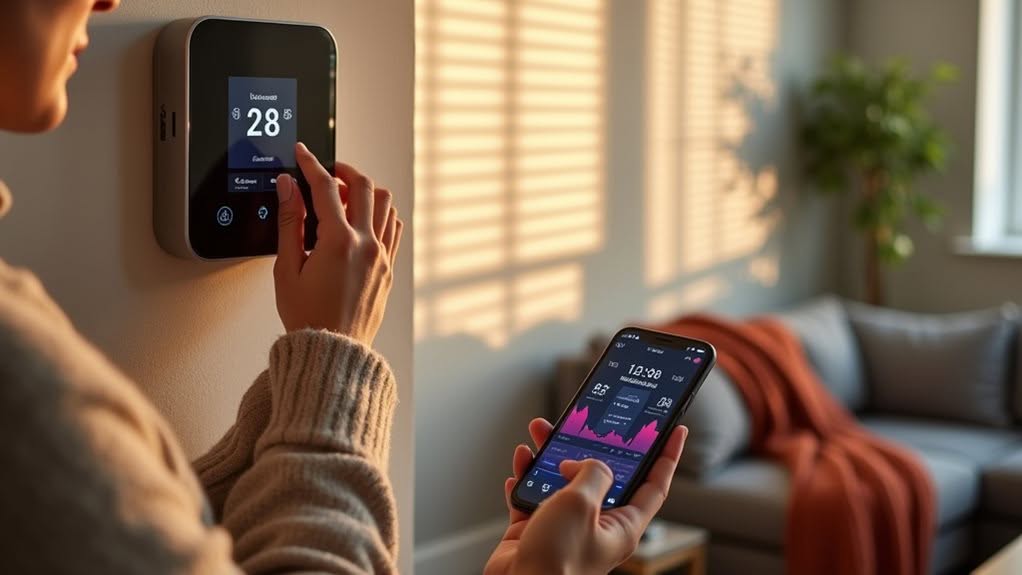
When you integrate smart devices into your home, you’ll face the challenge of balancing personal comfort with energy conservation. Smart thermostats, lighting systems, and appliances offer powerful tools to achieve both goals simultaneously through thoughtful programming. You can create customized schedules that adjust your home’s temperature and lighting based on your daily routines, saving energy when you’re away while guaranteeing comfort upon your return. The key lies in how you configure these technologies to work with your lifestyle rather than against it.
Creating a Compatible Smart Home Ecosystem
When establishing a smart home system, you’ll need to carefully plan your device selection to guarantee seamless integration.
Begin by listing your desired devices and verifying their smart device compatibility before purchase.
Research whether your devices can communicate with each other. For example, check if your Amazon Echo Dot will work with your ADT security system to avoid inefficiencies.
Compatible devices share data to improve performance and save energy, while incompatible ones operate independently, potentially wasting power.
Consider implementing centralized control through a smart home hub that supports various protocols. This allows diverse devices to connect and automate interactions for enhanced energy management.
For Apple users, a HomeKit smart hub can provide excellent integration with your existing Apple devices while maintaining strong privacy protections.
Remember to regularly update your smart home ecosystem to maintain compatibility, making sure all devices have the latest firmware for peak performance and energy efficiency.
Strategic Device Placement for Optimal Performance
Proper positioning of smart devices throughout your home greatly impacts their performance and energy efficiency. When installing a smart thermostat, avoid locations near drafts, direct sunlight, or heat sources that could skew temperature readings and cause inefficient heating or cooling cycles.
Smart sensor positioning is essential for automated systems to function correctly. Place motion detectors in high-traffic areas to guarantee HVAC and lighting respond appropriately to occupancy, reducing waste when rooms are empty.
For maximum energy management, install smart plugs near electronics clusters to monitor usage patterns. Position smart bulbs in entryways and common areas to take advantage of geofencing capabilities.
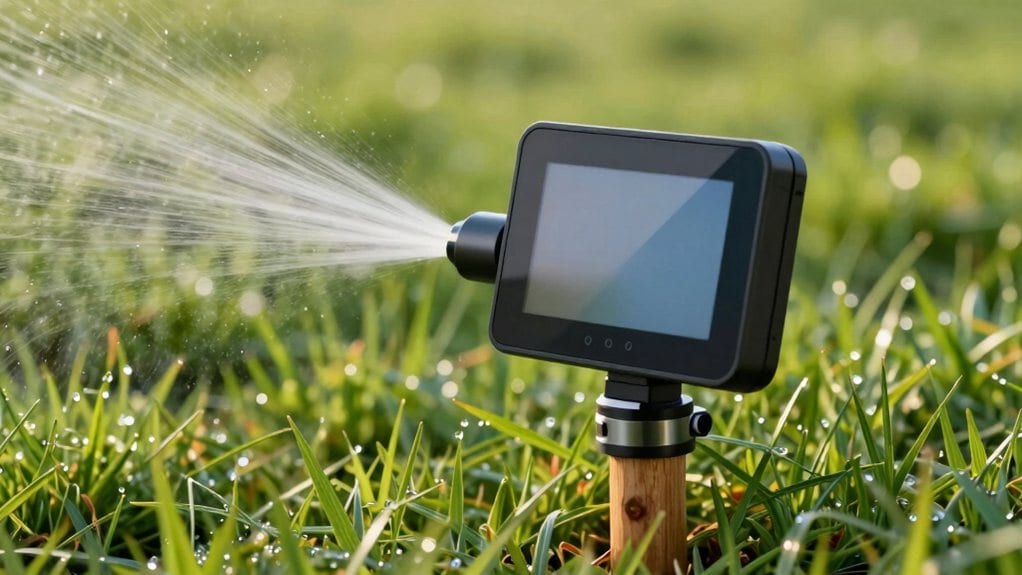
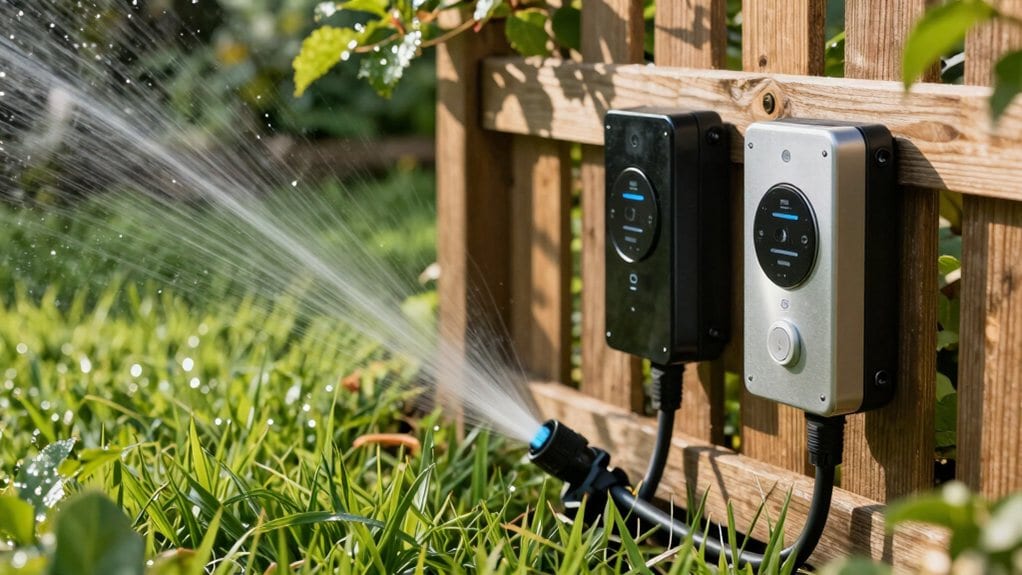
Don’t overlook smart irrigation controllers—confirm they’re installed where they can access sunlight and soil moisture data to optimize watering schedules and conserve water.
Balancing Automation With Manual Control
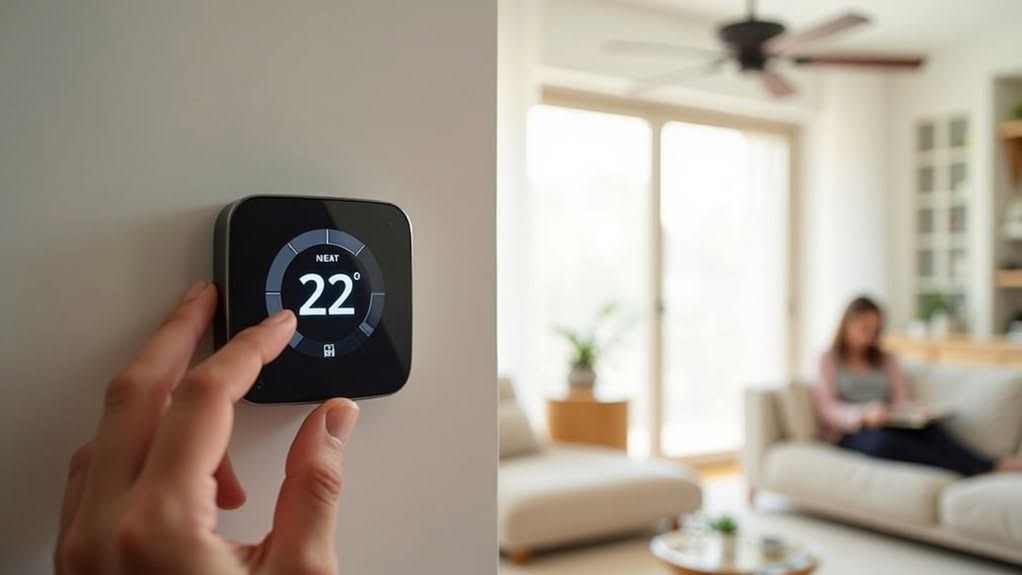
Strategic device placement sets the foundation for efficiency, but achieving the ideal balance between automation and manual control is where smart home systems truly shine.
While smart thermostats can automatically adjust temperatures based on programmed schedules, you’ll want to implement manual overrides during unexpected weather changes to maintain comfort and efficiency.
Research confirms that unplugging inactive electronics saves considerable energy, as many smart devices draw power even when not in use.
Your user habits play an essential role in energy management. Although automation streamlines daily routines, maintaining control over when to turn off devices can prevent wasteful standby power consumption.
The most effective smart home setup combines technological convenience with personal intervention, allowing you to make real-time adjustments based on your comfort needs while still benefiting from automated energy-saving features.
Setting Up Custom Schedules and Scenes
Custom schedules and scenes represent the backbone of an efficient smart home ecosystem, allowing you to maximize both comfort and energy savings. By programming your smart thermostat and lighting with custom schedules, you can reduce energy consumption during peak hours and potentially save up to 20% on heating and cooling costs.
Scene settings enable you to create specific environments like “movie night” or “out of the house” that simultaneously adjust multiple devices. For instance, your “evening” scene might dim lights and lower the temperature for bedtime.
Integrate your devices to work together based on real-time data. Smart blinds and thermostats can automatically adjust to outside temperatures and sunlight exposure, minimizing energy waste.
Implement geofencing technology to activate or deactivate systems based on your location, and regularly review your schedules as seasons change.
Using Data Insights to Refine Energy Usage
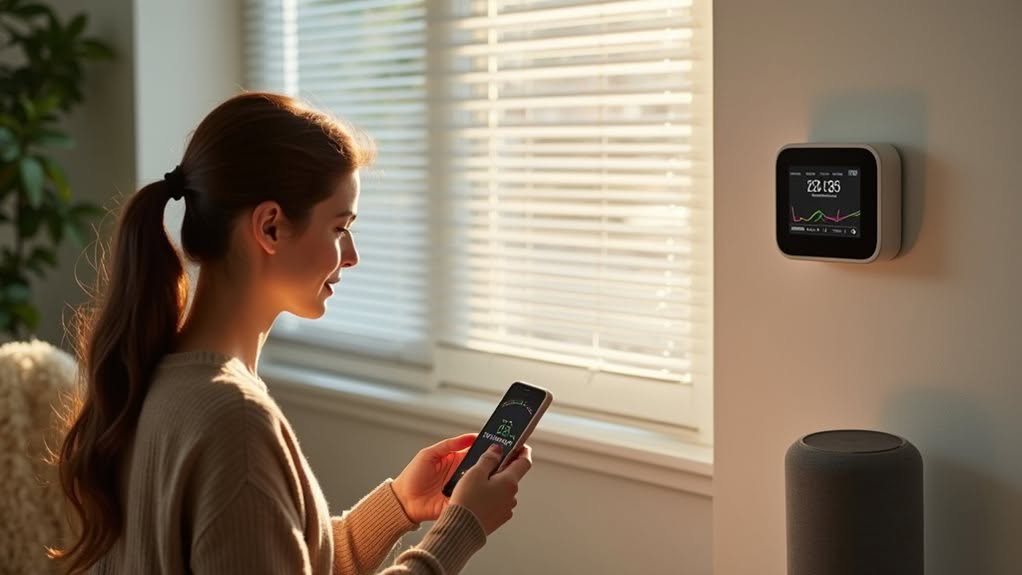
Your smart home’s energy usage dashboards provide valuable data about consumption patterns, allowing you to identify energy-hungry devices and peak usage times.
By examining these insights, you can make targeted adjustments to device schedules and settings that greatly reduce your monthly utility bills.
The machine learning capabilities in modern smart systems will analyze your preferences over time, automatically fine-tuning temperature, lighting, and appliance operations to maintain your comfort while optimizing energy efficiency.
Energy Usage Dashboards
The modern home’s energy environment becomes markedly clearer through energy usage dashboards, which provide homeowners with real-time visibility into their consumption patterns.
These monitoring tools transform raw data into actionable insights, helping you make informed decisions about when and how you use electricity.
With real-time monitoring, you’ll quickly identify when energy use spikes and which devices contribute most to your monthly bills.
These dashboards often compare your consumption patterns to similar households, giving you context for your usage levels.
When using energy dashboards effectively, focus on:
- Tracking usage during peak rate periods
- Setting specific energy reduction goals
- Identifying inefficient appliances that need maintenance
- Scheduling smart device operation during lower-cost hours
Regular dashboard checks can reveal unusual consumption patterns that might indicate malfunctioning equipment, potentially saving you money through timely repairs.
Machine Learning Patterns
While energy dashboards provide valuable visibility into consumption patterns, machine learning takes smart home efficiency to the next level by transforming collected data into predictive intelligence.
Your smart devices analyze historical energy consumption and user behavior to anticipate ideal settings based on your preferences. These systems can reduce energy costs by up to 15% by using occupancy sensors to guarantee heating and cooling operate only when needed.
Smart thermostats learn from your manual adjustments, automatically adapting schedules to match your routine. This intelligent adaptation can cut heating and cooling bills by up to 20%.
The technology identifies peak usage periods, allowing you to adjust settings during high-demand times.
As your smart home continuously learns from interactions and environmental changes, it progressively enhances efficiency while maintaining your comfort preferences.
Selecting Devices With Verified Energy-Saving Credentials
When shopping for smart home devices that truly deliver on energy-saving promises, identifying products with verified credentials should be your top priority.
The most reliable energy efficiency certifications come from independent organizations that test appliance performance ratings against established standards.
Look for these verified credentials when selecting energy-efficient smart devices:
- ENERGY STAR certification, which indicates up to 30% less energy consumption
- Third-party verification labels that validate manufacturer claims
- Integration capabilities with home energy management systems
- Machine learning features that adapt to your usage patterns
Devices with these credentials not only reduce your environmental impact but likewise deliver measurable savings on your utility bills.
Integrating Clean Energy Sources With Smart Technology
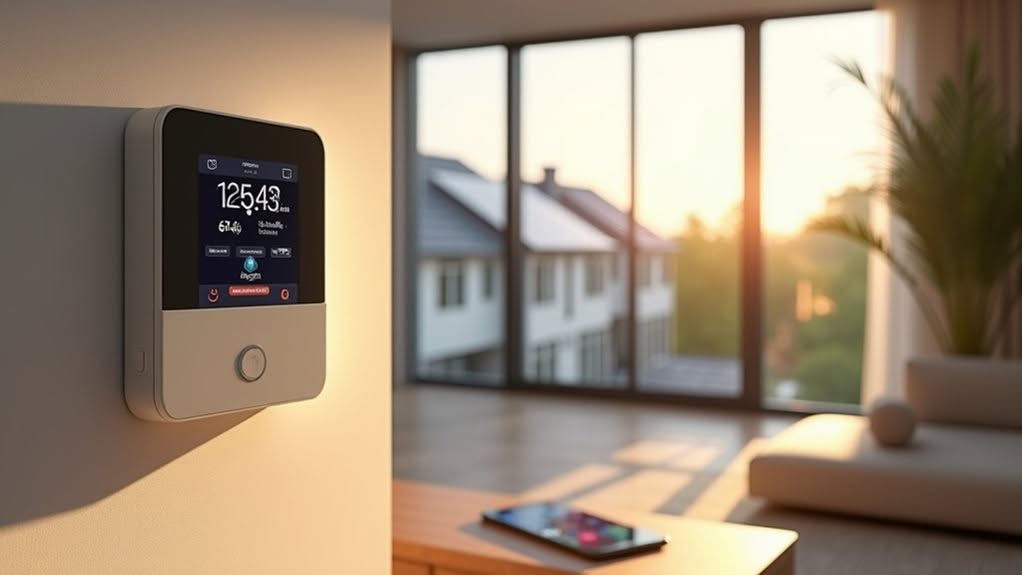
You’ll achieve ideal energy efficiency when you pair your smart devices with solar panels and other clean energy sources, creating a powerful synergy that reduces both carbon footprint and utility costs.
This integrated approach allows your smart home hub to automatically schedule high-consumption tasks like dishwashing or EV charging during peak solar production hours.
For homes in remote locations, combining off-grid energy solutions with smart automation systems guarantees reliable power management while maintaining comfort and convenience, even when disconnected from traditional utility grids.
Solar-Smart Device Synergy
As renewable energy adoption grows, the integration of solar power with smart home technologies creates a powerful partnership for sustainability-conscious homeowners.
Smart energy management systems track your solar production and automatically adjust connected devices to maximize renewable energy usage during peak sunlight hours.
You’ll achieve ideal solar panel integration by pairing your system with smart technology that reduces grid dependence. Energy storage solutions capture excess solar power for use when the sun isn’t shining.
Key benefits of solar-smart device efficiency include:
- Automatic adjustment of device operations to align with peak solar production
- Reduced energy costs through refined renewable energy usage
- Improved grid reliability through demand response capabilities
- Sustainable operation of smart devices like irrigation controllers using solar power
This synergy between solar energy and smart devices creates a more efficient, cost-effective home energy ecosystem.
Off-Grid Automation Solutions
Beyond integrated solar systems, true energy independence comes through extensive off-grid automation solutions that free homeowners from traditional utility connections.
These systems combine renewable innovation with smart technology to create self-sustaining homes.
By incorporating solar panels, wind turbines, and energy storage systems, you’ll dramatically reduce your carbon footprint while maintaining modern conveniences.
The off-grid benefits extend beyond environmental impact to considerable cost savings over time.
Smart energy management systems optimize your clean energy usage by scheduling devices to operate when renewable resources are most abundant.
IoT technology provides real-time monitoring of your energy production and consumption patterns, allowing you to make data-driven adjustments.
Recent advancements have introduced appliances that directly utilize renewable energy, making it easier than ever to balance comfort with efficiency in your smart home ecosystem.
Frequently Asked Questions
Will Smart Devices Work During Internet Outages?
Some smart devices can work during internet outages, but their functionality may be limited. You’ll find that devices with local processing capabilities will continue operating, while those requiring constant internet connectivity won’t function properly.
Can Smart Devices Compromise My Home’s Security?
Yes, they can. Your smart devices may have vulnerabilities that hackers exploit to access your home. You’ll reduce risks by using strong passwords and regularly installing security protocol updates on all connected devices.
How Much Money Will Smart Devices Actually Save Monthly?
You’ll typically save $10-50 monthly with smart devices. Your actual savings depend on your home’s size, current energy consumption, and which devices you install. Smart thermostats often deliver the most consistent monthly savings.
Are Budget Smart Devices Worth Buying?
Budget smart devices can be worth buying if you research first. Check smart device reviews for reliability and functionality. You’ll find many budget-friendly options that perform well without premium pricing. Don’t sacrifice crucial features.
Can Renters Install Smart Devices Without Landlord Permission?
You’ll need to check your rental agreement before installing smart devices. Many non-permanent options don’t violate renters rights, but it’s best to confirm device compatibility with your home’s systems first.
Final Thoughts
You’ll find that balancing comfort with energy efficiency isn’t about sacrifice but smart management. By integrating compatible devices, creating custom schedules, and regularly reviewing usage data, you’re taking control of your home’s energy footprint. Remember to combine automation with personal oversight for ideal results. With strategic planning and the right technology choices, you can maintain a comfortable home while reducing energy consumption and costs.