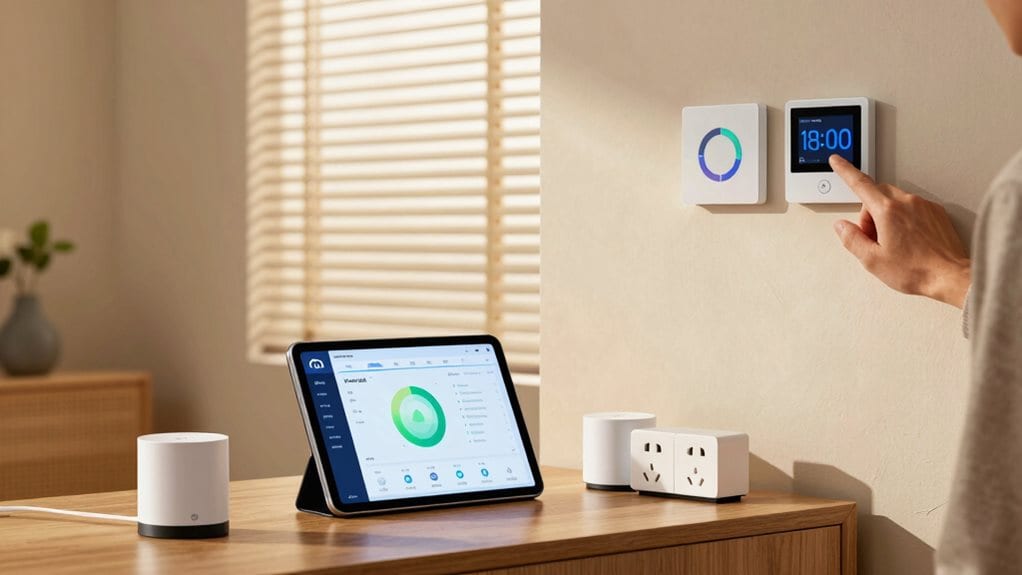
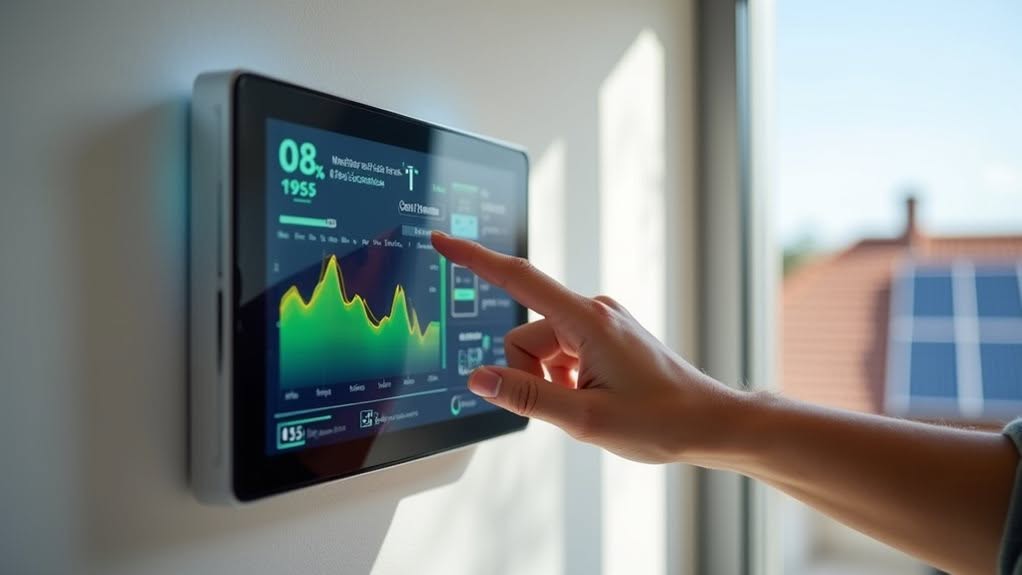
You’ve likely noticed how your energy bills fluctuate throughout the year, often in frustrating and unpredictable ways. AI is transforming this experience by creating smart homes that monitor, analyze, and optimize energy consumption in real time. Your thermostat can now learn your schedule, your lights can adjust based on occupancy, and your appliances can run when electricity costs less. These intelligent systems don’t just save money—they’re reshaping how we interact with our living spaces while reducing environmental impact. What exactly happens behind the scenes of these energy-saving technologies?
Understanding AI-Powered Energy Ecosystems
While traditional home energy systems rely on manual adjustments and fixed schedules, AI-powered energy ecosystems transform how you manage your home’s power consumption through intelligent automation.
These systems collect real-time data from IoT sensors throughout your home, analyzing usage patterns to make precise adjustments in heating, cooling, and lighting. This smart energy ecosystem design can reduce your utility bills by up to 30% through continuous optimization.
Predictive analytics anticipate your energy needs based on weather forecasts and occupancy patterns, automatically adjusting systems before you even notice a change in conditions.
Effective user engagement strategies include personalized dashboards that show your consumption patterns and potential savings. The system identifies unusual spikes and peak usage periods, empowering you to make informed decisions about your energy management with minimal effort.
For homeowners looking to enhance efficiency, smart energy monitoring solutions provide comprehensive tracking of electricity usage across all connected devices.
Real-Time Monitoring and Analytics Systems
Your smart home’s real-time monitoring system collects energy usage data continuously, giving you immediate insights into how and when you’re consuming electricity.
These systems analyze your consumption patterns using AI algorithms that identify peak usage times, inefficient appliances, and opportunities for energy reduction.
With this information at your fingertips, you’ll make more informed decisions about energy use, potentially cutting your household consumption by up to 30% through targeted adjustments to your daily habits and automated device scheduling.
Data-Driven Consumption Insights
The foundation of smart home energy management rests on data-driven consumption insights that transform how homeowners understand and control their energy usage.
Through IoT-enabled smart meters, you’ll receive continuous data about your energy consumption patterns throughout the day.
These systems analyze your usage behavior and identify which appliances consume the most power, allowing you to make strategic adjustments.
When unusual energy spikes occur, AI platforms can alert you immediately, helping you address potential issues before they impact your bill.
Predictive Usage Patterns
Building upon consumption insights, predictive usage patterns take smart home energy management to the next level. Through advanced energy behavior analysis, AI algorithms process data from IoT-enabled smart meters to forecast your future energy needs with remarkable accuracy.
These predictive systems offer several key advantages:
- Reduction in energy bills by up to 30% through optimized consumption scheduling
- Automatic adjustment of heating, cooling, and lighting based on real-time occupancy
- Early detection of unusual consumption spikes before they become costly problems
Consumption forecasting doesn’t just track what you’ve used—it anticipates what you’ll need. By analyzing historical patterns alongside current usage, these systems can redistribute energy more efficiently throughout your home.
The result is a smarter living environment that adapts to your lifestyle while consistently reducing waste.
Predictive Energy Usage Optimization
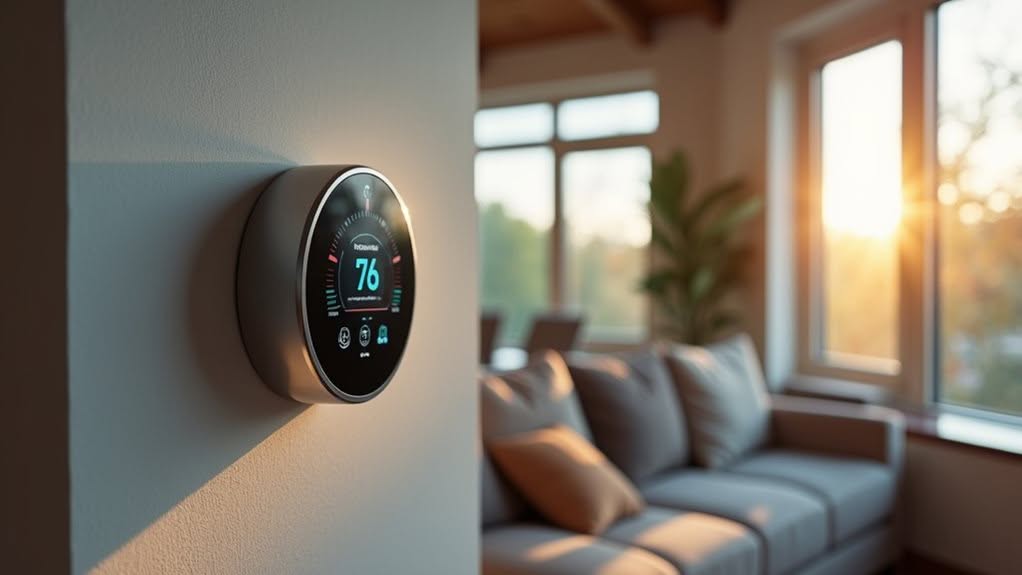
Modern smart homes leverage AI-driven predictive analytics to revolutionize energy management with remarkable precision and efficiency.
These systems analyze your user behavior alongside weather forecasts and historical consumption data to optimize how your home uses energy.
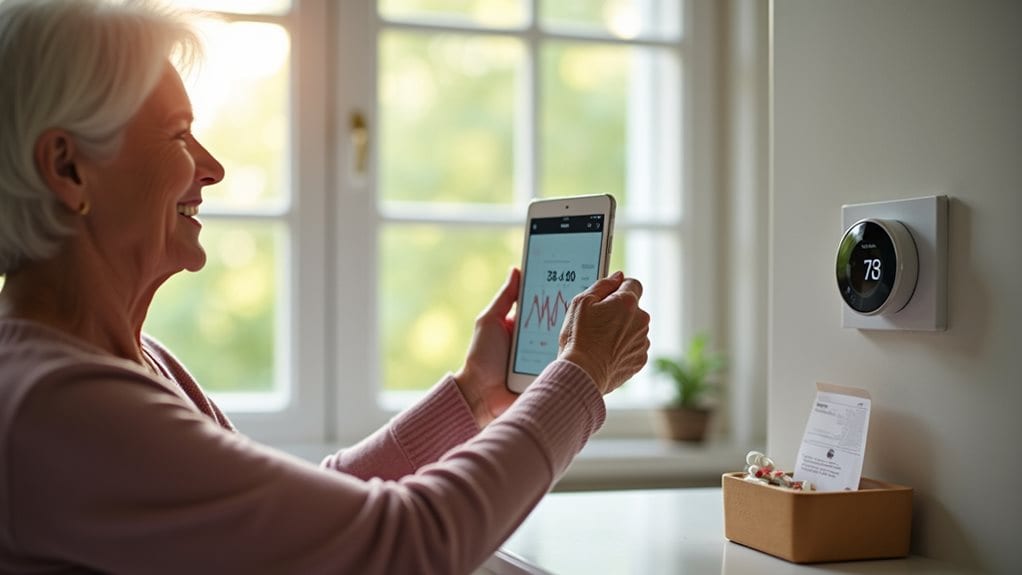
Smart thermostats learn your preferences over time, automatically adjusting temperature settings to reduce waste. This adaptive energy forecasting can cut your heating and cooling costs by up to 20%.
By identifying upcoming high-demand periods, AI systems reschedule appliance operation to off-peak hours, potentially reducing your utility bills by 15-30%.
The continuous monitoring detects unusual consumption patterns, allowing for immediate adjustments.
Homeowners implementing these AI-based solutions report annual savings between $300 and $600 on electricity costs, making the investment in smart technology financially beneficial in addition to environmentally responsible.
Smart Thermostat and HVAC Management
At the heart of energy-efficient homes, smart thermostats represent one of the most impactful AI applications in residential settings. These devices leverage AI algorithms to learn your preferences and daily routines, optimizing HVAC operation to reduce energy consumption by up to 30%.
Smart thermostat features extend beyond basic temperature control:
- Integration with local weather forecasts enables preemptive HVAC adjustments, saving approximately 20% on heating and cooling costs.
- Real-time energy price analysis shifts operation to off-peak hours, maximizing financial savings.
- Predictive maintenance alerts identify potential system issues before they become costly problems.
You’ll gain valuable insights into your energy usage patterns through detailed reports, empowering you to make informed decisions.
These HVAC optimization techniques not only improve comfort but also prolong your system’s lifespan through more efficient operation.
Automated Lighting Control for Energy Conservation

While smart thermostats enhance your HVAC system, automated lighting control stands as another powerful tool in your home’s energy conservation arsenal.
These AI-powered systems can reduce your energy consumption by up to 30% through automated brightness adjustment based on natural light availability.
Smart lighting responds to your home’s occupancy patterns, turning off or dimming lights in empty rooms to prevent wasted electricity. The system learns your preferences and routines, delivering ideal illumination while minimizing usage during peak hours.
Energy usage analytics show that homeowners save between $100 and $200 annually after implementing these controls.
The technology works with weather forecasting systems to adjust indoor lighting based on outdoor conditions, guaranteeing you’re never using more illumination than necessary.
Intelligent Appliance Scheduling During Off-Peak Hours
Your smart home’s AI can schedule your washing machine and dishwasher to run during off-peak hours, reducing your utility costs by up to 30%.
These cost-saving automation systems connect with dynamic electricity rates, automatically shifting energy-intensive tasks to times when power is cheaper.
Cost-Saving Automation Systems
Smart homes leverage AI-powered automation to dramatically reduce energy costs through intelligent appliance scheduling.
You’ll find that these systems analyze real-time electricity pricing data to operate your energy efficient appliances during off-peak hours when rates are lowest.
- Save 15-30% on energy bills, translating to $300-$600 annual savings
- Reduce winter heating costs by 25% and summer cooling expenses by 20%
- Recover your investment in automated scheduling solutions within 12-18 months
The financial benefits of intelligent scheduling are notable and sustainable.
By allowing AI to manage when your major appliances run, you’re fundamentally putting your home’s energy consumption on autopilot.
Your dishwasher, laundry machines, and HVAC systems will automatically operate when electricity is cheapest, maximizing your savings without requiring daily attention.
Dynamic Rate Integration
The foundation of effective energy management lies in dynamic rate integration, which builds upon basic automation by incorporating real-time pricing data. This technology enables your smart home system to schedule energy-intensive appliances during times when electricity costs less.
By analyzing appliance usage trends, AI systems can predict when you typically run your dishwasher or washing machine and automatically adjust these schedules to off-peak hours. This intelligent scheduling can reduce your monthly energy bills by 15-30%.
The impact extends beyond your wallet. Advanced algorithms that incorporate dynamic pricing strategies help decrease grid strain by shifting consumption away from peak demand periods.
Homeowners implementing these systems typically save $300-$600 annually, while simultaneously reducing peak-hour energy consumption by up to 20%.
Predictive Load Balancing
Predictive load balancing represents the next evolution in smart home energy management, building upon dynamic rate integration with more sophisticated forecasting capabilities.
This technology uses predictive analytics to schedule your high-energy appliances during off-peak hours when electricity costs less. AI algorithms analyze your usage patterns and real-time energy prices to determine the ideal operating times for appliances.
Energy forecasting systems can defer dishwasher or washing machine cycles to periods of lower grid demand, creating considerable savings.
- Save between $300-$600 annually on your electricity bills
- Reduce monthly energy costs by 15-30% through intelligent scheduling
- Contribute to a more stable energy grid by minimizing peak-time strain
Integration With Renewable Energy Sources
As renewable energy sources become increasingly accessible to homeowners, AI systems are revolutionizing how these technologies integrate with smart home ecosystems.
These intelligent systems analyze weather patterns and solar panel performance, optimizing energy generation through predictive analytics.
Your AI-powered home can now manage energy storage more effectively, capturing excess power from solar panels and deploying it during peak demand periods.
This renewable energy integration creates a more sustainable living environment while potentially reducing your energy costs by 15-30%.
Smart algorithms dynamically adjust your appliances to prioritize using renewable energy when it’s abundant, minimizing reliance on grid power.
Through continuous machine learning, these systems improve efficiency over time, improving the stability of your home’s energy supply from decentralized renewable sources.
Cost Benefits and ROI of AI Energy Systems
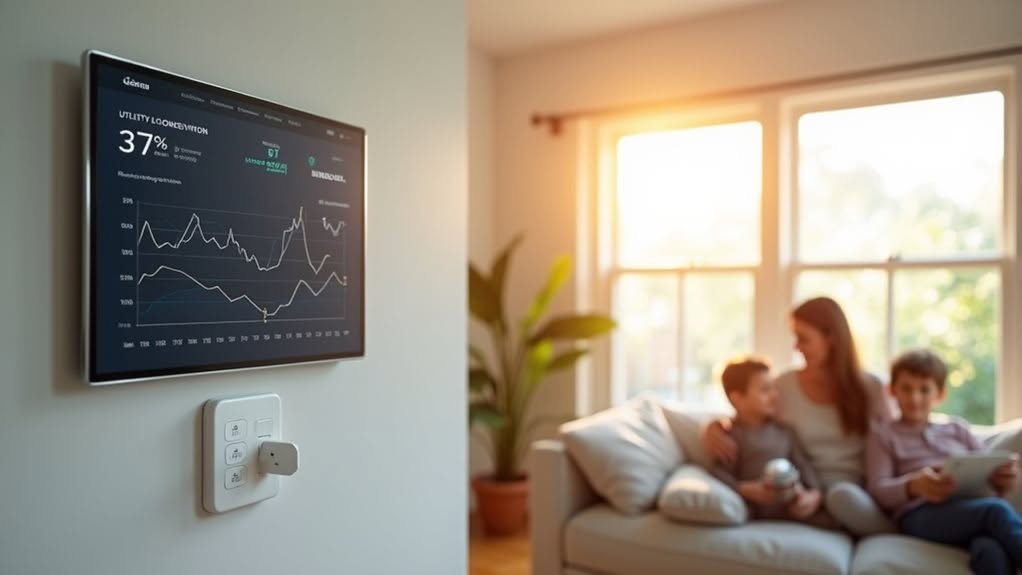
While many homeowners initially hesitate at the upfront cost of smart energy systems, the financial benefits quickly become apparent through substantial utility savings. Your investment typically pays for itself within just 12-18 months through reduced energy consumption.
A proper cost analysis reveals impressive returns on your investment:
- Monthly energy bills decrease by 15-30%, saving the average American household $300-$600 annually
- Winter heating costs drop by 25% while summer cooling expenses reduce by 20%
- Utility company rebates and incentives accelerate your return on investment
Smart investment strategies should consider both the immediate energy savings and the extended lifespan of your appliances.
With reduced operational strain, your HVAC systems and other smart-connected devices require less maintenance, further improving your long-term financial benefits.
Data Privacy and Security in Smart Energy Management
Despite the substantial efficiency advantages of smart energy systems, they introduce important privacy and security considerations for your home. A recent survey reveals that 63% of consumers worry about the security of their data when using smart home devices.
You’ll need to evaluate how your energy management system implements data encryption and access controls to protect your personal consumption information. Smart device vulnerabilities can expose sensitive data, making regular security audits and risk assessment crucial protection measures.
Companies must maintain compliance frameworks aligned with privacy regulations like GDPR and CCPA when handling your energy data. This includes obtaining proper user consent and implementing data anonymization techniques.
For your protection, verify your provider has a clear breach response protocol and threat mitigation strategies that evolve with emerging cyber risks.
Frequently Asked Questions
How Long Does AI Take to Learn My Household Energy Patterns?
AI typically learns your energy patterns within 2-4 weeks. Your system’s learning speed depends on how consistently you use devices. It’s constantly analyzing data to identify your routines and optimize energy consumption.
Can AI Energy Systems Work With Older Home Infrastructure?
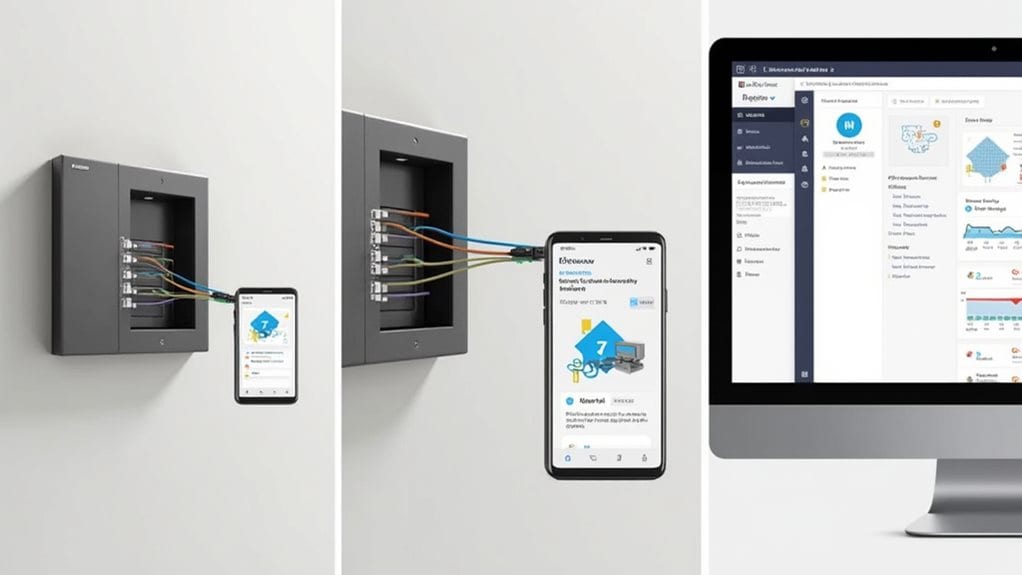
Yes, you can integrate AI energy systems with older homes through retrofit solutions that connect to your legacy systems. Smart plugs, adapters, and modern thermostats work with existing wiring to enable intelligent energy management.
Do I Need Technical Expertise to Operate AI Energy Management Tools?
No, you don’t need technical expertise. Modern AI energy management tools feature intuitive user interfaces and prioritize user experience with simple setup processes, automated operations, and smartphone controls that anyone can master.
How Does Power Outage Affect Ai-Based Energy Management Systems?
During outages, your AI system stops functioning unless it has battery backup. The outage impact varies by system design. Implement recovery strategies like cloud data backups to guarantee your settings and learnings aren’t lost when power returns.
Can Rental Properties Implement Smart Energy AI Without Landlord Modifications?
You can implement non-permanent AI solutions using smart plugs, portable thermostats, and app-based systems. Check your rental agreements first and get tenant consent if you’re subletting to avoid lease violations.
Final Thoughts
You’re witnessing a notable transformation in home energy management through AI integration. By adopting these smart systems, you’ll not just reduce your energy bills but also contribute to environmental sustainability. The combination of real-time monitoring, predictive analytics, and automated control creates an efficient energy ecosystem that adapts to your lifestyle. As these technologies continue to evolve, your smart home will become increasingly responsive while maintaining your privacy and security.