
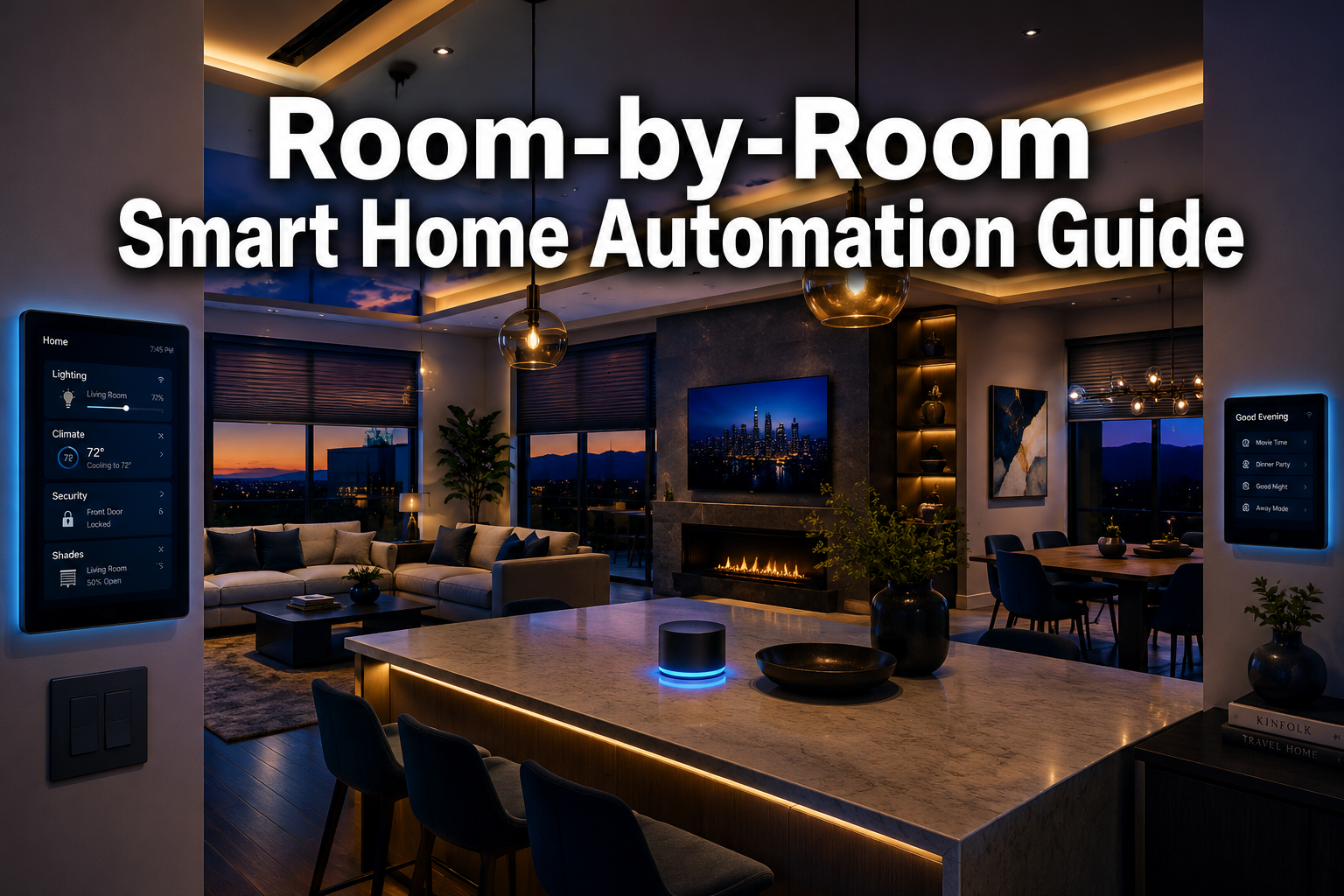
The global smart home market is projected to reach $175.1 billion in 2026 — and it’s not just tech enthusiasts driving that growth. Everyday homeowners are discovering that the best smart home automation ideas aren’t complicated. They’re practical, room-specific upgrades that make daily life genuinely easier.
Whether you’re starting from scratch or adding to an existing setup, this room-by-room guide gives you clear, actionable smart home automation ideas for every space in your home.
Key Takeaways
- Smart home automation ideas work best when tailored to each room’s specific function and daily routines.
- Energy-efficient living is one of the biggest benefits — smart systems can cut energy bills by up to 30%.
- AI-powered devices are shifting from command-based to intent-based control, anticipating your needs automatically.
- A connected home doesn’t require a full renovation — simple, modular upgrades work room by room.
- The most effective setups combine voice control, physical keypads, and automated schedules for hands-free convenience.
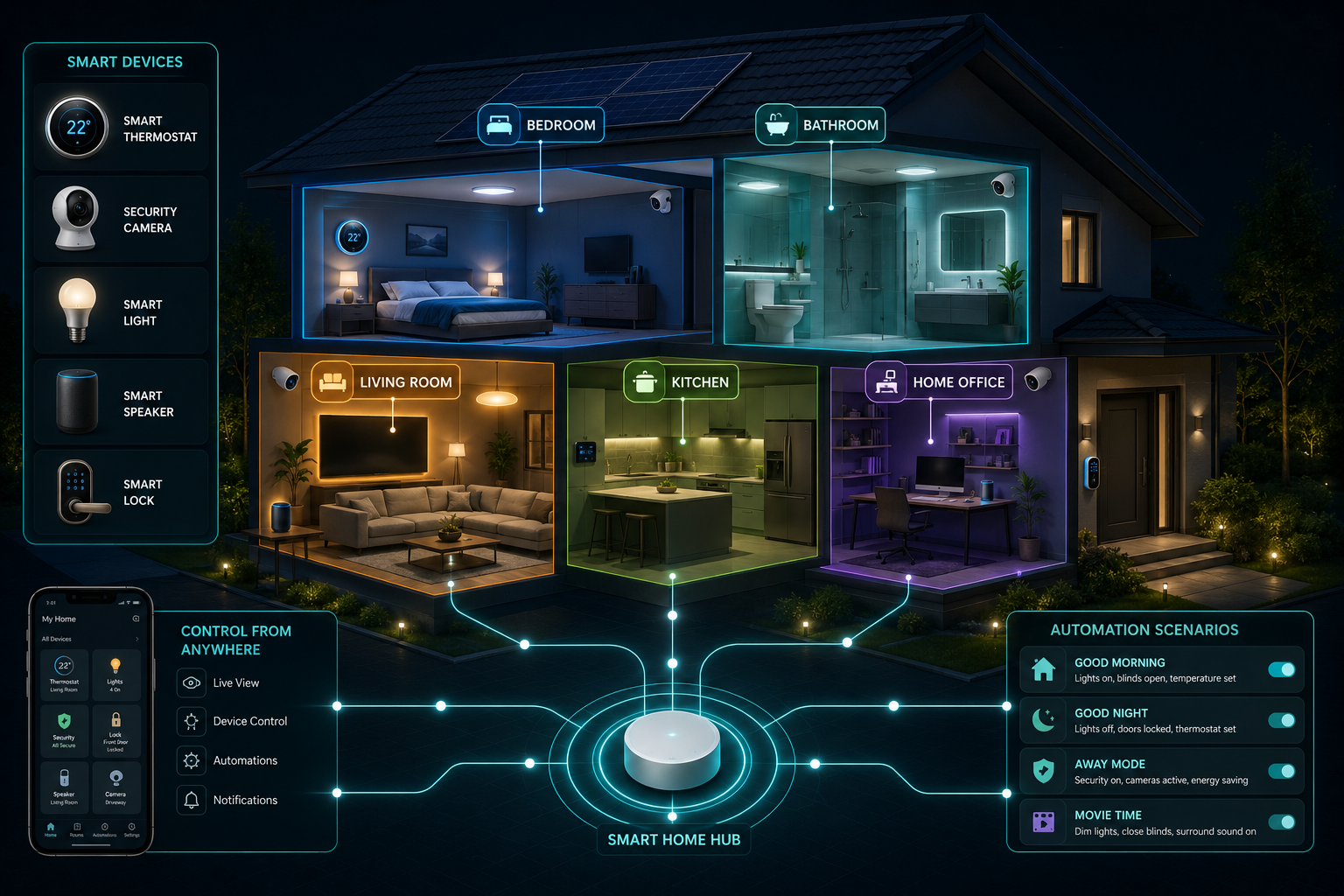
Why Room-by-Room Automation Makes Sense
Not every smart home automation idea suits every space. A motion-triggered light that works brilliantly in a hallway would be frustrating in a living room mid-film. Thinking room by room lets you match the right technology to the right environment.
The good news? Smart living made simple is the direction the whole industry is heading. Modern platforms now support thousands of third-party devices under one unified ecosystem, so everything works together without the headaches of mismatched apps.
“The best smart home setups aren’t the most technically impressive — they’re the ones that just work, every single day.”
Living Room: Comfort and Entertainment at Your Fingertips
The living room is where automation delivers the most visible results. Here’s where scene-based control really shines — lighting, curtains, and temperature all adjusting together at the touch of a button or a simple voice command.
Top smart home automation ideas for the living room:
- 🎬 Scene lighting — set a “Movie Night” scene that dims the lights, closes the smart blinds, and lowers the thermostat automatically.
- 📺 Smart TV integration — control streaming, volume, and inputs via voice or a single app.
- 🔊 Multi-room audio — play music throughout the home or zone it to specific rooms.
- 🌡️ Smart thermostat — room-by-room heating control keeps the living room at the perfect temperature without heating empty spaces.
- 🪟 Automated curtains — smart curtains that open at sunrise and close at sunset, tailored to your routine.
The shift away from separate app-controlled functions towards integrated scene-based automation is one of the strongest trends in 2026. Homeowners want everything to work together naturally — and now it does.
Kitchen: Smarter Cooking and Energy Management
The kitchen is the hub of the home, and it’s packed with opportunities for smart kitchen upgrades.
Best smart home automation ideas for the kitchen:
| Device | Key Benefit |
|---|---|
| Smart fridge | Inventory tracking, expiry alerts |
| Smart oven | Remote preheat, recipe guidance |
| Smart coffee machine | Scheduled brewing, voice activation |
| Smart plugs | Cut standby power waste |
| Energy monitor | Track real-time appliance usage |
Smart plugs are one of the easiest entry points — plug in any appliance and control it remotely or set schedules to avoid wasting electricity. Pair them with an energy monitor to see exactly where your power is going.
Smart energy management has become core infrastructure in modern homes. Devices can automatically shift high-energy tasks like dishwasher cycles to off-peak hours, delivering real cost savings every month.
Bedroom: Sleep Better With Intelligent Automation
A smarter bedroom means better rest. Automation here is all about creating the right environment without lifting a finger — hands-free convenience at its most valuable.
Smart bedroom automation ideas:
- 🌅 Sunrise alarm simulation — smart bulbs gradually brighten before your alarm goes off, making waking up far gentler.
- 🌙 Sleep mode scene — one command dims the lights, sets the thermostat to your preferred sleep temperature, and locks the doors.
- 📱 Smart charging station — automated plugs cut power once devices are fully charged.
- 💨 Smart air purifier — monitors and improves indoor air quality while you sleep.
- 💧 Smart humidifier — maintains ideal humidity levels automatically, especially useful in winter.
Modern smart thermostats now offer sleep-specific modes that coordinate temperature and humidity for optimal rest. That’s energy-efficient living and comfort working together.
Bathroom: Comfort, Safety, and Efficiency
The bathroom might seem like an unlikely candidate for automation, but it’s one of the most rewarding spaces to upgrade.
Practical smart home automation ideas for the bathroom:
- 🚿 Smart shower systems — set your preferred temperature and the shower reaches it before you step in.
- 💡 Motion-activated lighting — ideal for night-time trips without blinding yourself.
- 🪞 Smart mirror — displays weather, calendar, and news while you get ready.
- 💧 Leak sensors — detect water leaks early and send instant alerts to your phone, protecting your home from damage.
- 🌬️ Smart extractor fan — triggers automatically based on humidity levels, preventing mould and improving air quality.
Safety and home security extend into the bathroom too. Leak detection is one of those quiet automations that can save thousands in repair costs.
Home Office: Productivity-Boosting Smart Home Ideas
With more people working from home, the home office has become a serious space for smart upgrades.
Smart office automation ideas:
- 💡 Circadian lighting — bulbs that shift colour temperature throughout the day to reduce eye strain and support focus.
- 🎙️ Voice assistant integration — set timers, manage calendars, and control devices without breaking your workflow.
- 🌡️ Zone heating — only heat the office when it’s in use, cutting energy waste.
- 🔌 Smart extension leads — power down all devices with one command at the end of the working day.
- 📷 Smart security camera — monitor the front door without leaving your desk.
Hallway and Entryway: Your First Line of Smart Security
The entryway sets the tone for your whole connected home. This is where smart home security starts.
Key automation ideas for hallways and entryways:
- 🔐 Smart locks — keyless entry via app, code, or fingerprint. Grant access remotely for guests or deliveries.
- 📹 Video doorbell — see and speak to visitors from anywhere in the world.
- 💡 Motion-triggered lighting — lights activate when you arrive and switch off automatically when you leave.
- 📦 Delivery alerts — get notified the moment a parcel arrives.
- 🗝️ Smart keypads — physical keypads remain essential for everyday use, offering reliable control without relying on a phone.
A safer home starts at the front door. Smart locks and video doorbells are consistently among the highest-rated upgrades for both security and convenience.
Outdoor Spaces: Extend Your Connected Home Outside
Don’t stop at the back door. Outdoor automation adds security, convenience, and kerb appeal.
Outdoor smart home automation ideas:
- 🌿 Smart garden irrigation — waters plants based on weather forecasts and soil moisture, not just a fixed timer.
- 💡 Automated outdoor lighting — dusk-to-dawn schedules or motion-triggered security lights.
- 📹 Outdoor smart cameras — monitor driveways, gardens, and gates from your phone.
- 🚗 Smart garage door — open and close remotely, with alerts if it’s left open.
Whole-Home Essentials: The Backbone of Smart Living
Some smart home automation ideas apply to every room. These are the building blocks of a truly connected home.
Must-have whole-home automation:
- 🏠 Smart hub — a central controller that links all your devices, regardless of brand.
- 🌡️ Smart thermostat — the single most impactful upgrade for energy-efficient living. Smart thermostats are now a baseline requirement in 85% of new home builds.
- 📡 Reliable Wi-Fi mesh network — automation only works as well as the network behind it.
- 🔔 Smart smoke and CO detectors — instant alerts to your phone, even when you’re away.
- 🤖 AI-powered automation — modern systems now anticipate your needs rather than waiting for commands, adjusting settings based on your habits and preferences.
Smarter everyday living isn’t about having the most devices — it’s about having the right ones, set up to work together seamlessly.
FAQ
Q: What’s the best starting point for smart home automation ideas? Start with a smart speaker or hub, a smart thermostat, and a couple of smart bulbs or plugs. These give you immediate benefits and form the foundation for expanding your system room by room.
Q: Do smart home devices work without the internet? Many devices work locally — meaning they function even without an internet connection — but remote access and some advanced features do require Wi-Fi. A reliable mesh network is worth the investment.
Q: Are smart home systems compatible with each other? Compatibility has improved significantly. Platforms supporting the Matter standard work across thousands of devices from different brands. Always check compatibility before buying.
Q: How much can smart home automation actually save on energy bills? Well-optimised smart home systems — particularly smart thermostats and energy monitors — can reduce energy bills by up to 30% by eliminating waste and shifting usage to off-peak hours.
Q: Is smart home automation difficult to set up? Most modern smart home devices are designed for simple setup with guided apps. Many require no professional installation. Start small, build confidence, and expand at your own pace.
Q: Can renters benefit from smart home automation? Absolutely. Smart plugs, portable smart speakers, battery-powered smart locks, and wireless sensors require no permanent changes and are easy to take when you move.
Conclusion
The best smart home automation ideas aren’t about technology for its own sake — they’re about making your home work harder for you. Whether it’s a bedroom that adjusts itself for perfect sleep, a kitchen that tracks your energy use, or a front door that keeps your family safe, every room has something to gain.
Your next steps:
- ✅ Pick one room and identify the single biggest inconvenience or inefficiency.
- ✅ Choose one device that solves that problem — a smart plug, a thermostat, or a smart bulb.
- ✅ Build from there, connecting devices through a single hub or app.
- ✅ Explore smart home technology guides to find the right products for your setup.
Control at your fingertips, a safer home, and genuine energy savings — that’s what smart home automation delivers when it’s done right. Start simple, stay practical, and let your home do more of the work.
👆 Pick a room above to get started


