
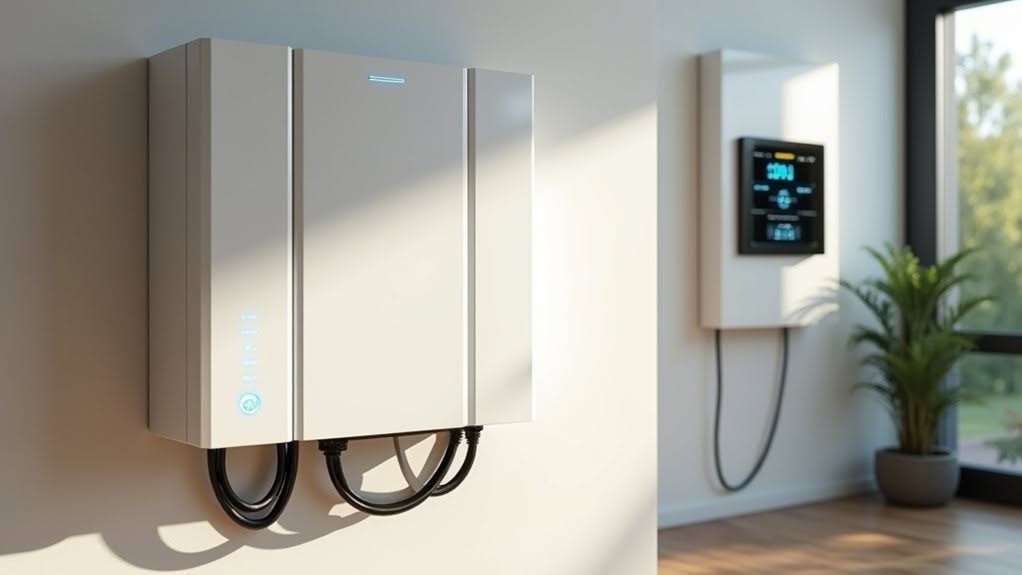
You’ve likely heard about smart battery storage systems as a complement to solar panels, but their benefits extend far beyond basic energy storage. These systems allow you to store excess electricity generated during sunny periods and use it when needed most—during outages or high-demand evening hours. With the average American home consuming 30 kWh daily, a properly sized battery system can greatly reduce your dependence on the grid while potentially lowering your monthly utility bills through strategic energy management.
Understanding Smart Battery Technology for Residential Use
As homeowners increasingly seek energy independence, smart battery storage systems have emerged as a critical solution for maximizing residential solar power.
These systems efficiently store excess energy generated by your solar panels for use during peak times or outages.
Modern residential battery chemistry has evolved to support storage capacities between 5 kWh and 30 kWh, with modular designs that allow for expansion as your energy needs grow.
The Anor solic X1 exemplifies advanced energy management capabilities through automatic scheduling and remote app control.
Most home battery systems complete a full charge or discharge cycle in approximately 1.5 hours, providing quick access to your stored energy.
These systems are engineered to operate reliably in various weather conditions and can support off-grid living by managing high inductive loads during power outages.
Financial Considerations: Costs, Incentives, and Return on Investment
While solar panels generate clean energy, the financial aspects of battery storage systems often determine their feasibility for homeowners. A cost breakdown reveals you’ll typically pay about $1,037 per kWh, making a standard 15 kWh system approximately $15,555 before incentives.
The 30% federal tax credit greatly reduces your upfront investment, but you’ll need to act before it expires on December 31, 2025. This incentive evaluation is essential when planning your purchase timeline.
Payment options include cash, loans, and leases, with cash purchases offering the best long-term value.
For off-grid capabilities, prepare to invest around $40,000 for a complete system.
Don’t overlook local incentives—state rebates and utility programs can provide additional savings, making battery systems more financially appealing for your home.
Installation Process and Key Considerations for Homeowners

Once you’ve assessed the financial aspects of your battery storage system, the installation process demands careful planning and expert execution.
Start by gathering multiple quotes from certified professionals to guarantee competitive pricing and quality service. Your installer selection is critical for safety and system performance.
Schedule a site assessment where technicians will evaluate your electrical panel and determine the best placement for your battery system.
The installation timeline typically ranges from a few hours to more than a day, depending on your system’s complexity. For example, the Anor Solic X1 system features modular 5 kWh units that can be stacked up to 30 kWh, making installation more manageable.
Always review your contract thoroughly before signing, paying attention to costs, warranties, and cancellation terms.
Maximizing Performance: Capacity, Monitoring, and System Integration
To maximize the performance of your smart battery storage system, understanding its capacity configurations and monitoring capabilities is essential.
Systems like the Anor solic X1 offer modular designs that allow you to scale your capacity from 5 kWh up to 30 kWh, or even 180 kWh with multiple connected units.
Each battery module delivers a 3 kW charge and discharge rate, completing a full cycle in about 1.5 hours for efficient energy management throughout the day.
You’ll gain valuable insights through advanced mobile monitoring apps that track solar generation, battery status, and household energy consumption in real-time.
Dual Maximum Power Point Trackers optimize energy capture from multiple solar panel strings, while smart scheduling functions automatically manage devices like heat pumps based on your solar production levels, improving capacity optimization.
Design Features and Safety Standards of Modern Home Battery Systems
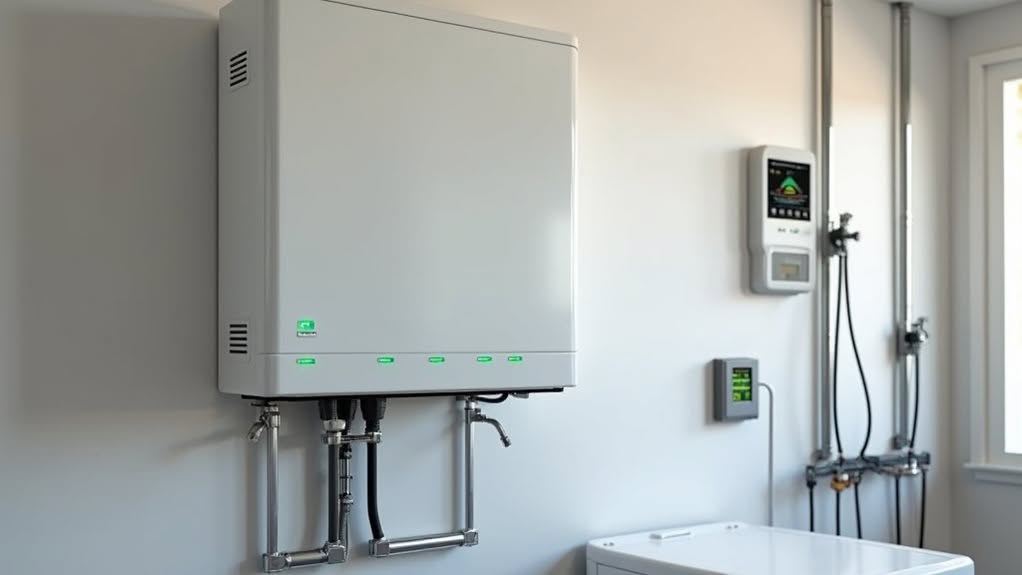
Modern home battery systems combine sophisticated design elements with rigorous safety standards to guarantee reliable performance and seamless integration into your home.
Products like the Anor solic X1 exemplify design efficiency with their slim 150mm profile, allowing you to install them visibly without compromising your home’s aesthetics. The IP66 anti-corrosion rating assures durability near shorelines and in harsh weather conditions.
Safety innovations include covered connections and organized cable management trays that greatly reduce fire hazards. Bidirectional RCBos provide additional protection by controlling energy flow between your battery system and home electrical network.
Each battery module operates with a low startup voltage and 3 kW charge/discharge capacity, enabling efficient performance even during low light conditions while supporting off-grid functionality when needed.
Frequently Asked Questions
How Do Batteries Perform During Extended Power Outages?
During extended outages, your battery’s performance depends on its efficiency and the outage duration. You’ll have power for hours or days, but eventually need recharging if the grid remains down for too long.
Can Smart Batteries Power My Entire Home Simultaneously?
You can’t power your entire home simultaneously with most residential batteries. Your home energy needs likely exceed standard battery capacity, so you’ll need to prioritize crucial appliances during outages or install multiple units.
Do Batteries Work With Existing Solar Systems From Different Manufacturers?
Yes, most smart batteries offer battery compatibility with existing solar systems from different manufacturers. You’ll need proper solar integration hardware like an inverter that connects your current panels to your new battery storage system.
What Happens to My Battery System if I Move?
You can take your battery system with you. Most manufacturers allow battery relocation and system reinstallation at your new home, though you’ll need professional help and may incur additional costs for removal and reinstallation.
How Does Extreme Weather Affect Battery Lifespan and Performance?
Extreme heat degrades your battery faster, while freezing can reduce capacity. Modern systems include temperature regulation to maintain weather resilience, but severe temperature extremes will still impact performance and shorten overall lifespan.
Final Thoughts
You’ll find that smart battery storage systems represent a valuable investment for your home’s energy future. They offer independence from the grid, reduce electricity costs, and provide backup during outages. With federal tax incentives and decreasing technology costs, these systems are becoming increasingly accessible. Consider your household’s energy needs, available space, and local regulations before making this important addition to your home energy infrastructure.