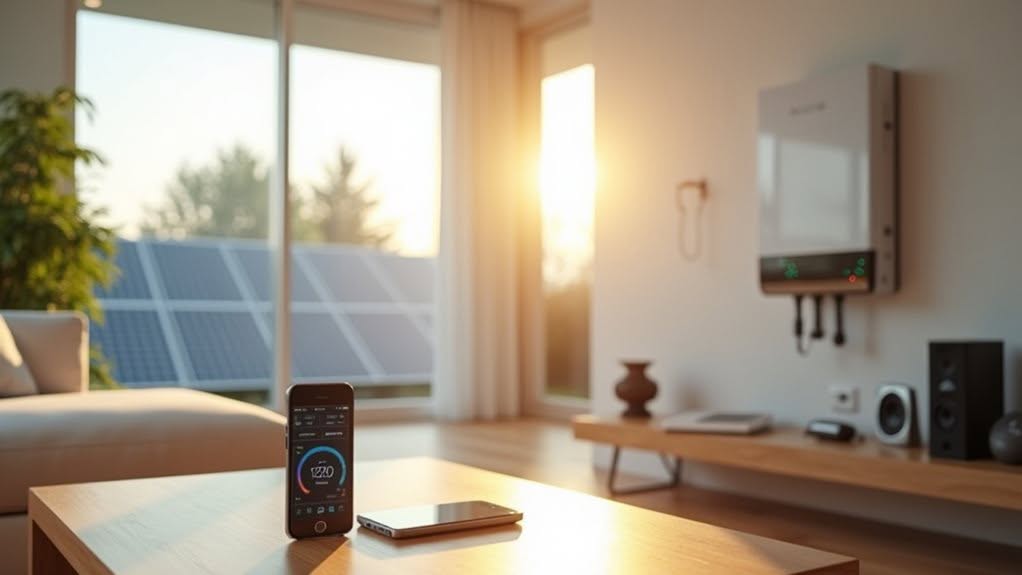
Have you considered how your smart home devices could work more efficiently with solar power? By connecting your existing smart technology to a solar system, you can reduce your energy bills while making your home more sustainable. Your smart thermostat, appliances, and lighting can all be programmed to operate during peak solar production hours. This integration creates a truly intelligent home ecosystem that adapts to both your needs and available sunlight throughout the day.
How Smart Solar Systems Revolutionize Home Energy Management
Smart solar systems have transformed how homeowners manage their energy consumption through advanced technology integration. These systems combine microinverter technology with communication devices, creating an all-encompassing energy management solution for your home.
With cloud-based monitoring platforms like the Enphase App, you’re able to track your system’s performance in real-time. You’ll receive automatic software updates, guaranteeing you always have access to the latest features and enhancements.
Your system’s panel-level resiliency means that if one panel fails, the others continue working independently. This design greatly improves reliability compared to traditional systems.
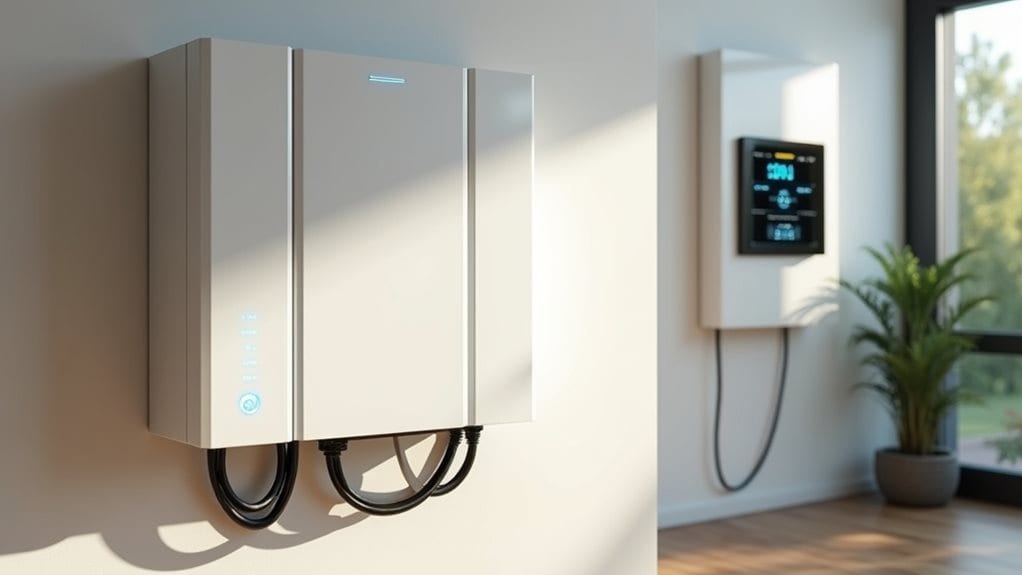
Battery integration allows you to store excess energy for use during cloudy days or nighttime.
Additionally, AI and machine learning capabilities optimize your energy usage by predicting consumption patterns and adjusting device operation accordingly.
Installing a home battery storage system can maximize your energy independence by reducing reliance on the electrical grid during peak usage hours.
Essential Components of an Integrated Solar-Smart Home System
Now that you understand how smart solar systems can transform your home’s energy management, let’s examine what goes into creating such a system.
A complete solar-smart home integration requires several key components working together. Various solar panel types are available, from monocrystalline panels offering higher efficiency to polycrystalline options that provide cost benefits.
Microinverters represent one of the smart inverter benefits, converting DC electricity to AC at each panel, which improves safety and performance compared to traditional string inverters.
Battery storage systems capture excess daytime energy for nighttime use, reducing your reliance on the grid.
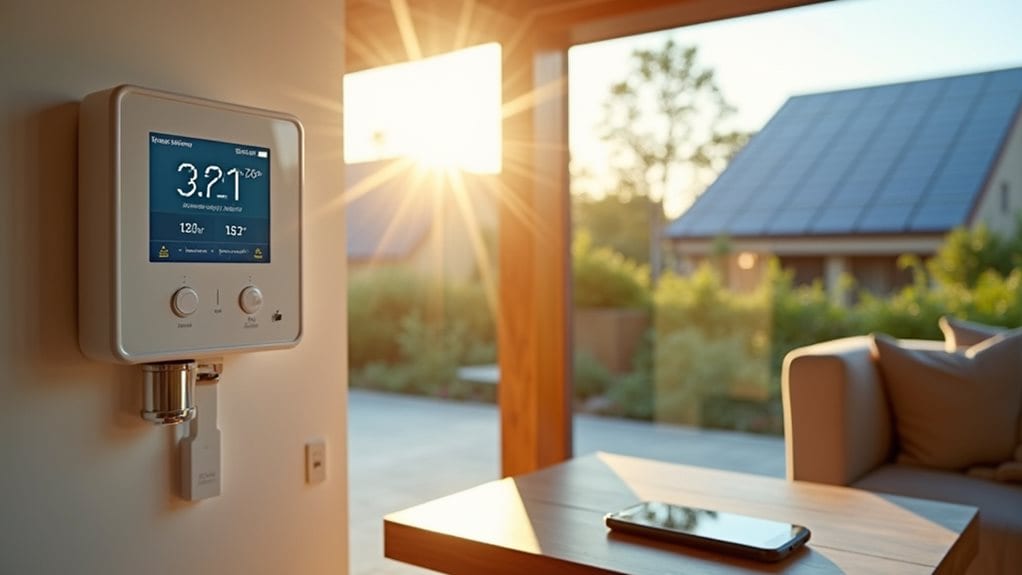
The smart energy management system ties everything together, tracking your production and usage while automating your smart devices like thermostats and lighting based on solar availability and peak demand periods.
Optimizing Smart Device Performance With Solar Power
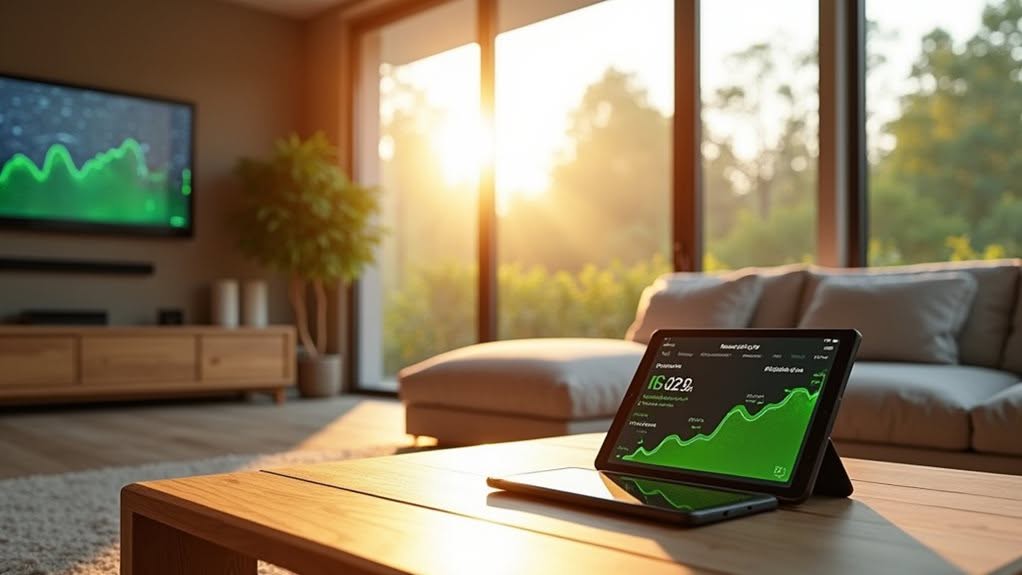
When your solar panels are producing maximum energy, you’re presented with a perfect opportunity to synchronize your smart home devices for ideal efficiency.
Programming your appliances to operate during peak solar production hours can greatly reduce your reliance on grid electricity.
Smart technology integration offers measurable benefits for improving your home’s energy efficiency:
- Install smart thermostats to reduce heating and cooling costs by 10% through automatic adjustments based on solar availability.
- Implement smart lighting systems that dim or turn off completely during daylight hours when your panels generate abundant power.
- Set up real-time monitoring through energy management systems to track solar production and optimize device usage accordingly.
Charging electric vehicles with excess solar energy further maximizes your system’s potential, increasing energy independence and lowering overall electricity costs.
Maximizing Energy Savings Through Automated Consumption Controls
By strategically implementing automated consumption controls in your home, you’ll discover considerable opportunities for energy savings beyond basic solar panel installation.
Automated scheduling of high-consumption appliances like dishwashers and washing machines during peak solar production times can improve your energy efficiency. This simple adjustment can reduce your reliance on grid electricity substantially.
Smart meters provide real-time monitoring of your energy consumption patterns, allowing you to make informed decisions about when to use certain devices. You can track exactly how your solar system is performing and adjust accordingly.
Smart plugs and devices further boost your control by automatically managing power to non-essential appliances during low solar production periods.
This thorough approach to energy management can reduce heating and cooling costs by up to 10% when thermostats adjust based on solar availability.
Expanding Your Solar-Powered Smart Home Ecosystem Over Time
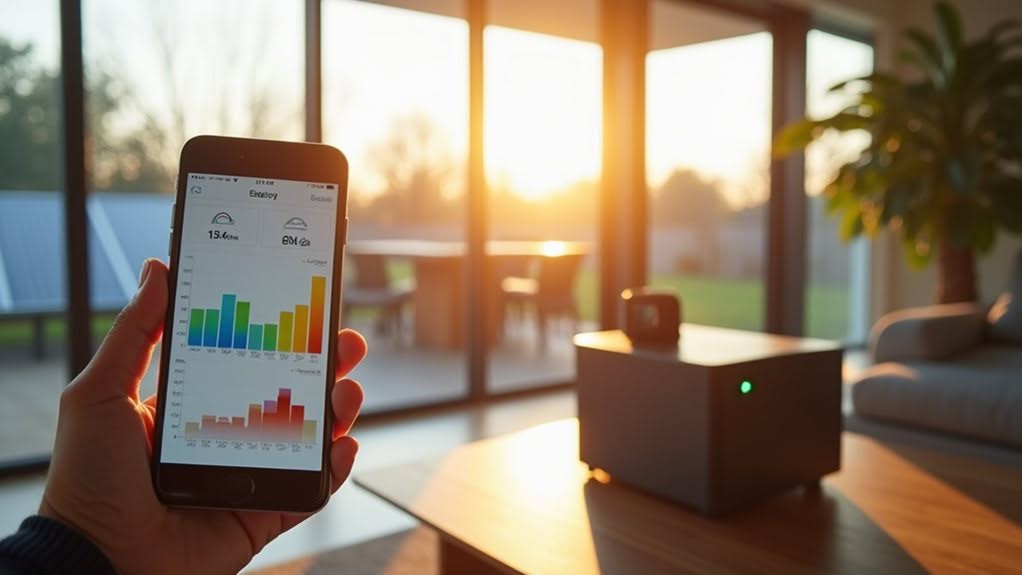
Building on your energy optimization strategy, a thoughtfully designed solar-powered smart home can grow alongside your changing needs.
The modular expansion capabilities of modern solar systems allow you to add components as your energy requirements increase.
Smart solar technologies, like Enphase Energy Systems, enable seamless integration of new devices through a unified app interface, simplifying management of multiple energy sources.
- Financial Relief: Take advantage of government incentives for incremental upgrades, reducing the cost burden of expanding your system.
- Future-Proofing: Integrate newer, more efficient panels with your existing setup without requiring complete system replacement.
- Intelligent Adaptation: Leverage AI and machine learning to automatically optimize energy usage as your solar ecosystem grows.
These modular solutions guarantee your investment continues to deliver value while accommodating technological advances and changing household needs.
Frequently Asked Questions
Can Solar-Powered Smart Homes Function During Internet Outages?
Yes, your smart home can operate during internet outages with solar backup powering crucial functions. Device autonomy allows many gadgets to continue basic operations locally, even when cloud connectivity is unavailable.
How Do Extreme Weather Conditions Impact Solar-Smart Device Integration?
Extreme weather reduces solar panel efficiency, affecting your device performance. Intense heat can degrade batteries, while snow and clouds limit power generation. You’ll need backup solutions to maintain smart device functionality during harsh conditions.
Are Retrofitted Solar Systems Compatible With All Smart Home Ecosystems?
No, your retrofitted solar systems aren’t universally compatible with all smart ecosystems. You’ll need to check retrofit compatibility and may require adapters or hubs to guarantee seamless smart device integration across different platforms.
What Cybersecurity Risks Exist in Connected Solar-Smart Home Systems?
You’ll face cybersecurity threats like unauthorized access to your energy usage data, firmware vulnerabilities, and potential grid disruptions. Don’t overlook data privacy concerns when your consumption patterns and home occupancy become visible to attackers.
Can Renters Implement Partial Solar-Smart Home Integration Solutions?
Yes, you can use portable solar solutions with smart devices even as a renter. Look for tenant-friendly options like window-mounted panels, balcony solar chargers, and plug-and-play systems that don’t require permanent installation or modifications.
Final Thoughts
By integrating solar power with your smart home devices, you’re embracing an energy-efficient future that benefits both your wallet and the environment. You’ll maximize savings through automated controls that align device usage with peak solar production. As technology advances, you can continue expanding your system to include more devices and storage options, creating a truly sustainable smart home ecosystem that evolves with your needs.