Smart home energy monitors give you visibility into your electricity usage through easy-to-read mobile apps. You’ll see which appliances consume the most power and potentially reduce energy use by 2-12%, saving up to $25 monthly. Options include whole-home systems that connect to your electrical panel, circuit-level monitors for detailed breakdowns, or simple smart plugs for single devices. Each type offers different installation requirements and features to match your specific home setup and monitoring goals.
The Core Benefits of Home Energy Monitoring Systems
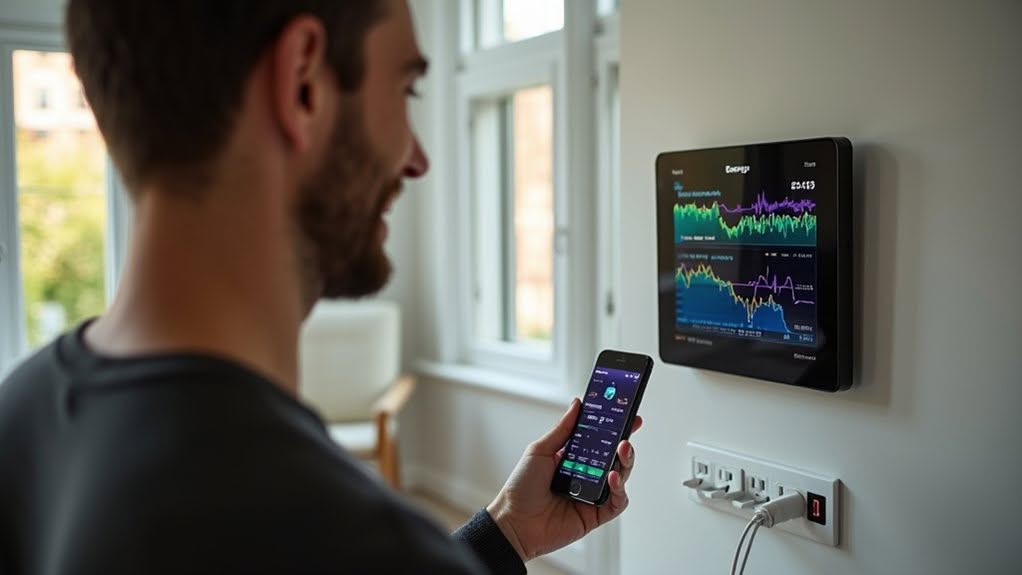
The modern home energy monitoring system serves as your window into household electricity consumption, revealing patterns that typically remain hidden.
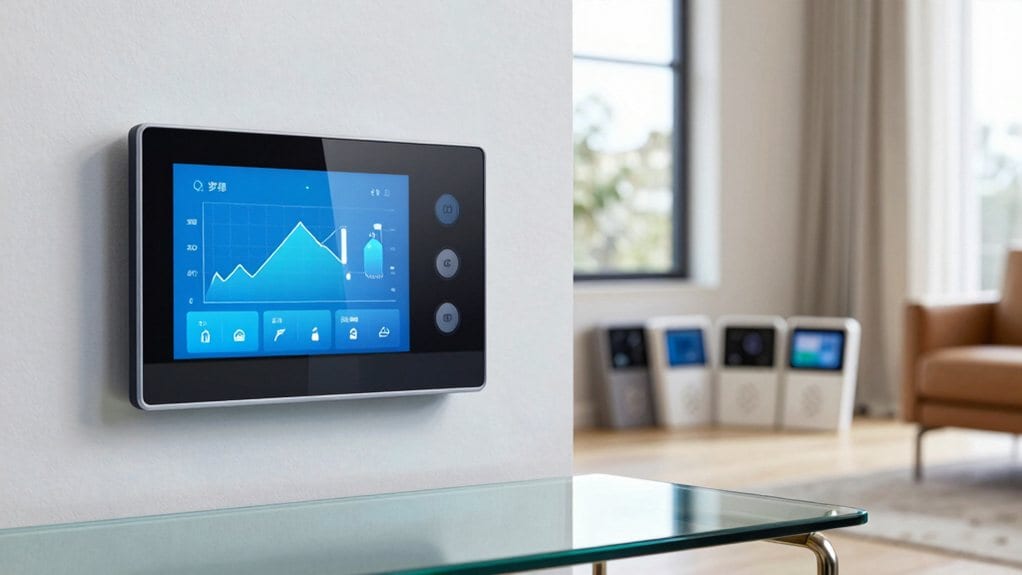
You’ll gain instant visibility into usage habits through mobile apps displaying easy-to-interpret charts and graphs.
These systems detect the unique electrical signatures of individual appliances, allowing you to identify your home’s largest energy consumers.
When you know which devices draw the most power, you can make targeted changes for maximum impact.
You’ll likely reduce your energy usage by 2% to 12%, translating to monthly savings of up to $25 or more.
Most households see these benefits within one or two billing cycles.
The monitors also function as an early warning system, detecting unusual energy fluctuations that might signal equipment malfunctions before they require costly emergency repairs.
Advanced monitoring systems help maintain stable power quality throughout your home, protecting sensitive electronics from damage due to unexpected voltage fluctuations.
Your home energy monitoring system facilitates data-driven decisions regarding potential renovations or upgrades that could further improve your home’s energy efficiency.
Smart energy solutions can transform your living space into an efficient, cost-effective environment while reducing your carbon footprint.
Types of Energy Monitors: From Whole-Home to Device-Level Solutions
You’ll find several types of energy monitors to fit your home’s needs and your specific goals.
Whole-home systems connect to your main electrical panel to track all usage, while circuit-level monitors provide detailed breakdowns by individual circuits within your panel. Systems like Curb excel at this approach by monitoring circuit breakers rather than focusing on individual appliance detection.
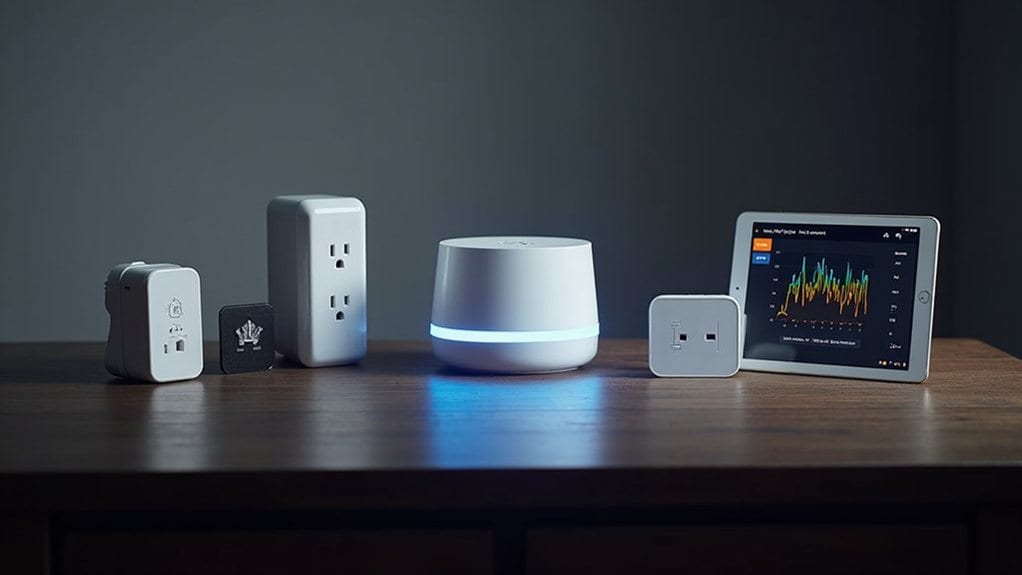
Smart plug solutions offer a simpler alternative, allowing you to monitor and control single devices without any electrical panel modifications. This option is particularly beneficial for renters who need portable monitoring options without permanent installation requirements.
Whole-Home Monitoring Systems
Whole-home energy monitoring systems serve as the foundation for thorough household energy management. These devices connect directly to your main electrical panel or meter, providing extensive visibility into your home’s total electricity consumption.
Most systems capture data at impressive rates—some sampling over a million times per second—and display real-time usage through smartphone apps or web dashboards.
You’ll typically pay $200-$400 for quality hardware that doesn’t require monthly subscriptions. These systems are part of a rapidly expanding market driven by smart home adoption and rising energy costs.
Leading brands offer distinct advantages: Emporia Vue provides direct circuit monitoring, Sense uses AI for appliance detection, while Curb offers extensive monitoring with smart device control. The accuracy of these systems typically ranges from ±2% accuracy when measuring your home’s energy consumption.
When selecting a system, consider installation requirements (many need professional installation), compatibility with your electrical setup, and integration with existing smart home ecosystems like Alexa or SmartThings.
Circuit-Level Tracking Options
While whole-home systems track overall energy usage, circuit-level monitors dive deeper by focusing on specific electrical circuits throughout your home.
These systems use clamp-on current transformer sensors installed on individual circuit wires inside your electrical panel. Real-time tracking capabilities allow users to receive immediate alerts about consumption spikes or anomalies.
Most circuit-level monitors support up to 16 individual sensors, with options to expand for larger homes. You’ll typically find 50A sensors for branch circuits and 200A sensors for main service lines. Some packages like Emporia Vue offer different sensor configurations with 8 or 16 sensors to match various monitoring needs.
Installation requires access to your electrical panel and is best performed by a licensed electrician. Once set up, you can label circuits (kitchen, HVAC, EV charger) for easy identification.
Many systems integrate with smart home platforms like Google Home and Amazon Alexa, enabling automation based on your energy usage patterns. This allows you to optimize consumption and reduce costs through load shifting.
Smart Plug Solutions
For users seeking more granular control over their energy consumption, smart plug monitors provide device-level tracking that bridges the gap between whole-home and circuit-level systems.
Smart plugs come in two main connectivity options: Zigbee models like Aqara SP-EUC01 offer better privacy and lower latency, while Wi-Fi versions such as Nous A1T provide easier cloud integration and firmware flexibility.
These devices monitor real-time power, current, energy consumption metrics, allowing you to identify energy-hungry appliances instantly. Models like BN-Link BNC-60 are particularly popular due to their affordability and reliable app performance. Most models support loads between 10A/2300W and 16A/3680W, suitable for most household devices. Some advanced models include built-in protection mechanisms against overloading and overheating for enhanced safety.
The benefits include DIY-friendly installation, real-time monitoring, and integration with voice assistants.
However, limitations exist—you’ll need multiple plugs for extensive coverage, which increases costs.
When selecting a smart plug, consider measurement parameters, overload protection, and compatibility with your existing smart home ecosystem.
Installation Options for Homeowners and Renters
Installing a smart energy monitoring system differs greatly depending on whether you own or rent your home.
Homeowners can choose between professional or DIY installation, while renters need non-invasive solutions.
Professional installation by licensed electricians guarantees safety and proper setup, typically taking 2-3 hours at a cost of $150-$500.
If you’re comfortable with electrical work, DIY installation is possible with many modern systems offering step-by-step guides.
Renters should focus on these plug-and-play options:
- Smart plugs that monitor individual outlets
- Portable energy monitors with real-time tracking
- No-modification systems that don’t require panel access
- App-based solutions with mobile notifications
- Outlet-level monitors for tracking specific appliances
Before purchasing, verify your system’s compatibility with your electrical panel, especially if you have solar panels or non-standard setups.
Key Features to Look for in Today’s Smart Energy Monitors
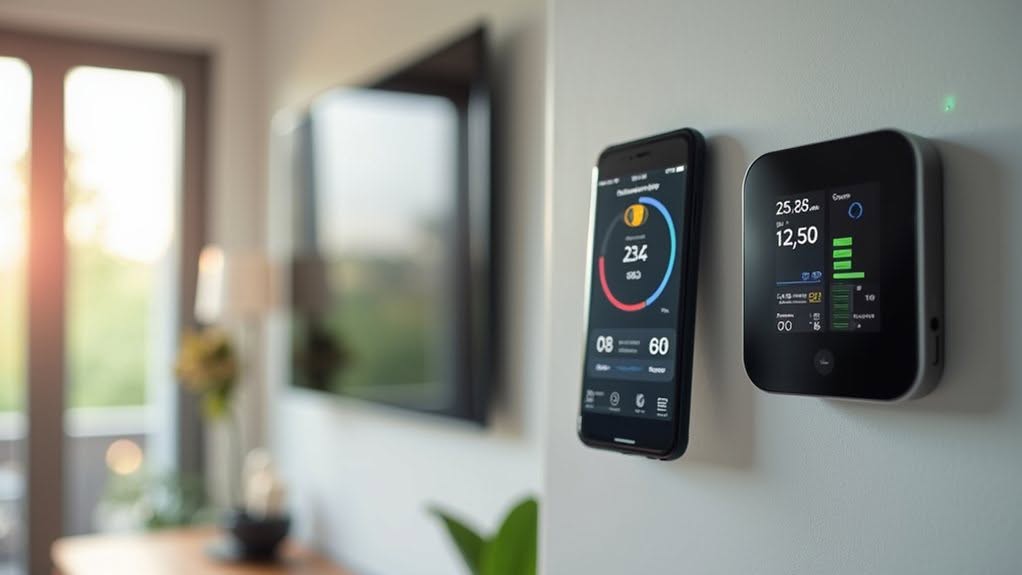
When shopping for a smart energy monitor, you’ll need to prioritize certain features that deliver meaningful insights about your home’s electricity consumption.
Look for real-time monitoring capabilities that provide instant feedback and send alerts for unusual usage patterns. The best monitors sample thousands of times per second and offer mobile notifications for remote awareness.
Circuit-level monitoring is vital if you want to track specific appliances or rooms. Some advanced systems use machine learning to identify unique electrical signatures of different devices without requiring individual sensors.
Smart home compatibility guarantees your monitor works with ecosystems like Alexa, Google Assistant, or HomeKit. This enables automation based on energy data and remote control options.
Finally, consider the data visualization features. Intuitive dashboards with clear graphs and cost tracking help you understand your usage patterns and identify savings opportunities.
Real-World Energy Savings: What to Realistically Expect
Now that you’ve selected the right monitoring technology, you’ll want to understand the actual financial benefits you can expect. Most homeowners achieve energy reductions between 10-30%, translating to annual savings of £200-£600 ($240-$720).
Your potential savings depend on several factors including your climate, home characteristics, and current consumption habits. The payback period typically ranges from 1.8 to 3.3 years, with ROI reaching 300-600% over a decade.
- Smart thermostats deliver 8-15% savings on heating and cooling costs
- Real-time feedback increases awareness, helping identify energy-wasting devices
- Extensive systems achieve higher savings (20-35%) through combined approaches
- Smart lighting can reduce electricity use by up to 75% compared to traditional bulbs
- Homes in extreme climates generally see greater savings due to higher HVAC demands
Smart Home Integration: Making Your Energy Data Actionable
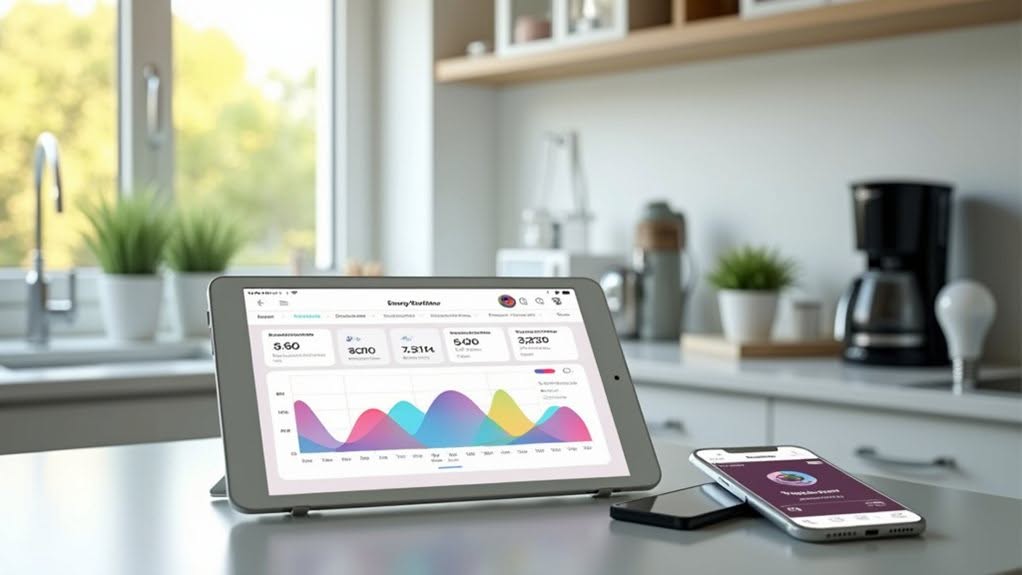
Converting your energy monitoring data into action requires seamless integration with your smart home ecosystem.
You’ll find considerable energy savings when you set up automation rules that turn off unused devices or adjust thermostats based on real-time consumption patterns.
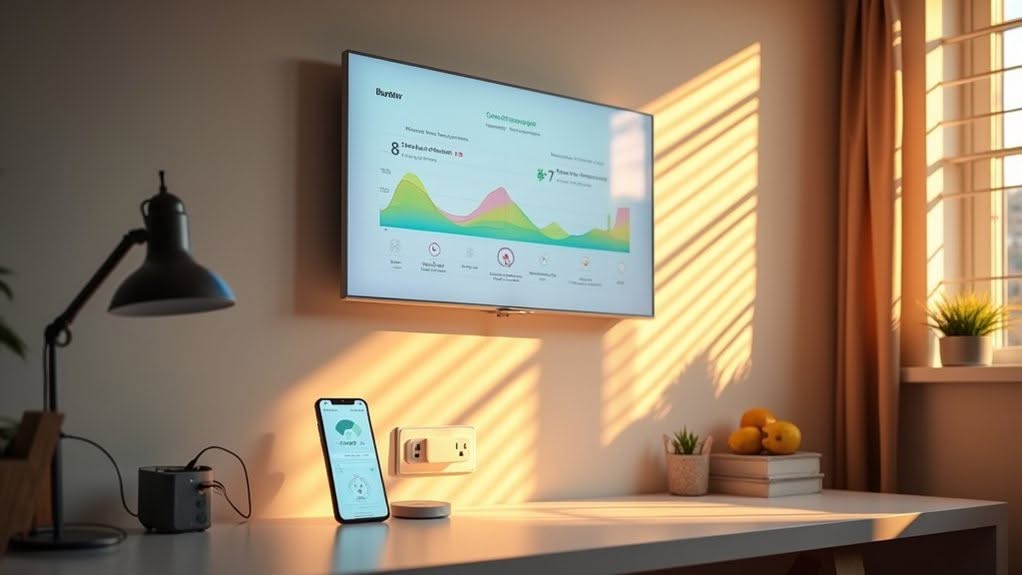
Most modern energy monitoring systems now offer control through multiple platforms, including smartphone apps, voice assistants like Alexa or Google Home, and web dashboards that put extensive management at your fingertips.
Automation Triggers Energy Savings
Smart home integration transforms raw energy data into automated actions that deliver substantial savings for homeowners. Your automated system learns your habits and adjusts operations to maximize efficiency without sacrificing comfort.
When devices work together through automation triggers, you’ll experience:
- Temperature adjustments saving 10-15% on heating and cooling costs, potentially reaching 26% savings ($131-$250 annually)
- Smart lighting reducing energy use by 7-27% compared to manual control systems
- Plug load management cutting standby power waste by up to 50%
- Zone-based climate control preventing energy waste in unoccupied rooms
- Real-time maintenance alerts guaranteeing systems maintain peak efficiency
Most homeowners see total energy consumption reductions of 10-30% with extensive smart home systems.
These investments typically pay for themselves within 2-3 years, offering long-term returns exceeding 300-600% over a decade.
Multi-Platform Control Options
How you access and control your energy data makes all the difference in transforming information into action.
Today’s energy monitors offer real-time visibility through mobile apps and cloud dashboards with updates as frequent as every second.
You’ll find detailed consumption breakdowns by circuit or device, with many platforms storing up to 36 months of history without subscription fees.
Most systems work seamlessly across web browsers, iOS, and Android devices for consistent access.
Your smart home ecosystem benefits from compatibility with Amazon Alexa, Google Assistant, and Samsung SmartThings.
This connectivity extends to smart plugs, thermostats, and even solar panel systems.
Advanced platforms provide circuit-level monitoring for up to 16 individual circuits, with AI capabilities that can identify specific appliances and their unique consumption patterns.
Solar and Battery Storage Monitoring Capabilities
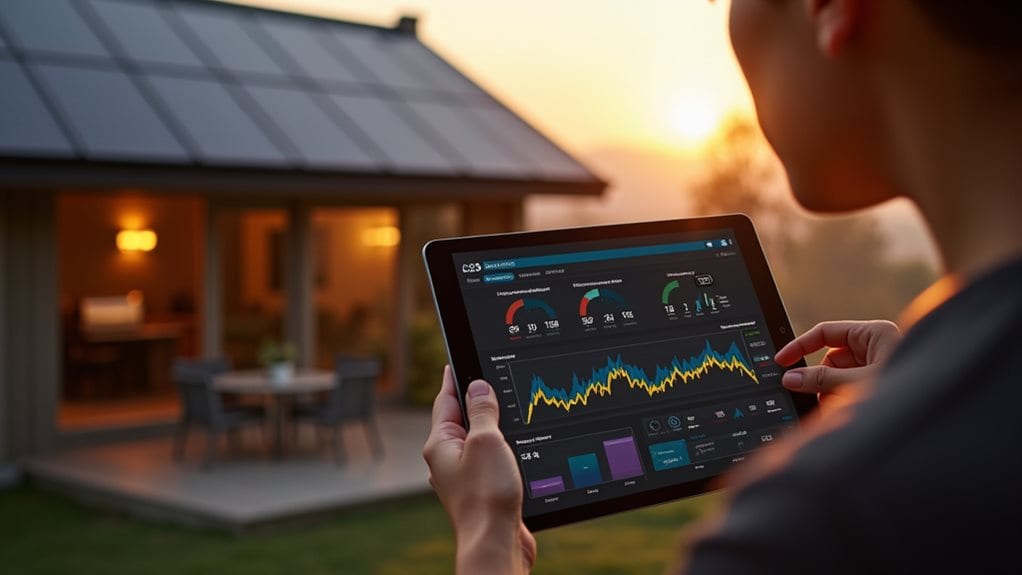
Modern homes with solar panels and battery systems need sophisticated monitoring technology to track energy production and consumption. Integrated platforms like Sungrow iSolarCloud, GoodWe SEMS, and Fronius Solar.web combine data from your entire energy ecosystem for thorough oversight.
These systems monitor several critical components:
- State of Charge (SoC) tracking that shows your battery’s remaining capacity percentage
- Voltage and current sensors that measure electrical potential and flow rates in real time
- Temperature monitoring to detect potential overheating issues
- Automated alerts for system faults delivered via app, email, or SMS
- Performance trend analysis that identifies maintenance needs before problems occur
With real-time synchronization, you’ll optimize energy usage between solar production and connected loads like EV chargers.
This integration boosts system efficiency, improves energy independence, and ultimately reduces your energy costs.
Comparing Top Energy Monitors for Different Household Needs
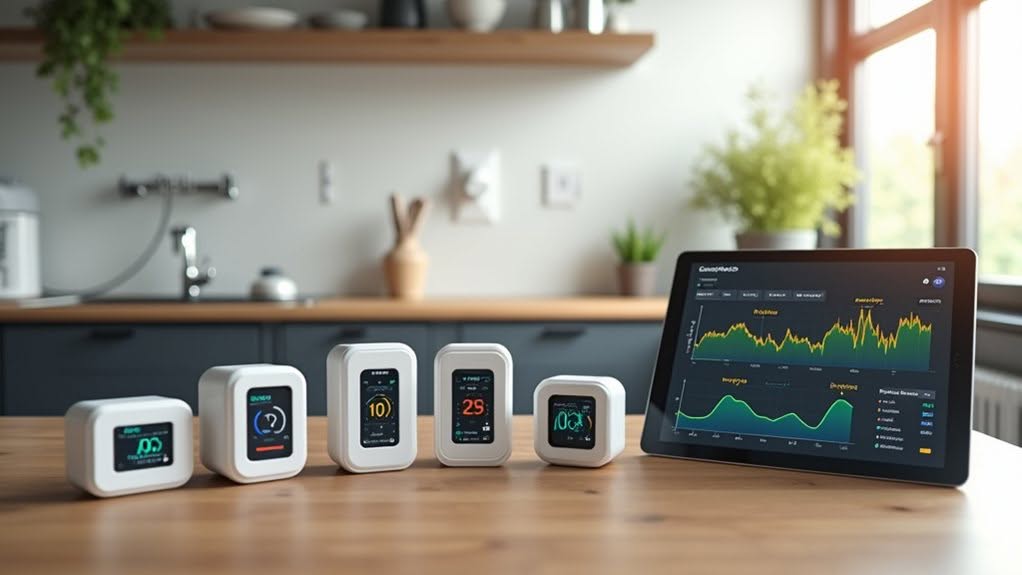
With solar and battery monitoring systems providing thorough oversight of energy production, homeowners now face the challenge of selecting the right energy monitor for their specific needs.
The Emporia Vue Gen 3 stands out for circuit-level monitoring, supporting up to 16 branch circuits and offering integration with smart devices. Users typically save 10% or more on monthly bills.
For those interested in automatic appliance detection, the Sense Home Energy Monitor uses advanced algorithms to identify individual devices over time, though it requires several weeks for full accuracy.
Schneider Electric’s Wiser Energy Monitor provides similar capabilities to Sense but has recently shifted to its own app platform.
Budget-conscious consumers might prefer outlet-level options like TP-Link Kasa HS300 or Govee Smart Plugs, while DIY enthusiasts can explore Home Assistant-compatible devices like IAMMETER WEM3050T or Zigbee-based meters.
Frequently Asked Questions
How Do Energy Monitors Handle Power Outages or Internet Disconnections?
During outages, your monitor may stop collecting data unless it has battery backup. Most will store data locally and sync once power returns, though you’ll lose real-time alerts until internet connectivity is restored.
Can Energy Monitors Detect Potential Electrical Hazards or Wiring Issues?
Standard energy monitors can’t specifically detect electrical hazards. They might flag unusual power patterns, but they don’t identify arcing or wiring faults. For fire hazard detection, you’ll need specialized sensors like Ting instead.
Are There Privacy Concerns With Collecting Detailed Household Energy Data?
Yes, you’ll face considerable privacy concerns as detailed energy data reveals your daily routines, appliance usage, and when you’re home. This information can be vulnerable to breaches, commercial exploitation, and potentially surveillance without proper protections.
What’s the Typical Lifespan of an Energy Monitor System?
You can expect your energy monitor system to last 5-10 years. Smart meters typically function for 5-10 years, while consumer monitors like Sense operate reliably for at least 4 years with proper maintenance.
How Accurate Are Energy Monitors in Identifying Phantom Power Consumption?
Plug-in monitors are highly accurate (±5%) for identifying phantom loads in individual devices. Whole-home systems can detect major energy vampires but might miss smaller loads. Smart plugs offer precise tracking for specific outlets you’re monitoring.
Final Thoughts
You’ve got all the information needed to make a smart choice for your home energy monitoring setup. By selecting a system that matches your living situation, technical needs, and budget, you’ll gain valuable insights into your energy usage patterns. Whether you’re looking to cut costs, reduce your carbon footprint, or integrate with your existing smart home, today’s monitoring solutions offer practical benefits that will pay off over time.