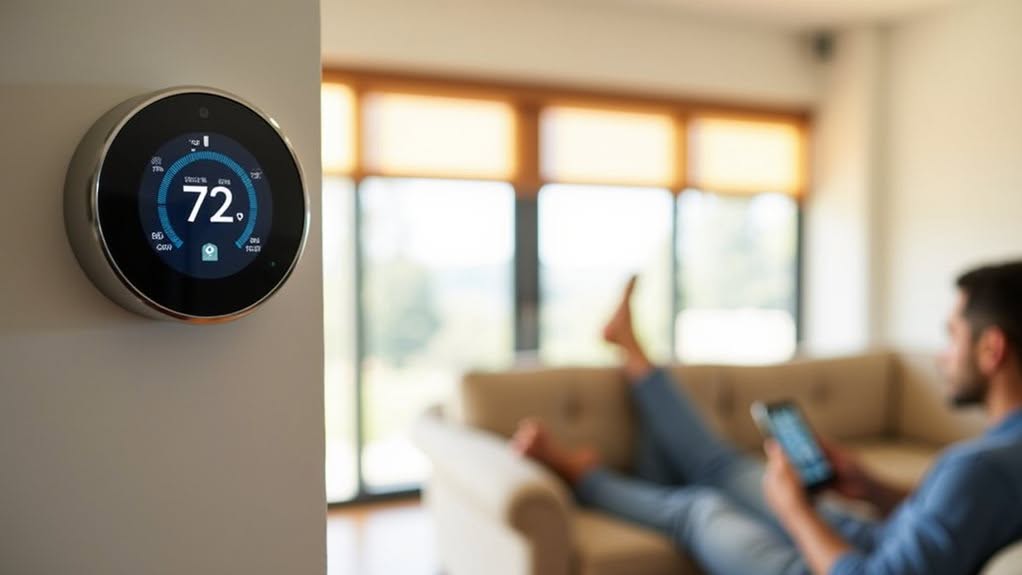
AI transforms your home climate control by learning your preferences and adjusting temperatures automatically. Smart HVAC systems use IoT sensors to collect real-time data, optimizing comfort while reducing energy consumption by 8-19%. These systems can pre-heat or pre-cool your home during off-peak hours, detect maintenance issues before failures occur, and extend equipment lifespan by up to 40%. The technology also integrates seamlessly with other smart devices, offering convenient remote management through smartphone apps.
How AI Transforms Traditional HVAC Systems
While traditional HVAC systems have served homes for decades, the integration of artificial intelligence has revolutionized how these systems operate and perform. Your existing setup can be improved through hardware upgrades like IoT sensors that collect real-time data on temperature and humidity. Many homeowners are now choosing to install smart HomeKit thermostats for seamless integration with their Apple devices. AI-powered controllers analyze this information to dynamically adjust settings, optimizing both comfort and energy efficiency. You’ll notice the difference as the system learns your preferences and adapts accordingly. Implementation can occur in phases, minimizing disruption to your daily life while providing measurable benefits. The software platforms work with your building management systems to enable advanced analytics and predictive capabilities. These smart integrations create unified ecosystems where your HVAC system becomes part of a connected environment that maximizes efficiency throughout your home.
Energy Savings Through Intelligent Climate Prediction
When properly implemented, intelligent climate prediction transforms your home’s energy consumption through advanced AI algorithms.
These systems analyze your historical energy usage, local weather patterns, and occupancy data to forecast future climate needs with remarkable precision.
AI-driven predictive analytics can reduce energy consumption in buildings by 8-19% by 2050, with even greater reductions possible when combined with renewable energy sources and supportive policies.
Your smart home can pre-cool or pre-heat spaces during off-peak hours, taking advantage of lower electricity rates while maintaining comfort.
The system continuously learns from real-time sensor data, improving its accuracy over time.
Preemptive Maintenance: AI’s Role in System Longevity
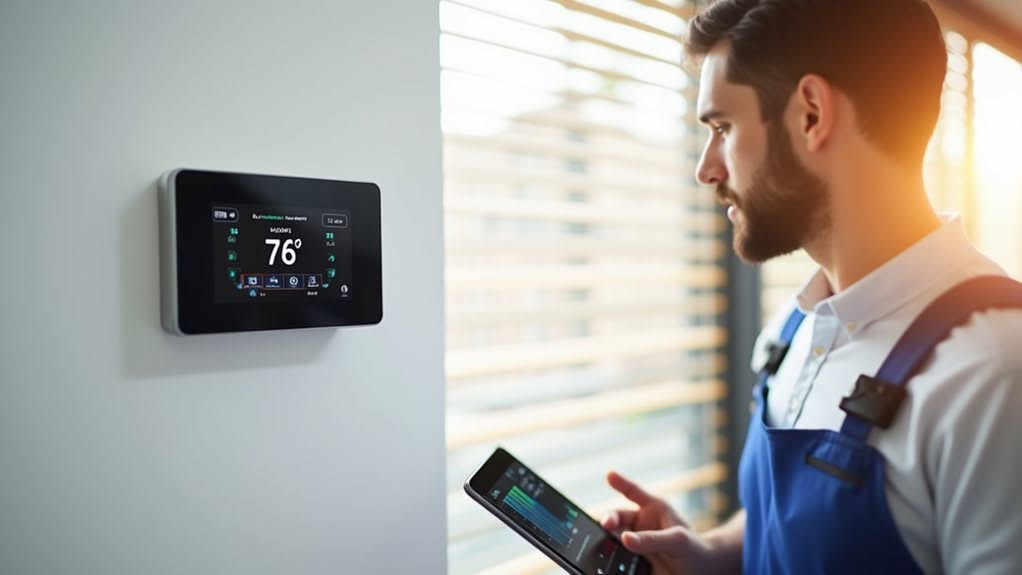
Your smart home’s AI can identify potential HVAC issues weeks before they cause system failures, alerting you to needed repairs before components break down completely.
The system analyzes patterns in temperature fluctuations, compressor cycles, and sensor data to detect subtle signs of wear that would be invisible to human observation.
These early interventions not only prevent inconvenient breakdowns during extreme weather but also greatly extend your climate control system’s lifespan by addressing small problems before they escalate into major replacements.
Fault Detection Before Failure
Three critical AI technologies now enable smart home climate systems to detect problems before they cause failures. Machine learning algorithms constantly monitor sensor data, identifying subtle deviations from normal operations that humans might miss.
Pattern recognition capabilities pinpoint root causes even when symptoms appear in different parts of your HVAC system.
IoT sensors provide the necessary real-time data for these AI systems, measuring everything from temperature and humidity to vibration and electrical current. This thorough monitoring allows for early detection of potential issues before they impact performance.
You’ll benefit from fewer emergency repairs, extended equipment life, and lower energy costs when your system identifies problems early.
The AI continues to improve over time, learning from new data and adapting to your home’s specific operational patterns.
Predictive Wear Analysis
Modern AI systems now analyze component wear patterns before they develop into costly failures, transforming how homeowners maintain their HVAC equipment.
These systems leverage data from embedded IoT sensors that monitor temperature, pressure, vibration, and other key indicators.
Your smart thermostat acts as a central hub, collecting information from multiple sensors throughout your system.
AI algorithms establish a baseline of normal operation, then continuously monitor for subtle deviations that indicate emerging wear issues.
When the system detects early signs of problems like compressor stress or airflow restrictions, it recommends specific maintenance actions.
This approach can extend your HVAC system’s lifespan by up to 40% while maintaining energy efficiency.
Instead of waiting for breakdowns or following rigid maintenance schedules, you’ll receive targeted recommendations based on your equipment’s actual condition.
Life-Extending Interventions
Building on the foundation of predictive wear analysis, AI-driven life-extending interventions now form the backbone of preemptive maintenance strategies for smart home climate systems.
These intelligent systems dynamically schedule maintenance based on actual equipment condition rather than rigid calendars, guaranteeing resources are allocated efficiently. When your AI detects subtle changes in performance, it can recommend specific actions before components fail completely.
You’ll benefit from automation platforms that prioritize critical component interventions, reducing unnecessary service calls while maintaining thorough maintenance logs for warranty purposes. Early detection and resolution of issues can lead to annual savings of up to 30% on repair costs.
The continuous monitoring of environmental factors allows your AI to adjust settings in real time, reducing strain on HVAC components and extending their operational lifespan while simultaneously lowering your utility bills.
Seamless Device Orchestration in Smart Homes

As smart homes become increasingly sophisticated, AI serves as the invisible conductor that harmonizes diverse devices into a cohesive ecosystem.
You’ll find AI analyzing your behavior patterns and environmental data to automate your smart home devices without your intervention.
The Matter Protocol guarantees your AI-powered devices from different manufacturers communicate effectively, creating a unified experience. Your thermostats, security cameras, and lighting systems work together seamlessly through AI-driven integration.
Edge AI processing on specialized chipsets reduces cloud dependency, delivering faster responses when you adjust your home’s climate.
These systems learn from your preferences over time, orchestrating complex sequences of actions to maintain your ideal environment.
AI also predicts potential device failures before they occur, safeguarding your climate control system operates continuously without unexpected interruptions.
On-The-Go Climate Management With AI
The flexibility of AI-powered climate control extends beyond your home’s walls into your mobile lifestyle. Through smartphone apps, you’ll gain complete remote access to your HVAC system, allowing temperature adjustments from anywhere at any time.
AI systems utilize geofencing to detect when you’re returning home, automatically adjusting temperatures to your preferred comfort levels before you arrive. You won’t need to remember to adjust settings manually, as the system learns your daily routines and adapts accordingly.
Your smart climate system continuously monitors performance, sending alerts about potential maintenance issues directly to your phone. This proactive approach prevents costly breakdowns and extends equipment lifespan.
Voice assistant integration enables hands-free control, letting you manage temperature settings through simple commands while you’re on the move.
Personalized Comfort Through Machine Learning
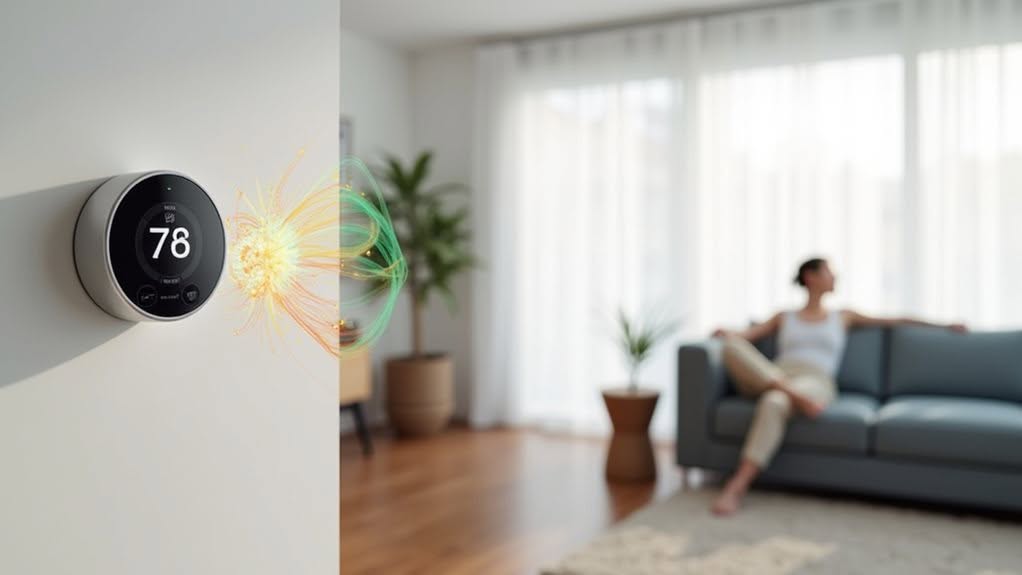
Your smart home climate system now learns your individual temperature preferences in different rooms, creating a personalized comfort map unique to your household.
Machine learning algorithms track your daily habits and adjust heating or cooling zones automatically, guaranteeing your bedroom stays cooler at night while your home office maintains the perfect daytime temperature.
These AI-driven customizations reduce energy waste by up to 14% on average, as the system only conditions spaces you actually use based on your established patterns.
Individual Preference Mapping
Modern smart home AI systems excel at mapping individual climate preferences through sophisticated machine learning algorithms that continuously monitor and adapt to each occupant’s comfort needs.
These systems create personalized climate profiles by analyzing your daily patterns and preferences.
- AI tracks your temperature and humidity preferences across different times and days, building a customized comfort profile
- Machine learning algorithms predict your preferred indoor climate by monitoring your behavior patterns and room usage
- Personal profiles adapt to seasonal changes and outdoor weather conditions automatically
- The system accommodates special needs, like adjusting heating for elderly residents who may be sensitive to cold
This intelligent preference mapping eliminates the need for constant manual thermostat adjustments, providing seamless comfort control that evolves with your changing habits and requirements.
Habit-Based Temperature Zones
Advanced machine learning has revolutionized how smart home climate systems create personalized temperature zones based on your daily habits and routines.
These systems analyze when you use different areas of your home, automatically adjusting conditions to match your preferences. Your smart thermostat learns your schedule, recognizing patterns like when you wake up, leave for work, and return home.
This data enables the system to establish customized comfort zones throughout your living space, reducing energy waste in unoccupied areas.
With zoning systems, you’ll enjoy different temperatures in various parts of your home simultaneously. Your bedroom can remain cooler while the kitchen stays warmer during meal preparation.
These habit-based adjustments integrate seamlessly with other smart devices like blinds and fans, creating an extensive climate control experience that’s both energy-efficient and perfectly customized to your lifestyle.
Reducing Your Carbon Footprint With Smart Climate Control
While global climate concerns continue to grow, smart climate control systems offer homeowners concrete ways to reduce their carbon footprint without sacrificing comfort.
Research shows these systems can cut CO2 emissions by up to 13% in homes with automated technology.
Smart thermostats deliver impressive environmental benefits:
- Save 8-16.5% annually on heating and cooling energy costs, with some UK homes achieving 31% reductions
- Automatically adjust temperatures based on occupancy, preventing energy waste
- Optimize room-by-room climate control through adaptive learning sensors
- Contribute valuable data to emission reduction research through anonymized usage patterns
Finnish studies confirm home automation reduces overall energy consumption by nearly 13%. Modern smart thermostats can optimize heating and cooling patterns, saving 10-12% on heating and up to 15% on cooling costs throughout the year. Integration with renewable energy sources allows smart homes to utilize clean electricity generated from solar panels while maintaining optimal indoor climate conditions.
The Economic Impact of AI-Driven HVAC Solutions
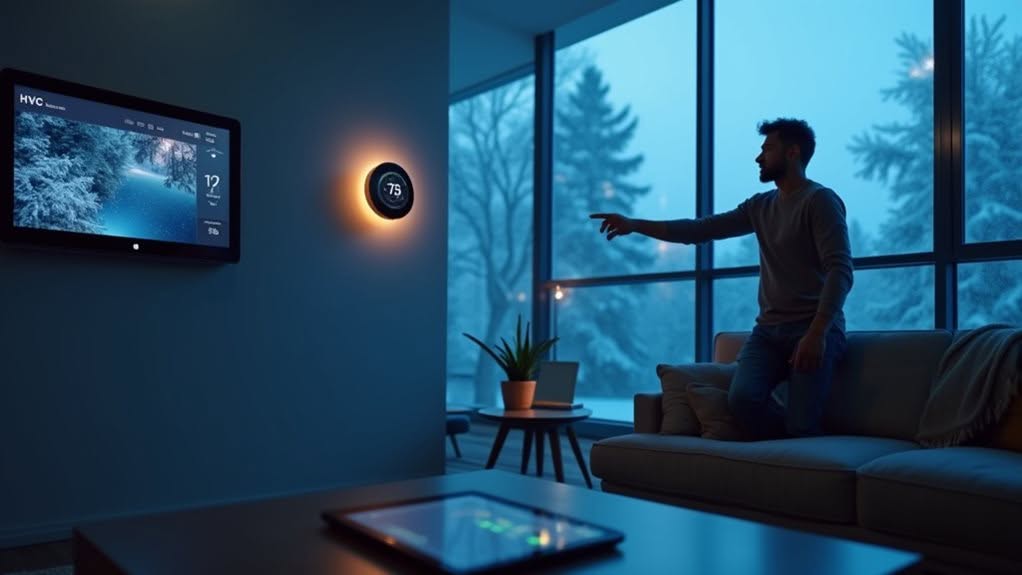
As AI technologies transform numerous industries, they’re revolutionizing the HVAC sector with considerable economic benefits for manufacturers, service providers, and consumers alike.
The U.S. HVAC market is projected to grow at a 7.4% annual rate through 2030, with smart solutions driving notable revenue expansion. You’ll find these AI-integrated systems commanding premium prices while creating new income streams through energy optimization.
For your home, AI algorithms reduce energy waste by adjusting settings based on real-time conditions and preferences. Predictive maintenance identifies potential issues before they become costly failures.
While automation advances, the industry still expects to add 40,000 new jobs annually. AI tools improve technician productivity rather than replace workers, addressing the current shortage of approximately 110,000 technicians nationwide.
Frequently Asked Questions
Is AI Climate Control Compatible With Legacy HVAC Systems?
Yes, you can integrate AI with your legacy HVAC through digital retrofitting. Cloud-based APIs and plug-and-play kits connect to your existing equipment, allowing AI to optimize performance while preserving your current infrastructure.
How Secure Is the Data Collected by Ai-Powered Climate Systems?
Your AI climate system’s data security varies widely. While technologies like blockchain and encryption offer protection, you’ll face privacy risks from data collection patterns. Implement strong authentication and regular updates to safeguard your information.
What Happens During Power Outages or Internet Connection Failures?
During outages, your AI thermostat stops working without power and loses cloud features when internet fails. You’ll rely on battery backups for temporary operation or revert to manual controls for basic temperature regulation.
Can Users Override AI Decisions Without Disrupting Learning Algorithms?
Yes, you can override AI temperature settings without disrupting learning. Your manual adjustments actually help the system improve, as the AI treats overrides as feedback to better understand your preferences while maintaining efficiency.
What Are the Installation Costs Compared to Traditional Thermostats?
You’ll pay $200-500 for professionally installed smart thermostats versus $113-264 for traditional ones. Smart models often require additional electrical work like C-wire installation, which adds $50-100 per hour to labor costs.
Final Thoughts
Your smart home’s climate control is evolving beyond simple temperature settings. By embracing AI-powered HVAC systems, you’re not merely optimizing comfort but also reducing energy costs and extending equipment life. You’ll enjoy a personalized environment that adapts to your preferences while minimizing your environmental impact. As technology advances, your investment in intelligent climate control will continue to deliver both comfort and financial benefits for years to come.