You’ve likely noticed the surge in smart home security systems that now feature AI capabilities. These advanced systems don’t just record activity; they actively analyze it, distinguishing between normal household movements and potential threats. With AI-powered security, your home can learn your family’s routines, recognize pets versus strangers, and dramatically reduce false alarms. But how exactly does this technology work, and what privacy concerns might arise as these systems become increasingly sophisticated?
Understanding AI-Powered Security Fundamentals
While traditional security systems rely on simple motion sensors, AI-powered security fundamentally changes home protection through advanced algorithms that analyze activity in real time.
These security algorithms can distinguish between normal household movements and potential threats, greatly reducing false alarms.
The AI fundamentals behind these systems include object recognition technology that can identify familiar faces versus strangers, creating a more personalized security response for your home.
This technology operates on edge computing, which processes data locally for faster reaction times.
You’ll appreciate how smart detection features let you customize which notifications you receive, filtering out unnecessary alerts.
This intelligence reduces the mental burden of constant monitoring while maintaining vigilance where it matters most.
Our store offers a complete AI smart home security system that integrates seamlessly with your existing smart devices.
Real-Time Threat Detection and Alert Systems
Because traditional security systems often react after a breach occurs, AI-powered alternatives now offer proactive threat detection that transforms how you protect your home.
These advanced systems analyze camera and sensor data instantly, considerably reducing false alarms while improving threat detection accuracy.
With real-time monitoring capabilities, AI security systems can distinguish between people, pets, and vehicles, sending you specific notifications about potential security concerns.
You’ll receive proactive alerts directly to your smartphone when suspicious activity is detected, allowing for immediate response.
The integration of edge computing enables on-device data processing, eliminating transmission delays and speeding up threat identification.
This technology not only improves your home’s security but can also reduce your insurance premiums by up to $263 annually, making it both a practical and economical choice.
Customizing AI Security for Your Home Needs
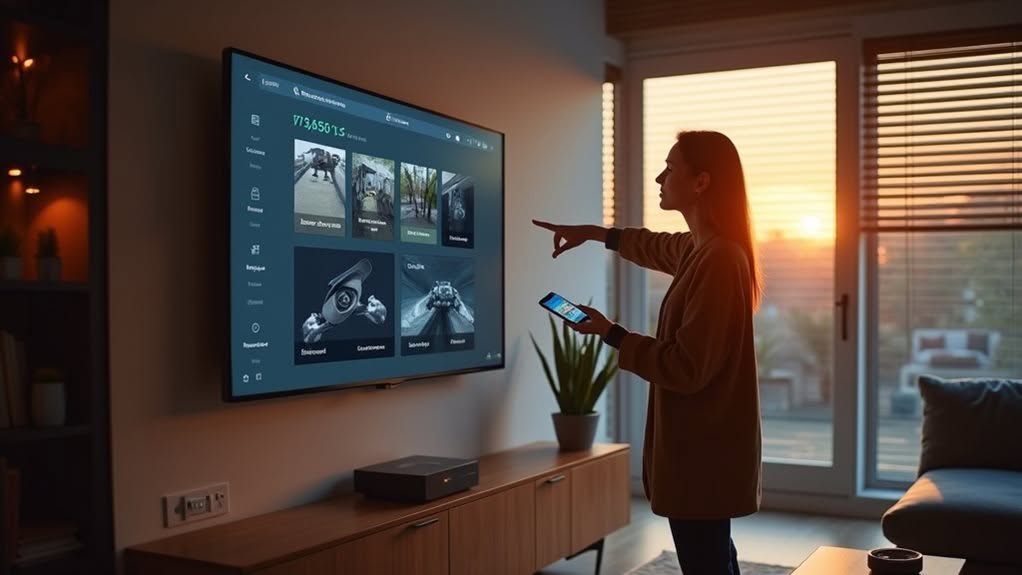
The effectiveness of AI security in your home extends beyond standard settings, with personalized configurations offering considerable advantages for your unique living situation.
Modern systems allow you to filter notifications based on user preferences, guaranteeing you’re only alerted to truly important events. Homeowners increasingly value this customization, with many willing to pay an additional $160 for AI features that adapt to their needs.
You can configure your system to recognize specific objects, distinguishing between family members, pets, and potential intruders.
Creating customized monitoring zones lets you establish personalized alerts for different areas of your property.
Over time, AI algorithms learn your household’s routine activities, automatically adjusting security responses to minimize false alarms while maintaining vigilance against unusual occurrences.
Smart Cameras and Object Recognition Technology
Modern AI-powered cameras represent a revolutionary advancement in home security technology, combining sophisticated hardware with intelligent software to transform how you protect your property.
Leading brands like Arlo, Ring, and Google Nest have integrated advanced object detection accuracy into their products, enabling cameras to distinguish clearly between people, pets, and vehicles. This precision greatly reduces false alarms that once plagued traditional security systems.
These cameras leverage machine learning advancements to improve over time, adapting to your household’s routine and becoming smarter with each detection. Your camera learns normal patterns and alerts you only to genuine security concerns.
You’ll benefit from secure storage options too, with footage saved either to cloud servers or locally, guaranteeing your security data remains accessible even during internet disruptions.
Privacy Considerations in AI Home Security
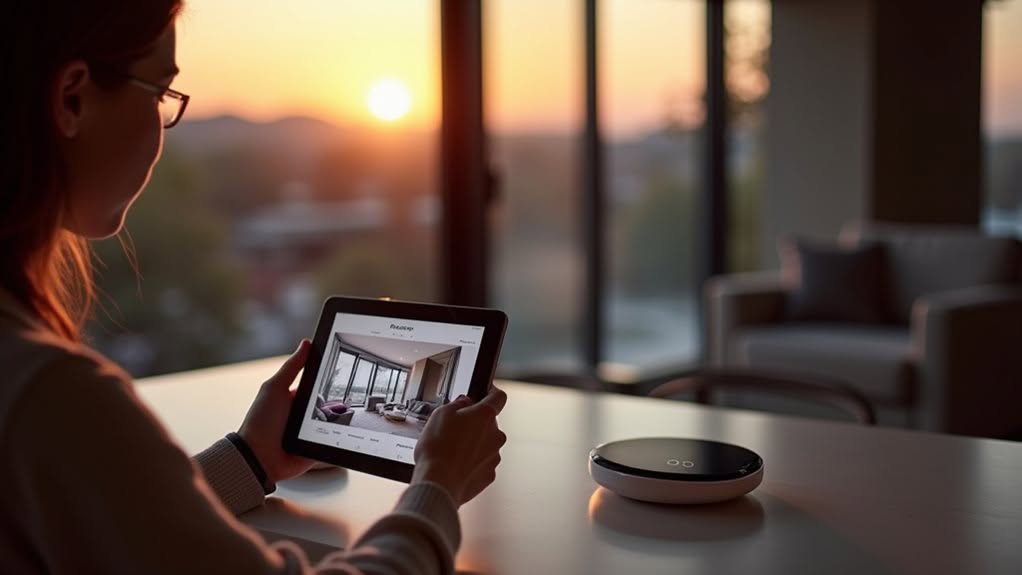
While smart security devices offer unprecedented protection for your home, they simultaneously introduce considerable privacy challenges that can’t be overlooked.
About 42% of Americans use home monitoring cameras, but 1 in 4 worry about hacking risks. Your concerns are justified. Camera hacking and always-on listening features create legitimate data privacy issues for many homeowners.
Cloud storage of facial recognition data poses additional risks, potentially exposing your home camera feeds to strangers. Effective AI security systems should prioritize user consent through opt-in data collection practices.
Look for systems offering local storage options instead of cloud-based solutions to minimize data theft risks. When choosing a smart security system, demand transparency and customizable privacy settings that give you control over what information is collected and how it’s used.
Cost-Benefit Analysis of AI Security Investments
Beyond privacy concerns, many homeowners wrestle with a fundamental question: is investing in AI security technology worth the cost?
The data suggests the answer is yes. While initial investments may seem steep, homeowners are willing to pay about $160 more for AI integration in security systems. This investment can lead to considerable long-term savings, including up to $263 annually in insurance discounts for homes with advanced security measures.
Nearly two-thirds of both homeowners (67%) and renters (63%) express willingness to spend more on AI security capabilities. This trend reflects growing recognition of smart technology’s value.
AI security systems also reduce false alarms, improving efficiency and lowering operational costs.
Though setup expenses can be considerable, the benefits—including reduced crime rates and increased peace of mind—typically justify the financial commitment.
Integration With Existing Smart Home Ecosystems

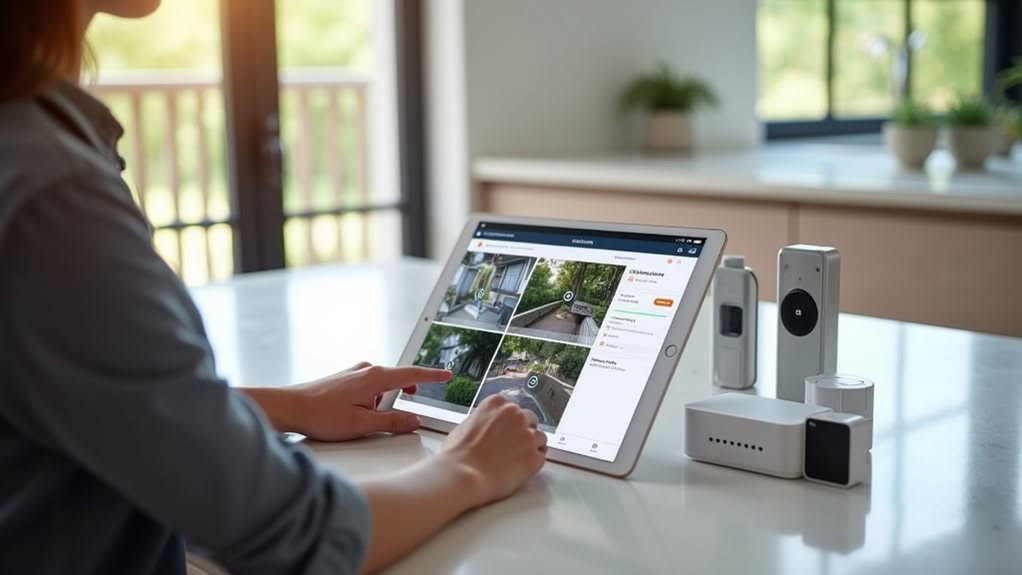
You’ll find that today’s AI security solutions offer seamless connectivity options that work with your existing smart home devices, whether you use Amazon Alexa, Google Home, or Apple HomeKit.
The cross-platform compatibility guarantees your cameras, doorbell, and sensors can communicate effectively, creating a unified security system that’s greater than the sum of its parts.
Voice control integration adds another layer of convenience, allowing you to check camera feeds, lock doors, or arm your security system through simple commands to your preferred smart assistant.
Seamless Connectivity Options
As smart homes become increasingly sophisticated, AI-powered security systems now offer unprecedented integration capabilities with existing smart home ecosystems. This improved cloud connectivity means your devices can communicate efficiently while maintaining robust security protocols.
Device interoperability stands as a central feature of modern AI security systems. You’ll find that cameras, sensors, and alarm systems work harmoniously with Amazon Alexa, Google Assistant, and Apple HomeKit platforms. This compatibility eliminates the need for multiple apps to control different security components.
Your AI security system can trigger automated responses when unusual activity is detected. When motion sensors identify potential threats, your system can automatically turn on lights, sound alarms, or lock doors without manual intervention.
Through a centralized app, you can customize notification preferences while maintaining seamless integration with your existing smart home devices.
Cross-Platform Device Compatibility
The seamless connectivity experience extends further when examining the cross-platform compatibility of today’s AI security systems.
Modern security solutions now integrate effortlessly with established smart home ecosystems from Google Nest, Arlo, and Ring.
This upgraded device interoperability allows you to manage your entire security network through a single application, eliminating the need to switch between multiple platforms.
Cloud computing technology facilitates real-time communication between your devices, guaranteeing synchronized alerts across your system.
You’ll appreciate the improved user experience when connecting your AI security system with smart assistants like Amazon Alexa or Google Assistant.
These integrations enable voice command functionality for your security equipment, making management more accessible and convenient.
The focus on cross-platform compatibility gives you the freedom to customize notifications and settings within a cohesive smart home environment.
Voice Control Integration
Voice control integration represents a remarkable advancement in how homeowners interact with their security systems. This technology allows you to manage security settings hands-free, providing immediate access during emergencies when physical interaction isn’t possible.
AI-powered voice assistants interpret commands related to critical security functions like locking doors or activating alarms. With voice command efficiency, you can quickly access live camera feeds from among the 42% of American homes using monitoring cameras.
Your security system becomes more robust when integrated with existing smart home ecosystems, creating seamless operation across multiple devices.
Personalized security access through voice recognition adds another layer of protection. The system recognizes authorized users’ voices, greatly reducing unauthorized access risks while maintaining convenience for household members.
Future Trends in AI Home Security Innovation
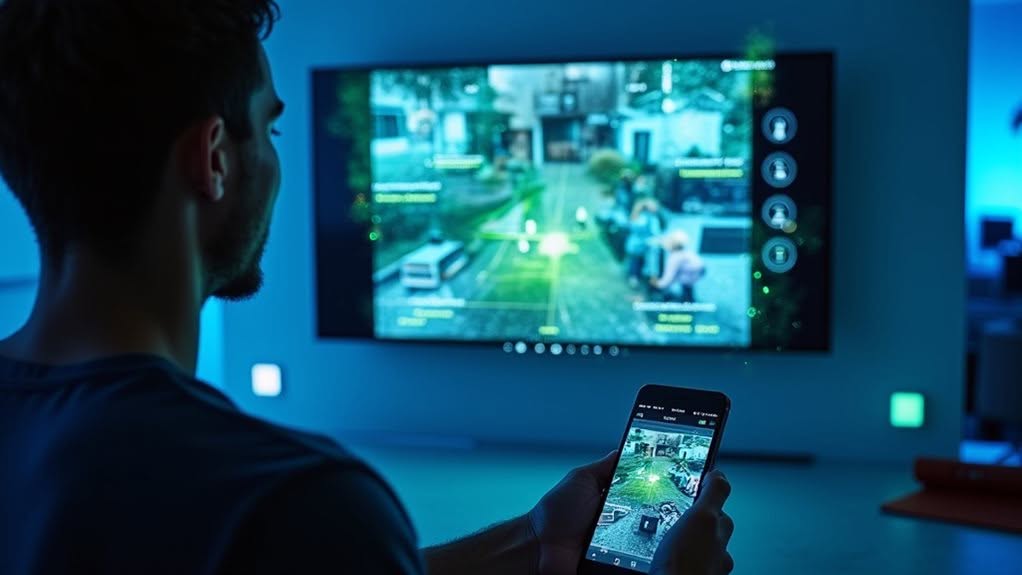
While current smart home security systems offer impressive protection, revolutionary advancements on the horizon promise to transform how you’ll secure your home in coming years. Edge computing will reduce response times for threat detection, making your security system more efficient and reliable.
Three key innovations to watch:
- Biometric advancements like facial and voice recognition will replace traditional passwords, offering more secure access control.
- IoT integration will create thorough security networks, connecting cameras, sensors, and smart devices.
- Improved privacy controls will give you more transparency and customizable settings.
AI-driven analytics will continuously learn from your home’s patterns, dramatically reducing false alarms while elevating accuracy.
You’ll enjoy smarter protection that respects your privacy concerns while providing more personalized security.
Frequently Asked Questions
Can AI Security Systems Function During Internet Outages?
Yes, you’ll maintain protection during outages if your AI security system has offline functionality. Advanced systems use local processing to analyze threats and operate crucial features without internet, though some capabilities may be limited.
How Often Should AI Security Models Be Retrained?
You should retrain your AI security models quarterly or when model accuracy drops below acceptable thresholds. More frequent data updates may be necessary if you’ve made considerable property changes or experienced security incidents.
Are AI Security Systems Vulnerable to Hacking?
Yes, AI security systems can be vulnerable to hacking. You’ll need regular vulnerability assessments to identify cybersecurity risks like adversarial attacks, data poisoning, and model manipulation that could compromise your home’s protection systems.
Do Pets Trigger False Alarms With AI Security?
Modern AI systems often include pet detection features that greatly reduce false alarms. You’ll find today’s systems can distinguish between humans and pets, improving your alarm accuracy while keeping your furry companions comfortable at home.
Can AI Security Differentiate Between Family Members and Visitors?
Yes, AI security can recognize your family members using facial recognition technology. You’ll set up user authentication for each person, so your system will distinguish between trusted household members and unknown visitors automatically.
Final Thoughts
You’re now equipped to transform your home security with AI technology. By implementing these smart systems, you’ll gain real-time protection, personalized monitoring, and seamless integration with your existing smart devices. While considering privacy concerns and initial costs, the long-term benefits of improved security are substantial. As AI continues to evolve, your security system will become even more effective at keeping your home and family safe.