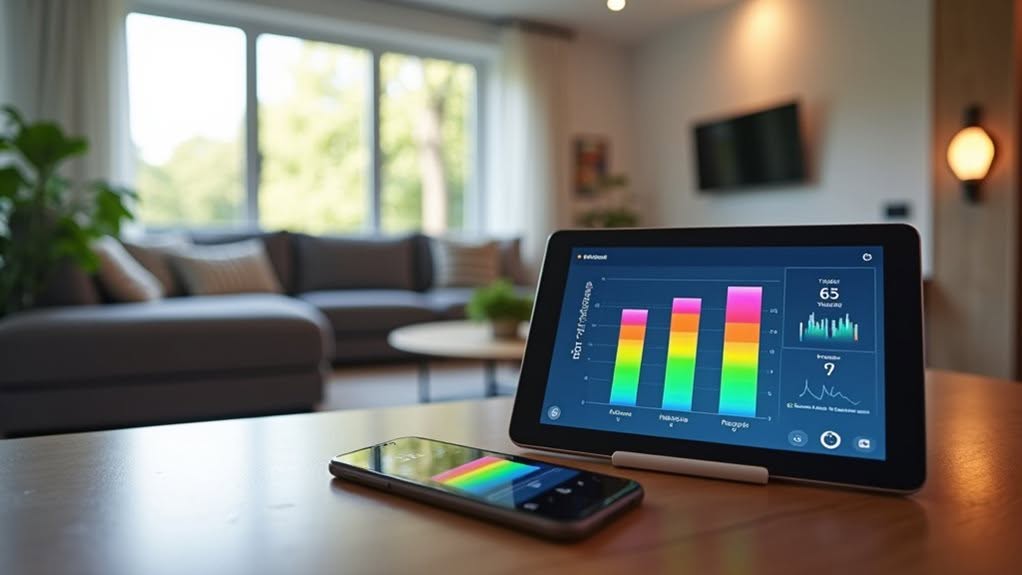
Modern smart home energy analysis tools combine AI technology with real-time monitoring to give you detailed insights into your power consumption. These systems track electricity usage thousands of times per second, identifying individual appliance signatures and providing customizable dashboards that visualize your usage patterns. You can reduce energy bills by up to 20% while integrating with renewable sources and smart devices. The growing marketplace offers solutions from simple smart plugs to extensive whole-home management systems that will transform how you understand your energy profile.
The Evolution of Home Energy Monitoring Technology
As energy concerns grew increasingly urgent during the 1970s oil crisis, the first systematic approaches to home energy monitoring began to emerge. Home Energy Rating Systems (HERS) standardized efficiency evaluations, while programmable thermostats offered basic control capabilities.
The 1970s and 1980s saw important commercial initiatives like Edison Electric Institute’s National Energy Watch program and PG&E’s Energy Conservation Homes program, which incentivized builders to exceed efficiency standards.
Technology evolved dramatically from the late 19th century’s early electricity meters to electromagnetic devices that dominated the 20th century. Early meters like those invented by Elu Thomson measured actual power consumption rather than just time or current.
By the 2010s, solid-state electronic meters enabled the rise of extensive Home Energy Management Systems (HEMS).
Today’s systems incorporate IoT, AI, and machine learning to optimize your energy consumption automatically, while integrating with renewable energy sources and smart grids for maximum efficiency. Modern smart home monitors help homeowners track and reduce their energy usage while providing detailed analytics for informed decision-making.
Real-Time Electricity Tracking: How Modern Systems Work
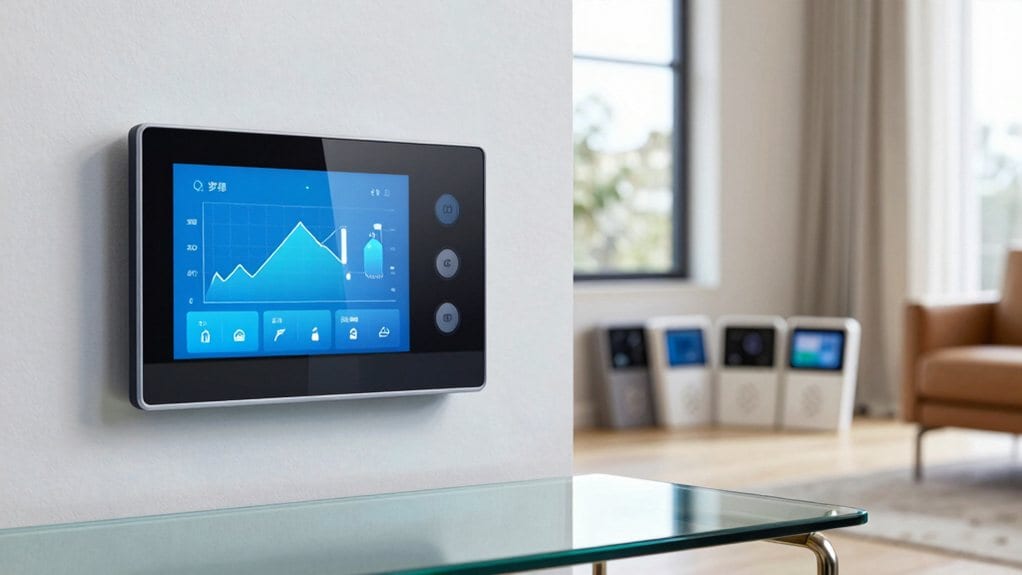
Modern electricity tracking systems offer you detailed insights through intuitive data visualization techniques that transform complex energy usage patterns into easily understood charts and graphs.
You can now see beyond your monthly utility bill with real-time monitoring that reveals which appliances consume the most power and when your peak usage occurs. Advanced systems utilize machine learning technology to identify specific device signatures for more precise monitoring of your energy consumption.
These tools present information through customizable dashboards where you can toggle between whole-home metrics or drill down to individual circuit performance, making energy management more accessible and actionable.
Subheading Discussion Points
Real-time electricity tracking systems have revolutionized how homeowners monitor and manage their energy consumption. These advanced technologies employ smart energy monitors with current transformers that measure electricity flow continuously at your electrical panel.
Your home’s energy data is transmitted instantly via Wi-Fi or Bluetooth to dashboards and mobile apps, providing immediate feedback on usage patterns. You’ll see power consumption translated into actual costs based on your utility rates, allowing you to make informed decisions.
The most sophisticated systems use machine learning to recognize individual appliances by their unique electrical signatures. This feature helps you identify energy-hungry devices and phantom loads that waste electricity when not in use. Innovative solutions like the Vue Home Energy Monitor can help consumers achieve average savings of 10% on their monthly electric bills through detailed usage insights.
With customizable alerts and visualizations, you can track consumption trends and potentially reduce your energy bills by 4-8% through targeted behavioral changes.
Beyond the Meter Insights
Beyond the meter insights represent a revolutionary shift in how you understand your electricity consumption patterns.
These systems operate on your side of the utility meter, providing granular data about specific devices and usage habits.
Smart meters serve as the foundation, sampling electricity thousands of times per second and enabling two-way communication.
This high-resolution data collection identifies individual appliances through their unique energy signatures without requiring additional sensors.
You’ll benefit from time-stamped information that shows exactly when and where energy is being used.
The system delivers this data to your mobile app or web dashboard, allowing remote monitoring from anywhere.
This technology empowers you to identify energy-wasting appliances, receive alerts about potential maintenance issues, and shift usage to off-peak hours for immediate cost savings.
Data Visualization Techniques
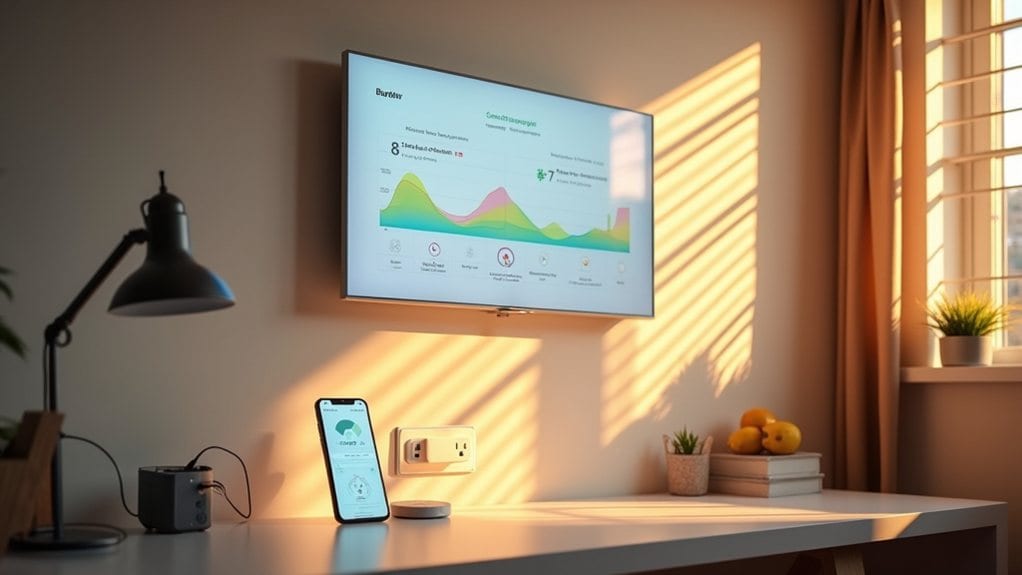
Effective visualization transforms complex energy data into actionable insights you can understand at a glance. Modern energy monitoring systems collect real-time data from smart plugs and electricity meters, then transmit it to centralized dashboards for immediate analysis.
These dashboards enable you to compare consumption patterns across different devices and identify energy-hungry appliances in your home. You’ll see exactly where your electricity is going through charts and graphs that highlight usage trends.
Most systems offer customizable alerts that notify you of unusual energy spikes or when devices are accidentally left running. This immediate feedback helps prevent waste and reduces your utility bills.
With smart meter integration through CT clamp sensors or P1 ports, you’ll receive high-resolution data that makes optimizing your home’s energy efficiency straightforward and effective.
AI-Driven Solutions for Optimizing Household Power Consumption
As artificial intelligence continues to transform home energy management, modern households can now leverage sophisticated AI-driven solutions to optimize their power consumption.
These systems learn your daily routines and preferences to forecast energy needs with remarkable accuracy.
You’ll benefit from real-time analytics that instantly detect inefficiencies through IoT-enabled smart meters and device monitors.
The technology integrates seamlessly with platforms like Google Home and Alexa for convenient voice-controlled management.
Your AI system will provide personalized insights and recommendations based on your unique consumption patterns, helping you make informed decisions about usage habits and appliance upgrades.
Many households achieve cost savings of 25% or more through predictive scheduling and load shifting, while simultaneously reducing their environmental impact through optimized management of heat pumps and EV chargers.
Dynamic pricing features allow your smart home to automatically schedule high-consumption activities during off-peak hours when electricity costs are lower.
Device-Level Monitoring vs. Whole-Home Energy Management
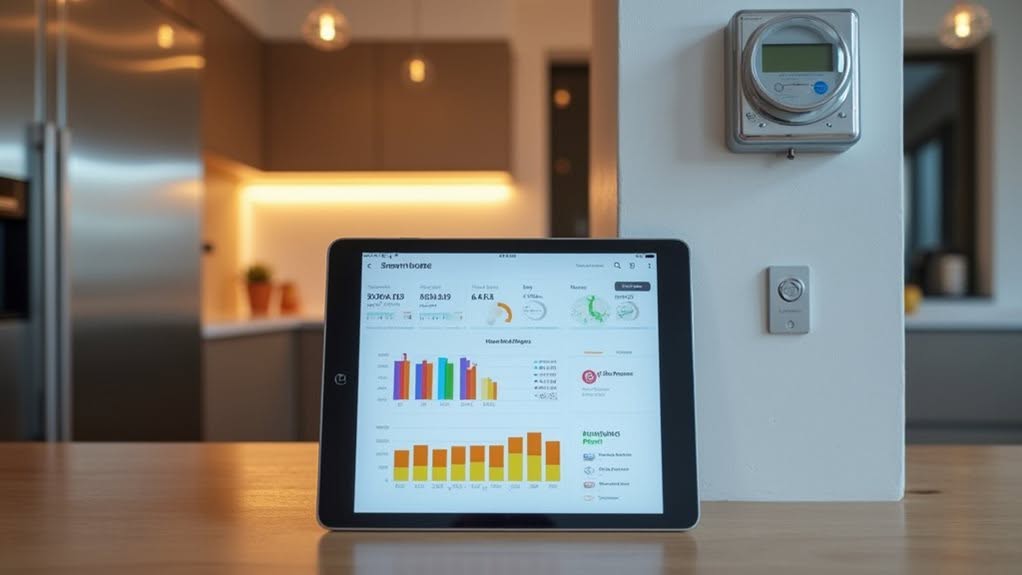
When choosing energy monitoring tools for your home, you’ll face two distinct approaches: device-level monitoring and whole-home energy management.
Device-level monitoring uses sensors or smart plugs to track individual appliances, providing granular data on specific electricity usage patterns. This approach offers high accuracy through direct circuit sensing, helping you identify inefficient devices or candidates for replacement. Most systems come with user-friendly mobile apps that provide convenient access to your energy data, alerts, and progress tracking. Systems like Emporia can monitor up to 16 individual circuits, giving you comprehensive insights into your home’s energy usage patterns.
In contrast, whole-home systems connect to your main electrical panel, measuring total energy consumption in real-time. These monitors require fewer sensors but provide aggregate data rather than appliance-specific insights.
Installation complexity varies greatly between options. Device monitoring often demands multiple sensors, while whole-home systems typically install at the main panel.
Professional installation is recommended for both, especially in homes with complex electrical setups or multiple panels.
Comparing Top Commercial Energy Analysis Platforms
The commercial energy analysis market offers several sophisticated platforms designed for different facility scales and specific industry needs.
Siemens SIMATIC Energy Manager targets large industrial facilities, integrating with Siemens hardware and reducing energy consumption by up to 64%. Its enterprise pricing starts at $50,000+ annually.
Schneider Electric EcoStruxure focuses on commercial buildings with third-party device integration, delivering up to 30% energy savings. The platform bridges operational technology and IT for smarter, sustainable building management. Pricing ranges from $2-5 per square foot annually.
Honeywell Forge provides real-time visibility and automated analysis, using AI to balance efficiency with comfort.
Johnson Controls Metasys boasts over 10,000 installations globally, with project-based pricing from $10,000 to $100,000+.
For homeowners, SolarEdge Technologies specializes in solar-powered systems with real-time monitoring to maximize renewable integration.
Smart Plugs as Entry Points to Energy Intelligence
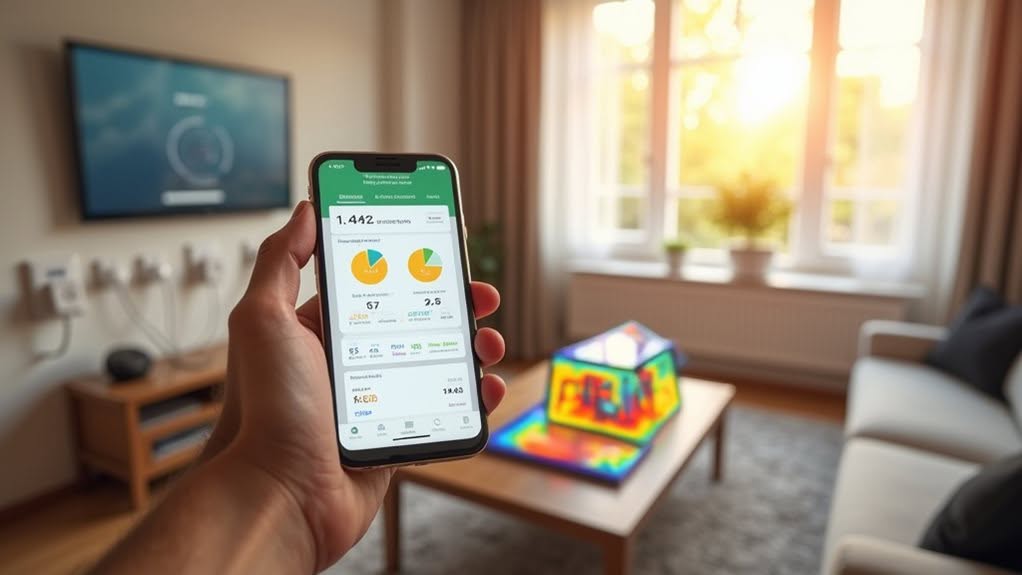
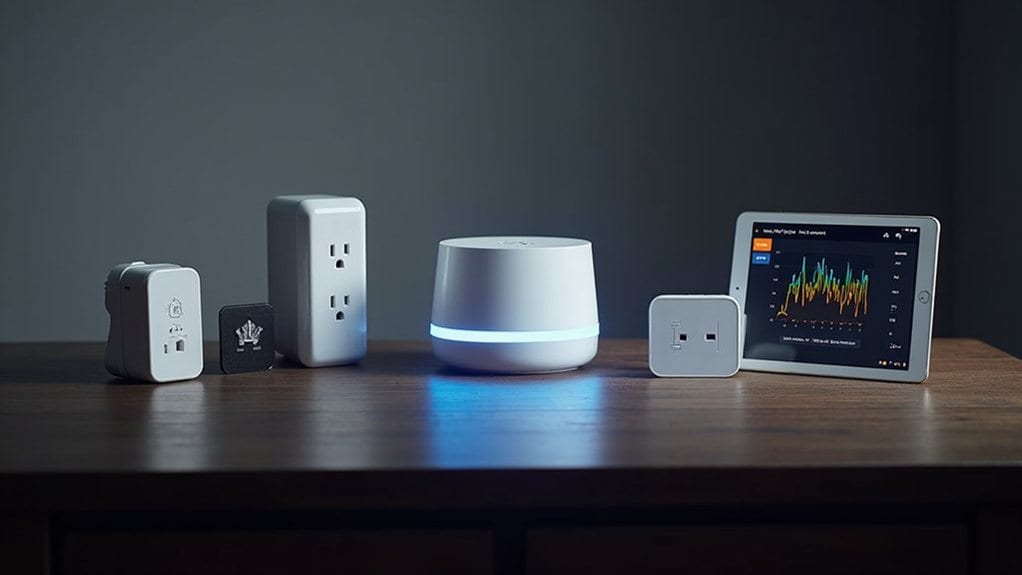
Smart plugs represent one of the most accessible and affordable entry points into home energy monitoring, typically costing between $15-40 per unit. These devices provide real-time tracking of energy consumption, helping you identify power-hungry appliances that contribute to high electricity bills.
Most smart plugs connect via Wi-Fi to proprietary apps, allowing you to monitor consumption patterns remotely from your smartphone. You’ll gain access to historical data that reveals usage trends over time.
Beyond monitoring, these devices offer practical control features that improve energy efficiency. You can create schedules, set timers, or use voice commands through assistants like Alexa or Google Assistant to automate power management.
For maximum benefit, choose plugs that integrate with your existing smart home ecosystem, guaranteeing compatibility with hubs like SmartThings or Home Assistant.
Creating a Connected Ecosystem for Maximum Energy Efficiency
Creating an integrated home energy ecosystem yields substantially greater efficiency gains than using isolated smart devices. Centralized hubs form the backbone of this system, coordinating communication through Wi-Fi, Zigbee, and Z-Wave protocols while providing unified control through mobile apps.
Energy monitoring devices at both the panel and plug level deliver granular insights into your consumption patterns, helping you identify inefficiencies. Smart thermostats and lighting controls work in tandem with occupancy sensors to dynamically adjust your home environment based on actual usage.
The most advanced systems integrate demand response capabilities, automatically shifting electrical loads during peak periods to reduce costs and support grid stability.
When combined with renewable energy sources and storage solutions, your connected ecosystem can balance energy flows effectively between generation, storage, and consumption.
Cost Benefits and ROI of Implementing Home Energy Analytics
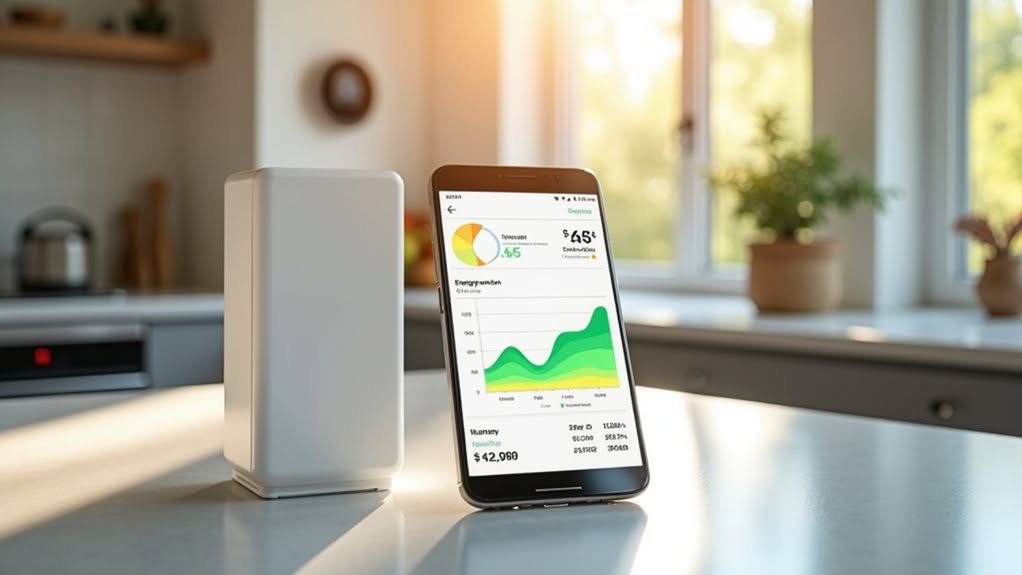
When considering the financial impact of home energy analytics, homeowners should evaluate both immediate costs and long-term returns on their investment. These systems provide considerable utility bill reductions while augmenting property value.
Key financial benefits include:
- Utility savings of approximately 20% through predictive maintenance and real-time usage optimization.
- Elevated property values with ROI ranging from 55-105% depending on specific upgrades and location.
- Faster payback periods in regions with higher electricity costs (5 years in California versus 20 years in Utah).
- Rental premium potential of 15-20% for properties equipped with advanced energy management systems.
Government incentives like tax credits can greatly improve ROI, while rising utility costs (increasing 3.2% annually) make these investments more valuable over time.
Smart energy analytics align with buyer preferences, potentially accelerating your home’s future sale.
Environmental Impact and Sustainability Advantages
Smart energy management tools deliver considerable environmental benefits beyond mere cost savings.
You’ll reduce your carbon footprint considerably, as residential energy consumption accounts for approximately 20% of U.S. greenhouse gas emissions, with smart thermostats alone capable of noteworthy CO2 reductions.
These systems also facilitate seamless integration with renewable energy sources, optimizing when your home draws power from solar panels or stores excess energy for later use. Smart grids significantly enhance this efficiency by redefining energy distribution across connected homes. Real-time data from energy monitors allows homeowners to achieve up to 15% energy savings through analysis of consumption patterns.
Subheading Discussion Points
Four major environmental benefits emerge when examining smart home technologies.
These solutions create substantial positive impacts through their integrated approach to resource management and energy optimization. The shift from luxury and convenience to energy efficiency has become a fundamental aspect of modern smart home development.
- Smart homes reduce energy consumption by 10-27% through automated temperature controls and lighting systems that respond to occupancy patterns.
- They seamlessly integrate renewable energy sources by monitoring production and adjusting usage when clean energy is abundant.
- Water and resource management features prevent waste through intelligent scheduling and leak detection systems.
- Smart grid integration enables demand response participation, reducing strain during peak periods and supporting grid stability.
These environmental advantages extend beyond individual homes, contributing to broader sustainability goals by decreasing reliance on fossil fuels and supporting decentralized energy infrastructure.
Your smart home investments directly support urban sustainability and resource conservation efforts.
Carbon Footprint Reduction
The carbon footprint of an average household contributes considerably to global emissions, but smart home technologies now offer powerful tools to reduce this environmental impact.
Smart homes with real-time energy monitoring can cut CO2 emissions by approximately 13% through optimized electricity, water, and gas management.
Smart thermostats alone reduce heating energy by 10-12% and cooling energy by 15%, addressing nearly half of home energy consumption related to climate control.
These technologies enable participation in demand response programs, allowing you to shift energy use away from high-carbon periods when fossil fuel plants operate.
By integrating with renewable energy storage, your home can tap into cleaner power sources during peak demand times.
When combined with improved insulation and air sealing, smart automation creates a thorough approach to reducing your household’s environmental impact.
Renewable Energy Integration
Integrating renewable energy into smart homes represents a vital advancement in sustainable living that extends far beyond simple carbon reduction.
Smart home systems now enable you to become a “prosumer” – both consuming and producing energy within localized microgrids.
All-in-one management platforms optimize your renewable energy use, while reducing grid dependency through intelligent control of:
- Sleek, aesthetically pleasing solar tiles that blend with your rooftop
- Smart thermostats that reduce heating by 10-12% and cooling by 15% annually
- Next-generation water heaters that utilize renewable energy more efficiently
- Battery storage systems that store excess production for later use
Your smart home’s IoT sensors provide real-time energy monitoring, enabling automated demand response that shifts usage to high-generation periods.
This localized energy approach decreases transmission losses, preserves water resources, and minimizes habitat disruption from large-scale infrastructure.
Future Trends in Residential Energy Monitoring and Control
As residential energy systems grow increasingly sophisticated, the environment of home energy monitoring and control is undergoing a dramatic transformation.
AI-driven platforms will increasingly predict usage patterns and automatically adjust systems based on weather, occupancy, and electricity prices. By 2030, over half of global electricity meters will be smart, creating unprecedented opportunities for optimization.
Digital twin technology will map building energy flows, enabling real-time optimization and immediate anomaly detection.
You’ll see more integration between EV charging systems and home energy management tools as electric vehicles become commonplace.
The market for these technologies continues expanding rapidly, projected to reach $16.21 billion by 2032.
Hybrid systems that combine AI analytics with solar tracking will likely differentiate products in an increasingly competitive marketplace, offering you more extensive energy management options.
Frequently Asked Questions
Can Energy Monitors Detect Which Appliances Waste the Most Power?
Yes, they can identify power-wasting appliances through pattern analysis and device recognition. You’ll see which devices consume excessive energy, allowing you to make immediate adjustments and reduce your electricity bills considerably.
Are Home Energy Monitoring Systems Secure Against Hacking?
No, many home energy monitors aren’t secure. Your system likely has vulnerabilities like hardcoded passwords, weak encryption, and insecure APIs. You’ll need regular updates, strong passwords, and network segmentation to reduce hacking risks.
How Do Power Outages Affect Smart Energy Monitoring Systems?
Power outages disrupt your smart energy monitoring by cutting data collection, severing communication networks, and risking equipment damage. You’ll experience system downtime, but your smart meters will send last gasp messages to utilities before losing power.
Can Renters Install These Systems Without Landlord Permission?
No, you shouldn’t install permanent smart energy monitoring systems without landlord permission. It could violate your lease agreement. Stick to portable, plug-in devices that don’t require modifications to the property’s infrastructure instead.
Do Energy Monitoring Tools Work With Solar Panels?
Yes, many energy monitoring tools work effectively with solar panels. You’ll find both equipment-integrated systems and third-party monitors that can track your solar production and help optimize your home’s energy consumption patterns.
Final Thoughts
Energy analysis tools have transformed how you’ll manage your home’s power consumption. You’re now able to track usage in real-time, identify waste, and make smarter decisions about your energy habits. As these technologies continue to advance with AI and device-specific monitoring, you’ll see greater cost savings and environmental benefits. Your investment in these systems today prepares your household for the increasingly connected and energy-conscious future.