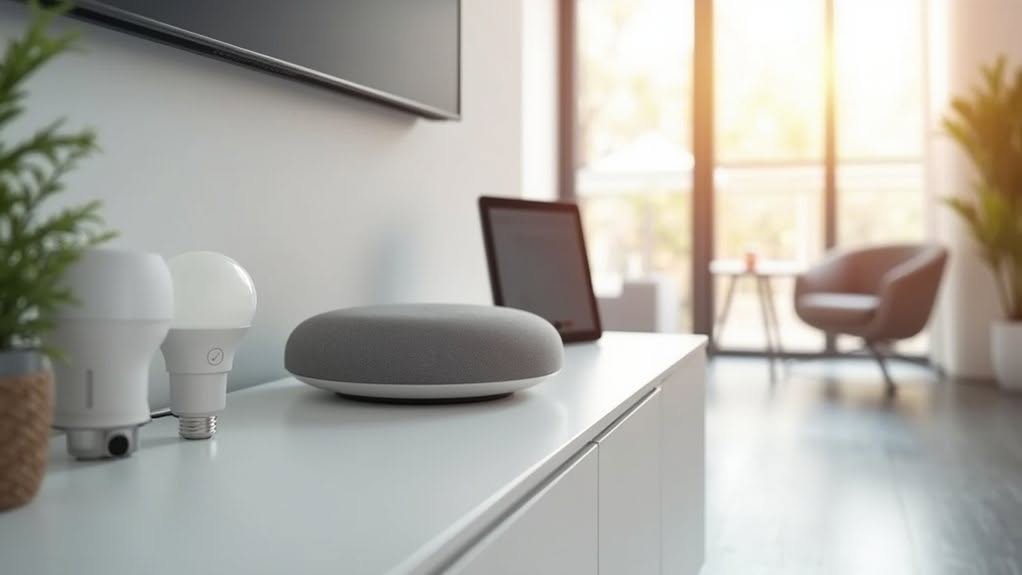
The Matter protocol is an open smart home connectivity standard that lets devices from different manufacturers work together — regardless of whether you use Google Home, Apple HomeKit, Amazon Alexa, or Samsung SmartThings. Launched in 2022 by the Connectivity Standards Alliance, Matter runs on local networks using Wi-Fi, Ethernet, and Thread mesh networking, so your smart home keeps working even when the internet goes down. Over 200 companies — including Apple, Google, Amazon, and Samsung — backed its development, and the standard is now on version 1.4.
What Is Matter for Smart Homes?
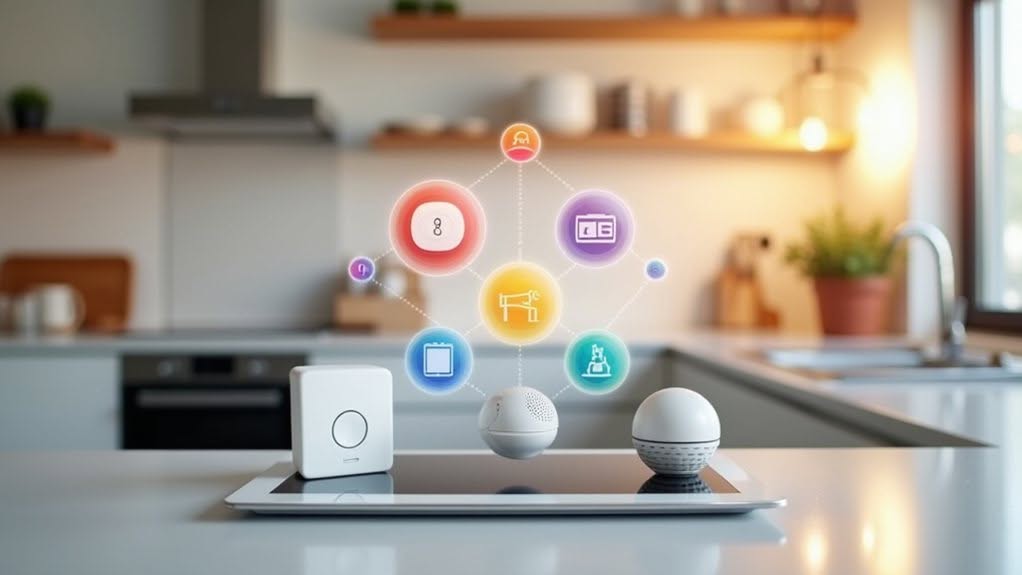
Matter represents a groundbreaking open standard that unifies smart home devices across different platforms and manufacturers.
You’ll find that this IP-based protocol eliminates the fragmentation that’s plagued smart home ecosystems for years.
Unlike proprietary systems, Matter operates as a manufacturer-independent communication protocol.
You can control devices locally without constant internet connectivity, though cloud features remain optional for improved functionality.
The standard runs on multiple networking technologies including Ethernet, Wi-Fi, and Thread mesh networking.
Bluetooth Low Energy handles initial device setup and pairing processes.
Matter controllers, such as smart hubs or speakers, coordinate your connected devices seamlessly.
You’ll benefit from multi-admin capability, allowing multiple ecosystems to manage the same devices simultaneously while maintaining compatibility with existing standards like Zigbee and Z-Wave.
After initial setup, Thread Border Routers bridge Thread mesh networks to Wi-Fi and Ethernet networks, with examples including Apple HomePod mini, Google Nest Hub, and eero routers.
The standard was developed by over 200 companies, including major technology leaders like Apple, Google, Samsung, and Amazon.
A dedicated Matter smart home hub can serve as the central command center for orchestrating all your compatible devices across different brands and platforms.
How Matter Fixes Smart Home Compatibility Issues
Matter addresses three fundamental smart home problems that have plagued users for years. You no longer need to worry about whether your smart bulb works with your voice assistant, as Matter creates universal compatibility across major platforms like Google Home, Alexa, and Apple HomeKit.
The standard also streamlines device setup by eliminating the need for multiple manufacturer apps, while freeing you from vendor-specific ecosystems that previously trapped your smart home investments. Despite these promises, Matter device pairing can still fail due to network configuration issues, particularly when IPv6 connectivity is disabled in containerized home automation systems. However, many popular devices like security cameras and kitchen appliances still lack Matter support, limiting the standard’s current real-world utility.
Eliminates Vendor Lock-In
Why have smart home enthusiasts struggled with mixing devices from different brands in the same ecosystem? Traditional smart home systems create vendor lock-in by forcing you to commit to one platform’s ecosystem.
Matter eliminates this problem by allowing you to mix brands without compatibility worries. You’re no longer trapped within a single manufacturer’s ecosystem or forced to replace existing devices when switching platforms.
The standard provides these key freedoms:
- Control devices through Apple Home, Google Home, Amazon Alexa, or Samsung SmartThings simultaneously
- Mix brands like TP-Link plugs with Eve sensors without compatibility issues
- Switch between platforms without losing device functionality
- Use family members’ preferred apps regardless of ecosystem choice
- Add new devices from any Matter-certified manufacturer to existing setups
This flexibility encourages competition and innovation while protecting your investment. Matter networks operate primarily on your local network, ensuring your smart home remains functional even during internet outages. The standard has backing from over 30 companies including industry giants like Amazon, Apple, Google, and Samsung, demonstrating widespread commitment to solving compatibility issues.
Universal Device Compatibility
Beyond breaking vendor lock-in barriers, Matter addresses the fundamental compatibility problems that have plagued smart home technology for years.
The standard supports iOS, Android, Alexa, Google Home, and Apple HomeKit platforms simultaneously, allowing devices to connect directly without separate hubs or skills.
Matter covers broad device categories including lights, switches, locks, HVAC systems, sensors, cameras, and control panels.
Examples include Philips Hue lights, Eve Energy switches, Yale Assure Lock 2, and Ecobee thermostats.
Bridge integration enables legacy Zigbee and Z-Wave devices to join Matter ecosystems. This open-source protocol ensures transparency and allows developers to contribute to its ongoing improvement and standardization.
Existing products receive software updates for Matter compatibility, while bridges built into controllers provide seamless experiences across protocols. Matter devices benefit from local control capabilities, operating without requiring internet connectivity or cloud services.
You’ll find thousands of compatible products through certified devices and bridges, with the Matter logo indicating guaranteed compatibility.
Simplified Setup Process
How does setting up a smart home device transform from a technical challenge into a simple scan-and-connect process? Matter standardizes device setup through QR codes and automated pairing procedures that eliminate manual configuration steps.
You’ll find standardized setup codes on device packaging that contain all necessary information for secure commissioning. Simply scan the QR code with your smartphone camera to initiate automated setup, or manually enter codes when scanning isn’t available.
The streamlined process works consistently across all platforms:
- Single app controls all Matter devices regardless of manufacturer
- Apple Home, Google Home, and Amazon Alexa apps all support Matter integration
- Bluetooth pairing automatically provides Wi-Fi network credentials
- Device naming and room assignment happens directly within platform apps
- Setup procedures remain identical for lights, thermostats, locks, and speakers
During initial setup, your smartphone and hub must maintain internet access to verify device certification through the Distributed Compliance Ledger database. Matter devices can also establish direct device-to-device connections that reduce the need for a central hub in many configurations.
Matter Protocol Versions: What Changed in Each Release
The Matter protocol has shipped four major updates since its October 2022 launch. The version your device supports determines which device categories and features it can use.
| Version | Released | Key additions |
|---|---|---|
| Matter 1.0 | Oct 2022 | Core launch: lights, smart plugs, locks, thermostats, window coverings, bridges |
| Matter 1.1 | May 2023 | Bug fixes, enhanced commissioning, improved Thread support |
| Matter 1.2 | Oct 2023 | Fridges, washing machines, dishwashers, robot vacuums, air quality sensors, smoke/CO detectors |
| Matter 1.3 | May 2024 | EV chargers, water management (irrigation, valves), microwaves, ovens, cooktops |
| Matter 1.4 | Nov 2024 | Battery optimisation, Thread 1.4, water heaters, heat pumps, enhanced energy management |
Most devices on shelves today support Matter 1.2 or later. If a specific device category matters to your setup, always check the spec sheet — a thermostat sold in 2023 may only support 1.0, while one from 2025 will likely cover 1.3 or 1.4 features.
Matter Protocol vs Zigbee vs Z-Wave
Each protocol fits different home setups. Here’s how they compare on the metrics that matter most for a buying or integration decision:
| Feature | Matter | Zigbee | Z-Wave |
|---|---|---|---|
| Launched | 2022 | 2003 | 2001 |
| Network type | IP-based (Wi-Fi, Thread, Ethernet) | IEEE 802.15.4 mesh | Sub-GHz mesh |
| Range | Wi-Fi range; extends via Thread mesh | 10–20m per node (mesh extends) | Up to 200m; Z-Wave LR up to 1.5km |
| Max devices | Thread supports 150+ per network | Up to 65,000 | 232 per network |
| Cross-brand compatibility | Native — any certified device works | Coordinator needed; some brand quirks | Good certified interoperability |
| Cloud dependency | Local-first (cloud optional) | Local | Local |
| Hub required | No — controllers like HomePod or Alexa suffice | Yes (Zigbee coordinator) | Yes (Z-Wave controller) |
| Power efficiency | Good (Thread is low-power) | Excellent — designed for battery devices | Excellent — sub-GHz penetrates walls |
| Home Assistant support | Native built-in integration | ZHA or Zigbee2MQTT | Z-Wave JS |
Bottom line: Matter is the best choice for new purchases if you want cross-platform flexibility and future-proofing. Zigbee and Z-Wave remain excellent for large sensor networks or where range and battery life are priorities — and both integrate with Matter setups via bridges or Home Assistant.
Which Smart Home Platforms Support Matter?
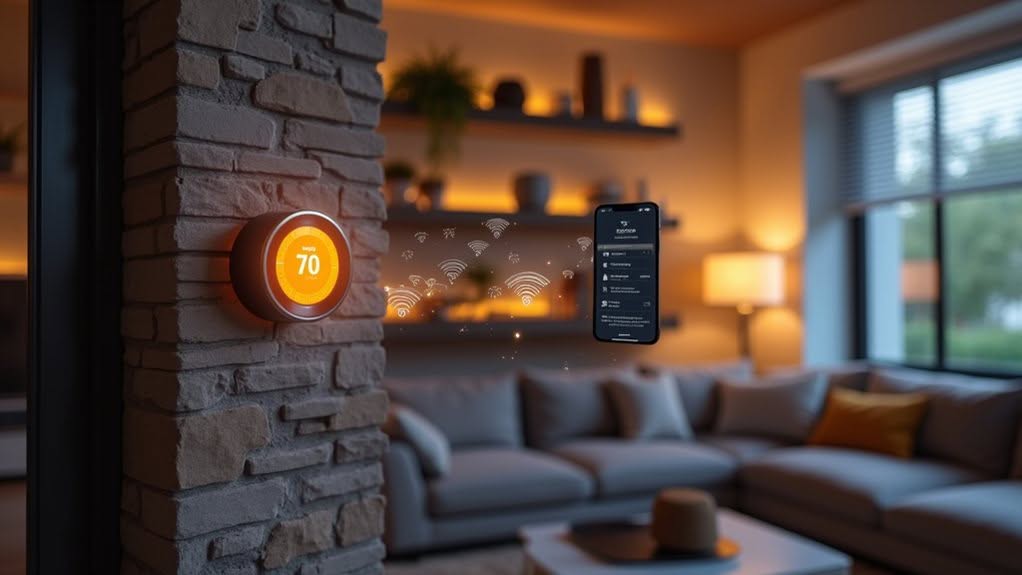
You’ll find that all major smart home platforms now support Matter, including Amazon Alexa, Apple HomeKit, Google Home, and Samsung SmartThings. This widespread adoption means you can share compatible devices across different ecosystems without requiring separate hubs for each brand.
The universal standard eliminates the previous need for multiple bridge devices, allowing your smart home components to communicate directly through your existing Wi-Fi or Thread networks.
Major Platform Compatibility
What smart home platforms actually support Matter’s unified standard? The four major platforms have already deployed Matter compatibility across millions of existing devices through software updates.
Amazon Alexa functions as a Matter controller through its app, hubs, and smart speakers. You can manage Matter devices using voice commands and control non-Amazon branded products seamlessly.
Google Home provides Matter support across all Nest speakers and displays. The Google Home app on Android and iOS devices enables full Matter device management.
Apple Home requires iOS 16.1 or newer for Matter compatibility. HomePod models and Apple TV 4K units serve as Matter controllers within Apple’s ecosystem.
The major platforms supporting Matter include:
- Amazon Alexa (app, hubs, speakers)
- Google Home (Nest devices, mobile app)
- Apple Home (HomePod, Apple TV)
- Samsung SmartThings (apps, hubs, TVs)
- Cross-platform device control capabilities
Cross-Ecosystem Device Sharing
The Matter standard’s most notable advantage lies in its Multi-Admin feature, which enables seamless device sharing across all major smart home ecosystems without platform restrictions.
You can add devices to multiple platforms simultaneously, allowing experimentation with features from different ecosystems.
A Matter smart plug initially paired to Google or Apple Home can be shared to another platform like Alexa with just a few taps.
Household members can access shared accessories regardless of their phone’s operating system or preferred voice assistant.
The sharing process requires accessing your desired accessory in the respective app and activating pairing mode.
You’ll receive a generated code that enables cross-platform integration.
This Multi-Admin capability represents the true interoperability advantage of Matter beyond its security and reliability improvements.
Hub Requirements Eliminated
Beyond enabling cross-platform compatibility, Matter fundamentally changes how smart home devices connect by eliminating the need for proprietary hubs altogether.
Matter operates at the application layer over IP-based networks like Wi-Fi, Ethernet, and Thread. Your devices connect directly to any Matter controller, such as smartphones or smart speakers, without requiring vendor-specific bridges.
The standard supports multiple communication protocols for seamless connectivity:
- Wi-Fi and Ethernet for direct IP communication
- Thread 1.4 certification for routers supporting up to 150 devices
- Bluetooth Low Energy for initial commissioning
- AES-128 encryption with certificate authentication
- Local fulfillment paths working across certified devices
Backward compatibility guarantees older Matter versions function on newer networks without additional hardware.
Distributed management allows control via any certified controller, reducing single-point reliance on proprietary hubs.
How Matter Connects Devices Without the Cloud
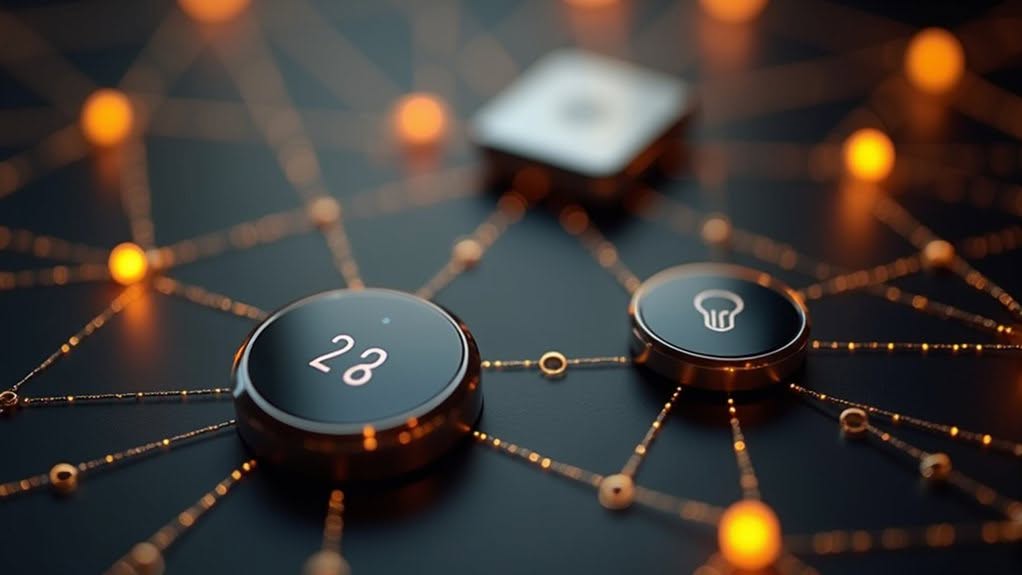
Unlike traditional smart home systems that route commands through distant servers, Matter establishes direct communication between your devices using local network infrastructure. The IP-based protocol enables device-to-device communication across Wi-Fi, Thread, and Ethernet connections within your home network.
Your Matter Controller acts as a local hardware intermediary, managing messages between devices without requiring internet connectivity for operation. Commands are processed locally by the controller rather than routed through cloud servers, guaranteeing faster response times and consistent functionality.
Data exchange occurs securely within the Matter Fabric, with encryption protecting all connection paths regardless of protocol type. This local communication architecture means your smart home devices remain controllable through local apps and interfaces even when your internet connection becomes unavailable, providing reliable operation independent of external servers.
Setting Up Your First Matter Smart Home Device
You’ll need to choose a Matter-certified device that displays the official Matter logo, then download the app for your preferred smart home platform like Apple Home or Google Home.
Once you’ve installed the platform app on your smartphone, you can begin the setup process by scanning the QR code printed on your new Matter device.
This three-step approach guarantees compatibility and provides the foundation for integrating your device into your smart home ecosystem.
Choose Compatible Matter Device
When selecting your first Matter device, compatibility verification stands as the most critical step in guaranteeing seamless integration across your smart home ecosystem.
Matter certification ensures interoperability across different platforms, with over 300 certified devices available as of 2025.
You’ll need to check manufacturer announcements for certified products or future firmware updates that enable Matter support.
Consider these crucial compatibility factors:
- Verify Matter certification through official manufacturer documentation
- Confirm your ecosystem supports the device category (lights, locks, sensors)
- Check connectivity requirements (Wi-Fi, Thread, or Ethernet)
- Guarantee Thread devices have compatible border routers available
- Validate specific Matter clusters match your intended functionality
Popular certified options include smart lights with On/Off clusters, door locks with Door Lock clusters, and hubs like Hubitat C-8 that support multiple protocols for thorough home automation.
Download Platform App
Selecting the correct platform app represents your gateway to Matter device integration, with each smart home ecosystem requiring its dedicated management application. Apple HomeKit users need the Apple Home app, which comes pre-installed on iOS devices but can be reinstalled from the App Store if necessary.
Google Home ecosystem users should download the Google Home app from the Play Store. Amazon Alexa users must access the Alexa app to manage their Matter-enabled devices effectively.
SmartThings platform users require the SmartThings app for thorough device management and control. Your selected app functions as the central control hub for all Matter devices within that specific ecosystem.
Each platform app provides standardized workflows designed to simplify the device setup process and enable seamless integration across your smart home network.
Scan QR Code
Finding the QR code on your Matter device marks the fundamental first step in establishing secure communication between your smart home accessory and controller app.
You’ll locate the QR code in several possible locations depending on your specific device model.
- Device housing as a physical label with accompanying graphics
- Directly imprinted on the device’s surface or casing
- Printed leaflet included inside the product packaging
- Product packaging itself or accompanying instruction materials
- LCD screen display during startup or within settings menu
Each QR code contains 19 alphanumeric characters starting with the “MT:” prefix, indicating proper Matter format.
The code includes your device’s vendor ID, product ID, and version information for compatibility verification.
Your smartphone camera captures this code to initiate secure encrypted commissioning through your chosen controller app.
Matter Security: How Safe Are Your Connected Devices?
How secure are your smart home devices once they adopt the Matter standard? The protocol implements mandatory AES encryption in CCM and CTR modes for all device communications, guaranteeing data confidentiality across your network.
Matter’s authentication system uses Device Attestation Certificates (DAC) as X.509 certificates to verify each device’s identity. This Public Key Infrastructure provides cryptographically unique keys that prevent man-in-the-middle attacks and unauthorized access.
The standard prioritizes local-first security, reducing cloud dependencies that create potential attack vectors. Your devices communicate directly using IPv6 and mDNS protocols, maintaining faster response times without internet reliance.
However, vulnerabilities exist. Manufacturers aren’t required to protect DAC keys adequately, creating cloning risks.
Compromised certificates could enable unauthorized network access, depending on your Access Control List configurations and proper ecosystem implementation.
The Best Matter Devices You Can Buy Today
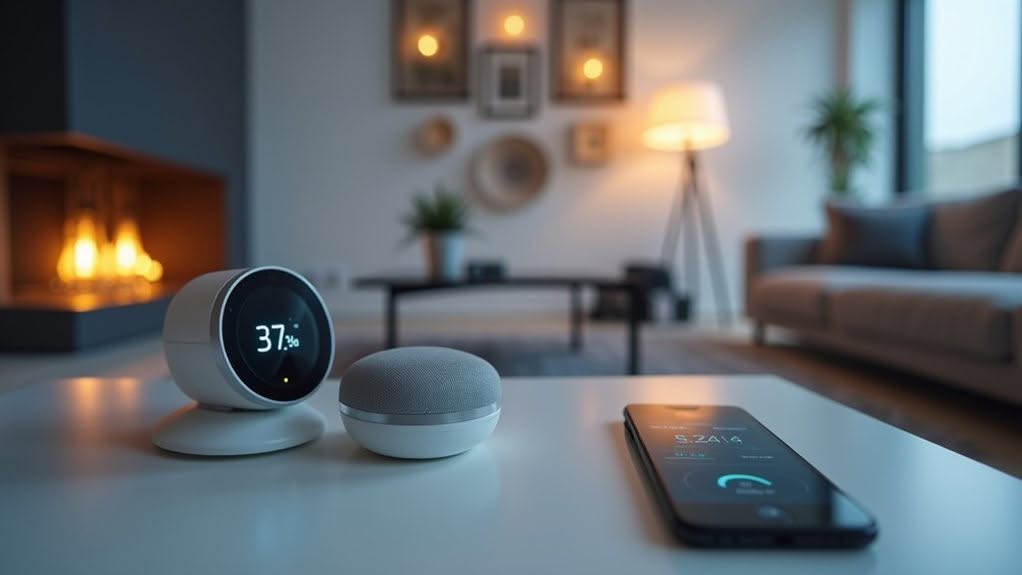
Matter’s security framework provides the foundation for a growing ecosystem of compatible devices that you can purchase today.
You can choose from various categories that offer immediate availability or upcoming releases.
Current Matter-compatible devices include:
- Smart locks – Affirm Smart Deadbolt and Latch with NFC, app, and keypad access
- Air conditioners – Window and standard AC units available now with Matter support
- Smart lighting – Matter over Wi-Fi bulbs, strips, floor lamps, and ceiling lights
- Thermostats – Hub W200 with dual-band Wi-Fi, Thread, and Zigbee integration
- Smart plugs – New Matter smart plug releasing in Q1 2026
Additional devices launching in 2026 include smart dehumidifiers, sensor pods with 30-day battery life, and ceiling fan upgrade kits for existing installations.
What’s Coming Next for Matter Smart Homes?
Where will Matter’s evolution take smart home technology in the coming years? Battery life improvements represent a major advancement, as Matter 1.4 specifications reduce energy consumption through optimized sleeping device behavior.
Thread 1.4 standardization will eliminate network connection problems by allowing new border routers to join existing networks instead of creating separate systems. This addresses a primary source of user frustration with smart home setups.
Universal Matter Bridge products launching in spring 2026 will integrate legacy devices like air conditioners and televisions into Matter ecosystems. These bridges support infrared and RF signals while covering approximately 98 percent of household appliance brands.
Camera and video doorbell products will see substantial market expansion in 2026, featuring embedded buttons for video calls to smartphones through manufacturer platforms.
Should You Upgrade to Matter Devices Now?
With Matter’s roadmap pointing toward substantial improvements in the next two years, the question becomes whether you should invest in Matter devices today or wait for future upgrades.
The current Matter ecosystem offers compelling advantages for immediate adoption. Thousands of certified products across multiple categories provide extensive device selection, while major manufacturers like Apple, IKEA, and Bosch guarantee quality options.
Key benefits of upgrading now include:
- Cross-platform compatibility eliminates vendor lock-in
- QR code setup streamlines device commissioning
- Local network control reduces cloud dependency
- Matter bridges preserve existing device investments
- Standardized protocols simplify future additions
However, you’ll need appropriate hub infrastructure, including Thread Border Routers for Thread-based devices.
The commissioning process requires initial setup through manufacturer apps before third-party integration, adding complexity to installation procedures.
Using the Matter Protocol with Home Assistant
Home Assistant has native Matter support built directly into the platform — no third-party add-on required. It acts as a full Matter controller, running everything locally so none of your device commands touch the cloud.
To set it up, go to Settings → Devices & Services → Add Integration and search for Matter. You’ll be prompted to install the Matter Server add-on if you’re on Home Assistant OS (the recommended install method). Once running, commission any Matter device by scanning its QR code directly in the HA app or companion app.
If you’re adding Thread-based Matter devices — common for battery-powered sensors and locks — you’ll also need a Thread Border Router. Compatible options include an Apple HomePod mini, a Google Nest Hub (2nd gen), or the OpenThread Border Router (OTBR) add-on built into Home Assistant Yellow and Green hardware.
One practical note: Matter works best on Home Assistant OS or Supervised installs. Docker and Core installs need extra configuration to expose the Matter server correctly. If you’re running HA on a Raspberry Pi 4 or 5, you’re well placed to take full advantage of the Matter protocol alongside your existing Zigbee and Z-Wave devices.
Frequently Asked Questions
Can I Use Matter Devices Without a Smartphone or Tablet?
Yes, you can use Matter devices without smartphones through alternative methods. You’ll need Thread Border Routers, Home Assistant with Bluetooth dongles, or Matter Bridges to commission and control devices locally.
Do Matter Devices Work During Internet Outages?
Yes, you can control Matter devices during internet outages through local network apps like Apple Home. However, you’ll lose voice assistant functionality since Siri, Google Assistant, and Alexa require internet connectivity.
Will My Existing Non-Matter Smart Home Devices Become Obsolete?
Your existing non-Matter devices won’t become obsolete immediately. They’ll continue working in their original ecosystems, and many can integrate with Matter through bridges or software updates, though eventual replacement may be needed.
Can I Control Matter Devices When I’m Away From Home?
Yes, you can control Matter devices remotely through cloud-enabled controllers like Apple Home, Alexa, Google, or SmartThings. Multi-Admin features let you connect multiple platforms for remote access when you’re away.
Do Matter Devices Consume More Electricity Than Other Smart Devices?
No, Matter devices don’t consume more electricity than other smart devices. They’re actually more energy-efficient because they use local communication instead of constant cloud connections, and Thread networks consume less power than Wi-Fi.
Final Thoughts
Matter represents a major step forward for smart home technology, offering improved compatibility and security across different platforms. You’ll benefit from easier device setup, better interoperability, and reduced reliance on cloud services. While the ecosystem is still developing, early Matter devices show promising results. You should consider upgrading gradually as more products become available, focusing on key devices like lights and switches first.


