Your smart home’s security depends on more than just changing default passwords. As connected devices proliferate throughout your living space, they create multiple entry points for potential cyber threats. The convergence of convenience and vulnerability makes implementing robust security protocols vital, not optional. While the summary mentions encryption and authentication as foundational elements, additional layered protections like network segmentation and zero-trust architectures provide critical defense depth against increasingly sophisticated attacks.
End-to-End Encryption: Safeguarding Smart Home Data Transmission
While smart homes offer unprecedented convenience, they also create new security challenges that demand robust protection measures.
End-to-end encryption (E2EE) guarantees your data remains secure throughout its path between devices and applications. This technology encrypts information at its source and only decrypts it at its intended destination, maintaining data integrity throughout transmission.
E2EE employs advanced encryption algorithms like AES-256, making it extremely difficult for hackers to intercept and decode your sensitive information. Smart home protocols including Matter and Zigbee incorporate this security measure to protect your privacy.
Nearly 72% of consumers worry about the security of information collected by their smart devices. With E2EE, you retain control over your data, as only authorized devices and users can access the decrypted information.
Investing in smart home security systems that utilize encryption protocols is essential for maintaining privacy and protecting your household from digital threats.
Multi-Factor Authentication for Connected Devices
Because single-password protection proves insufficient in today’s complex threat environment, multi-factor authentication (MFA) has emerged as a critical security feature for smart home devices. This security protocol requires you to provide two or more verification factors before granting access.
Microsoft’s research demonstrates MFA’s remarkable effectiveness, blocking 99.9% of automated attacks on smart home systems. This protection combines something you know, have, and are—like passwords, authentication apps, and biometrics.
Modern risk assessment techniques evaluate user behavior analytics to determine when additional verification might be needed. For example, a login attempt from an unfamiliar location might trigger extra security steps.
You’ll find MFA increasingly available across Matter-compatible devices and other smart home ecosystems. To maximize your protection against cyber threats, enable this feature on all your connected devices.
Network Segmentation and Dedicated IoT Networks
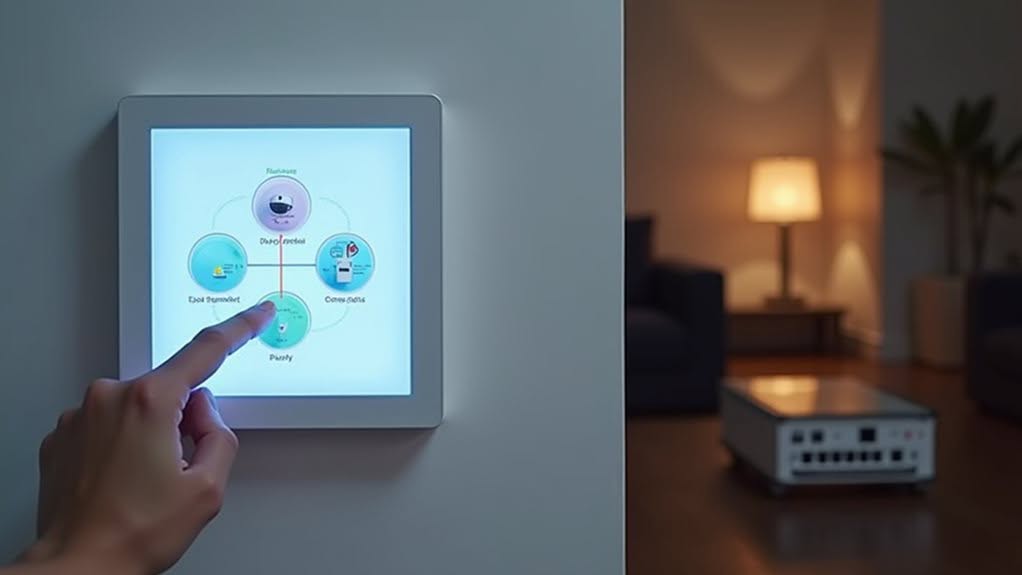
Once your smart home expands beyond a few devices, network segmentation becomes essential for maintaining robust security. By creating separate subnetworks specifically for your smart devices, you’re establishing vital IoT device isolation that considerably reduces unauthorized access risks.
Dedicated IoT networks limit your smart devices’ exposure to the broader internet, minimizing potential vulnerabilities that hackers might exploit. This segmentation creates protective boundaries around your connected devices.
Effective bandwidth management is another important benefit of network segmentation. Your smart home devices can operate seamlessly without competing for resources with data-hungry computers or streaming services.
Consider implementing VLANs for improved protection, as they restrict traffic between device groups.
Remember to regularly review your network configuration and update access controls to maintain your segmented network’s integrity.
Firmware Update Automation and Management
Your smart home’s security depends heavily on regular firmware updates, which you’ll want to verify through scheduled maintenance checks to confirm proper implementation.
You should implement rollback protection systems that prevent your devices from reverting to older, vulnerable versions after security patches have been applied.
OTA security measures, including encrypted update packages and secure authentication protocols, further safeguard your devices during the update process by preventing malicious actors from injecting harmful code.
Scheduled Update Verification
While smart home devices offer convenience and connectivity, they require regular firmware updates to maintain security against evolving threats. Implementing scheduled update verification delivers considerable scheduled update benefits, protecting your devices against known vulnerabilities without requiring manual intervention.
Automated firmware management streamlines your smart home security through:
- Reduced vulnerability window by applying security patches promptly when released
- Minimized disruption by scheduling updates during low-usage hours (typically overnight)
- Improved device performance as updates often include functionality improvements
- Augmented peace of mind knowing your system consistently maintains current security standards
Most modern smart home platforms now include built-in scheduling features, allowing you to set convenient times for updates.
This automation creates a proactive security approach, guaranteeing your devices remain protected even as new threats emerge in the ever-evolving cybersecurity environment.
Rollback Protection Systems
Although firmware updates are vital for smart home security, they occasionally introduce new bugs or vulnerabilities that can compromise device functionality.
This is where rollback protection systems become fundamental components of your smart home security framework. These automated systems monitor updates and revert devices to previous stable versions when new updates cause problems.
By implementing devices with built-in rollback features, you’re establishing a safety net that maintains continuous protection while improving user trust.
Unfortunately, many smart home products lack these important safeguards. When selecting devices, prioritize manufacturers that offer automated firmware management capabilities.
Regular monitoring through rollback protection noticeably reduces the time your devices remain exposed to known vulnerabilities.
This proactive approach guarantees your smart home ecosystem stays resilient against emerging threats while minimizing the risk of bricking devices during update processes.
OTA Security Measures
Over-the-Air (OTA) security measures form the backbone of modern smart home maintenance systems.
These mechanisms deliver critical firmware updates to your devices without requiring physical access or manual intervention.
Implementing robust OTA practices provides vital protection for your smart home ecosystem:
- Regular OTA updates address vulnerabilities promptly, preventing the 60% of data breaches attributed to unpatched systems.
- Secure firmware deployment using strong encryption prevents man-in-the-middle attacks during the update process.
- Automated update management reduces user burden while making sure devices remain current.
- Properly implemented OTA systems combat the concerning statistic that 30% of IoT devices lack regular security updates.
The OTA update benefits extend beyond convenience—they’re crucial to maintaining your smart home’s security posture, especially as threat actors continually discover new exploitation methods.
Smart Home Firewall and Intrusion Detection Systems
The foundation of any secure smart home setup rests on robust firewall and intrusion detection systems.
These technologies create a protective barrier between your home network and potential external threats, monitoring incoming and outgoing traffic for suspicious activity.
Modern smart home firewalls leverage threat intelligence and AI capabilities to identify evolving attack patterns, adapting their defenses accordingly.
Network monitoring through IDS provides real-time alerts when unusual activities are detected, giving you immediate awareness of potential breaches.
You’ll benefit from segmenting your network, placing IoT devices separate from personal computers and smartphones.
This strategy prevents cross-contamination if less secure smart devices become compromised.
Remember to regularly update your firewall and IDS configurations to address new vulnerabilities.
These maintenance steps guarantee your protection remains effective against the latest security threats.
Zero Trust Architecture for Device Authentication
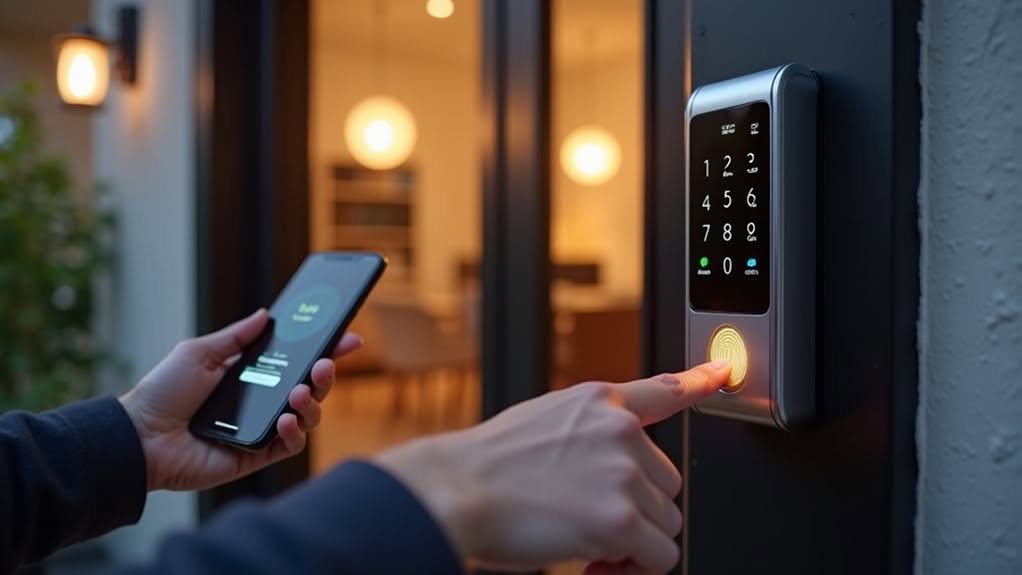
Zero Trust Architecture fundamentally transforms your smart home security by requiring every device to prove its identity before gaining network access, regardless of its location.
You’ll need to implement network segmentation, which divides your connected devices into separate zones based on their functions, preventing attackers from moving laterally if one device becomes compromised.
Your smart home security system should enforce continuous verification through methods like multi-factor authentication and real-time behavior monitoring, guaranteeing only authorized devices maintain access to your network resources.
Network Segmentation Principles
Modern smart home security hinges on effective network segmentation, which divides your home network into smaller, isolated zones to greatly reduce potential attack surfaces.
Building upon Zero Trust Architecture, network boundaries create security isolation that prevents compromised devices from affecting your entire smart home ecosystem.
You’ll need to implement continuous verification processes to maintain this protective framework.
- Establish distinct network zones (guest, IoT, personal computing, security systems)
- Apply the principle of least privilege to each device
- Implement multi-factor authentication at zone boundaries
- Conduct regular monitoring and auditing of traffic between segments
This approach guarantees that even if an attacker breaches one segment, they can’t easily move laterally through your network.
Your smart devices remain isolated from each other, considerably improving your overall home security posture.
Continuous Verification Methods
Why do traditional authentication models fail in smart homes? They often use a “trust once, access anywhere” approach that creates security vulnerabilities when devices are compromised. This outdated model grants extended access after initial verification, creating opportunities for attackers.
Zero Trust Architecture addresses this weakness by implementing the principle of “never trust, always verify.” Your devices must authenticate each time they request access to network resources, regardless of their location or previous verification status.
With continuous verification, your smart home system employs real-time monitoring to track device behavior and communication patterns. This enables anomaly detection that immediately flags suspicious activities that deviate from established baselines.
For maximum protection, implement multifactor authentication alongside continuous verification. Regular firmware updates further strengthen this security approach, keeping your smart home protected against evolving threats.
Device Identity Enforcement
How can you protect your smart home network when every connected device represents a potential entry point for attackers?
Device Identity Enforcement, a core component of Zero Trust Architecture, requires that all devices undergo authentication before accessing your network.
This approach continuously verifies device identities rather than assuming trust based on location, reducing potential attack surfaces by up to 80%.
- Implement strong cryptographic methods like digital certificates to establish secure device connections.
- Use public key infrastructure (PKI) to verify trusted devices before allowing network access.
- Replace weak default passwords with robust device authentication protocols.
- Maintain continuous verification of all devices communicating within your smart home ecosystem.
Privacy-Focused Protocols and Data Minimization Strategies
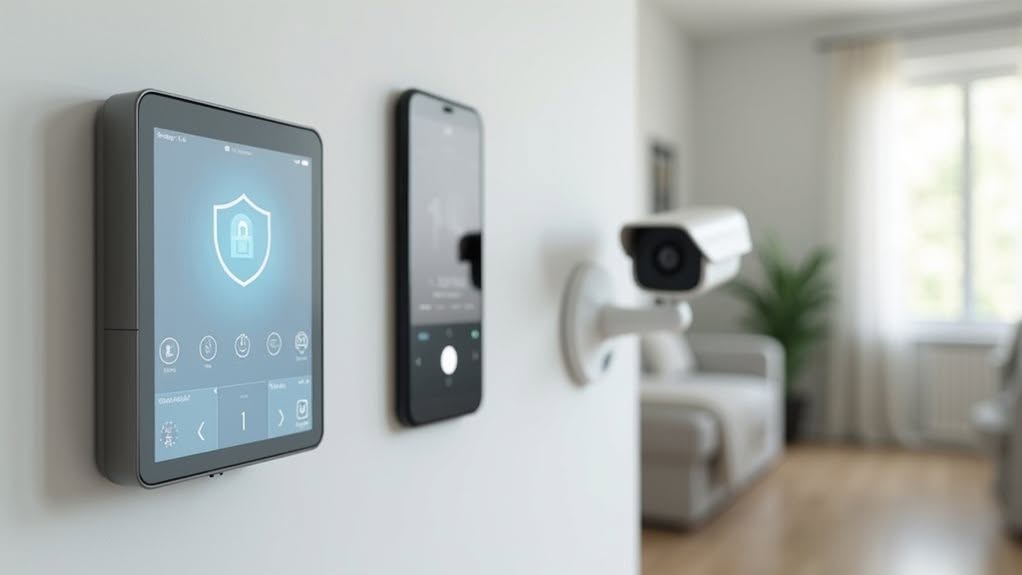
Strong privacy protection forms the backbone of effective smart home security systems. When selecting devices, you’ll want to prioritize those using robust encryption standards like AES-128, which safeguards your data during transmission and storage.
Implementing data collection limits is crucial for maintaining privacy. Look for protocols that follow data minimization principles by gathering only information that’s necessary for basic functionality, always with clear user consent.
The Matter protocol improves your privacy by enabling local device control, keeping your commands within your home network rather than routing through vulnerable cloud servers.
Don’t overlook the significance of regular firmware updates, which patch security vulnerabilities in your devices. For maximum protection, create unique passwords for each device and enable multi-factor authentication to prevent unauthorized access to your smart home ecosystem.
Frequently Asked Questions
How Much Does Professional Smart Home Security Installation Cost?
Professional smart installation typically ranges from $300-$1,500. You’ll find cost factors include system complexity, number of devices, and monitoring options. Higher-end setups with advanced integration will push your price higher.
Can Smart Home Security Systems Work During Power Outages?
Yes, they can work during outages if equipped with battery backup systems. You’ll want to guarantee your devices have alternative power options like solar panels or uninterruptible power supplies for extended protection.
Are DIY Security Protocols as Effective as Professionally Installed Systems?
No, DIY effectiveness generally falls short of professional reliability. You’ll face challenges with proper placement, integration, and ongoing maintenance. Professionals offer expertise, superior equipment, and regular updates that DIY solutions typically can’t match.
How Do Insurance Companies View Smart Home Security Implementations?
Insurance companies often offer premium discounts for smart home security implementations. Your system’s quality affects their risk assessment—professionally monitored devices typically earn larger discounts than DIY solutions because they’re considered more reliable.
What Security Certifications Should I Look for in Smart Devices?
You’ll want to look for UL 2900, CSA IoT Security, NIST compliance, and ETSI EN 303 645 security certifications. Also check for the Matter standard to guarantee device compatibility across your smart home ecosystem.
Final Thoughts
You’ll need to implement all these protocols together for thorough smart home security. By combining encryption, authentication, and monitoring systems, you’re creating multiple layers of protection for your connected devices. These measures aren’t just optional—they’re crucial safeguards against increasingly sophisticated cyber threats. Remember to regularly update your security practices as technology evolves to keep your smart home truly secure.