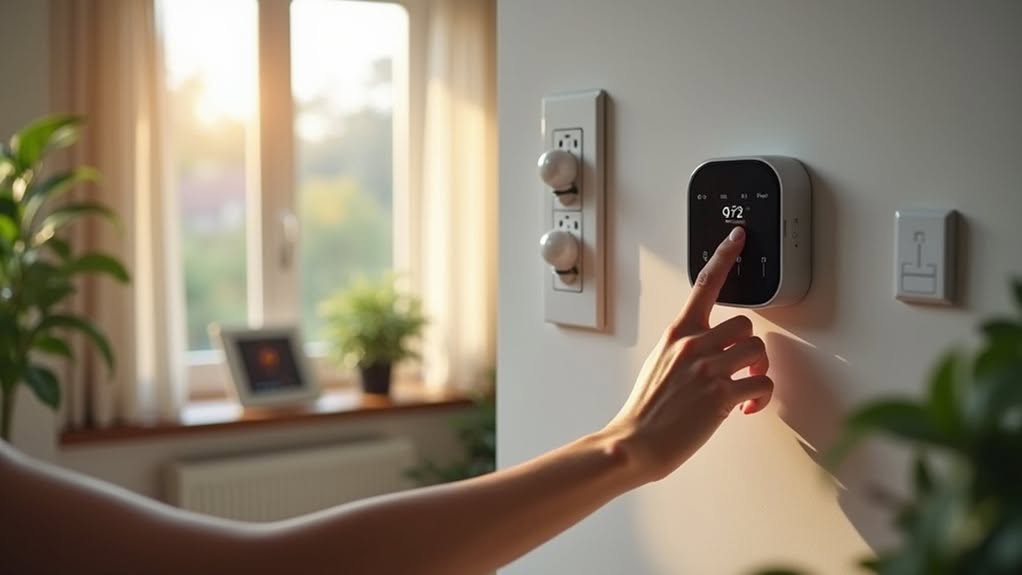
To optimize your home’s energy efficiency, implement these seven tech solutions: Install smart home automation with real-time energy monitoring, upgrade to high-SEER HVAC systems with variable-speed compressors, improve insulation to reduce energy loss, switch to LED lighting that uses 90% less power, integrate solar panels with battery storage, track energy usage with circuit-level monitors, and set up zoned climate control with wireless sensors. These technologies can reduce your energy bills by up to 40% while creating a more comfortable living environment.
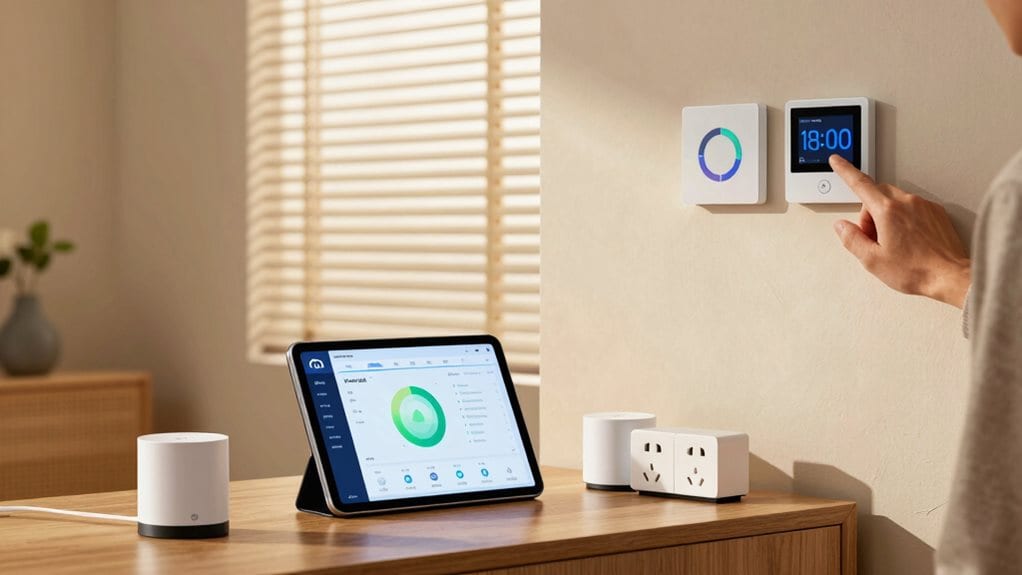
Automate Your Home With Smart Devices
As smart home technology continues to revolutionize residential energy management, automating your living space with intelligent devices offers considerable benefits for both comfort and efficiency.
The market for these technologies is expanding rapidly, projected to reach $227.3 billion by 2035. You’ll find various options to integrate into your home, from smart lighting systems to energy-efficient appliances. Installing smart energy monitors can help you track electricity usage in real-time and identify power-hungry devices.
Smart speakers, now present in 79% of U.S. households, serve as central hubs for voice-controlled automation. Motion-activated lighting systems, costing between $350-$500, greatly reduce unnecessary power usage.
Integrated home energy management systems can predict and control your consumption patterns, lowering utility bills while reducing your carbon footprint. The Energy Management segment specifically is expected to grow from $2.95 billion in 2017 to $17.46 billion by 2027. The growing focus on energy efficiency is a key driver behind the market’s impressive 11.0% compound annual growth rate.
Homeowners consistently report tangible returns on their smart technology investments through reduced energy costs and improved living comfort.
Upgrade to Energy-Efficient HVAC Systems
You can dramatically reduce your heating and cooling costs by investing in high-SEER heat pumps, which offer superior energy efficiency compared to traditional HVAC systems.
Smart zoning solutions allow you to control temperatures in different areas of your home independently, preventing energy waste in unoccupied rooms.
Look for systems with variable-speed compressors that adjust output based on your home’s needs rather than simply turning on and off.
These advanced HVAC technologies typically cost more upfront but deliver substantial long-term savings through reduced energy consumption and lower utility bills.
Regular maintenance is essential for keeping your HVAC system operating at peak efficiency levels, similar to how an oil change maintains your car’s performance.
Smart Zoning Solutions
When traditional HVAC systems treat your entire home as a single unit, they waste energy by heating or cooling unoccupied spaces.
Smart zoning solutions offer a more efficient alternative. By directing airflow only to occupied areas, zoned systems can reduce energy use by up to 33% compared to non-zoned systems.
This targeted approach can lower your energy bills by up to 30%, especially in larger homes.
Zoning solves the common problem of hot and cold spots by allowing custom temperature control in multiple areas.
Each zone operates with independent thermostats or smartphone apps, giving you precise control based on room usage.
These systems also extend equipment life by reducing wear and tear.
With less frequent cycling and lower operational strain, you’ll face fewer maintenance issues and enjoy quieter operation throughout your home.
Modern zoning systems can be seamlessly integrated with smart home technology for remote monitoring and control of individual zones.
Zoning technology significantly reduces stress on the electrical grid by shifting usage to off-peak hours through strategies like pre-cooling upstairs areas at night.
High-SEER Heat Pumps
While smart zoning directs airflow strategically, upgrading your HVAC system itself offers another powerful way to reduce energy consumption.
High-SEER heat pumps deliver exceptional efficiency, with top models reaching ratings of 27+. These systems can be twice as efficient as older 10 SEER units, considerably reducing your utility bills over time. The new SEER2 standards measure system efficiency in more realistic conditions than the original SEER system established in 1992. Modern systems with high efficiency ratings provide superior indoor comfort by effectively cooling and reducing humidity levels.
You’ll find considerable financial incentives available for upgrading. The Inflation Reduction Act offers tax credits up to $3,200, while programs like TVA EnergyRight provide rebates up to $3,000 for heat pumps with SEER2 ratings of 17 or higher.
Beyond energy savings, these systems improve your comfort with better humidity control and quieter operation.
Variable-speed technology allows output modulation between 30% and 100%, maintaining precise temperatures while reducing energy use.
Seal and Insulate Your Home Properly
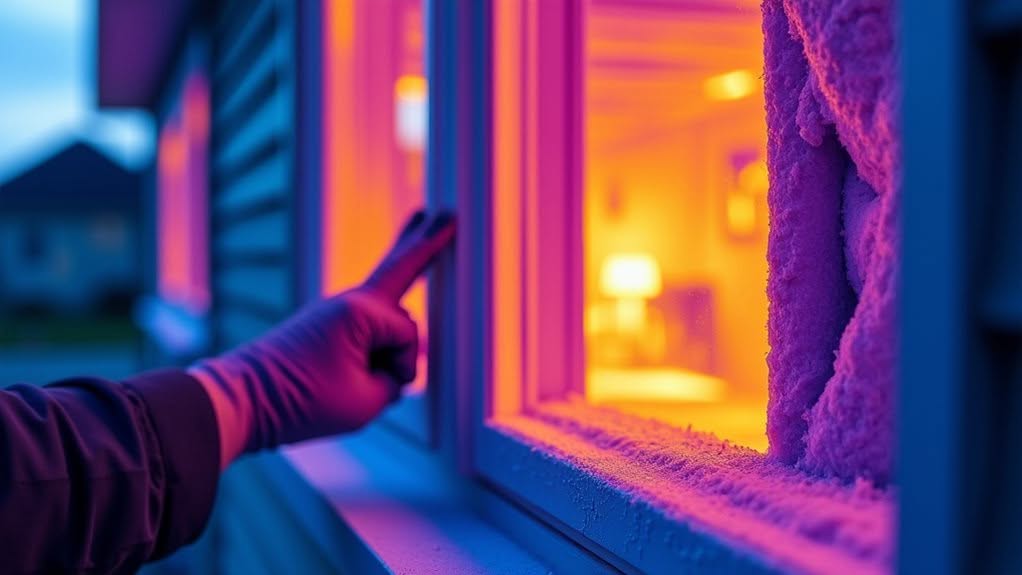
Proper sealing and insulation serve as the foundation of an energy-efficient home, potentially reducing energy costs by up to 40%. Air leaks around windows, doors, and plumbing vents can waste considerable energy, while targeted insulation in attics, crawl spaces, and basements helps maintain comfortable temperatures year-round. Utilizing spray foam insulation can significantly reduce the workload on your HVAC systems while providing both insulation and air sealing benefits in one application.
Your insulation strategy should consider your climate zone, as savings vary geographically. Northern homeowners can achieve 16-18% utility bill reductions, while southern regions see more modest benefits. A concerning 89% of homes in the United States are currently under-insulated, leading to decreased comfort and higher energy bills.
- Seal common leak areas including window frames, wiring holes, and door frames.
- Choose appropriate insulation materials based on R-value and application area.
- Target high-impact areas first: attics can lose up to 25% of your home’s heat in winter.
The EPA recommends a 25% reduction in total air infiltration through effective sealing techniques.
Switch to LED Lighting Throughout
LED lighting represents one of the most crucial upgrades you can make to reduce your home’s energy consumption.
These bulbs use up to 90% less energy than incandescent options while converting 95% of consumed energy into light rather than heat.
You’ll experience considerable long-term savings despite higher upfront costs. LEDs last up to 25 times longer than traditional bulbs and 3-5 times longer than CFLs, greatly reducing replacement frequency and maintenance expenses.
The environmental benefits are equally impressive. LED adoption contributed to over 220 million metric tons of CO₂ emission reductions in 2018 alone.
Unlike CFLs, they contain no mercury, making disposal safer and simpler.
For ideal efficiency, replace all home lighting with LEDs and look for products with higher lumens-per-watt ratings to maximize your energy savings.
Harness Solar Power With Panels and Storage
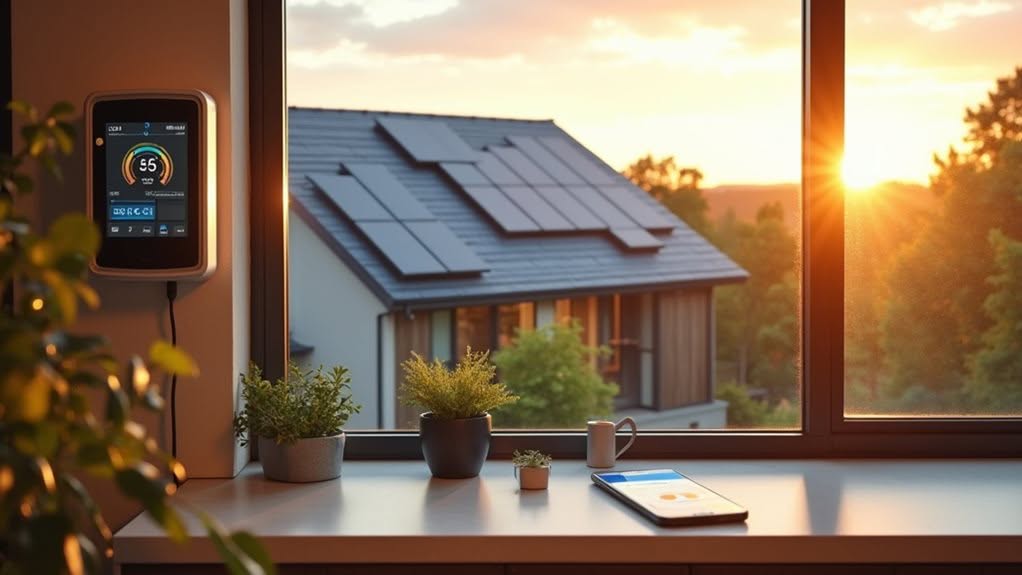
Investing in solar panels represents one of the most influential ways to reduce your home’s carbon footprint while markedly cutting energy costs.
Today’s residential panels deliver impressive efficiency, with top-tier monocrystalline options converting up to 22.8% of sunlight into electricity.
When considering solar installation, focus on these key factors:
- Panel efficiency – Higher-efficiency panels (19-27% for monocrystalline) produce more power per square foot, ideal for limited roof space.
- Temperature performance – Efficiency decreases 0.26-0.3% per degree Celsius increase, affecting real-world output.
- Battery integration – Adding storage allows you to use solar energy at night, improving self-consumption and reducing grid dependence.
While most systems include 20-year warranties, many panels maintain about 80% efficiency even after 40 years, making solar a reliable long-term investment.
Track Energy Usage With Real-Time Monitors
Real-time energy monitors serve as vigilant guardians of your home’s electricity consumption, revealing usage patterns that often remain hidden.
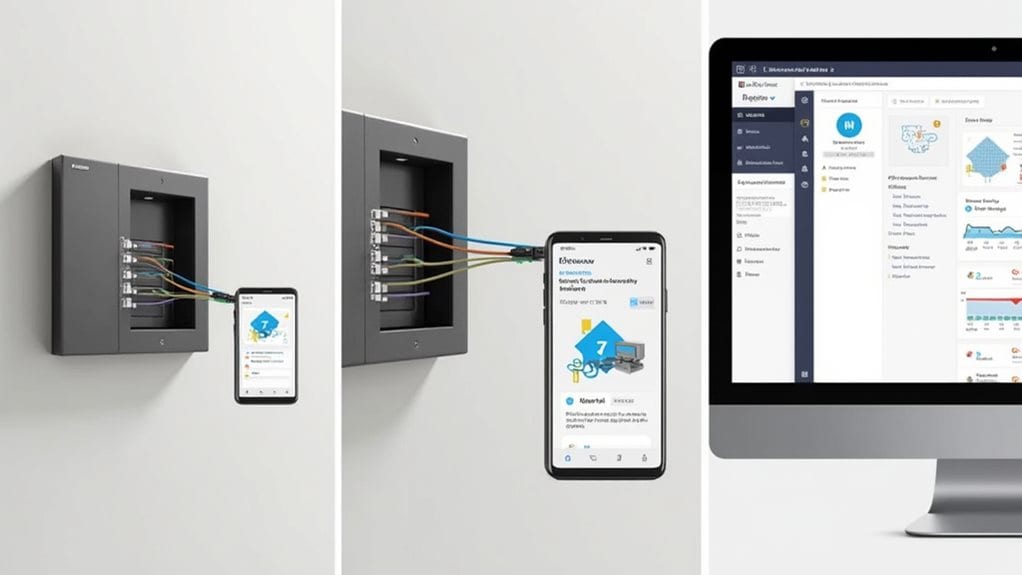
These systems connect power meters, smart plugs, and electricity meters to track energy use across all appliances and circuits. Your consumption data transmits instantly to centralized dashboards or mobile apps, allowing you to identify high-usage periods and inefficient appliances.
Many systems, like Sense, automatically identify specific devices in your home. You’ll receive customizable alerts to manage costs and can integrate with smart home setups for improved control.
Systems like Lumin offer circuit-level monitoring for thorough insights. The benefits are substantial: reduced electric bills, better energy efficiency, and greater sustainability.
Implement Zoned Climate Control
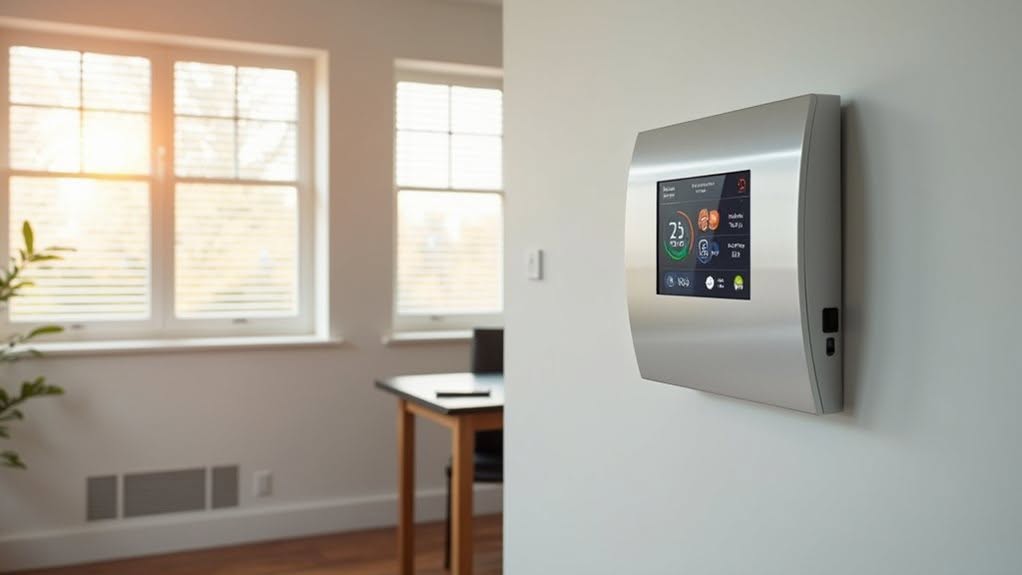
Mapping your home’s temperature patterns with strategically placed sensors helps identify areas that need targeted heating or cooling.
You’ll gain valuable insights into thermal variations across different rooms, which creates a foundation for effective zone-based climate management.
Modern programmable zone controllers let you customize temperature settings for each area of your home, automatically adjusting airflow based on occupancy patterns and time of day.
Sensor-Based Temperature Mapping
Why settle for a one-size-fits-all approach to home temperature when you can create customized comfort zones throughout your living space?
Modern temperature mapping uses strategically placed sensors to monitor and adjust conditions in each area of your home.
For effective temperature mapping, you’ll need:
- Multi-functional wireless sensors placed at varying heights to capture temperature stratification
- Strategic sensor positioning in geometric extremes and near external walls to identify hot and cold spots
- Real-time data integration with your HVAC system for automated zone adjustments
This precision approach delivers notable benefits beyond comfort.
You’ll reduce energy consumption by avoiding unnecessary heating or cooling in unused areas, extend your HVAC system’s lifespan by decreasing strain, and identify problematic areas with poor insulation or airflow issues.
Programmable Zone Controllers
Four key principles define programmable zone controllers: efficiency, personalization, equipment protection, and precision.
These systems can reduce your energy costs by up to 30% by conditioning only occupied zones rather than your entire home.
With programmable controllers, you’ll enjoy personalized temperature settings in each zone, eliminating the hot and cold spots common in single-thermostat systems.
Your family members can adjust their spaces to their preferred comfort levels.
Zone controllers extend your HVAC system’s lifespan by reducing runtime and operating at partial capacity, which decreases wear on components like compressors and blowers.
Installation requires a central control panel, individual thermostats, and motorized dampers in your ductwork.
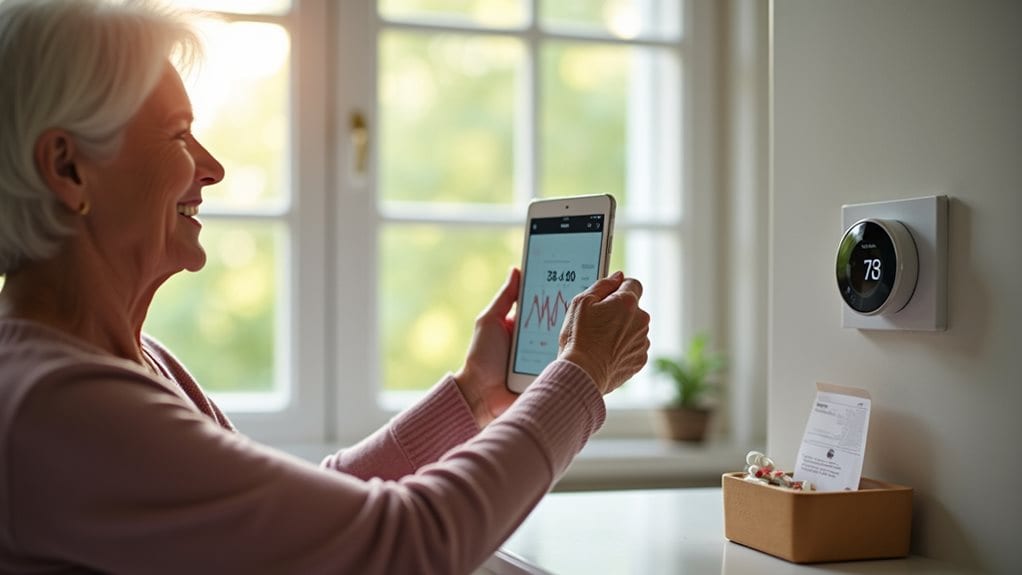
Modern smart thermostats improve this system by learning your routines and automatically adjusting temperatures, even allowing remote control of each zone.
Frequently Asked Questions
How Do Smart Home Systems Affect Privacy and Data Security?
Your smart home devices continuously collect personal activity data, creating privacy risks. They’re often vulnerable to hacking, potentially exposing your entire network and sensitive information to unauthorized access or misuse.
What Financing Options Exist for Energy Efficiency Upgrades?
You can finance energy upgrades through government-backed EEMs, personal loans, on-bill financing, and PACE programs. Don’t forget to take advantage of federal tax credits that’ll cover up to 30% of your costs.
Can Renters Implement Significant Energy-Saving Measures?
Yes, you can implement noteworthy energy-saving measures as a renter. Use smart thermostats, LED bulbs, energy-efficient appliances, weatherstripping, and portable solutions that don’t require permanent installation or landlord approval.
How Do Extreme Weather Conditions Impact Efficiency System Performance?
Extreme weather pushes your HVAC systems to their limits, reducing efficiency and increasing costs. You’ll experience performance drops, shorter equipment lifespans, and higher bills when systems struggle against temperature extremes and humidity fluctuations.
Are There Health Benefits to Energy-Efficient Home Improvements?
Yes, you’ll enjoy considerable health benefits! Energy-efficient upgrades reduce asthma triggers, improve indoor air quality, lower respiratory illness risks, decrease healthcare visits, and elevate your mental well-being through better comfort and reduced stress.
Final Thoughts
You’ve now explored seven powerful ways to optimize your home’s energy efficiency through technology. By implementing these solutions, you’ll reduce your carbon footprint while enjoying considerable savings on monthly utility bills.
Remember that energy optimization is an ongoing process. Start with the most impactful changes for your specific situation, then gradually incorporate additional technologies as your budget allows. Every smart upgrade contributes to a more sustainable and cost-effective home.