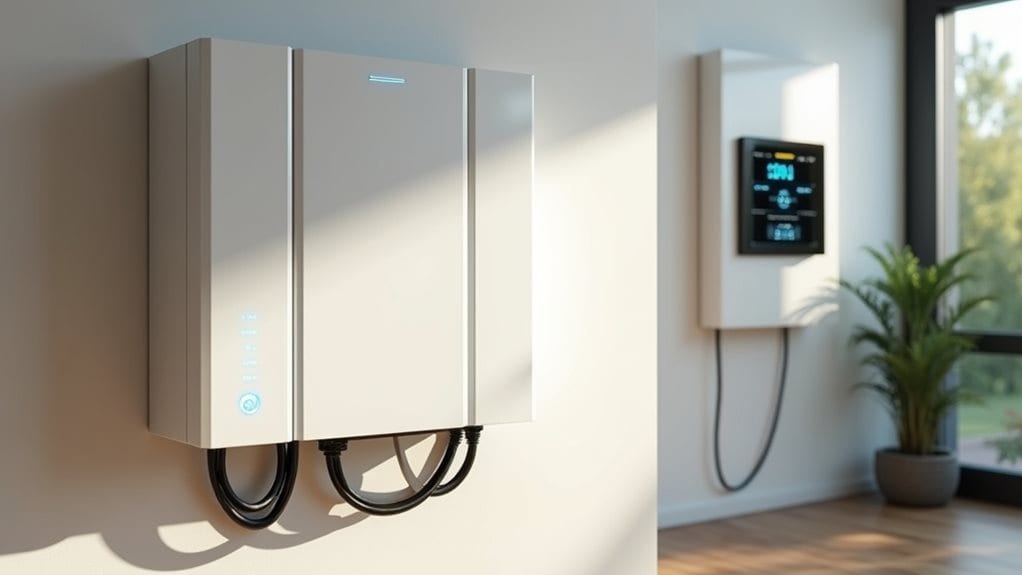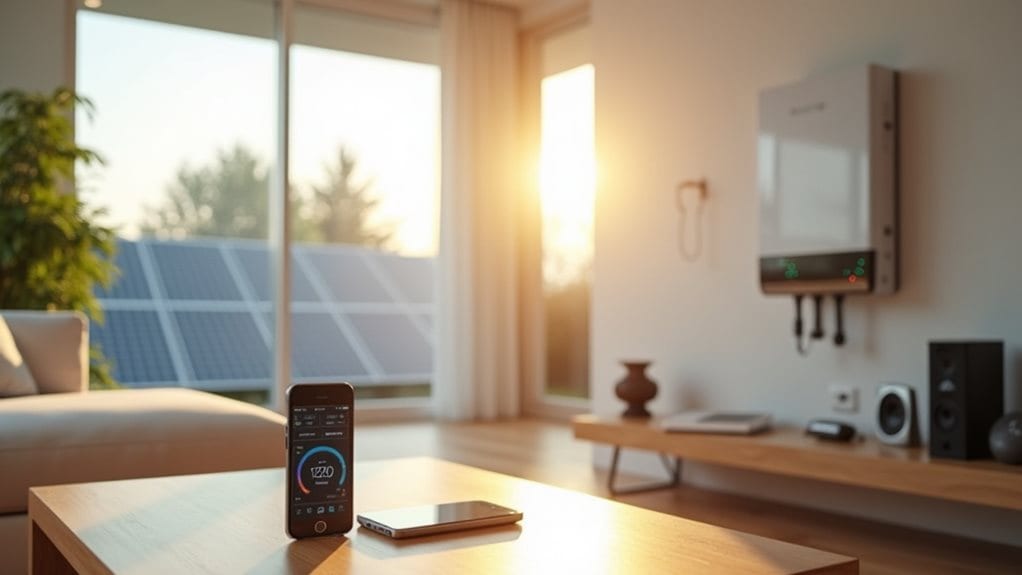
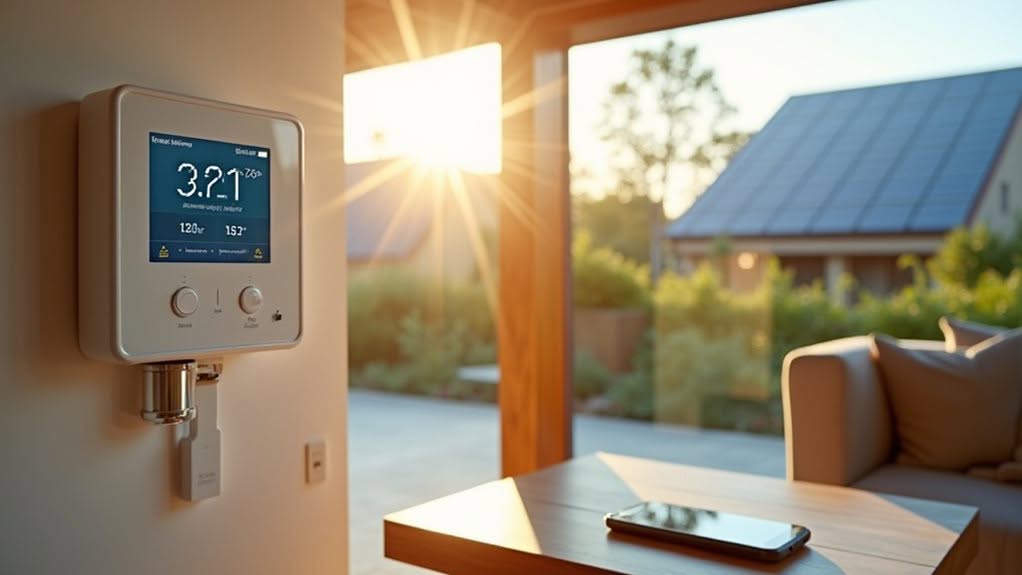
To combine solar panels with smart climate systems, install panels in ideal sunlight locations and connect them to battery storage for consistent power. Choose climate devices that support common protocols like Z-Wave or Wi-Fi 6 for seamless integration. Schedule your HVAC to run during peak solar production (10 AM-4 PM) and use smart thermostats to pre-cool or pre-heat your home strategically. Proper integration can reduce payback periods to 5-8 years while improving efficiency by up to 20%.
Understanding the Basics of Solar Panel Integration
As homeowners increasingly seek sustainable energy solutions, understanding solar panel integration has become crucial for maximizing energy efficiency.
Solar panels convert sunlight into electricity, offering you a renewable energy source that can considerably reduce your utility bills. You’ll need to decide between monocrystalline, polycrystalline, or thin-film panels based on your efficiency requirements and budget.
Proper installation on rooftops or areas with maximum sun exposure is necessary for ideal performance. You’ll also need to take into account smart inverters, which convert DC power from panels to AC power for home use while providing real-time monitoring capabilities. Smart systems like Enphase Energy Systems provide panel-level resiliency that ensures one panel’s failure won’t compromise your entire system.
Regular maintenance, including cleaning and system checks, guarantees your solar setup continues performing efficiently. For complete household efficiency, consider adding a smart energy system that automatically manages power distribution between solar generation and grid consumption.
When integrated with smart home systems, your solar panels can power automated climate controls and energy management systems.
Selecting Compatible Smart Home Systems
When selecting smart home systems to pair with your solar installation, you’ll need to evaluate compatibility across communication protocols, hardware requirements, and integration capabilities.
Protocols like Z-Wave and Wi-Fi 6 offer notable advantages for solar-connected devices, with Z-Wave creating mesh networks that optimize energy usage and Wi-Fi 6 improving battery efficiency by up to 30% for smart security cameras.
Your ecosystem choice matters tremendously, as integration hubs such as SmartThings, Hubitat, and Home Assistant provide superior compatibility with solar monitoring devices while supporting the extensive device ecosystem needed for thorough energy management. Modern off-grid smart homes can operate efficiently with proper solar setup, using 30-40% less energy than traditional homes without sacrificing comfort or functionality.
Compatibility Assessment Criteria
Selecting the right combination of solar panels and smart climate systems requires a thorough compatibility evaluation to guarantee seamless integration and maximum performance. Your analysis should focus on technical specifications that determine if components will work together effectively.
When evaluating compatibility, examine the communication protocols supported by both your solar equipment and smart climate devices. Verify that voltage ratings align properly to prevent system damage. Smart climate systems should support multiple communication protocols like CAN bus, RS485, and RS232 for comprehensive solar system integration.
- Check if solar inverters support open protocols like Wi-Fi, ZigBee, or MQTT for communication with smart devices.
- Evaluate battery chemistry and capacity to confirm they’ll support your climate control needs.
- Confirm the system architecture (AC or DC coupled) suits your intended automation strategy.
- Verify scalability options that allow future expansion without major system redesign.
Protocol Considerations Essential
Protocol compatibility forms the foundation for successful solar panel and smart climate system integration, determining whether your devices will effectively communicate with one another.
When selecting components, prioritize systems that support standard wireless protocols such as Zigbee, Z-Wave, Wi-Fi, and Bluetooth. These enable seamless connectivity between solar inverters and climate controls.
For robust solar monitoring, look for equipment supporting Modbus or CAN bus protocols, which must be compatible with your home automation hub. Open standards like MQTT and REST APIs further improve interoperability.
Your smart meter should comply with protocols like SMETS2 or DLMS/COSEM to accurately track energy flow between your home and the grid. This data informs your climate system’s operation.
Don’t overlook security considerations—ensure your devices implement AES encryption and secure authentication protocols to protect your energy data.
Ecosystem Integration Strategies
Building an effective solar-powered smart home requires careful selection of compatible systems that work together seamlessly. When selecting your ecosystem, consider both current compatibility and future expansion options.
Enphase solar systems offer integration with popular thermostats like Nest, Ecobee, and Honeywell through third-party platforms such as IFTTT. The Tesla ecosystem provides thorough energy management when paired with Powerwall batteries and Tesla vehicles.
- SolarEdge systems optimize energy distribution, directing solar power to appliances when production is highest.
- Control4 and Schneider Electric systems provide advanced automation capabilities for solar integration.
- Z-Wave thermostats create reliable mesh networks that maintain connectivity throughout your home.
- Real-time monitoring applications allow remote control of energy flow between solar panels, batteries, and home systems.
Integrating AI-enhanced controllers can predict household usage patterns and automatically adjust climate settings to maximize energy efficiency and reduce utility costs.
Planning Your Energy Management Strategy
When you’re integrating solar panels with smart climate systems, a thorough energy management strategy becomes essential for maximizing efficiency and cost savings.
Begin by analyzing your household’s consumption patterns and aligning energy-intensive tasks with peak solar production times. AI-driven algorithms can automate this process, making thousands of micro-adjustments daily that can lower costs by an additional 20-30% compared to standard installations.
Consider how your system will handle energy arbitrage—automatically drawing from batteries or the grid based on real-time electricity rates. This optimization can lead to utility bill reductions of up to 90% for fully integrated setups.
Don’t overlook financial incentives like tax credits, rebates, and net metering when planning your system. These benefits can notably offset your initial investment while supporting your long-term sustainability goals.
Installation and Setup Best Practices
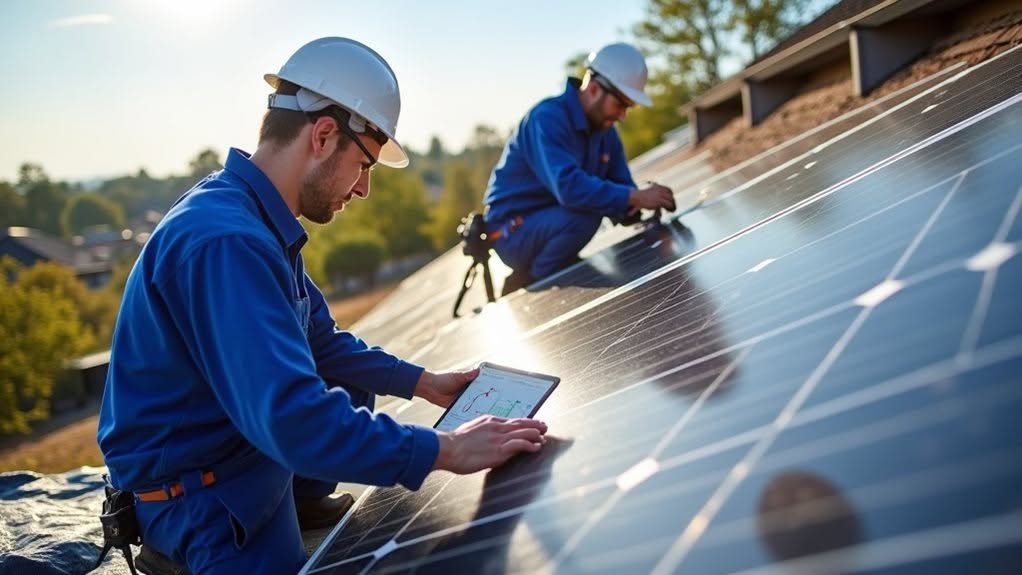
Proper installation of your solar and smart climate integration requires meticulous attention to detail for ideal performance and safety. Secure roof brackets by bolting directly to rafters, guaranteeing your system withstands harsh weather conditions.
Position batteries in temperature-controlled, ventilated spaces to maximize their lifespan and efficiency.
When connecting components, use appropriate wiring methods—series connections increase voltage while parallel connections boost current. Your inverter should be installed in an accessible location with adequate airflow to prevent overheating.
- Install energy management controls near your inverter and battery storage for simplified wiring and easier maintenance
- Use stainless steel mounting hardware to prevent corrosion and assure long-term durability
- Maintain 10mm spacing between solar panels to accommodate thermal expansion
- Program smart thermostats to prioritize solar power usage during peak production hours
Maximizing Efficiency Through Smart Controls
With your solar system properly installed, the next step involves harnessing smart controls to maximize your energy efficiency.
Intelligent systems can schedule your high-energy appliances to operate during peak sunlight hours (10 AM to 4 PM), when your panels generate the most power.
Smart thermostats can pre-cool or pre-heat your home during solar production peaks, guaranteeing comfort while minimizing grid dependency. These systems adapt to weather forecasts, automatically adjusting your energy consumption patterns accordingly.
AI-driven management platforms provide real-time monitoring of both energy production and usage, allowing you to make informed decisions.
When integrated with IoT devices, your entire home ecosystem works cohesively to optimize solar utilization.
For climate control specifically, smart systems guarantee your HVAC operates primarily during sunshine hours, storing excess energy in batteries for evening use.
Overcoming Common Integration Challenges
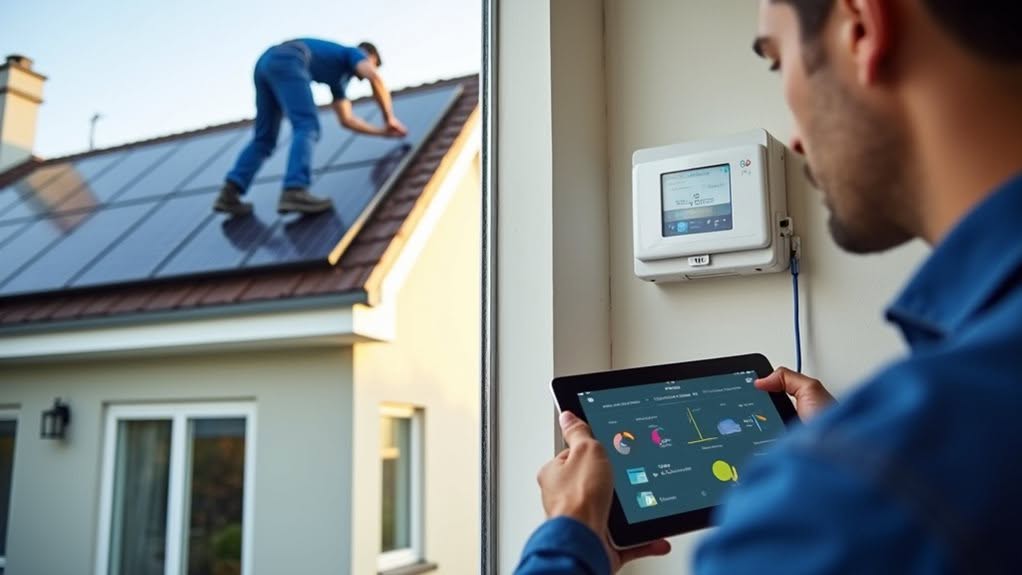
When integrating solar panels with smart climate systems, you’ll often face compatibility issues that require troubleshooting, such as mismatched communication protocols or outdated firmware.
You can resolve many compatibility problems by installing protocol bridges, guaranteeing all systems use the latest firmware updates, or consulting with an integration specialist who understands both solar and HVAC technologies.
To create a cost-effective setup, consider phased implementation approaches, prioritize fundamental integrations first, and look for rebates or incentives specifically designed for renewable energy systems with smart home components.
Compatibility Troubleshooting Tips
Why do seemingly compatible solar and smart climate systems fail to work together effectively? Often, the issue lies in communication protocols, software incompatibilities, or outdated components that weren’t designed with integration in mind.
These technical mismatches can prevent your systems from sharing data properly, resulting in inefficient energy usage and reduced performance.
- Check that your solar inverter supports communication with your smart home platform through compatible protocols
- Ascertain both systems use the same communication standards (Zigbee, Z-Wave, or WiFi)
- Verify firmware and software are updated on all components to support modern integration
- Consider adding a dedicated energy management system that can bridge communication gaps
Regular professional system assessments can identify incompatibilities before they impact performance.
When purchasing new components, always confirm cross-system compatibility with manufacturers.
Cost-Effective Setup Solutions
Although integrating solar panels with smart climate systems offers considerable long-term benefits, many homeowners hesitate due to concerns about initial costs.
Fortunately, there are several approaches to make this investment more manageable.
Government incentives and tax credits can greatly reduce your upfront costs, sometimes by 30% or more.
Many financial institutions now offer specialized loans for renewable energy installations with favorable terms.
Net metering programs allow you to sell excess energy back to the grid, creating additional savings that offset your initial investment.
This arrangement typically reduces payback periods to 5-8 years in most regions.
For maximum cost-effectiveness, consider AI-driven energy management systems that automatically schedule high-consumption activities during peak solar production hours.
These smart systems can improve overall efficiency by 15-20%, further speeding up your return on investment.
Cost Analysis and Return on Investment
The financial terrain of integrated solar and smart climate systems presents both considerable upfront investments and substantial long-term savings. A typical 7-8 kW solar installation costs $24,000-$36,000 before incentives, with the 30% federal tax credit reducing your expense by $7,200-$10,800.
Smart climate integration adds $200-$1,500 initially but can decrease heating and cooling energy use by 10-20%.
Financing options include solar loans (adding $3,000-$8,000 in interest), PPAs with $0 down, or home equity lines of credit.
Annual maintenance averages $150-$400 for solar panels and under $100 for smart climate systems.
Only system owners qualify for the valuable 30% federal tax credit.
Smart climate components typically pay for themselves in 2-5 years through energy savings.
Future-Proofing Your Solar Climate System
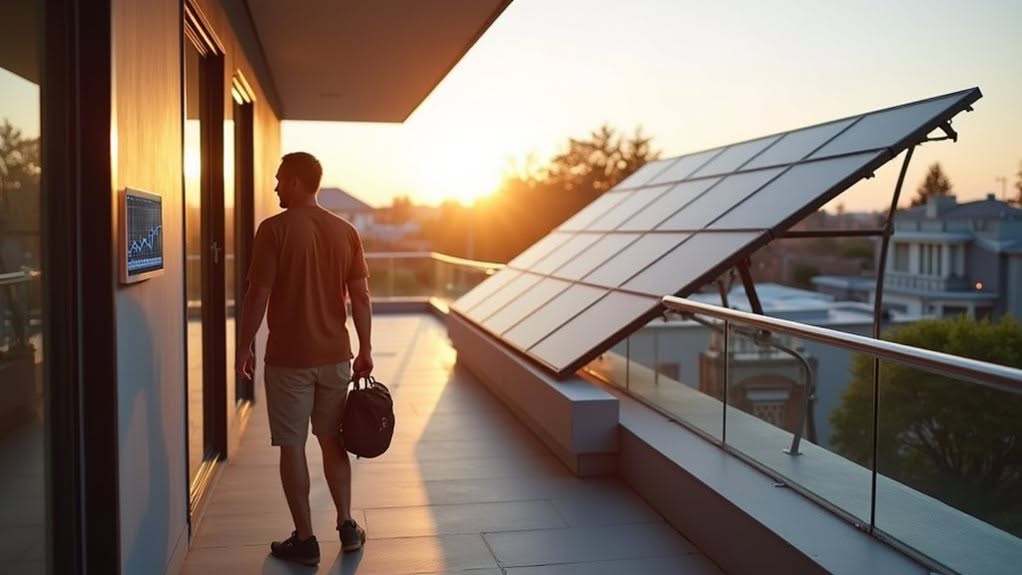
While financial calculations provide clarity on your immediate investment, planning for the future of your solar climate system deserves equal attention.
Choose modular components that allow for easier technology upgrades without replacing the entire system. Standardized parts can extend your system’s lifespan beyond 35 years through targeted replacements.
Integrate battery storage to maintain climate control during outages and reduce grid dependency. Smart inverters can optimize charging based on your HVAC needs, improving energy independence.
Select equipment designed with high material recovery rates—up to 98% of solar panels can be recycled. This supports sustainability goals and prepares for future regulations.
Ensure your system uses interoperable communication protocols so solar arrays, smart thermostats, and home automation can work together as technology evolves.
Frequently Asked Questions
How Do Solar Panels Perform During Extended Cloudy Periods?
Solar panels produce 10-75% less power during cloudy days. You’ll see efficiency depend on cloud density and panel technology. Monocrystalline panels perform better, but you’ll still generate electricity even on gray days.
Can Solar-Powered Climate Systems Work in Rental Properties?
Yes, you can use solar-powered climate systems in rentals through community solar subscriptions, portable solar options, or by negotiating with your landlord who might approve installation if it increases property value and attracts eco-conscious tenants.
Are There Insurance Implications for Integrated Solar-Smart Systems?
Yes, you’ll face insurance implications with integrated solar-smart systems. You’ll need to update your homeowners policy, potentially get specialized coverage, and expect modest premium increases to protect your investment against various risks.
How Do Extreme Temperatures Affect Solar Panel Efficiency?
Your solar panels lose 0.3-0.5% efficiency for every degree above 25°C. During extreme heat, they can experience 10-25% efficiency drops, though they’ll still generate considerable power even when temperatures soar.
What Maintenance Does a Combined System Require Seasonally?
You’ll need seasonal panel cleaning, electrical checks, and smart thermostat calibration. Clear debris quarterly, inspect connections twice yearly, and update climate system programming as seasons change to maximize efficiency and prevent system conflicts.
Final Thoughts
By combining solar panels with smart climate systems, you’ll create a sustainable, efficient home that saves money while reducing your carbon footprint. The initial investment pays off through lower utility bills and increased property value. As technology advances, your integrated system will continue to improve, offering new ways to optimize energy use. With proper planning and regular maintenance, your solar-powered smart home will serve you well for decades to come.