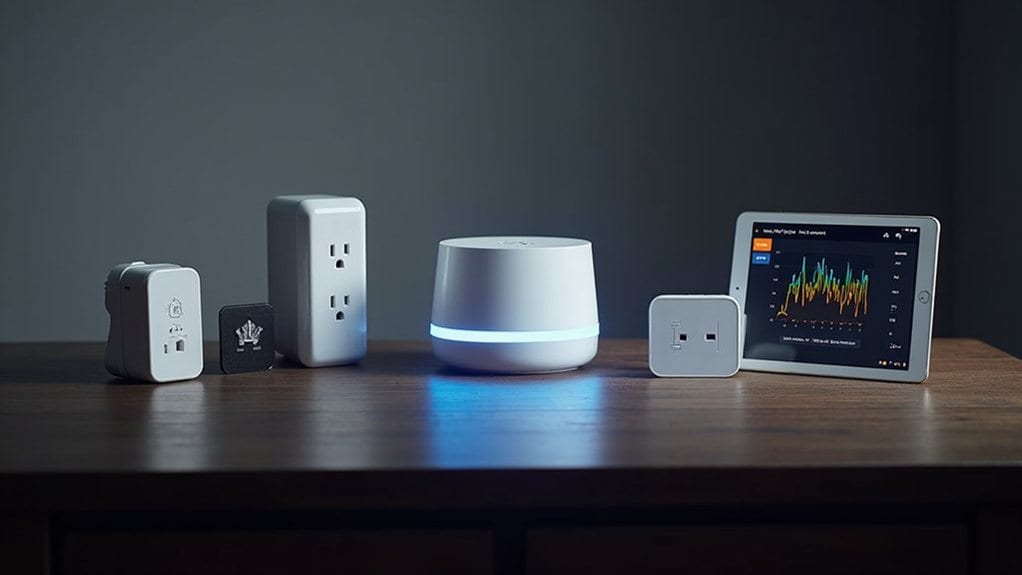
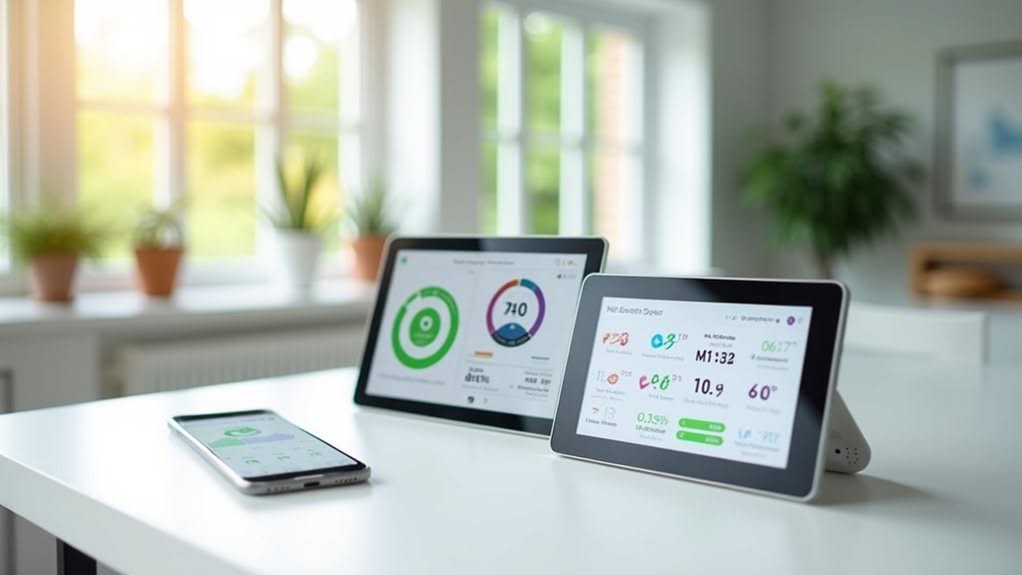
The best real-time energy monitors include the Emporia Vue for professional-grade circuit-level tracking with 1-second granularity, and the Sense Home Monitor with AI-powered appliance detection. Budget-conscious homeowners can consider Eyedro’s affordable solutions with no subscription fees. Your ideal monitor depends on installation preferences, desired accuracy level, and smart home integration needs. Each system offers unique features that can help you achieve the typical 10% reduction in monthly electricity bills.
Understanding Real-Time Energy Monitoring Technology
While traditional energy meters only show total consumption at the end of a billing cycle, real-time energy monitoring systems transform how we manage power usage by providing instant feedback.
These systems rely on IoT sensors that continuously measure your electricity consumption and environmental factors. The collected data travels to cloud platforms where it’s stored and analyzed.
For faster response times, edge computing processes some information locally before sending it to the cloud. AI and machine learning algorithms then identify usage patterns and suggest optimization strategies. The most advanced systems now incorporate blockchain technology to ensure data integrity and security.
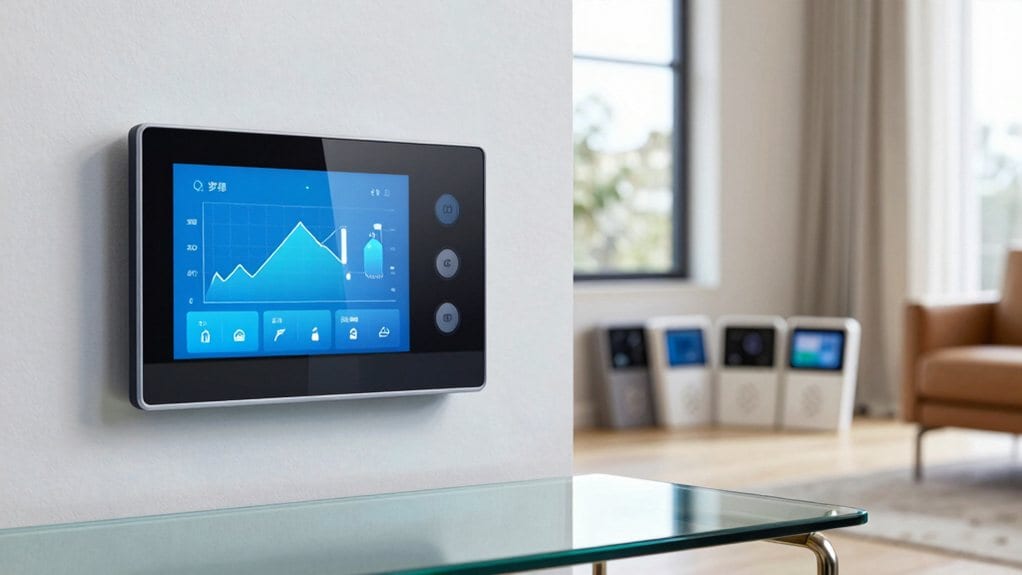
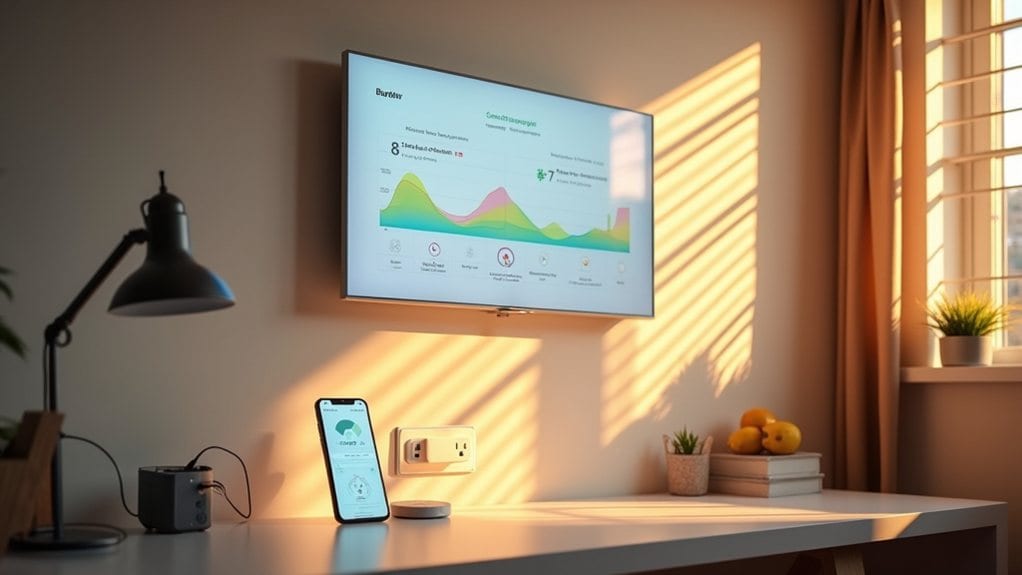
You’ll interact with this technology through user-friendly dashboards that display current usage, historical trends, and alerts for unusual consumption.
Many systems also integrate with your existing building management infrastructure to automate HVAC, lighting, and other energy-intensive systems. This integration allows for immediate adjustments to energy usage within minutes for commercial buildings, unlike traditional methods that rely on historical data.
Smart home energy monitors give homeowners the power to transform their homes with insights that lead to more sustainable living practices.
Top Features to Look for in Home Energy Monitors
Choosing the right energy monitor requires understanding which features will provide meaningful insights into your home’s electricity consumption.
Real-time data access is crucial, with dashboards that display instant electricity usage in watts or kilowatts. Look for monitors that update every few seconds via smartphone apps or web portals.
Appliance-level detection helps you identify which devices consume the most power through AI recognition of electrical signatures, though similar appliances may be harder to distinguish.
Cost tracking features calculate your current electricity spend and forecast monthly bills based on your consumption patterns, helping with budget planning.
Smart home integration capabilities allow your monitor to connect with other devices like thermostats and solar inverters, enabling automated energy-saving actions when usage spikes. For homes with renewable energy systems, monitors with solar tracking capabilities can help optimize usage against generation. Proper installation by certified electricians is recommended to ensure safety and system reliability when connecting monitors to your home’s electrical panel.
Emporia Vue: Professional-Grade Monitoring With Direct Circuit Tracking
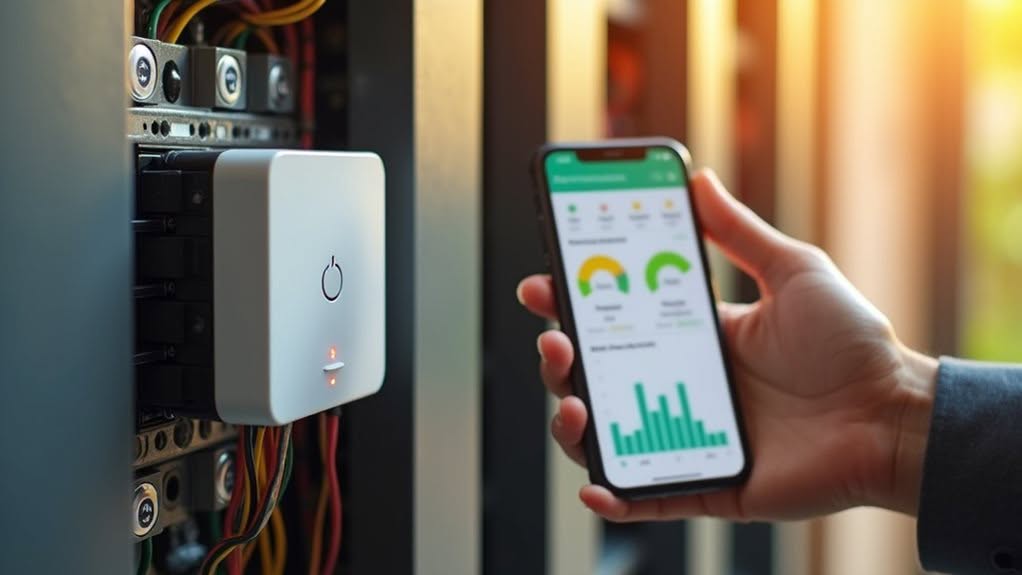
The Emporia Vue stands out for its real-time circuit tracking that monitors your energy usage with one-second granularity across up to 16 individual branch circuits.
You’ll need professional installation since the system installs directly inside your electrical panel, requiring expertise to safely place the current transformer sensors around your home’s wiring.
Once installed, you’ll gain remarkable flexibility in monitoring specific circuits—from major appliances to solar production—allowing you to identify energy hogs and optimize consumption patterns through the cloud-connected mobile app. The system processes 24,000 samples per second to deliver highly accurate energy consumption data for informed decision-making. With ±2% precision, the Vue Gen 2 provides exceptionally reliable measurements that help you make confident decisions about your energy usage.
Real-Time Energy Insights
How exactly does the Emporia Vue deliver professional-grade energy monitoring? The device captures energy data at remarkably precise 1-second intervals, providing you with highly detailed consumption patterns. This granular approach allows you to identify energy usage with exceptional accuracy.
The Vue supports multiple electrical system configurations, including single-phase, single-split phase, and three-phase setups. It comes equipped with 200A main sensors and optional 50A branch circuit sensors that enable tracking at the individual circuit level. The Vue 3 incorporates advanced CT sensors that monitor energy flow with improved accuracy compared to previous models. Many customers report average savings of 10% on their monthly electric bills after installing the system and making adjustments based on the insights provided.
Connectivity options include 2.4 GHz WiFi in all models, with the Gen 3 adding Ethernet capability for more reliable connections.
The system sends actionable alerts and detailed analysis to help you identify energy-wasting appliances, allowing you to make informed decisions about your energy consumption.
Professional Installation Required
While the Emporia Vue delivers impressive monitoring capabilities, you should be prepared for professional installation requirements. This system involves working inside your electrical panel with live circuits, creating potential safety hazards for those without proper training.
The installation process includes mounting current transformer sensors on individual circuits and connecting to your main panel. An electrician will ascertain proper placement of up to 16 CT sensors and verify compatibility with your specific panel configuration.
Most installations take 1-2 hours to complete, depending on your panel’s complexity. Professional installation isn’t just about safety—it also guarantees accurate readings from the system’s high-precision sensors.
You’ll need stable internet connectivity for the system to transmit real-time data to the Emporia app, where you can access your energy insights without subscription fees. Many users report that the system helped them identify inefficient appliances and achieve significant energy savings through targeted upgrades. With its remarkable ±2% accuracy and comprehensive monitoring features, the Emporia Vue stands out as one of the most precise energy monitors available on the market.
Flexible Circuit Monitoring
At the core of Emporia Vue’s powerful capabilities lies its flexible circuit monitoring system that transforms how you manage household energy.
The system supports monitoring of up to 16 individual 50A branch circuits plus mains via two 200A sensors, providing extensive visibility into your home’s power usage. You’ll receive real-time data updated every second, allowing you to identify energy-hogging appliances with precision.
Installation options accommodate various electrical configurations, including 3-phase, split-phase, and single-phase panels. The Gen 3 model features bendable Rogowski coil sensors with a 36mm opening that can fit around awkwardly positioned wires.
All this data flows through WiFi or Ethernet to Emporia’s cloud platform, where you can track consumption patterns, set energy goals, and receive customized alerts for unusual activity.
Sense Home Energy Monitor: AI-Powered Appliance Detection
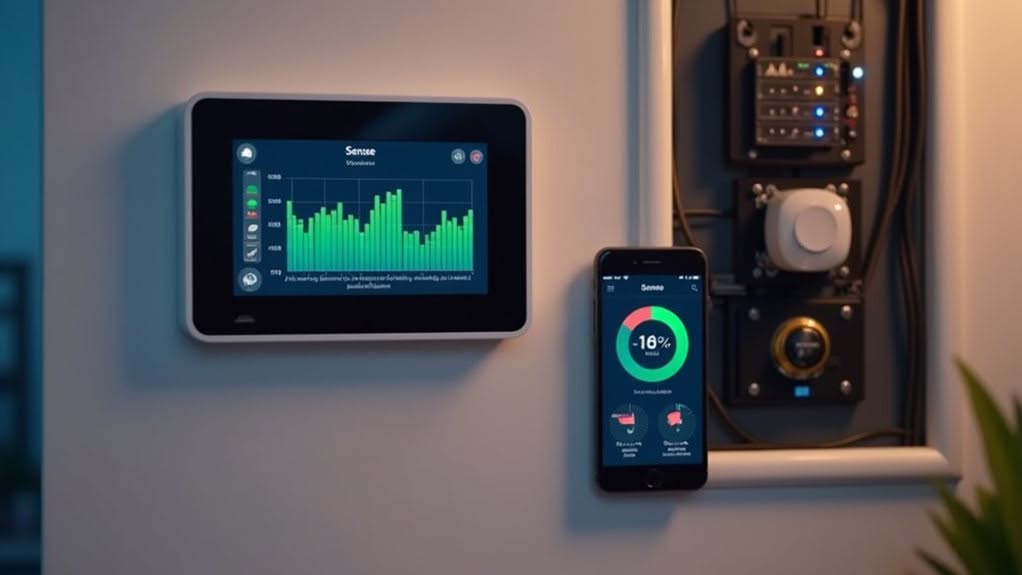
While Sense’s AI technology can identify many appliances over time, you’ll need to be patient during the initial learning period when few devices are recognized.
The system typically detects major energy-consuming appliances first, such as refrigerators and HVAC systems, but may struggle with smaller or similar devices that have overlapping electrical signatures.
This detection gap represents a tradeoff between convenience and thoroughness, as manually labeled devices provide immediate tracking while the AI gradually builds a more complete picture of your home’s energy profile.
AI Learning Curve
Understanding how the Sense Home Energy Monitor identifies your appliances requires patience, as the AI detection system doesn’t work instantly. The technology needs time to analyze your home’s unique electrical patterns before it can reliably identify devices.
Sense’s machine learning algorithms sample your electrical current thousands of times per second, gradually building profiles of each appliance. This process typically takes weeks or months to achieve reliable detection results.
You can speed up this learning process by manually turning devices on and off, which helps the system recognize their electrical signatures more quickly.
The technology advances through crowdsourced learning, as each new home adds data to Sense’s cloud-based AI platform. This collective intelligence improves the system’s ability to recognize a wider variety of appliances over time.
Detection Gap Tradeoffs
Despite its advanced technology, the Sense Home Energy Monitor faces considerable tradeoffs in device detection accuracy. The system requires weeks or even months for its AI algorithms to learn and stabilize device recognition patterns in your home.
Even after extended learning periods, notable challenges remain:
- High-frequency sampling improves potential accuracy but can’t guarantee detection of all devices.
- Complex appliances with variable power draws, like dimmers and variable speed motors, often confuse the system.
- A fundamental tradeoff exists between broad device coverage and individual device detection accuracy.
- Low-wattage devices or those running simultaneously may remain permanently unidentified.
- Substantial portions of energy usage can remain labeled as “unknown” despite the system’s sophisticated monitoring.
These limitations mean you’ll likely need to provide manual input to identify certain devices, particularly those with overlapping electrical signatures.
Budget-Friendly Options: Eyedro and Other Affordable Alternatives
For budget-conscious homeowners seeking to monitor their energy usage, Eyedro represents an excellent balance of affordability and functionality.
Their non-invasive installation process eliminates the need for cutting wires or complex rewiring of your electrical panel.
The basic EHEM1-LV model offers Ethernet connectivity and monitors up to 200A/300V, while the EYEDRO-HOME adds WiFi capability and solar/net metering compatibility.
Both provide real-time consumption data in watts, amps, and dollars.
Eyedro’s cloud-based MyEyedro dashboard gives you 24/7 access to your energy data without subscription fees.
You’ll see usage patterns by hour, day, week, or month, helping you identify energy waste.
Though Eyedro can’t identify individual appliances, its whole-home monitoring capabilities make it an excellent starting point for those wanting to understand and reduce their electricity consumption.
Smart Home Integration Capabilities and Compatibility
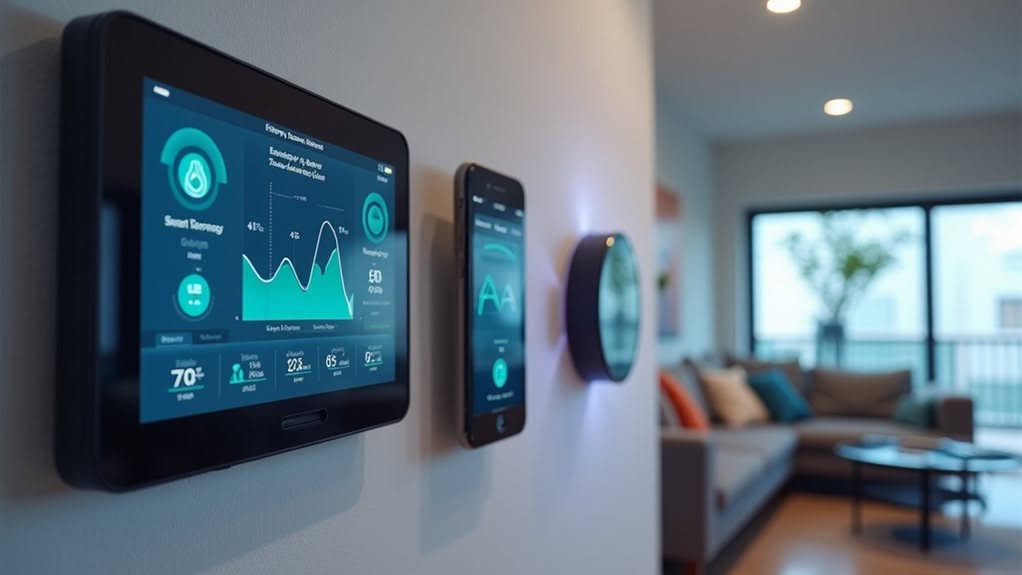
Three key factors determine how well energy monitors integrate with your existing smart home: platform compatibility, data accessibility, and automation capabilities.
When selecting an energy monitor, consider which ecosystems you’ve already invested in and how deeply you want your energy data to influence other smart devices.
- Aeotec Home Energy Meter Gen 8 offers the most thorough integration with Home Assistant via Z-Wave JS, enabling detailed automation and visualization.
- Aqara products provide exceptional cross-platform support, working with Apple HomeKit, Google Home, Alexa, and SmartThings.
- Sense and Schneider monitors excel at mobile app dashboards but offer limited third-party platform integration.
- Emporia Vue 3 works primarily within its own ecosystem of smart plugs and EV chargers.
- Custom firmware options like ESPHome can improve compatibility for budget monitors like Refoss and Fusion.
Solar System Monitoring: Special Considerations for Renewable Energy Users
Solar system owners face unique monitoring challenges that standard energy monitors don’t fully address. Your renewable energy setup requires specialized monitoring solutions that track production alongside consumption.
When selecting a solar monitoring system, consider whether you need panel-level or system-level monitoring. Panel-level options like Enphase Enlighten can identify underperforming modules, while system-level monitoring provides broader performance metrics.
Look for platforms that integrate with energy storage solutions if you have batteries installed. Systems should also account for environmental factors that affect solar performance.
Robust security measures are crucial to protect your monitoring data. Additionally, scalability matters—choose a system that can adapt as you expand your renewable energy infrastructure.
Many manufacturers offer their own monitoring platforms, including SolarEdge, SMA, and Fronius, each with mobile accessibility for convenient tracking.
Frequently Asked Questions
How Accurate Are Energy Monitors Compared to Utility Company Meters?
Energy monitors typically vary 2-10% from utility meters. You’ll notice differences due to sensor types, sampling rates, and modern appliances causing waveform distortion. Utility meters remain the billing standard despite these accuracy challenges.
Can These Monitors Detect Energy Theft or Unauthorized Usage?
Yes, energy monitors can detect unauthorized usage by identifying unusual consumption patterns or circuit loads. You’ll see suspicious spikes in real-time, though they can’t detect physical meter tampering or bypasses outside monitored circuits.
Do Energy Monitors Work With Time-Of-Use Pricing Plans?
Yes, many energy monitors work with time-of-use plans. You’ll find models like Emporia Vue 3 that track usage by the second and send notifications to help you shift consumption to lower-cost periods.
How Do Energy Monitors Handle Power Outages and Data Recovery?
Energy monitors detect outages instantly, store data in the cloud, and resume tracking when power returns. You’ll receive app alerts when outages occur, and your historical usage data remains accessible after power is restored.
Are There Privacy Concerns With Cloud-Stored Energy Consumption Data?
Yes, your energy consumption data stored in the cloud raises privacy concerns. You’re sharing detailed usage patterns that could reveal your lifestyle habits. Make certain your provider uses encryption and offers clear opt-out options.
Final Thoughts
Whether you’re tracking energy consumption, reducing your bills, or managing a solar system, today’s monitors offer solutions for every need and budget. Emporia Vue provides whole-house insights with circuit-level precision, while Sense’s AI technology identifies individual appliances. Budget options like Eyedro deliver crucial monitoring at lower price points. Choose a device that matches your technical requirements, connects with your smart home ecosystem, and helps you make informed energy decisions.