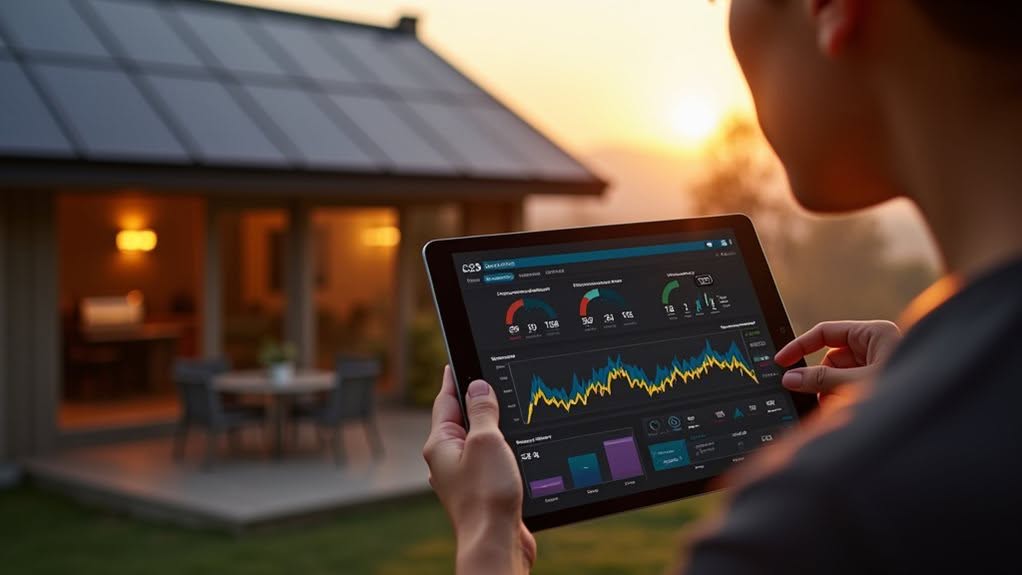
When you go off-grid, every watt of power becomes precious. Your home’s energy monitoring system transforms from a simple utility tracker into your lifeline for sustainable living. With real-time data on battery levels, solar production, and consumption patterns, you’ll gain control over your limited resources. Smart monitoring helps you identify energy hogs, eliminate phantom loads, and automate conservation measures during critical times. The difference between a comfortable off-grid experience and constant power anxiety often comes down to how effectively you track what’s happening in your electrical system.
7 Second-Level Headings for Blog Post
To effectively organize our blog post on energy monitoring for off-grid smart homes, we need a clear structure that guides readers through this complex topic.
Consider these crucial headings for your article:
- Understanding Energy Consumption Patterns
- Real-Time Appliance Tracking for Improved Efficiency
- Aligning Daily Routines with Solar Production
- Optimizing Battery Usage Through Monitoring
- Extending System Lifespan with Preventative Maintenance
- Automating Your Home Based on Energy Availability
Each section will help you explore how monitoring systems like the Emporia Vue can transform your off-grid living experience.
You’ll learn practical approaches to energy efficiency while guaranteeing your vital devices operate when needed. The headings progress logically from understanding consumption basics to implementing advanced automation strategies.
Investing in a smart home monitor can significantly increase your household’s overall efficiency while providing valuable insights about your energy usage patterns.
Why Energy Monitoring Is Essential for Off-Grid Living
Living off the grid requires careful management of your limited energy resources to prevent frustrating power shortfalls during critical times.
Your battery system’s lifespan depends directly on how you monitor and manage discharge cycles, with proper oversight potentially doubling the useful life of this expensive component.
Energy monitoring gives you the data needed to make informed decisions about which appliances to run and when, allowing you to allocate your precious power resources most efficiently throughout changing seasons and weather conditions.
Preventing Energy Shortfalls
When off-grid solar systems fail, they don’t simply dim the lights—they can leave entire homes without power for days.
Thorough energy monitoring provides the data you need to prevent these disruptions through effective load forecasting and improved energy efficiency.
Your monitoring system reveals essential insights that help maintain reliable power:
- Real-time consumption tracking identifies energy-hungry appliances and phantom loads that drain batteries unexpectedly.
- Accurate load calculations guarantee your battery storage and solar capacity match your actual daily needs.
- Automated load management schedules energy-intensive tasks during peak sunlight hours.
Optimizing Battery Lifespan
Beyond preventing system failures, proper energy monitoring directly impacts the health and longevity of your battery bank—often the most expensive component in off-grid power systems.
Your monitoring system provides crucial alerts for battery maintenance needs, helping you avoid deep discharges that greatly reduce battery life. Regular monitoring allows you to track battery health in real-time and address issues before they cause permanent damage.
Energy efficiency improves remarkably when you can identify which appliances consume the most power. With this data, you’ll make smarter decisions about when to run high-demand devices, ideally during peak solar production periods.
Studies show that homes with proper energy monitoring reduce waste by 30-40% through optimized charging cycles, effectively extending battery lifespan and maximizing your investment in off-grid technology.
Resource Allocation Decisions
Unlike grid-tied homes where electricity flows freely at the flip of a switch, off-grid living requires strategic management of limited energy resources.
Energy monitoring provides the real-time data you need to make informed decisions about when and how to use your available power.
With detailed monitoring of your system, you’ll develop effective resource allocation strategies that maximize self-sufficiency:
- Identify high-consumption appliances and schedule their use during peak solar production hours
- Track energy usage patterns to determine which activities can be postponed during low-generation periods
- Maintain sufficient battery reserves by adjusting consumption based on weather forecasts and production data
Systems like the Emporia Vue offer circuit-level analysis, helping you eliminate phantom loads and reduce waste.
This optimization not merely improves daily energy autonomy but also extends your system’s lifespan, resulting in notable long-term cost savings.
Key Components of an Effective Energy Monitoring System
To build a reliable off-grid smart home system, you’ll need several vital monitoring components working together. A thorough solution should include specialized energy sensor types that track both production and consumption at circuit level.
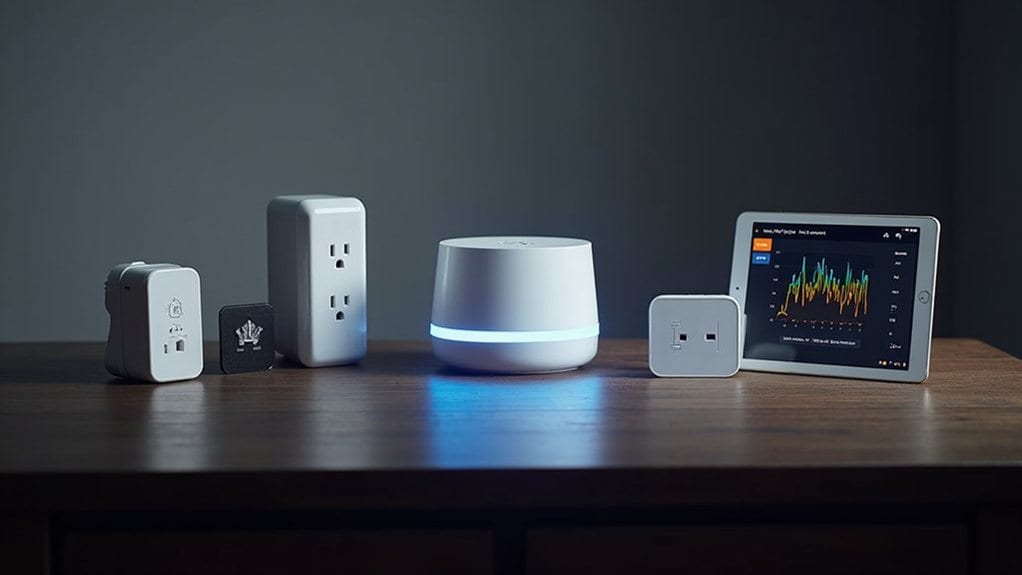
Devices like the Emporia Vue offer detailed monitoring of multiple appliances, providing granular insights into your energy usage patterns. Various monitoring software options can integrate with your smart home ecosystem, giving you real-time access to consumption data.
Your monitoring system should include notification capabilities for maintenance alerts and battery health warnings. This technology enables intelligent load management, allowing you to prioritize fundamental appliances during low solar production periods.
With proper monitoring, you’ll identify energy-intensive behaviors and make informed decisions to optimize efficiency, guaranteeing your off-grid system maintains autonomy throughout varying conditions.
Setting Up Real-Time Battery and Solar Production Tracking
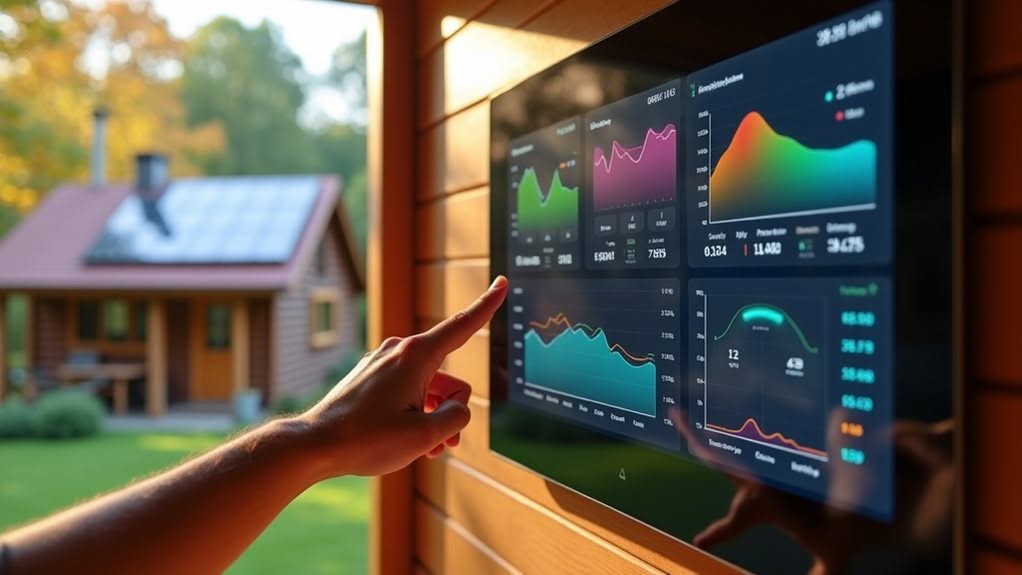
Since effective energy management depends on accurate data, establishing real-time battery and solar production tracking forms the foundation of your off-grid smart home system.
Home Assistant offers robust solar integration capabilities by connecting to various inverters and energy monitors for extensive visualization.
Installing battery health monitors provides immediate feedback on storage levels, allowing you to maintain ideal performance of your system.
These tools help you identify usage patterns and adjust consumption accordingly.
- Connect your inverter to Home Assistant using compatible integration modules
- Install dedicated battery monitors that report charge levels and health metrics
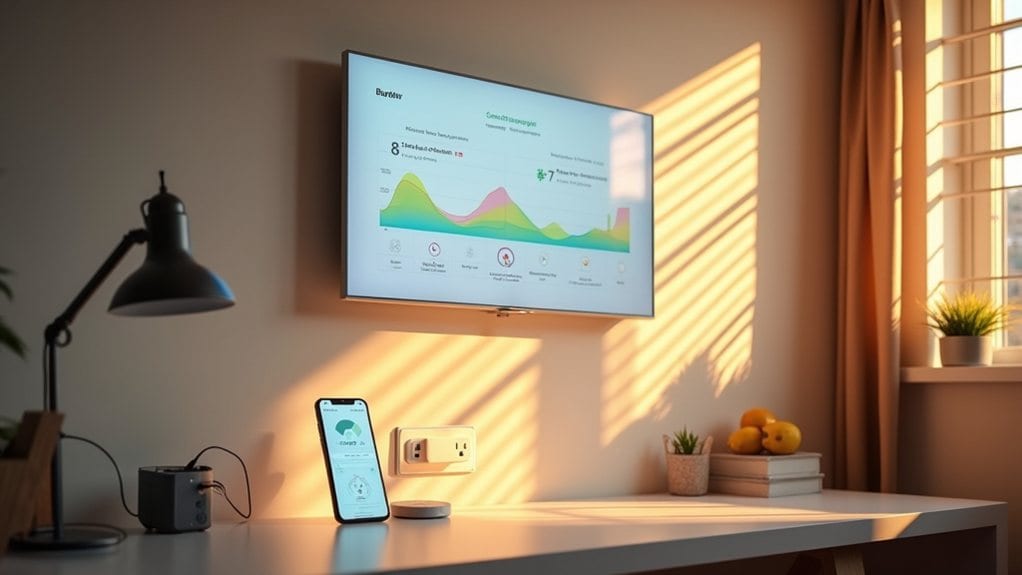
- Set up dashboard visualizations that display real-time production alongside historical data
With proper monitoring setup, you’ll be able to align energy-intensive activities with peak solar production times, maximizing your system’s efficiency while extending battery lifespan.
Smart Load Management Techniques for Limited Power Resources
When your off-grid system has limited power resources, implementing smart load management becomes vital for maintaining reliable operation. Load prioritization guarantees your fundamental devices remain functional during low solar production periods, while non-critical appliances automatically power down.
Energy monitors provide valuable real-time data about your power consumption, helping you make informed decisions about which devices to use when. You’ll gain insights into which appliances draw the most power, allowing for strategic load shedding.
Appliance scheduling aligns energy-intensive tasks with peak solar production times. Run your dishwasher or washing machine when the sun is highest to maximize your clean energy usage.
Smart switches and dimmers further reduce power consumption by adjusting lighting levels based on available energy.
Integration with battery management systems enables automatic adjustments based on your battery’s status.
Visualizing Energy Data to Make Better Consumption Decisions
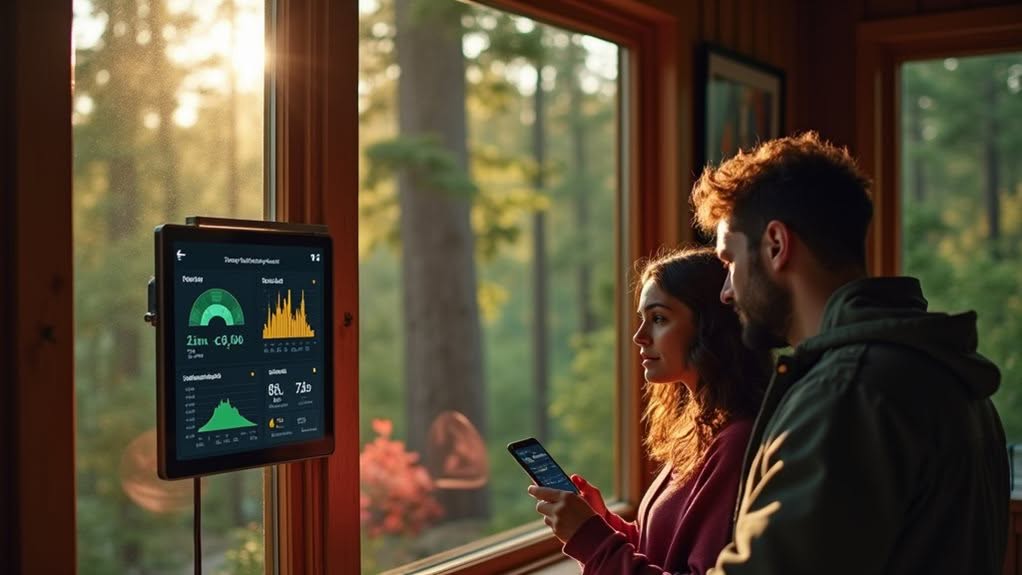
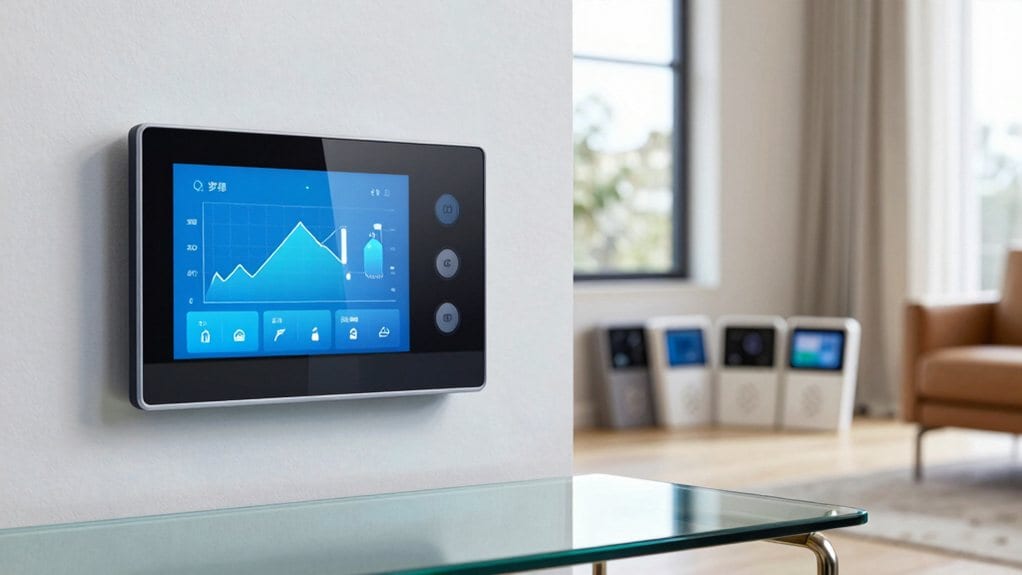
Smart energy management becomes considerably more powerful when you can actually see your data in action.
Through platforms like the Emporia Vue, you’ll gain real-time insights into consumption patterns, helping you make informed decisions about when to use energy-intensive appliances.
Visualization tools help you identify:
- Daily and seasonal data trends that affect your solar production
- Specific appliances that consume the most energy in your home
- Ideal times for running high-demand devices based on battery levels
Automating Energy Conservation With Monitoring Triggers
You can transform your off-grid home into an intelligent energy manager by setting up automation workflows triggered by your monitoring system’s data.
These energy-driven automations will turn off non-essential appliances when battery levels drop below your preset thresholds, while also shifting power-hungry tasks to coincide with peak solar production.
Real-time alerts notify you of unusual consumption patterns or critical battery levels, allowing you to take immediate action before small issues become major problems.
Energy-Driven Automation Workflows
Integrating real-time energy monitoring data with home automation systems creates powerful opportunities for conservation in off-grid settings. Your home can become a responsive ecosystem that maximizes energy efficiency through automated decision-making based on available resources.
Energy optimization becomes effortless when you implement appliance scheduling that responds to monitoring triggers. Your system can automatically adjust power consumption based on current solar production and battery levels.
- Smart thermostats can modify heating and cooling schedules, reducing costs by up to 10% while maintaining comfort.
- Lighting systems can dim or shut off completely based on occupancy and overall energy usage data.
- Energy-intensive appliances like washing machines can be programmed to run only during peak solar production hours.
This integration enables sophisticated load shedding strategies that prioritize crucial devices when battery capacity diminishes, guaranteeing reliability in your off-grid system.
Real-Time Usage Alerts
How effectively can your off-grid home respond to energy fluctuations without your constant attention? Real-time alerts transform passive monitoring into active energy management by notifying you when consumption exceeds your preset usage thresholds.
When properly configured, these alerts detect abnormal energy draws that might indicate malfunctioning appliances or unexpected power drains. Your notification settings can trigger automatic responses, such as dimming lights or adjusting thermostats when usage spikes occur.
This intelligent monitoring helps you schedule high-energy tasks during peak solar production hours, maximizing your renewable energy utilization.
The system can automatically intervene when consumption approaches critical levels, protecting your off-grid setup’s integrity.
Frequently Asked Questions
How Much Does a Complete Off-Grid Monitoring System Typically Cost?
You’ll pay $1,500-$5,000 for a complete off-grid monitoring system. The cost breakdown varies based on system components including sensors, controllers, and software interfaces. Higher-end systems offer more detailed analysis and automation capabilities.
Can Energy Monitoring Systems Work Without Internet Connectivity?
Yes, you can use energy monitoring systems without internet. Many offer offline capabilities that store local data until connectivity returns. Some systems operate completely independently, showing real-time usage on local displays.
What’s the Learning Curve for Setting up Energy Monitoring Software?
You’ll face a moderate learning curve depending on the system’s user interface complexity. Modern solutions offer guided installation processes with intuitive dashboards, while DIY options require more technical knowledge but provide greater customization possibilities.
How Accurate Are DIY Energy Monitoring Solutions Compared to Commercial Ones?
DIY monitoring systems can be 80-90% accurate, while commercial solutions often achieve 95-98% reliability. You’ll notice the gap most during peak loads or with complex appliance interactions, but DIY options improve with calibration.
Can Energy Monitoring Systems Work With Older Off-Grid Setups?
Yes, you’ll find retrofit options available for older off-grid systems, though you’ll face some compatibility challenges. You can install specialized monitors that work with legacy components through adapter interfaces or wireless sensors.
Final Thoughts
By implementing energy monitoring in your off-grid smart home, you’re taking control of your power independence. You’ll make informed decisions based on real data, extend battery life, and maximize renewable energy usage. These monitoring systems help you balance consumption with production, creating a sustainable living environment that meets your needs while minimizing waste. The investment in monitoring technology pays off through improved efficiency and greater energy autonomy.